After years of lobbying by Riyadh, the United States recently greenlit a potential sale of F-35 fighters to Saudi Arabia. Meanwhile, Turkey is looking to rejoin the F-35 program and is aggressively pursuing the Trump administration to approve the sale of stealth jets.
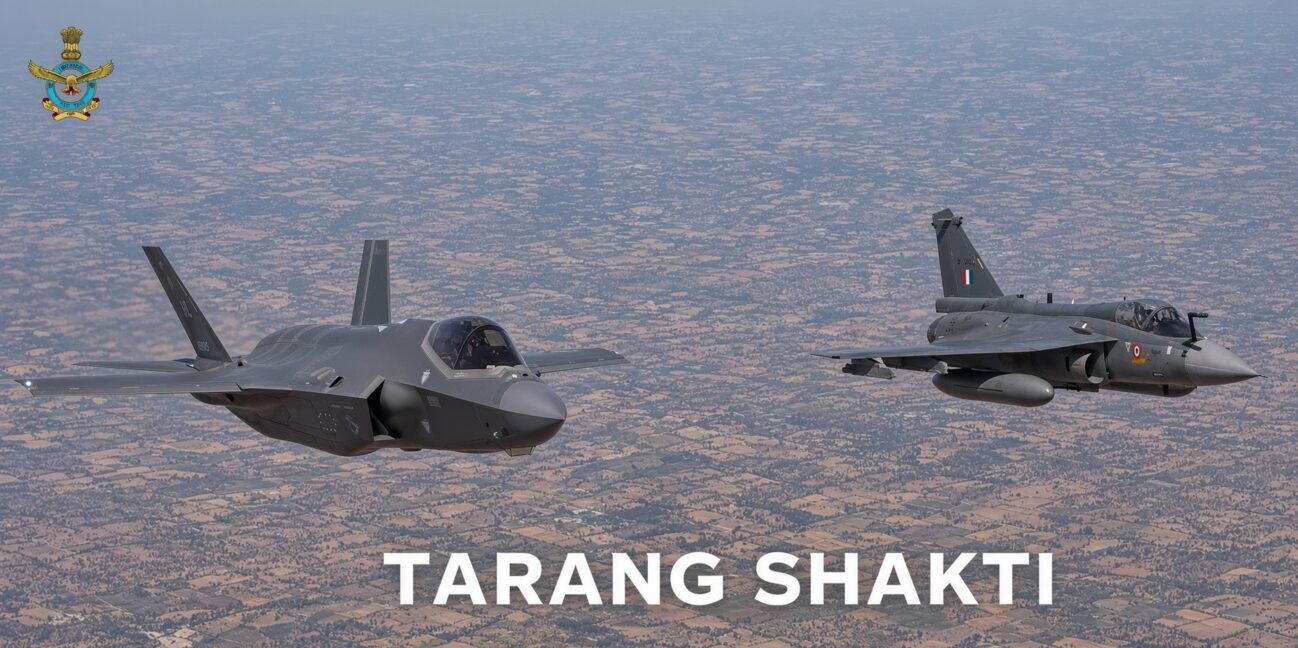
Another interesting case is India, which is hosting Exercise Tarang Shakti, where six F-35 jets are participating. Indian experts call it a unique opportunity for the IAF to evaluate US stealth jets and see how Indian ground and airborne radars detect them.
Notably, this is the first time F-35s are participating in drills with Indian jets on Indian soil.
Many see this as an historic opportunity to train alongside arguably the world’s best jets and give real-time exposure to the IAF’s Rafale, Su-30MKI and Tejas aircraft. Even IAF critics who don’t favor a potential F-35 sale to India see this as a historic opportunity.
Earlier, a EurAsian Times report said the US State Department announced the proposed sale of F-35 Lightning II and related equipment to Saudi Arabia on September 17, 2026. The proposed sale is expected to cover 48 F-35 aircraft and 49 Pratt & Whitney F135-PW-100 engines, along with communications gear, training, spare parts, and other support as requested by Riyadh.
The approval followed years of lobbying by the Saudi kingdom to procure the highly sought-after stealth fighters. Earlier, the Obama administration explicitly ruled it out in late 2015, stating that Israel would remain the sole F-35 recipient in the region to preserve its qualitative military edge (QME).
Later, the Biden administration explored linking a potential F-35 deal to Saudi-Israeli normalization, but talks stalled after the October 7 Hamas attack on Israel.
The US State Department’s proposed sale still requires congressional approval, and analysts believe Saudi’s purchase of the F-35 could hit a roadblock amid concerns about Riyadh’s ties with China and Israel’s opposition to the deal.
Despite being a founding member of the F-35 program and making a significant financial investment, the US expelled Turkey from the consortium and sanctioned it under CAATSA for purchasing the S-400 despite repeated warnings.
Ankara has been actively pursuing a strategy to divest itself of its Russian-made S-400 and sell it off to a potential third-party buyer.
Earlier, the US President similarly responded to questions about lifting CAATSA sanctions on Turkey by saying, “I’ll always speak to President Erdogan. He is a friend of mine, as you know. And I’ll always make him happy.”
For now, Turkey’s path to obtaining the F-35s is still full of hurdles that both Washington and Ankara may find hard to remove, including Israel’s stiff opposition, as the EurAsian Times has explained before.
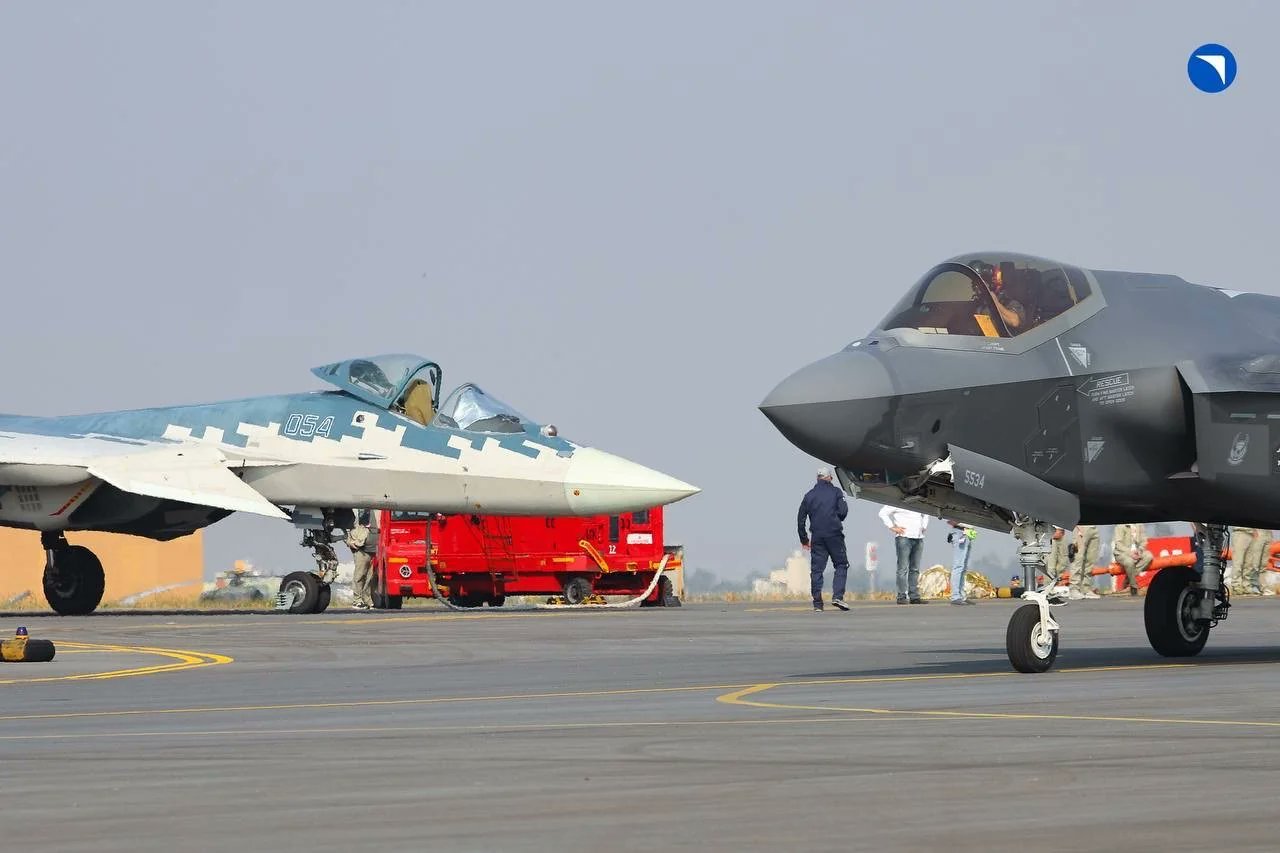
Like Saudi Arabia and Turkey, several countries have made unsuccessful attempts to obtain the F-35, widely regarded as the leading fifth-generation multirole fighter thanks to its advanced low-observable stealth and groundbreaking sensor fusion.
Functioning as a highly networked airborne command node—often described as the “quarterback of the skies”—it shares data seamlessly across friendly platforms. In fact, analysts believe that it is the most capable fifth-generation fighter in service anywhere in the world.
Despite this, India — a country that faces the dual threat of China and Pakistan along its borders — has been somewhat indifferent to what many consider the world’s best jets.
US Pitch for F-35s
Donald Trump unofficially pitched the F-35 to India during a meeting with Indian Prime Minister Narendra Modi in February 2025. “Starting this year, we will be increasing military sales to India by many billions of dollars. We are also paving the way to provide India with the F-35 stealth fighters ultimately,” he said at the time.
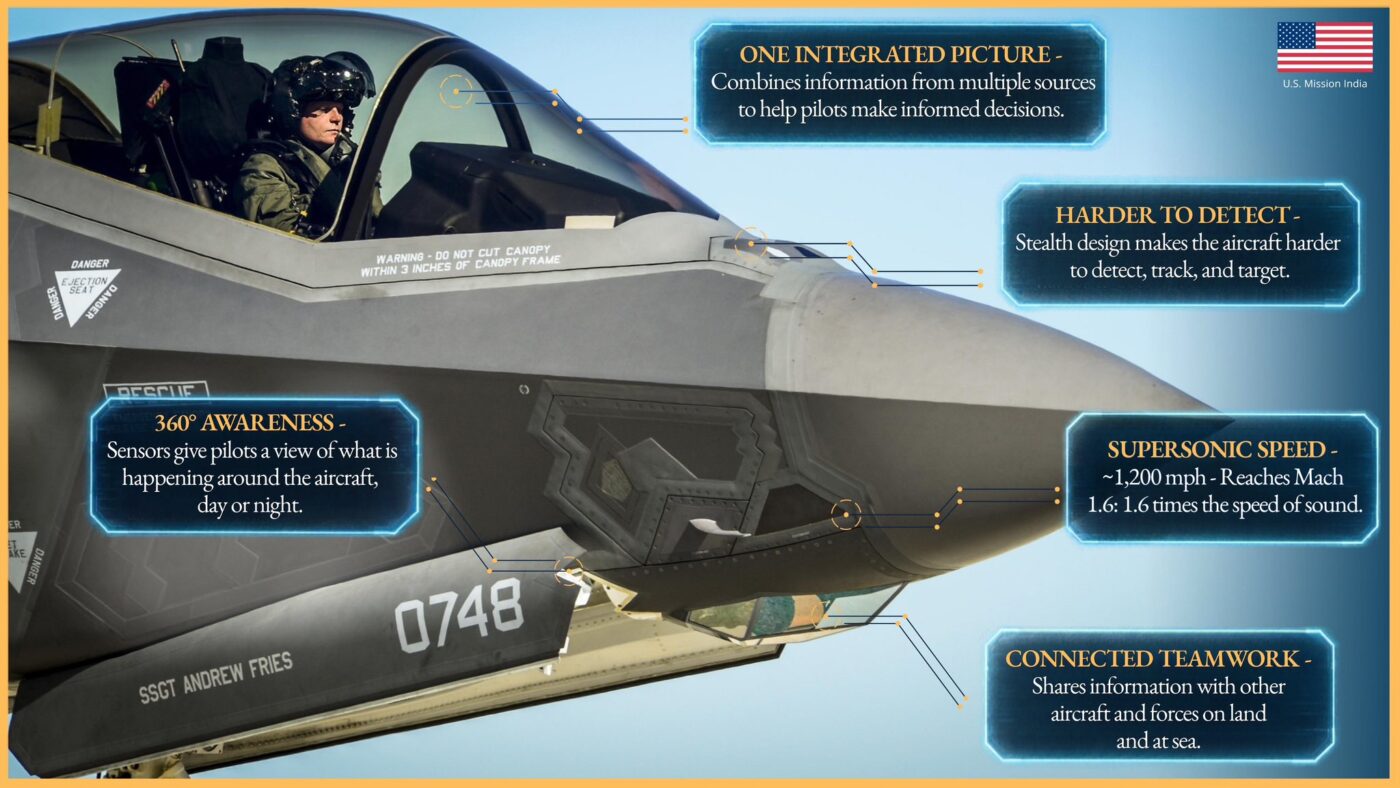
The F-35s were also displayed at Aero India 2025 the same month, where they met the Russian Su-57 on the tarmac for the first time.
During his April 2025 visit to India, US Vice President J.D. Vance appeared to reiterate the offer.
“We, of course, want to collaborate more. We want to work together more. And we want your nation to buy more of our military equipment, which we believe is the best in class. American fifth-generation F-35s, for example, would give the Indian Air Force the ability to defend your airspace and protect your people like never before,” he said, making a more direct appeal.
Although the US never made an official offer, the verbal F-35 pitch and the prospect of acquiring a cutting-edge stealth fighter looked great on paper, particularly since China operates two fifth-generation aircraft (the J-20 and J-35A) and is allegedly exporting the J-35A to Pakistan.
However, India’s defense community and Indian Air Force (IAF) veterans seemed unimpressed by the F-35 offer despite acknowledging the aircraft’s potent capabilities, a stance recently reiterated as six F-35s made their debut in India-hosted “Exercise Tarang Shakti 2026” in Jodhpur, Rajasthan.
Seven Reasons Why IAF Veterans Oppose F-35
First, Indian analysts and experts believe that buying an expensive stealth fighter off the shelf from the United States would be a liability, since it would do nothing for the Indian defense manufacturing sector and come with an enormous price tag.
Each F-35 is expected to cost $80 to $120 million, with even higher life cycle costs. Therefore, a fleet of F-35s would impose a heavy financial burden that the Indian Air Force would rather allocate to indigenous programs and more flexible and diverse acquisitions.
Second, analysts and veterans have argued that the US would never part with its technology, eliminating domestic manufacturing. They reckon the F-35 procurement would run counter to the “Make in India” and “Aatmanirbhar Bharat” policies.
Air Marshal Anil Khosla (retd), the former Vice Chief of Air Staff (VCAS), earlier stressed that even with approval of limited technology transfer and local manufacturing, significant challenges would remain. At the time, he highlighted production risks arising from the F-35’s complex global supply chain, noting that Lockheed Martin sources components from multiple countries. He cautioned that any disruption or delay in delivering these parts could halt the entire manufacturing process.
Air Marshal Khosla further noted that India’s continued reliance on foreign suppliers would constrain genuine localization, and the IAF would struggle to manage such disruptions.
Notably, this concern takes on greater significance as delivery of Tejas Mk-1A fighter jets to the Indian Air Force has been delayed due to delays in delivery of F404-IN20 turbofan engines, affecting the service’s preparedness.
Third, there is concern that diverting resources to acquiring the F-35 would inevitably affect India’s own fifth-generation Advanced Medium Combat Aircraft (AMCA), which aims to deliver a fifth-generation platform with advanced sensors, electronic warfare systems, and networked combat features while fostering a domestic aerospace industrial base.
Experts have urged the IAF to focus on its indigenous programs rather than getting trapped in another round of imports.
Fourth, analysts have also cited logistical challenges and operational incompatibility with India’s diverse air force fleet comprising a mix of Russian Su-30MKIs, French Rafales and Mirage 2000, and Tejas. They believe that adding another fighter type would further complicate maintenance, training, and logistics for an already varied inventory.
Fifth, India operates Russian-supplied S-400 systems, which previously caused friction between the US and Turkey.
“An F-35A deal would likely come with strings attached—most notably, a U.S. demand that India abandon its Russian S-400 air defense systems in favor of the American THAAD,” IAF veteran and commentator Squadron Leader Vijainder K. Thakur earlier stated.
The S-400 is deeply embedded in India’s layered air defense network, and New Delhi has been considering an additional order, meaning it would inevitably become a point of contention in any potential deal.
Sixth, the US has been flagged as an unreliable partner.
“Putting too many military aviation eggs in the unreliable US basket will also be an issue. Americans can be “very unreliable” when it comes to putting sanctions and freezing spares and maintenance support,” IAF veteran and aviation analyst, Air Marshal Anil Chopra (retd), earlier wrote in a detailed EurAsian Times article.
Adding the repeated threat of sanctions by the US and a rapidly changing geopolitical scenario further complicates the purchase.
Seventh, the F-35 is embedded in the US-controlled networks, including the Operational Data Integrated Network (ODIN), which sends information back to American servers. Indian experts view this as a breach of operational independence.
Furthermore, they have cautioned that the US imposes stringent operational restrictions on its system and could try to limit the F-35’s use in combat, particularly against Pakistan.
Critics worldwide have also stressed that an unpredictable US administration could restrict free F-35 operations by limiting hardware and software supplies, commonly referred to as a kill switch. In fact, this is the reason why countries like Canada and Portugal decided to look for an alternative to the American stealth fighter.
Indian strategic discussions generally prioritize accelerating Tejas production, advancing the AMCA, and exploring local manufacturing options for platforms such as the Rafale. If a foreign fifth-generation fighter is ultimately considered, many experts have indicated a preference for the Russian Su-57 because of the technology transfer, local production, and twin-seat variant.
- Contact the author at sakshi.tiwari13 (at) outlook.com
- Follow EurAsian Times on Google News