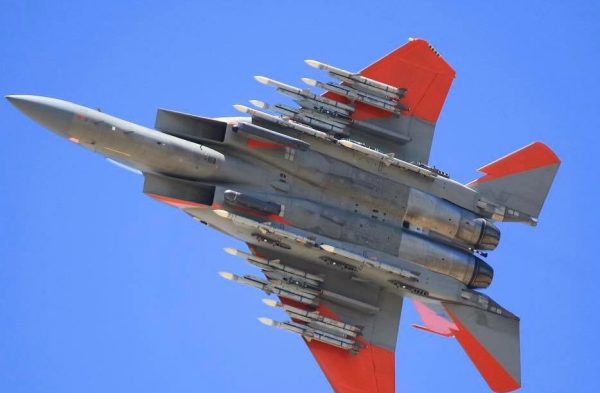
Saudi Arabia’s long-sought acquisition of the F-35 stealth jets could face another major obstacle after US intelligence assessments warned that China could obtain sensitive technology from the kingdom.
Earlier, Saudi Arabia received approval from US President Donald Trump to acquire F-35s in November 2025 after Riyadh and Washington signed a “historic strategic defense agreement.”
Now, US intelligence analysts have raised concerns in internal assessments about possible Chinese espionage related to the $24 billion sale of dozens of advanced F-35 warplanes to Saudi Arabia, the New York Times reported, citing sources.
Intelligence analysts fear China could obtain F-35 technology by conducting espionage operations inside Saudi Arabia or leveraging its existing military ties with the kingdom.
According to one official cited by the NYT report, a detailed assessment the Pentagon’s Defense Intelligence Agency (DIA) produced several months ago examined Chinese military access to Saudi bases and the kingdom’s reliance on Chinese technology in its telecommunications networks. The same report raised doubts about whether the United States and Saudi Arabia can keep F-35-related sites adequately secure from China.
The DIA report in question has been shared across multiple administration agencies and congressional offices, along with evaluations from other intelligence organizations.
The US State Department forwarded a package covering 48 aircraft plus a spare engine to two congressional committees in June 2026, seeking preliminary clearance. However, several US lawmakers and their staff have since pressed the administration about the intelligence community’s reservations, the NYT report claimed.
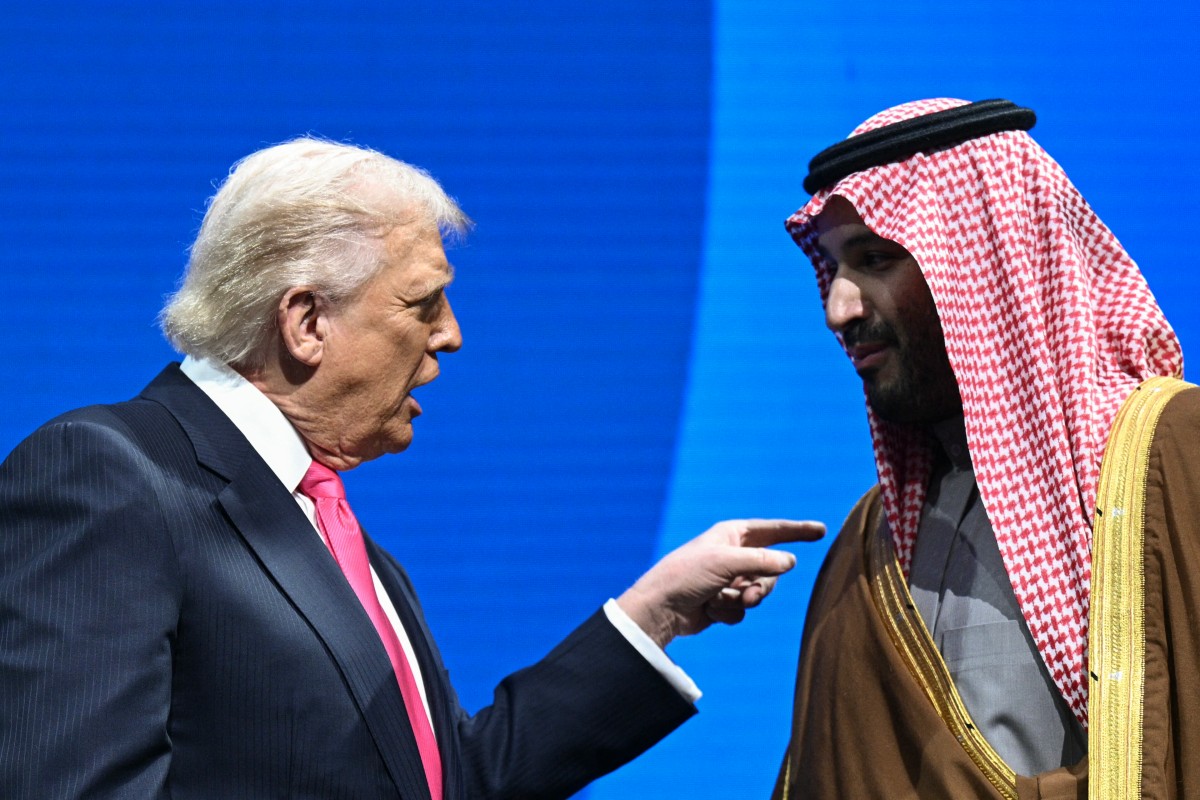
Chinese Shadow Looms Over F-35?
The recent Pentagon intelligence report states that only Saudi and American officials and contractors should have access to locations where F-35s would be housed.
Pentagon officials are particularly worried about safeguarding the F-35’s cutting-edge radar and surveillance systems, according to the report.
Intelligence analysts have asked in the report whether Saudi Arabia would generally consent to restrict contact with Chinese military and intelligence officers and related organizations. The report also raises concerns about Saudi authorities’ willingness to remove equipment from defense sites, router infrastructure, and telecommunications from two well-known Chinese technology companies, Huawei and ZTE.
The United States officially considers Huawei and ZTE to have deep ties to the Chinese government, the CPC (Communist Party of China), and the Chinese military.
In fact, these recent concerns echo earlier US objections that contributed to the collapse of a proposed F-35 sale to the United Arab Emirates.
Earlier, the US government had raised strong security concerns regarding the UAE’s use of Huawei 5G network equipment. Washington feared that Chinese technology could be used to spy on or compromise sensitive US military technology embedded in the stealth F-35 aircraft.
However, Emirati officials felt these stringent conditions and demands—which included requirements to remove or alter Chinese tech infrastructure—infringed on their national sovereignty and called off talks over the F-35 purchase.
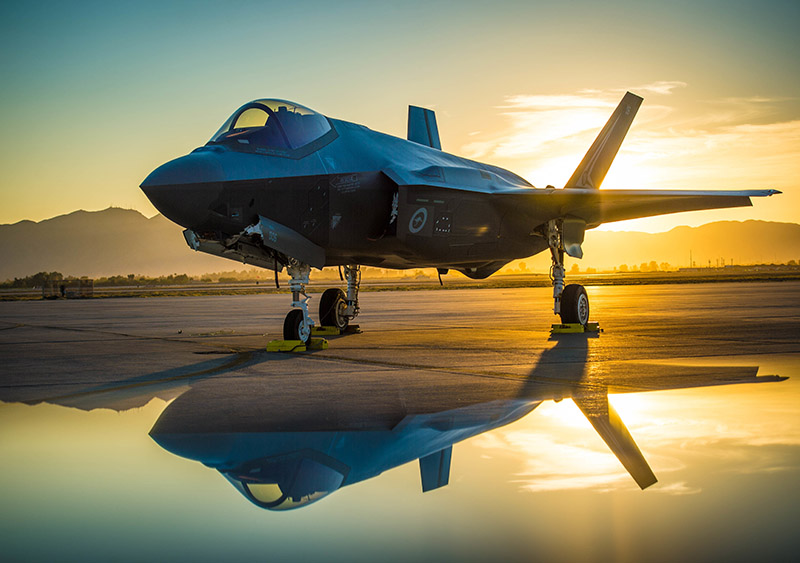
On its part, Saudi Arabia has long cultivated ties with Chinese arms manufacturers despite being the world’s largest buyer of American weapons. It has obtained short-range ballistic missiles from China for years and, more recently, has signed agreements for sophisticated, extended-range versions that include technology transfers enabling local manufacturing and the construction of testing sites, as the EurAsian Times previously explained.
In fact, some reports suggested that the kingdom had used a Chinese-origin DF-15A short-range ballistic missile—whose purchase by Riyadh was previously unknown— against Houthi forces in Yemen.
In addition, the kingdom has purchased Wing Loong and CH-series drones and acquired PLZ-45 155mm self-propelled howitzers and the Norinco LG5 40mm anti-materiel grenade launcher. It has also purchased the Silent Hunter laser directed-energy weapon.
Meanwhile, a Reuters report in January 2026 claimed that Pakistan and Saudi Arabia are working out a deal that could convert roughly $2 billion in Saudi loans to Pakistan into the purchase of Sino-Pak JF-17 jets for the Royal Saudi Air Force. Pakistan authorities refuted these reports at the time, but the deepening Sino-Saudi defense ties have fueled persistent US unease about technology security.
Whether the latest intelligence assessment will become a roadblock as Congress prepares to decide whether to green-light the deal remains to be seen.
Earlier, former U.S. Deputy Under Secretary of Defense Stephen Bryen said, “Congress will need to evaluate the level of China’s penetration of Saudi Arabia’s defense industries, the safeguards that might be applicable to the F-35, and the impact of the sale of the F-35 on the regional power balance.”
Additionally, several analysts believe the US could do without risking its technology for close ties with Riyadh.
For instance, China expert Gordon Chang warned that Beijing has already shown it can penetrate US defense programs and should be assumed to be targeting the F-35 again.
“We should assume China has everything already. They already stole the whole plane once. They probably did it again,” he told Fox News Digital last year, cautioning, “Washington must balance the risks with the strategic benefits of strengthening ties with Riyadh.”
Earlier, Su Bin, who worked in Canada under the name Stephen Su, stole tens of thousands of documents on the F-22 and F-35 with help from Chinese hackers, as detailed in a previous EurAsian Times report
For now, a looming concern in US intelligence circles and the Pentagon is that if China gained access to F-35 technology and secrets, it could use them to further refine its own fifth-generation stealth fighters or develop tactics to counter the F-35.
Beyond concerns over Chinese espionage, a Saudi purchase of F-35s also faces opposition from Israel, which fears that delivering these cutting-edge stealth fighters would erode its Qualitative Military Edge (QME).
The US has an agreement with Israel, which stipulates that US weapons supplied to Israel should be “superior in capability” compared to those sold to Israel’s neighbors and rivals in the region. Therefore, even if a sale went through, the US could likely downgrade the F-35s meant for Saudi Arabia to strike a balance and honor its commitments to Tel Aviv.
The US could also make the Saudi F-35s technologically inferior to Israeli jets through the software package commissioned for the jet, or ensure the Saudi jets do not receive certain other advanced Israeli features, such as enhanced electronic warfare suites for jamming radars and disrupting enemy communications.
If Saudi Arabia gets the F-35, it will become the first Arab country to have arguably the world’s most sophisticated stealth aircraft.
- Contact the author at sakshi.tiwari13 (at) outlook.com
- Follow EurAsian Times on Google News