Recently, during the 5th Halla Bolle Conclave held at the Radisson Collection in Srinagar, Jammu and Kashmir, the same separatist discourse once again found space.
The conclave brought together mainstream political leaders and a former separatist figure, with discussions focusing on issues such as restoring statehood, Article 370, autonomy, political rights, governance, youth aspirations, reconciliation, and India-Pakistan relations.
Many of the questions asked and answers given reflected narratives that have long been nurtured in the Valley and closely resemble Pakistan’s longstanding propaganda on Kashmir.
The participation of mainstream political leaders alongside former separatist figures also showed how some of these old narratives still find space in Kashmir’s contemporary political discourse.
Selective Politics of Kashmir’s Mainstream Leaders
Aga Syed Ruhullah Mehdi, the National Conference Member of Parliament (MP) representing the Srinagar Lok Sabha constituency, who behaves like some philosopher-king, is systematically promoting Pakistan’s propaganda and narratives.
He tries his best to hurt India whenever he gets the chance.
For instance, when asked to state his position on the situation in Muzaffarabad and Pakistan-occupied Jammu and Kashmir (PoJK), he said that he would not talk about it until people in the Valley were ‘empowered’, deflecting by declaring, ‘Return our dignity & we will talk about Muzaffarabad’. He then went on to claim that Kashmiris face the status of ‘second-class citizens’ in the Valley, asserting that ‘our reality is that we are disenfranchised as second-class citizens.’
This is exactly the problem. He avoids questions concerning PoJK but remains extremely vocal when criticizing India.
He is actually misusing his constitutional right to freedom of speech and expression and using Indian democracy as a shield while promoting narratives that are completely in line with Pakistan’s interests. He actually doesn’t want to hurt his masters sitting in Rawalpindi.
He also claims that there is no freedom of speech, frequently protesting that, “as a Kashmiri Muslim voice, I was denied the opportunity to speak.” Yet his actions contradict this narrative. He himself makes the most noise, using every available platform to speak publicly, give interviews, address gatherings, speak in Parliament, and criticize India regularly.
If he is supposedly not allowed to speak, then how is he able to constantly and systematically spread venom and engage in anti-India propaganda repeatedly?
There is a clear difference between legitimate democratic criticism of a government and repeatedly using the democratic space available in India to promote narratives that portray India itself as the source of Kashmir’s problems while giving Pakistan a free pass for its sponsorship of cross-border terrorism and the killing of innocent civilians in J&K and the rest of the country.
Then, an audience member asked National Conference president Farooq Abdullah why Kashmir had aligned with ‘Hindu-majority India’ in 1947. The very framing of the phrase ‘Hindu-majority India’ exposes the toxic ideology behind the question.
However, those who push such narratives desperately need to look at what actually happened to the regions that joined Pakistan in 1947, as well as those parts of the subcontinent that were forcibly taken by Pakistan, and the misery their people endure today.
Look at Balochistan. Look at Khyber Pakhtunkhwa. Look at the political and institutional failures that ultimately led to the secession of Bangladesh, demonstrating that a shared religious identity alone could not keep Pakistan united. Most importantly, look at the disaster that is Pakistan-occupied Jammu and Kashmir (PoJK) today.
For years, the people of PoJK have taken to the streets to protest Islamabad over basic political, economic, and social rights. The recent protests have faced deadly crackdowns, reportedly leaving more than 150 people killed, while the brutal authorities have even gone so far as to restrict the supply of essential goods, including food, flour, medicines, and fuel, during periods of unrest.
When Pakistan’s Failures Are Blamed on India
Yet Pakistan’s propaganda machinery has repeatedly played its cards well in Kashmir. Its influence remains deeply entrenched in the Valley, allowing narratives about Pakistan and India to persist regardless of what happens inside Pakistan.
Pakistan can have Imran Khan in jail, political repression, a deeply constrained democratic system, and an army that continues to exercise enormous influence over the country’s politics, elections, government formation, policymaking, and even the broader political system, yet people in Kashmir are repeatedly told that Pakistan’s problems are somehow the result of an Indian conspiracy.
Even when Pakistan itself is burning, its failures are deflected towards India rather than examined as the consequences of its own political and institutional failures.
This should force Indian authorities to rethink their approach and ask why such narratives continue to resonate in the Valley. Simply dismissing them as propaganda will not be enough. There needs to be a serious effort to understand the channels through which they spread, the political actors who amplify them, and the reasons they continue to influence public discourse.
Certain mainstream political parties and leaders in Jammu and Kashmir have also played a major role in keeping this discourse alive. They have repeatedly used the blood and suffering of Kashmiris for their own political objectives. Rather than challenging narratives promoted by Pakistan, they have often sustained and magnified them.
Take PDP chief Mehbooba Mufti, for example. She has advocated opening the Line of Control in Kashmir so that trade can take place with Central Asia, Afghanistan, and other regions, invoking the old Silk Route and China’s connectivity. One has to ask: what world is she living in?
Does she not understand the region’s geopolitics? Does she not understand the cross-border terrorism and terrorist infrastructure operating from Pakistan-occupied territory? Does she not understand the India-Pakistan dispute over PoJK? Does she not understand China’s illegal territorial claims against India in Jammu and Kashmir, the Shaksgam Valley territory ceded by Pakistan to China in 1963, the recent Galwan clashes, and China’s broader geostrategic interests in the region?
It is not simply a matter of opening India’s borders and assuming that will solve everything. Other players have their own interests and nefarious designs, and they too have agency. Besides, extra-regional powers have their own interests. The region is not operating in a geopolitical vacuum.
The problem with Kashmir’s political leadership is that they rarely talk about the issues that actually matter to the people, for which they were elected, and instead think that by playing separatist politics, they can secure their votes and political future.
They rarely talk about how to improve the living standards of common people, eliminate corruption, generate employment, improve infrastructure, attract investment, or make governance more accountable and responsive.
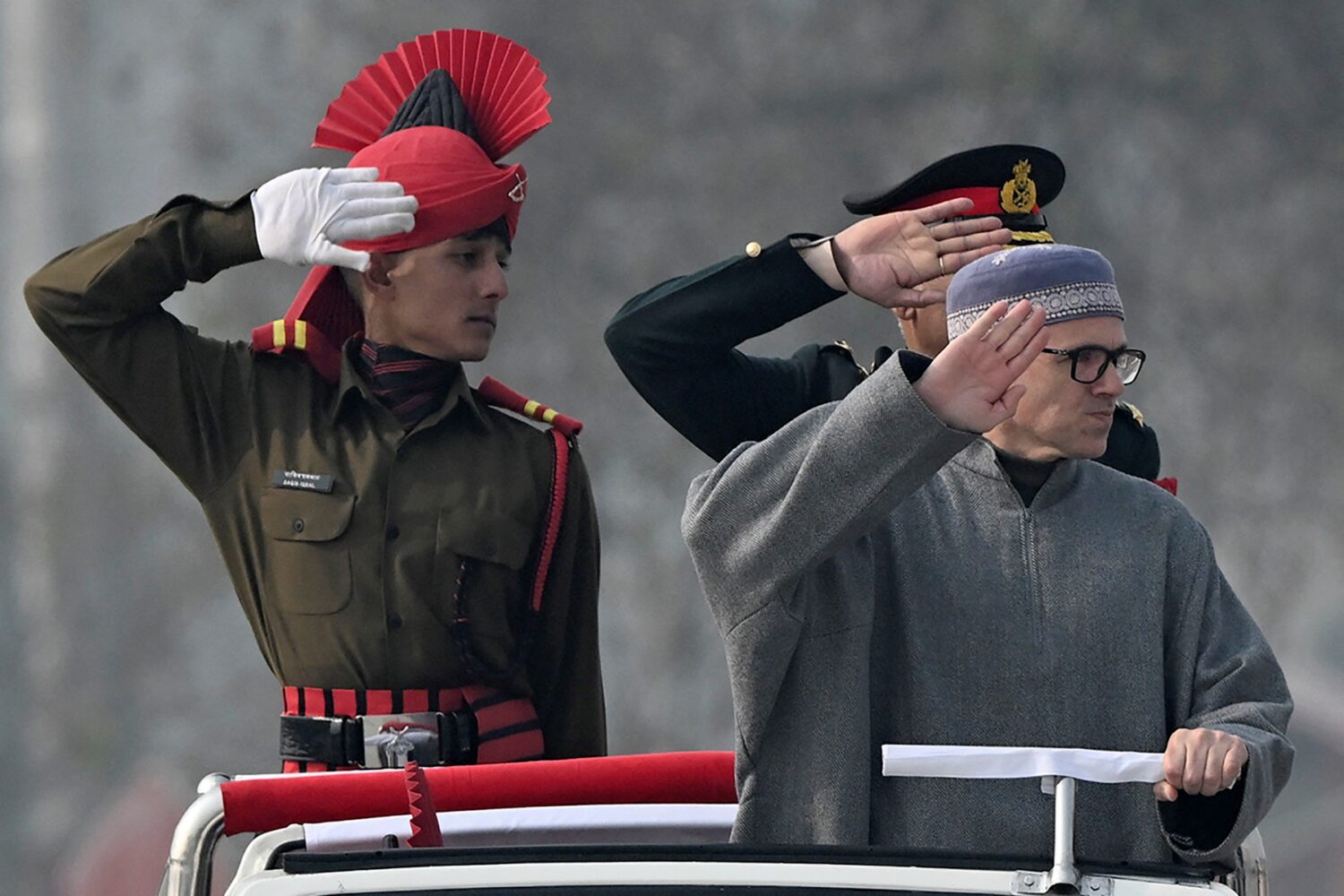
Instead, they have often tried to frame the relationship between the people of Kashmir and the central government in colonial terms, as a master-slave relationship. They repeatedly use words such as “Delhi,” while saying that Kashmiris have to “fight Delhi.” They rarely speak about constructive engagement with the central government.
They now say that Kashmiris have been “disempowered” after the abrogation of Article 370 in 2019. But what happened before 2019? Were Kashmiris not being described as “alienated” and “disempowered” before 2019 as well? Were these same political leaders not making exactly the same arguments then?
If they were making the same arguments before 2019, then what exactly did they do for the people of Kashmir when they had the political power they now claim to have lost?
This is something that needs to be asked.
Need to Move Beyond the Politics of Alienation and Victimhood
Moreover, the words “alienation” and “disempowerment” are not being used accidentally. They carry a specific political meaning and fit into a particular narrative. The problem is that these leaders have never really looked at the relationship between Jammu and Kashmir and the central government in the same way that political leaders in other parts of India look at their relationship with the Center.
The current noise over statehood also needs to be understood in this context. They present the demand for statehood as though it is entirely about the interests of the common people. But is it?
Of course, statehood is important, and people can legitimately demand its restoration. But it also involves political interests. These political parties want more political power and greater control over the administration.
After losing statehood, they feel they lost a significant part of their political authority. They also want statehood because it would give them greater political control and a shield from the scrutiny and accountability they currently face from different agencies and institutions. In this sense, the demand for statehood is also about restoring their own political power and reducing accountability.
But the common people have other priorities. They want good governance. They want corruption to be eliminated. They want development, employment, better infrastructure, better public services, and an improved standard of living.
The question is: when there was statehood before 2019, what did they do to improve the lives of common people?
If the mainstream political parties in Jammu and Kashmir had pursued positive, constructive, forward-looking, and pragmatic politics instead of sustaining and magnifying narratives that have served Pakistan’s interests, the Valley could have been very different.
Political parties have every right to criticize the government. They have every right to demand statehood, greater powers, development, and political representation. But when criticism of India becomes constant while questions concerning Pakistan are systematically avoided, and when every issue is presented through the prism of alienation and disempowerment, it becomes necessary to ask whose interests this politics is ultimately serving.
The mainstream political leadership in Jammu and Kashmir needs to understand that the people of Kashmir cannot be kept permanently trapped in the politics of grievance, alienation, and victimhood. The people deserve politics that focuses on their future, not politics that continuously recycles past narratives.
- Views Personal of the Author
- The author is a prominent journalist from Jammu & Kashmir and wishes to keep his identity concealed for security reasons.
- For any feedback on the story, email us at editor (at) eurasiantimes.com