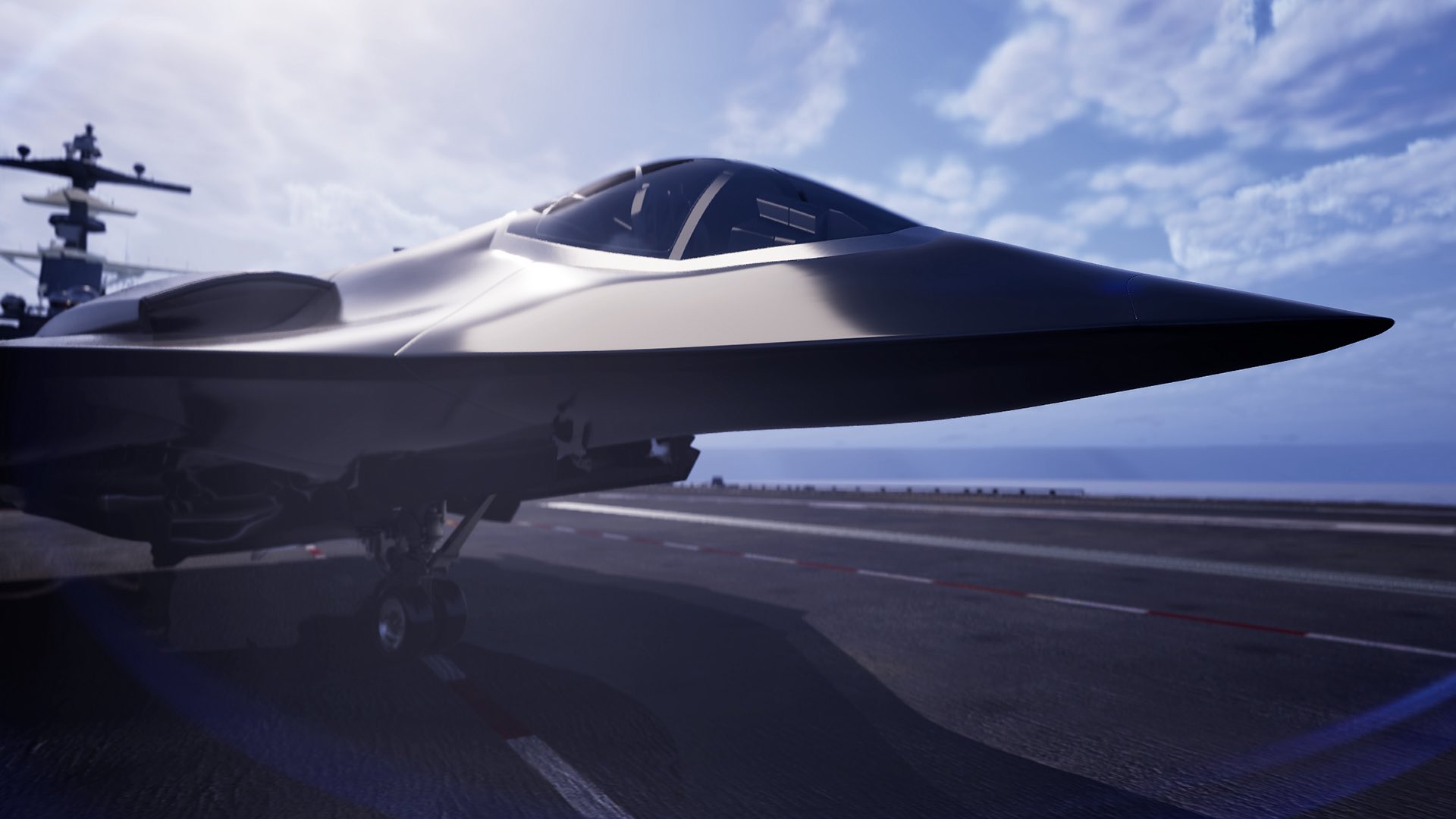
More than a year after Donald Trump unofficially offered the F-35 to India, the fighter jet debuted in India’s multinational exercise Tarang Shakti 2026.
For the first time, six US F-35 Lightning II fighter jets and more than 200 airmen joined the Tarang Shakti multinational drills in Jodhpur, western India.
Photos of the jets appeared on social media ahead of their participation in tactical exercises alongside the Indian Air Force’s stalwarts, including the Rafale, the Su-30MKI, and indigenous Tejas fighters in Jodhpur, Rajasthan.
Meanwhile, the Indian Air Force published a video on September 29, 2026, showing an F-35 and Tejas flying together.
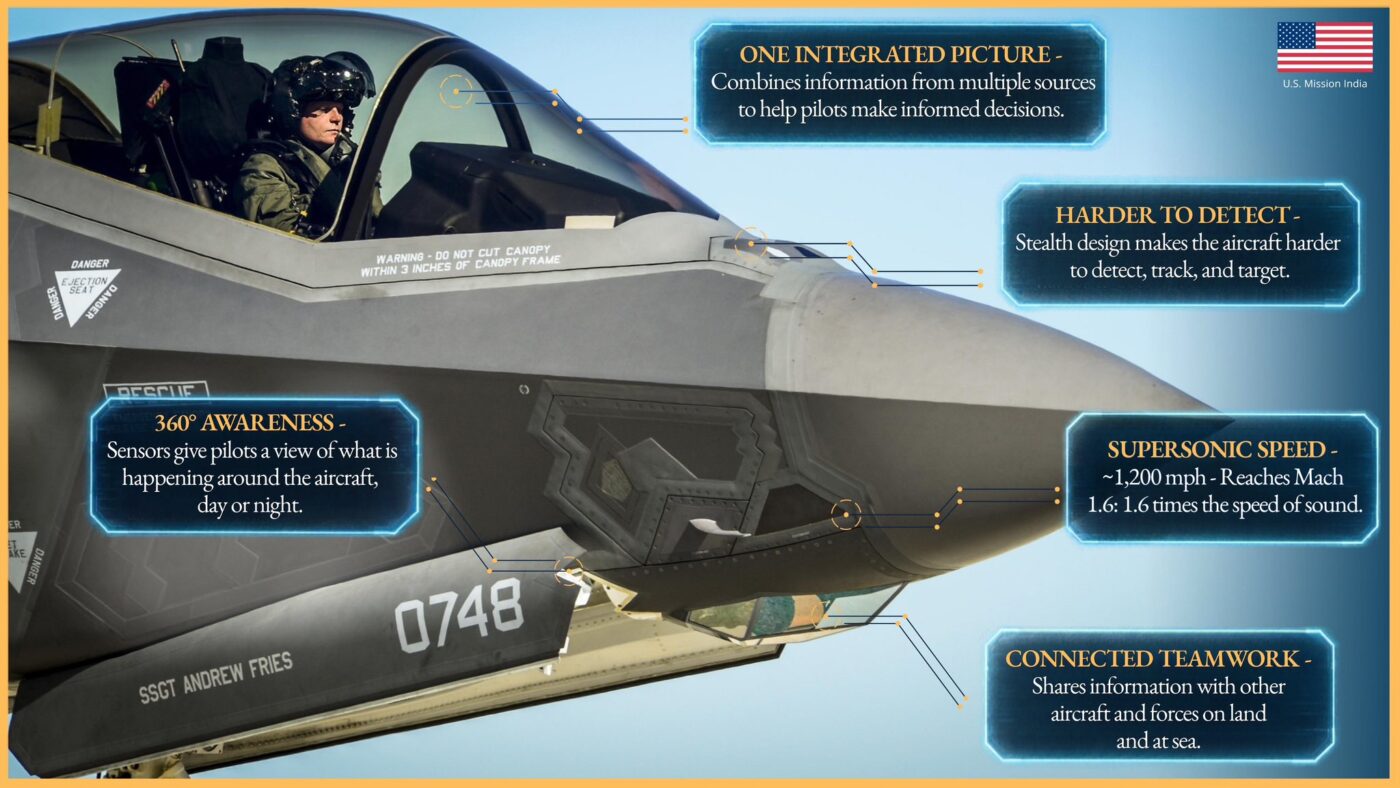
The @usairforce F-35A Lightning IIs are making their exercise debut in India at Tarang Shakti.
Combining stealth, advanced sensors, and information-sharing capabilities, the F-35s bring new opportunities to train with the Indian Air Force and other partners, strengthening… pic.twitter.com/wGfT6OxtAc
— U.S. Embassy India (@USAndIndia) September 29, 2026
The exercise comes more than a year after US President Donald Trump offered the F-35 to India during a meeting with Indian Prime Minister Narendra Modi in February 2025. So, while the deployment is meant to provide the IAF practical exposure to the aircraft’s operations and sensor integration in a multinational setting, it has inevitably sparked questions about whether the US is signaling its intent to sell the fighter.
F-35 for India?
“Starting this year, we will be increasing military sales to India by many billions of dollars. We are also paving the way to ultimately provide India with the F-35 stealth fighters,” Trump told reporters in February 2025.
Vice President J.D. Vance reiterated the offer during his visit to India in April 2025, saying, “We, of course, want to collaborate more. We want to work together more. And we want your nation to buy more of our military equipment, which we believe is the best in class. American fifth-generation F-35s, for example, would give the Indian Air Force the ability to defend your airspace and protect your people like never before.”
These pitches took many by surprise, but there was a catch: they were merely verbal pitches, not official offers accompanied by formal discussions.
So, Air Chief Marshal AP Singh, chief of the Indian Air Force, ultimately told reporters that India was not considering the F-35 option, adding that it had not received a formal offer. A fervent supporter of augmenting Indian air power, the IAF top boss emphasized that purchasing a fighter jet was not like “buying a washing machine or refrigerator,” implying that the appropriate process must be followed. “We haven’t examined it [F-35].”
Later that year, the Minister of State for External Affairs, Kirti Vardhan Singh, told Parliament that it had held no formal discussions with the US about acquiring F-35 fighter jets.
However, more than a year later, the deployment of the F-35s for Tarang Shakti gives the impression that the exercise may be an attempt by Washington to keep the door open or provide useful exposure that could entice the Indian Air Force (IAF).
Meanwhile, the Russian envoy to India praised the F-35 fighter jet in a rare move while arguing that it was not suitable for India.
Speaking at the NDTV Defense Forum 2026, Russian Ambassador to India Denis Alipov said, ”The US is welcome to promote its product. It’s a good aircraft, no doubt about that. But way too expensive. If India goes for that, well, that would be India’s sovereign decision. But we are offering a much better deal. Next year we are going to see hopefully many firsts at the Bengaluru air show.”
It appears the Russians might be smelling the US offer.
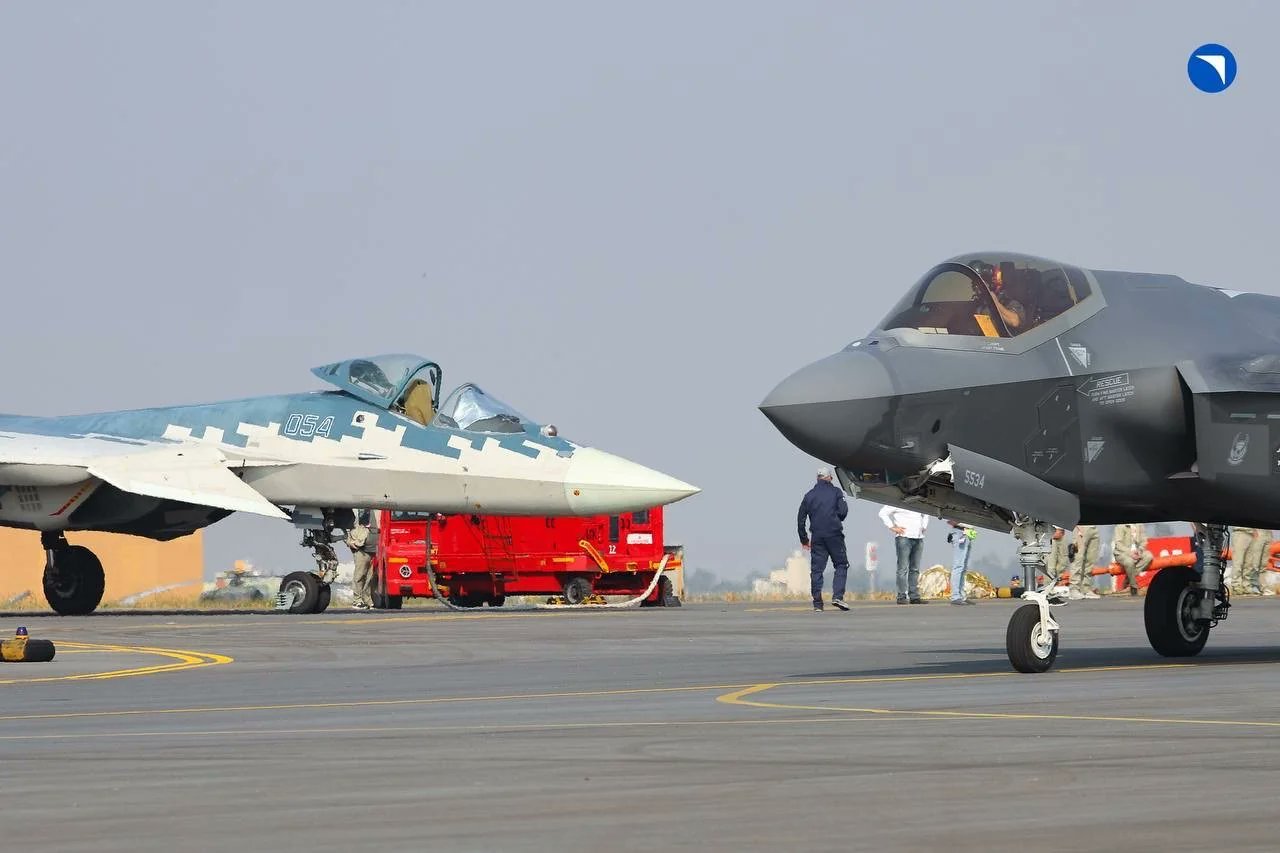
Russia has also been aggressively pursuing to sell India its fifth-generation Su-57, which Moscow positions as a competitor to the F-35.
It has offered New Delhi a host of options, including an off-the-shelf purchase of Su-57 fighters, full licensed production in India, technology transfer, a “two-seat variant,” and help with India’s own fifth-generation aircraft, the Advanced Medium Combat Aircraft (AMCA).
"Good Product But…": Russian Envoy Compares American F-35 With Su-57 Fighter Jethttps://t.co/vUTjeKPq63 pic.twitter.com/4e9n8ufmGx
— NDTV (@ndtv) September 27, 2026
IAF veteran and commentator, Air Marshal Anil Chopra (retd), told the EurAsian Times, “IAF has trained alongside the F-35s in the past, such as in the Pitch Black exercise. The deployment is likely meant to test the waters by enticing the IAF, and probably to create conjecture, considering that no official offer was ever made. They could also be creating a deliberate distraction for India, particularly since the Russians have sustained their Su-57 campaign and expanded the scope of the initial offer to make it more and more appealing.”
“As for the cost factor mentioned by the Russian envoy, everything we buy is expensive. The Su-57 may be cheaper than the F-35 initially when looking at per-unit price, but it wouldn’t be cheap in the long term,” Chopra added.
That said, since both Su-57 and F-35 offers were made to India around the same time, the two jets have been viewed as competitors in the context of India’s acquisition of a fifth-generation fighter to augment its airpower.
As Air Marshal Chopra added: India may need a fifth-gen fighter as a stopgap solution till the AMCA arrives. If the US makes an enticing offer and meets India’s core requirements, American jets offered to the IAF are “quite possible”, but India should best avoid letting the USA get into its fighter aircraft ecosystem.
F-35 vs Su-57 Showdown?
Although India is developing its own fifth-generation stealth aircraft, the AMCA, it is unlikely to be delivered to the IAF before the mid-2030s. Defense Secretary R.K. Singh recently said the first flight is targeted for September 2028, but the aircraft may take time to become operationally available to the IAF.
This means waiting for the AMCA would leave India with a glaring capability gap vis-à-vis adversaries China and Pakistan. China already operates two different fifth-generation stealth fighters: the J-20 and J-35A, and is currently testing two sixth-generation fighter prototypes. Meanwhile, Beijing could export its 5th-gen J-35A to Pakistan.
However, Air Marshal Chopra had earlier told the EurAsian Times that the decision not to show any interest in the Su-57 and the rhetoric about focusing on AMCA is meant to keep American ire and sanctions at bay.
For now, India’s path to bolstering its airpower includes accelerating Tejas production, advancing work on AMCA, and signing a deal for 114 Rafale fighters with France.
Observers have noted that India’s sustained disinterest in buying the F-35, arguably the best fifth-generation stealth fighter on the market, stemmed mainly from American unreliability, including painful delays in delivering F404-IN20 turbofan engines for Tejas Mk-1A jets.
So far, the US has not been able to break into the Indian fighter jet ecosystem, and has pitched multiple warplanes to the IAF, including F-15EX, F-21 (modified F-16), and F/A-18 Super Hornets. However, none of them appears to have lured the Indians. Can the F-35 do? Only time will tell.
Indians are reportedly also concerned about operational costs linked to the F-35, anxiety over introducing a complex Western platform to its fleet, Washington’s unwillingness to transfer the technology and allow local manufacturing, and potential operational restrictions on F-35 use.
Skeptics have noted that the sale may never go through, given that India operates the Russian S-400 air defense system and has integrated it into its layered air defense network.
Earlier, the US expelled Turkey from the F-35 consortium for buying the S-400 and has not yet approved the F-35 sale to it, despite Ankara’s assurances that it would never activate the system.
Meanwhile, India is also aggressively evaluating the French 6th-gen FCAS program.
- Contact the author at sakshi.tiwari13 (at) outlook.com
- Follow EurAsian Times on Google News