Months after walking away from the Future Combat Air System (FCAS) project, Germany is quietly testing the waters of a rival alliance led by Britain, Japan and Italy.
Germany has held “exploratory talks” about joining the Global Combat Air Program (GCAP) as it charts its future after the FCAS collapse.
The confirmation came after Politico accessed internal German government documents that revealed the United Kingdom’s national armaments director, who oversees defense procurement, sought German participation in the next-generation fighter program. The document noted that London wants to discuss the terms of potential cooperation, such as Germany’s military capability requirements and industrial “workshare.”
Notably, the German defense ministry told Politico it held preliminary discussions on GCAP’s fundamental requirements and program substance, without disclosing whether the United Kingdom had officially offered Germany any specific participant status.
The development comes months after the Friedrich Merz government pulled the plug on the FCAS program it was pursuing with France and Spain. The program had remained stalled amid unresolved disputes between Airbus (representing Germany and Spain) and France’s Dassault Aviation over work-sharing, design philosophy, and supplier selection.
After the program ended, an Airbus-led consortium of defense companies known as “Team Gen 6” filed a position paper on a sixth-generation fighter project with the German government, signaling an industry drive to influence the process.
Over a month after Germany abandoned the FCAS, Airbus Defense and Space said at the ongoing Farnborough Air Show in the UK that it was open to joining forces with Britain, Italy and Japan if it had enough control over the program and work share.
“What we’re ready to do is to join something or to build something where we have a significant portion of the work and the leadership. That’s currently being explored,” head of Airbus’s defense division in Munich, Michael Schoellhorn said at the time.
GCAP has been on Merz’s radar since before it walked out of the FCAS in June 2026, as the EurAsian Times had previously reported.
During a visit to Italy in February 2026, Merz raised the prospect of his country joining the GCAP and received a favorable response from Italian Prime Minister Giorgia Meloni.
While Germany is actively looking for partnerships it could forge for a sixth-generation fighter, France appears more undecided for now.
France and its aerospace giant Dassault could go solo with the FCAS, repeating a historical pattern seen in its development of the Rafale. In fact, French officials have repeatedly said France is currently the only country in Europe with the full industrial ecosystem to design and build a fighter completely independently.
In July this year, Dassault CEO Eric Trappier said a next-generation combat jet could be developed solely in France or in cooperation with other partners, but he did not say which countries could be invited to the effort, if at all.
Meanwhile, India has officially initiated efforts to join the FCAS program. “The Ministry of Defence has initiated efforts in a concerted manner to co-join the 6th Generation Fighter Aircraft Development Programme viz. Future Combat Air System (FCAS) spearheaded by the French Government,” the defense ministry said in its report to the Parliamentary Standing Committee on Defense.
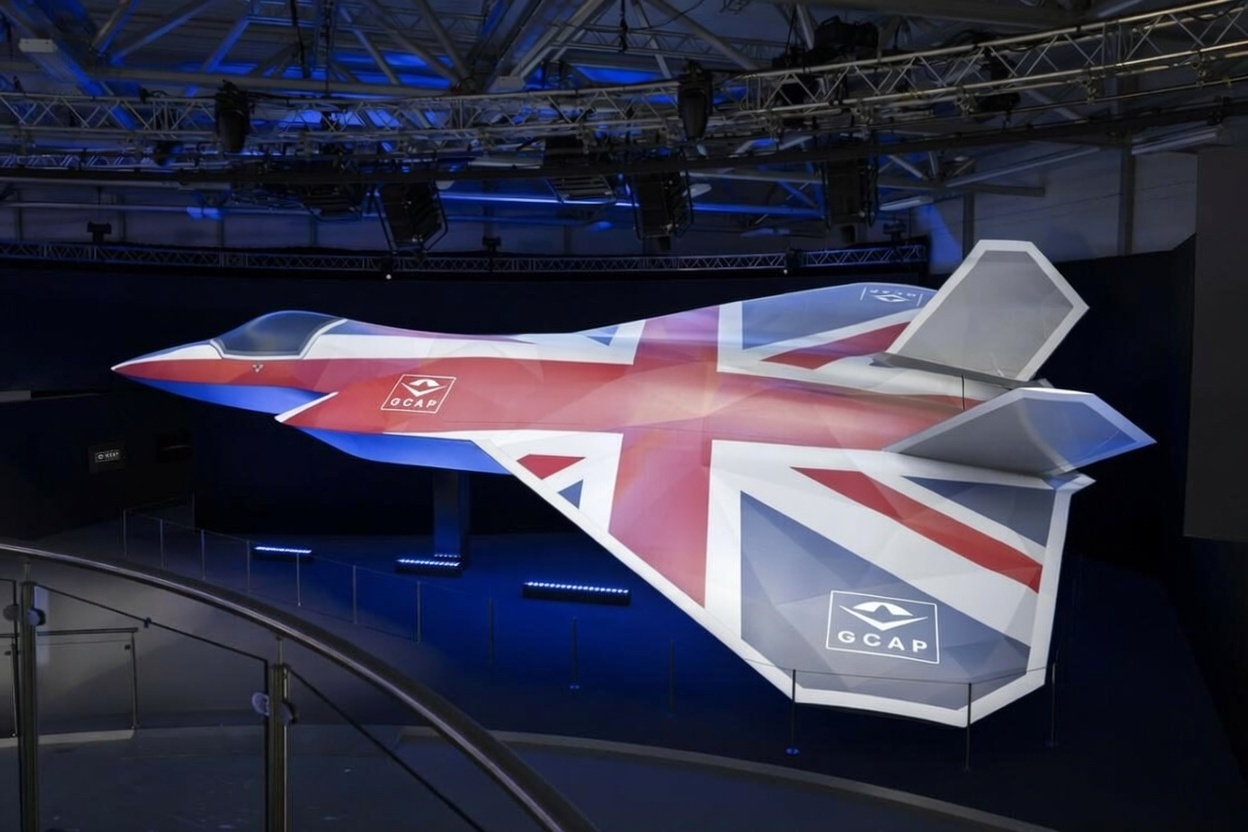
Germany’s GCAP Decision: Not So Easy?
GCAP is largely on track after it received a fresh impetus last month, with London committing £8.6 billion ($11.7) to the program in the Defense Investment Plan (DIP) earlier this year. GCAP’s industrial joint venture to design and develop the next-generation fighter, Edgewing, is led by Leonardo (Italy), Mitsubishi Heavy Industries (Japan), and BAE (the UK).
The group formally admitted Canada as an observer to the program in July this year, as the EurAsian Times previously reported. Following that, Leonardo CEO Lorenzo Mariani said at Farnborough that a country willing to join the GCAP could do so before the end of this year, with a final deadline of another year—signaling an appetite for expansion.
Although the UK and Italy have openly expressed their willingness to welcome more partners into the GCAP, Japan may remain Germany’s only hurdle if it decides to join the trilateral sixth-generation grouping.
Until now, Tokyo has remained reluctant to open the group to more members, citing concerns about delays and an urgent need for the Japanese Air Self-Defense Forces to replace the F-2 with a next-generation aircraft. It earlier opposed Saudi Arabia’s entry into the GCAP despite the resources that the cash-rich country could potentially bring.
Because of “where GCAP partners are in terms of the program at the moment, what they don’t want to do is to start to have to renegotiate stuff, introducing somebody else at this point and then slow the program down,” Douglas Barrie, a senior fellow for military aerospace at the International Institute for Strategic Studies (IISS), told Breaking Defense.
Even if Japan allows Germany entry into the GCAP on the insistence of the UK and Italy, new challenges could arise over the aircraft’s design philosophy. For one, the GCAP is being built around a maritime scenario, whereas Berlin would want an aircraft suited to its own geography and continental use.
There is already a small discrepancy in the GCAP group’s priorities: Japan wants to simply develop a new fighter by the mid-2030s to replace the F-2, while the UK and Italy are reportedly more interested in GCAP developing a cutting-edge “system of systems,” a fighter that works with a swarm of drones under a less stringent timeframe. Admitting a new member could further complicate matters internally and likely cause delays.
Another major challenge for Berlin could be the distribution of work share, which was unarguably the main bone of contention within the FCAS and the last nail in its coffin.
The three Industry partners are already set in their ways, having established the joint venture, divided responsibilities, and set program structures via Edgewing and GIGO (GCAP International Government Organization). At this point, bringing Germany into the GCAP could risk undermining existing partners’ interests and reopening delicate talks on industrial participation, production shares, and intellectual property.
If the terms are renegotiated, Germany may be offered a junior or subordinate role, with limited say over design, architecture, and key decisions—something that may not be acceptable to Airbus, as indicated earlier this year.
In addition to these challenges, Germany views the UK’s BAE Systems with skepticism, Politico stated, citing the internal German assessment.
The document reportedly highlights what it calls a “bad experience” with the business during Eurofighter development and says it is reasonable to expect BAE will control the new initiative in a manner incompatible with collaboration “on an equal footing.”
It is pertinent to note that Italy’s defense minister claimed in January this year that the UK was not doing enough to share its cutting-edge technology with its partners, calling it “madness,” months after he said in April 2025 that the UK needed to bring down the “barriers of selfishness.
Besides GCAP, Germany is considering an alternative partnership with Sweden and Spain. In fact, the internal document emphasizes that the three nations would start from a more comparable position than Germany would, because their military requirements are closely linked, and recommends exploring that option, as noted by Politico.
Notably, Michael Schoellhorn expressed his excitement about collaborating with Sweden and Saab on the next-generation fighter in March 2026 during an exclusive interview with the Swedish business newspaper Dagens Industri on the fringes of the Airbus Defense & Space Summit. This means that Airbus has been eyeing Saab as a potential partner.
For now, both options remain on the table, and Germany has yet to decide whether to join the GCAP to get a sixth-generation fighter by 2035 or pursue a partnership that starts on equal footing and allows Airbus to take an equal, if not larger, role.
- Contact the author at sakshi.tiwari13 (at) outlook.com
- Follow EurAsian Times on Google News