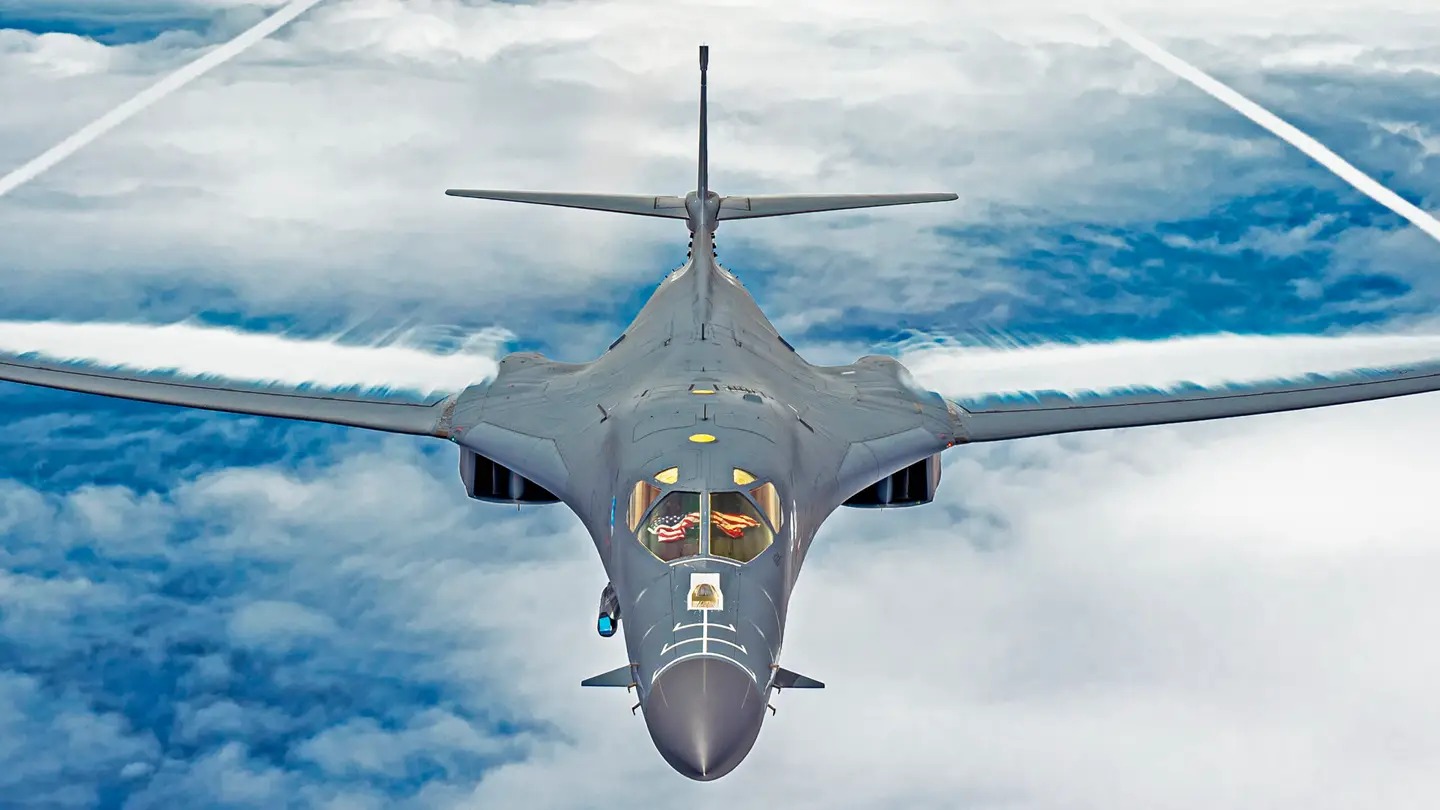
The US has pulled out all its B-1B Lancer bombers from RAF Fairford in the United Kingdom, a key forward operating location used for long-range missions against Iran.
The abrupt move appears to be an attempt by the US to safeguard its long-range strategic bombers from the fate suffered by other military aircraft destroyed by Iranian attacks in the Middle East.
The B-1B bombers arrived at RAF Fairford in March 2026 as part of Operation Epic Fury. Although the US and Iran agreed to a ceasefire in April 2026, the B-1Bs remained stationed at Fairford amid sustained hostilities.
However, the US hastily withdrew all 12 B-1B Lancers from the base on October 4, 2026, amid renewed threats of an Iran-backed plot against the facility. The Pentagon confirmed the bombers have returned to their home bases.
“While operational security precluded us from confirming the movement of our assets and forces in real-time, we can acknowledge now that all US bombers that were deployed to RAF Fairford have re-deployed to their home stations in the United States,” a Pentagon spokesman reportedly said in a statement.
The pullout was extremely unusual since such actions are rarely taken so swiftly from an allied air base thousands of kilometers away from the combat zone. In fact, some of the bombers and their flight crews left RAF Fairford even as aerial refueling aircraft were still being rushed to support the missions to the United States, the New York Times reported.
These claims point towards an uncanny sense of urgency, although the US military has not officially cited a reason for this rushed exodus of bombers from RAF Fairford.
Nonetheless, the move comes days after five British men in their early 20s were arrested near RAF Fairford in Gloucestershire after reports of three suspicious vans approaching the base hosting the US bombers.
They were held on suspicion of Explosives Act offenses and preparing a terrorist act, but were released on police bail with strict conditions the next day. However, a sixth man—identified as a 25-year-old dual UK-Iranian national—was later arrested in London on suspicion of preparing terrorist acts. He was later released on bail.
An investigation into what was believed to be a sabotage operation is now underway. However, both the United States and the United Kingdom have since hinted that Iran has links to the potential attack or sabotage operation.
US President Donald Trump said the suspects had been looking to do “big damage” whereas Secretary of State Marco Rubio said it involved the “hands of a foreign actor,” without directly naming Tehran. Meanwhile, British Prime Minister Andy Burnham said there are “strong indications” that Iran played a role in the security incident at a crucial base that hosts US assets and troops.
Iran dismissed the allegations and has denied any link to the suspected security incident.
“PM Burnham says the UK Government ‘can confirm our belief that we believe Iran to have played a part’ in the RAF Fairford incident,” Iran’s Foreign Minister Abbas Araghchi wrote on X last week. “I can confirm Iran’s belief that releasing supposed terrorists working for foreign states really says it all. You’re barking up the wrong tree.”
Iranian Threats Triggered A Pullout?
The US military has not given any information on the urgent threat, whether it was an imminent strike or a sabotage- or terror-related incident. However, the threats issued by the Islamic Republic and its forces in the past may have influenced the decision to withdraw the bombers.
As the hostilities resumed between the US and Iran in July this year, the Islamic Revolutionary Guards Corps (IRGC) claimed that the US was launching bomber sorties from RAF Fairford to attack Iranian cities, adding that any base used to carry out such strikes would be a legitimate target.
“The American aggressor army, which used to launch cruise missiles from its vessels in the Indian Ocean in its aggression after the official resumption of the war, with the end of the missile reserves of the aforementioned vessels, yesterday switched to using B1 planes flying from Fairford Air Base, England,” Tasnim News Agency quoted the IRGC as saying on July 23. “As the officials of the Ministry of Foreign Affairs also stated, any base that is used to invade Iran’s territory is our legitimate goal.”
In March 2026, Araghchi told the UK Foreign Secretary, Yvette Cooper, that Iran views the UK’s decision to let the US use British bases as “participation in aggression.” Later, it fired two mid-range ballistic missiles at Diego Garcia, the Indian Ocean military outpost jointly operated by the US and the UK. Although none of the missiles reached their designated targets, the attack was launched after the UK approved the US use of its bases as launchpads for attacks on Iranian sites targeting the Strait of Hormuz.

RAF Fairford, for one, has been a key hub for US heavy bombers—including the B-1B and the B-52—conducting missions against Iranian missile infrastructure. Although Washington could fly long-range bombers to attack Iran from its own soil, using RAF Fairford has been significant because it enables long-range strikes and reduces flight times to Iranian targets by over 50% compared to US-based launches, allowing higher sortie rates.
According to media reports, a proxy sabotage or terror operation by Iran on RAF Fairford remains a major possibility. In the past, the United Kingdom has accused Iran of conducting cyberattacks and employing criminal networks and proxies to strike at its critics and dissidents on British soil for years.
Apart from a terror plot, it is hard to say whether Iran has the capability to strike RAF Fairford, or any other base in the United Kingdom. Iran has long claimed a self-imposed limit of about 2,000 kilometers for its ballistic missiles. However, its March 2026 attempted strike on the US-UK base at Diego Garcia demonstrated a much longer reach, and analysts have said it could potentially strike parts of the United Kingdom.
The US currently has about 45 operational B-1B bombers in its inventory, and many are aging airframes with very low readiness rates.
Therefore, losing even a single bomber would remove a scarce, high-payload platform that cannot be rapidly replaced, particularly while the B-21 Raider remains in the early stages of introduction. Additionally, a successful Iranian strike on a high-value asset at a known forward location would also carry symbolic weight, demonstrating an ability to impose costs far from the primary theater.
Moreover, the US military has already faced a trial by fire in the Middle East during the course of this war and lost several military aircraft, many of them on the ground, a fate that it may not wish to befall its highly potent but limited bomber fleet.
On March 27, 2026, for instance, an Iranian drone struck an E-3 Sentry Airborne Warning and Control System (AWACS) aircraft during a strike at Prince Sultan Air Base in Saudi Arabia. Photos published after the strike showed that the rear fuselage of E-3 #81-0005 was completely burned out and destroyed, with debris scattered around the aircraft.
On March 2, CENTCOM reported that three F-15Es were shot down and destroyed by friendly fire over Kuwait; all six aircrew ejected safely and were recovered. The fourth F-15E was shot down by Iran during combat operations over Iran on April 5; both aircrew were safely recovered during separate search-and-rescue operations.
On March 14, media reports stated that five additional KC-135s were damaged on the ground at Prince Sultan Air Base in Saudi Arabia during an Iranian strike.
Later, Iran managed to damage an F-35A fighter jet over Iranian airspace. A recent Congressional Budget Office (CBO) report stated that replacing/repairing the aircraft would cost $120 million, without saying whether it would be written off or repaired.
On April 5, the US forces were forced to destroy two MC-130J Commando II special operations aircraft inside Iran after the planes became stuck and immobilized while supporting combat search-and-rescue efforts for a downed F-15E aircrew. Meanwhile, the US lost an HH-60W Jolly Green II combat search-and-rescue helicopter after it took damage from small-arms fire during the same operation.
In addition to these manned aircraft, the US lost several unmanned aerial vehicles, including MQ-9 Reapers and MQ-1C Tritons. The US has now lost more than 30 Reapers in the conflict with Iran, several destroyed on the ground by Iran across Middle East bases.
If Washington is preparing another round of strikes on Iran, and Tehran answers as it did against US bases in the Middle East, then RAF Fairford could be in the firing line. The IRGC has already called the base a legitimate target. The Pentagon has not said the B-1Bs left because of that threat. Moving all 12 in a day, while tankers were still being scrambled, suggests commanders were not willing to leave a scarce bomber fleet on a base they could no longer treat as safe.
- Contact the author at sakshi.tiwari13 (at) outlook.com
- Follow EurAsian Times on Google News