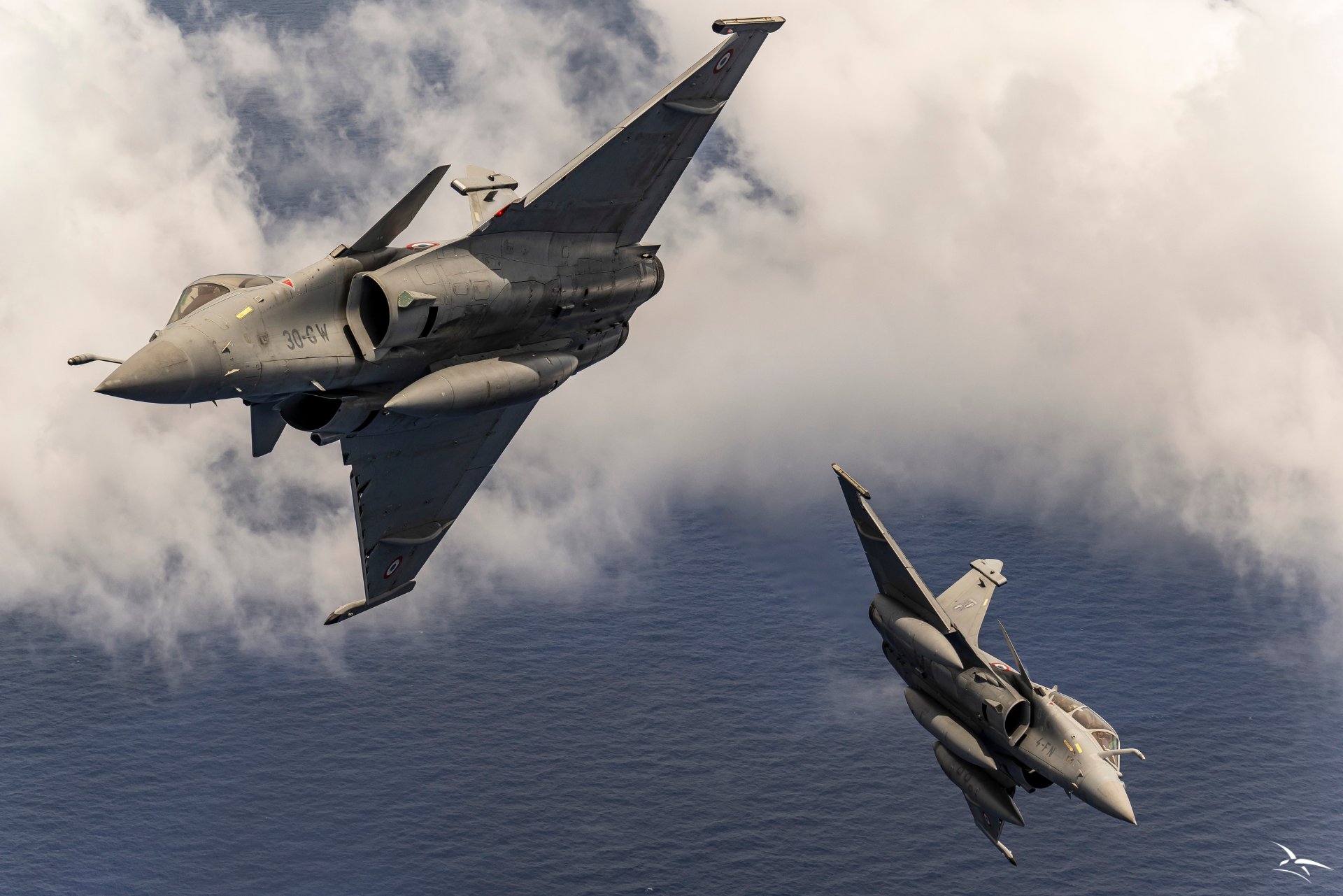
After India, the French Rafale and Russian Su-57 are set for another epic battle as Vietnam looks to modernize its legacy air force amid China’s rapid modernization and increasing friction with Beijing over maritime claims in the South China Sea.
While Vietnam has been interested in and exploring the Su-57 at least since 2018, discussions with France over procuring two to three squadrons of Dassault Aviation’s Rafale fighter jets have been ongoing since late last year.
Earlier this year, French media reported that discussions between Vietnam and France over procuring Rafale jets were in advanced stages. Notably, if Vietnam signs a deal for Rafale, this will be a historic opportunity for France to enter the Vietnamese defense market, which has historically been dependent on Russian weapons systems.
The Vietnamese Air Force is almost exclusively built around legacy Soviet and Russian combat jets, including the Su-22, Su-27, and Su-30MK2.
This will be another big victory for the French fighter jet, after it won a historic deal for 42 Rafales in neighboring Indonesia, another Southeast Asian country that depended on Russian combat jets but picked the Rafale to diversify its weapons supply chains and cultivate stronger defense ties with Western countries.
According to the latest reports, Vietnamese pilots have been granted the rare opportunity to test-fly the Dassault Rafale, strongly suggesting that discussions with France have entered a serious technical and operational phase.
“Vietnam could be one of the next Rafale customers. Currently equipped with Russian Sukhoi jets, the Vietnamese military is looking to diversify its aircraft suppliers. A Vietnamese pilot has already had the opportunity to fly the Dassault fighter jet, albeit discreetly,” a French media platform L’Express reported.
This is significant, as such access for foreign pilots to test-fly a combat aircraft is typically reserved for customers in mature evaluation stages rather than for preliminary diplomatic defense engagements.
Notably, France has been trying to enter the Vietnamese combat aviation market for some years now.
In 2018, as part of an Air Force deployment to the Indo-Pacific, two Rafales made a stopover in Vietnam.
Then, in 2022, neighboring Indonesia signed a contract for 42 Dassault Rafale fighter jets for nearly US$8.1 billion. This made Indonesia the second Indo-Pacific operator of the Rafale after India. Deliveries began in early 2026.
Open-source reporting suggests a possible acquisition scale of approximately two squadrons, or roughly 24 to 40 aircraft, with an estimated program value of US$4 billion to US$8 billion.
If discussions conclude by the end of this year, a deal could be signed early next year, with initial deliveries beginning by 2030.
As of early 2026, nearly 220 Rafale fighter jets are on order. Of them, 45 are for France, and 175 are for export customers, including India, Indonesia, Egypt, Greece, Serbia, and the UAE.
In 2025, Dassault Aviation built 26 Rafales, its highest total ever. Of the 26 Rafales, 15 were for export customers and 11 for the French armed forces. The target for 2026 is set for 28 Rafales.
Therefore, given the heavy backlog, even if a deal is signed in 2026, Vietnam could not get its Rafales before 2030.
This is another concern for Hanoi, as many of its legacy aircraft are near retirement age.
Vietnam has approximately 70-72 active combat jets, almost entirely of Russian/Soviet origin. It has nearly 25-30 Su-22M4 ground-attack aircraft.
Further, around 10 Su-27 fighters, including some trainers.
However, the backbone of Vietnam’s current combat jet fleet is the Su-30MK2 multirole heavy fighter. Hanoi has around 35 Su-30 jets.
Both the Su-22M4 and Su-27 fighter jets are nearing retirement and are no longer suitable for modern, networked warfare.
They are also highly vulnerable in the modern battlespace, where fighter jets must navigate multiple ground-based air defense systems and AWACS.
Therefore, Vietnam is actively modernizing and overhauling its fleet.
The need for a modern fighter jet fleet is even more urgent given that China, one of Hanoi’s primary adversaries, has rapidly modernized its PLA Air Force in recent years.
China already has over 300 J-20 fifth-generation fighter jets and is set to have nearly 1,000 by 2030.
It has also operationalized a second fifth-generation fighter jet, the J-35A.
At the same time, Beijing has hundreds of other modern fighter jets, such as J-16, J-11, J-10C, J-15, as well as Russian Su-30MK2 and Su-35S.
Two to three squadrons of Rafale jets will give Hanoi much more credible deterrence and air-denial capabilities.
Further, Rafale is a multi-role fighter jet capable of precision strikes, ground-attack, and maritime operations, including anti-ship strikes, as well as air superiority operations, including air defense, interception, and air policing.
Trump’s Fury Revives Rio Treaty: Will the U.S. Betray UK & Back Argentina Over Falkland Islands?
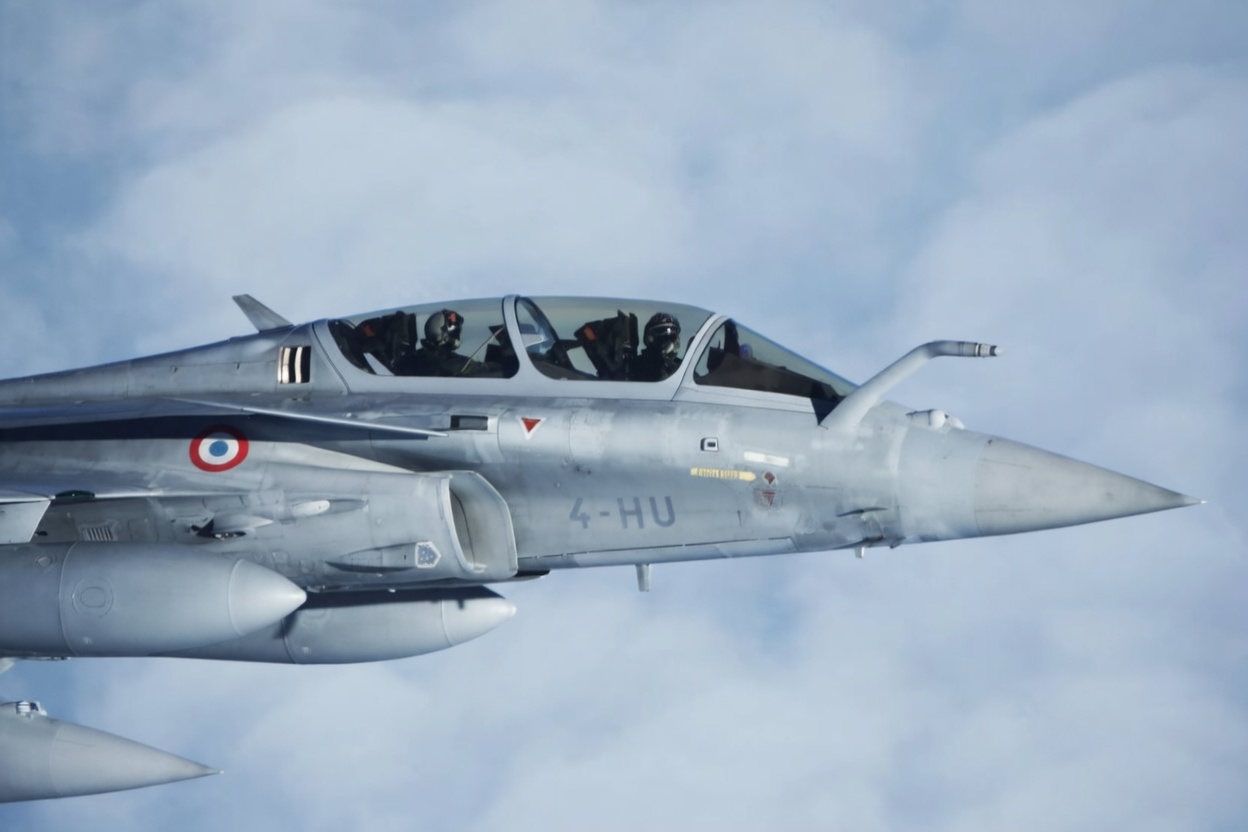
Its SPECTRA EW suite offers credible protection against incoming missile threats by providing long-range detection, identification, and precise localization of radar, infrared, and laser threats; radar warning; missile approach warning; laser warning; phased-array jamming; decoy dispensers; and automatic countermeasures.
Its RBE2 AESA radar improves detection and tracking performance against complex airborne threats.
Furthermore, Rafale’s impressive ferry range of 3,700 km makes it suitable for long-range operations in the South China Sea. Its payload capacity, exceeding nine tons, is an added advantage.
At the same time, Vietnam would like to diversify its weapons supply chains and build formidable defense ties with Western countries, rather than being entirely dependent on Russia for its arms supplies.
However, integrating the Rafale into Vietnam’s fleet would pose major challenges. It would require building entirely new maintenance infrastructure, training programs, weapons procurement systems, and adapted operational doctrines, since Western aircraft and systems are largely incompatible with Vietnam’s existing Russian munitions and equipment.
These factors will substantially increase the overall life-cycle costs of the Rafale.
And, for this reason, Russia’s latest fifth-generation fighter jet, the Su-57, is still a formidable challenger to Rafale. Incidentally, Vietnam has been interested in the Su-57 since 2018.
Rafale vs Su-57
The aircraft has also been combat-tested in the Ukraine War, where Moscow has used it for stand-off, long-range strikes.
At the same time, the Kremlin’s reluctance to deploy the Su-57 to penetrate Ukrainian airspace, which is well defended by Russian and Western air defenses, suggests Russia is not very confident in the fighter jet’s claimed stealth capabilities.
According to reports, while the Su-57 has impressive frontal stealth capabilities, it is not very stealthy from the rear and against ground-based air defense systems.
Notably, the Su-57 has secured its first export customer, Algeria, which began receiving deliveries of the fighter jet early this year.
Nonetheless, Russia’s ability to deliver these jets on time amid the ongoing Ukraine War, the demands from domestic armed forces, and persistent Western sanctions remain doubtful.
Compatibility with Vietnam’s existing Russian-origin infrastructure — such as its Su-30 fleet and S-300PMU-2 air defense systems — would greatly ease integration challenges compared to a full switch to Western aircraft. It would also preserve the maintenance expertise the Air Force has built up over many decades.
This level of continuity would reduce training and sustainment costs.
Apparently, India, another Asian country, is struggling with similar dilemmas for selecting its new aircraft.
Echoes of India’s Rafale Dilemma
India has already operationalized 36 Rafale jets and has placed an order for 26 Rafale M fighter jets for aircraft-carrier operations.
Earlier this year, India’s Defense Acquisition Council (DAC) cleared the proposal to acquire 114 Rafale fighter jets for the Indian Air Force (IAF) under the Multi-Role Fighter Aircraft (MRFA) program.
However, just when the deal seemed almost finalized, France’s reluctance to share source code, even for weapons and radar integration, has raised fresh questions about the deal.
Even as Paris plays hardball with New Delhi, Moscow has offered to share the source code, promised localized production, and assured that India can utilize its existing Su-30MKI production and repair facilities for Su-57 production.
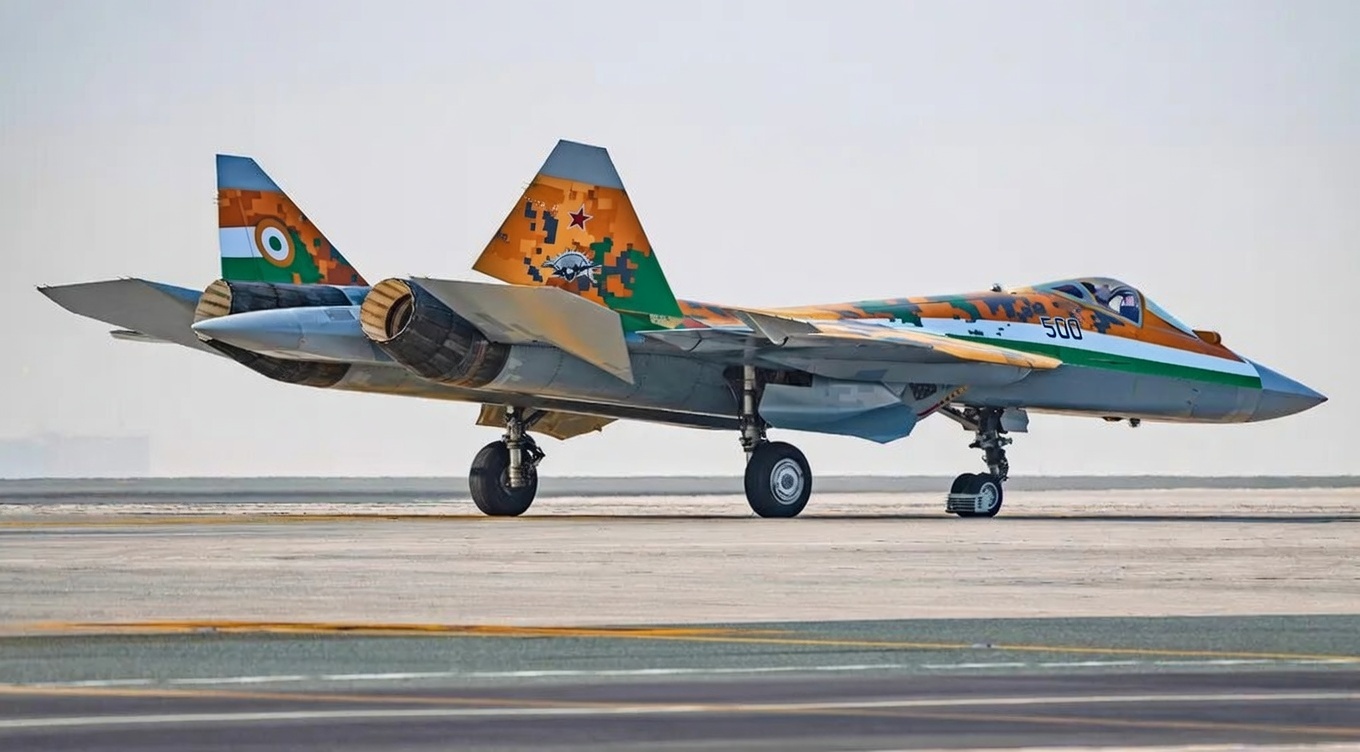
Russia is also prepared to provide technological training in areas such as fifth-generation engines, optics, AESA radar, artificial intelligence, low-signature technologies, and advanced air-to-air weapons, which could help India’s indigenous fifth-generation fighter jet program, AMCA.
However, many experts suggest that it should not be an either/or situation between Rafale and Su-57, and that both India and Vietnam can eventually opt to buy both fighter jets in limited numbers.
For instance, writing for Eurasian Times, former IAF Air Marshal, a test pilot and defense analyst, Anil Chopra, said, “India is already making the Rafale fuselage. Dassault has already announced plans to establish an MRO facility for M88 engines, which power the Rafale, in India. With large Rafale order books, France needs another production line. If India chooses the 114 Rafale, such a full production line would get set up in India—a win-win for both.”
“Meanwhile, AMCA timelines are bound to slip. India would still need an interim 5th-generation aircraft. So the best option would be to acquire 2-3 squadrons of Su-57 through outright purchase, along with the latest long-range weapons without making in India.”
“Buy Rafales to manage squadron strength… buy off-the-shelf Su-57 fifth-generation fighters to bridge the current stealth gap with China…”
Vietnam could opt for a similar strategy of buying both Rafale and Su-57 jets in limited numbers.
However, the decision of India and Vietnam is bound to redefine regional deterrence and air superiority in the Indo-Pacific theatre.
- Sumit Ahlawat has over a decade of experience in news media. He has worked with Press Trust of India, Times Now, Zee News, Economic Times, and Microsoft News. He holds a Master’s Degree in International Media and Modern History from the University of Sheffield, UK.
- THIS IS AN OPINION ARTICLE. VIEWS PERSONAL OF THE AUTHOR
- He can be reached at ahlawat.sumit85 (at) gmail.com