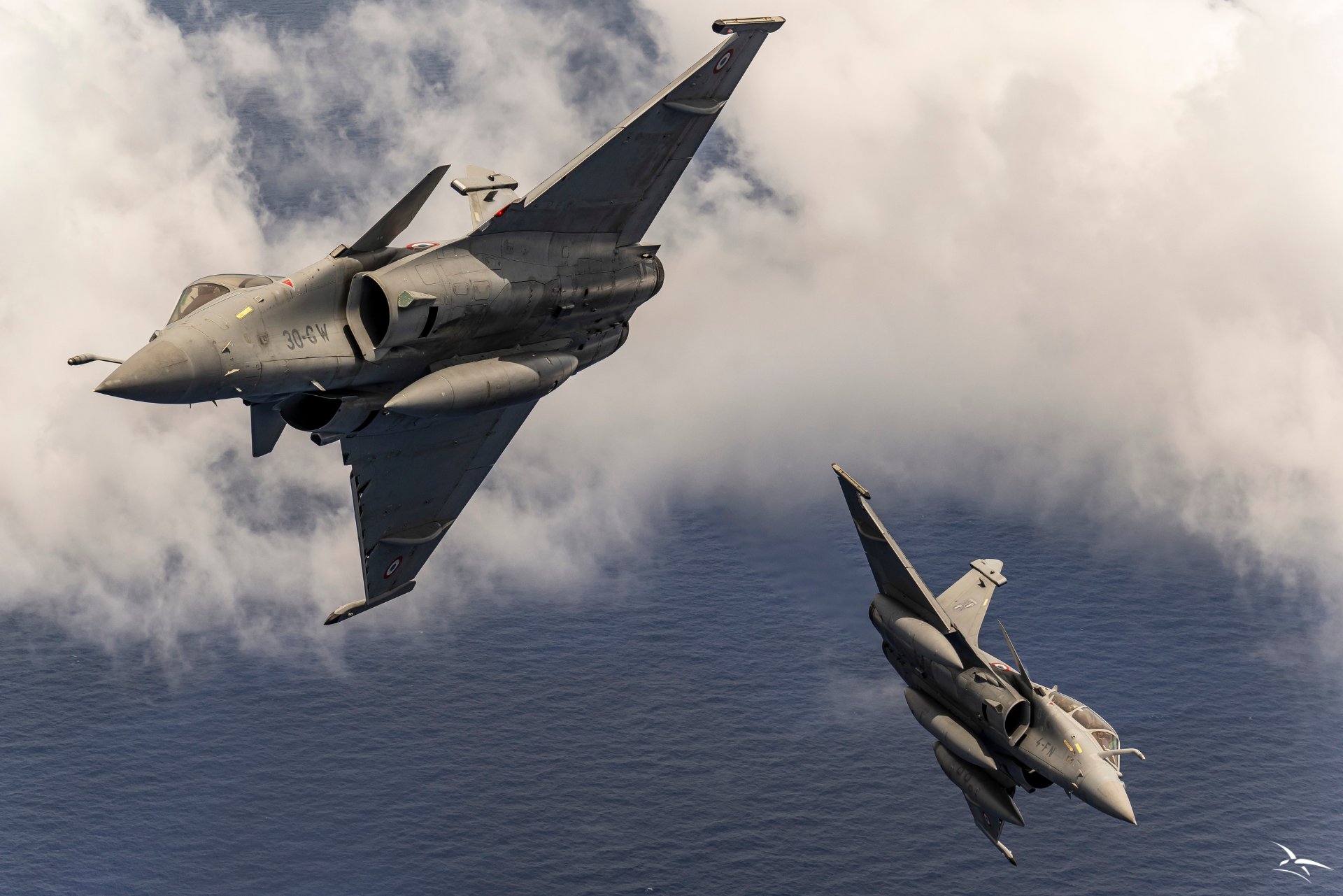
US President Donald Trump may have declared that the Iranian military has been decimated, but did reveal the extent of damage caused by Iran across West Asia during the war, according to a new report. Meanwhile, another report states that the UAE used Israeli Iron Dome to fend off attacks from Iran during the hostilities.
Citing US officials and other informed sources, NBC News reports that the extent of the destruction to American military facilities and equipment in the Persian Gulf is far greater than the Pentagon has disclosed, and may require billions of taxpayer dollars for repairs.
After the US launched “Operation Epic Fury” with devastating strikes on Iran on February 28, the Islamic Republic retaliated with strikes on Gulf countries that host strategic US military facilities or personnel, thereby transforming the conflict into a regionwide war.
Over the next five weeks, Iranian forces targeted radar and communication systems, storage warehouses, command centers, aircraft hangars, and systems used for satellite communication. Additionally, the IRGC (Islamic Revolutionary Guards Corps) destroyed several American military aircraft, radar equipment, and runways, all of which are essential for military movement and surveillance.
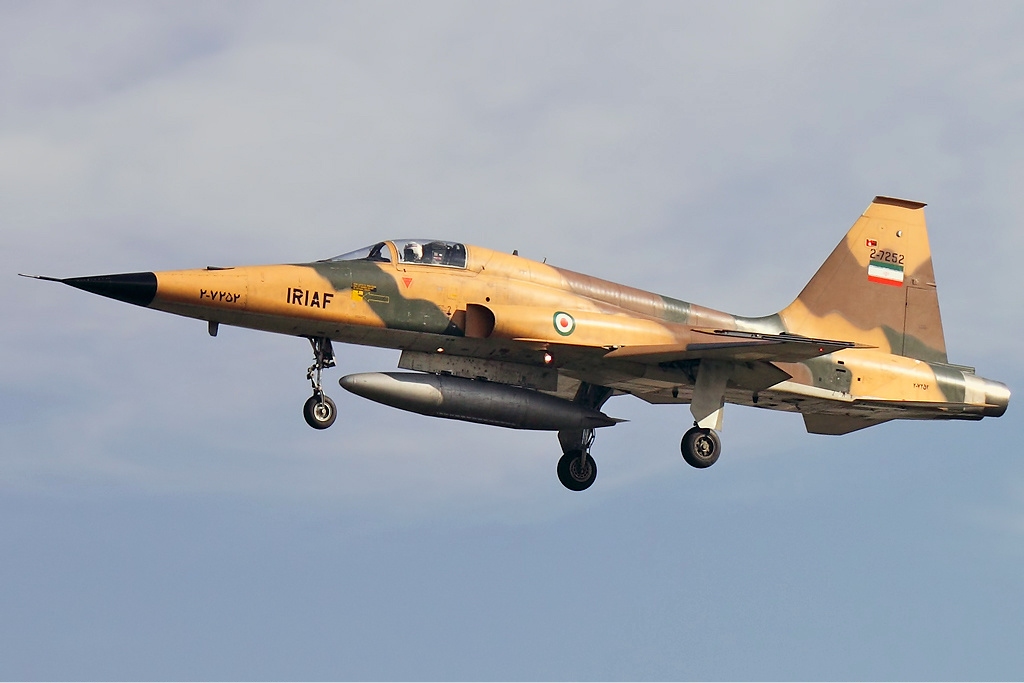
The report underlines one incident in which a legacy F-5 fighter jet managed to penetrate the US air defense shield and launched an attack on the US base Camp Buehring in Kuwait. The incident, according to the report, marked the first time a hostile fixed-wing aircraft had successfully hit an American military base in years.
Military observers and aviation enthusiasts have since referred to the unprecedented incident as the “Top Gun” moment—a niche reference to the Tom Cruise-starring Hollywood film, which featured the F-5 as an aggressor aircraft.
Iran did a TOP GUN on US
NBC confirmed that Iran has caused more damage to US military bases in the Middle East than officials first revealed. Several US bases and military equipment in Gulf countries were hit multiple times during Iranian attacks, including by an Iranian F-5… pic.twitter.com/2SsMdutMmg— MIRZA BEY™ (@AuctionMirza570) April 27, 2026
US officials told the publication that the US Navy’s headquarters building in Bahrain, which serves as the command center for its activities in the region, was seriously damaged. Other parts of the Bahraini facility were also heavily damaged but likely could be repaired, they noted.
Notably, the publication examined an unofficial assessment by the American Enterprise Institute (AEI), which revealed that several hangars and stores at Kuwait’s Ali Al Salem Air Base were hit, the runway at the massive Al-Udeid Air Base in Qatar was destroyed, and a weapons storage facility at a military post in Erbil, northern Iraq, was damaged.
The AEl estimated Iran hit about 100 targets at 11 bases in seven Gulf countries. The targets were US and host-nation bases in Qatar, the UAE, Bahrain, Jordan, Kuwait, Iraq, and Saudi Arabia.
“As part of Epic Fury, the potential future costs to rebuild American military infrastructure overseas may include repair, reconstruction, outright replacement, or even abandonment/decommissioning of locales,” Mackenzie Eaglen, a senior fellow at AEl, said. “War damage also includes estimated costs for infrastructure that is unsalvageable.”
Eaglen estimated the cost for repairing the infrastructure to be more than $5 billion. However, this is just a ballpark number that does not include the cost of damage to radar systems, weapons systems, aircraft, and other equipment, the report states. This means that the actual number would be much higher, and could potentially trigger concerns around the risk of maintaining military facilities that are within Iran’s firing range.
Satellite imagery confirms an Iranian strike damaged a key US AN/TPY-2 radar at Saudi Arabia’s Prince Sultan Air Base on March 1.
The radar — critical to the US THAAD missile defense system — shows visible charring and structural damage.
The antenna alone is valued at about… pic.twitter.com/i9qKA53Zxo
— Clash Report (@clashreport) April 2, 2026
The Iranians damaged at least two air defense systems in the region, according to the US officials, who spoke to NBC News. However, the exact type of the system was not revealed.
Notably, analysts have long highlighted the withholding of full information by the Pentagon and the US Central Command (CENTCOM) on battle damage in the region.
“The damage to US bases in the region has been underreported,” Mark Cancian, Senior Adviser, Center for Strategic and International Studies (CSIS), said in a report last month. “Although that appears to be extensive, the full amount won’t be known until more information is available.”
Meanwhile, Marc Lynch, director of the Project on Middle East Political Science at George Washington University, said, “This is the physical architecture of American primacy, and Iran has essentially rendered it useless in the span of a month,” while referring to the US facilities in the region. “We are not seeing a full and accurate reporting of the extent of damage that has been done to US bases in the region.”
🇺🇸🇧🇭 Claimed as damage at US Naval Support Activity, 5th Fleet Base in Bahrain following Iranian strikes. pic.twitter.com/hnOk93vDSk
— MAKS 26 🇺🇦👀 (@Maks_NAFO_FELLA) March 18, 2026
“My friends in the region, they’ll send me pictures of the base in Bahrain,” Lynch was quoted as saying at the time. “The bases around the region are suffering real damage, and I think it’s very unlikely that we’re ever going to go back and put our Fifth Fleet back in Bahrain. It’s too vulnerable.”
It is pertinent to highlight that the US government requested major commercial satellite imagery providers to restrict or withhold recent imagery of the Middle East, including areas with US bases hit by Iranian strikes. The reason cited at the time was “operational security” and the urgent need to stop Iran from exploiting high-resolution, near-real-time commercial satellite photos for launching strikes on US bases.
Military watchers believe that the blackout may be part of the larger picture: to prevent the extent of losses from being publicized. Nonetheless, analysts figured a way to gather data despite the restriction, as meticulously detailed on X by noted analyst Aadil Brar.
When Satellite Imagery Goes Dark: New Tool Shows Damage in Iran and the Gulf
1/9
Commercial satellite imagery over Iran and the Gulf is being deliberately restricted—just as the war escalates and Iran blackouts its internet.
That means less optical footage, fewer photos from…— Aadil Brar (@aadilbrar) April 22, 2026
Notably, some experts believe that these losses were due to the US underestimating Iran’s capabilities and its response.
“The US did not anticipate that Iran would start attacking Gulf countries. Many of their radars and large air platforms were lying in the open. These assets were thus a relatively easy target. Iranians used drones and drone swarms to hit US military assets and oil facilities,” Indian Air Force (IAF) veteran and military analyst, Air Marshal Anil Chopra (retd), wrote in a EurAsian Times article last month.
He further attributed the heavy losses to a lack of combat experience.
“While the US Air Force and Navy have been exercising regularly with GCC countries, including ‘large force engagements,’ the GCC countries have had almost no combat experience. There was an obvious lack of coordination between the US armed forces and the GCC counterparts,” he argued.
The latest NBC News report claims that some Republican legislators have privately voiced their displeasure with senior Pentagon officials for not disclosing information about the extent of the damage or an estimate of the cost of repairs. “No one knows anything. And it’s not for lack of asking,” one congressman stated. “We have been asking for weeks and not getting specifics, even as the Pentagon is asking for a record high budget.”
That said, a latest report also discloses something previously unknown: Israel supplied its cutting-edge air defense systems to the UAE to protect against the Iranian drones.
Israel Armed The UAE With Iron Dome
Israel sent an Iron Dome system and dozens of Israel Defense Forces (IDF ) troops to the United Arab Emirates during the latest hostilities with Iran, according to Axios, which cited Israeli and US officials.
According to reports, Israeli Prime Minister Benjamin Netanyahu spoke with UAE President Mohammed bin Zayed (MBZ), after which he decided to deliver an Iron Dome battery and interceptors. Sources cited by reports claim that the state-of-the-art system intercepted dozens of Iranian missiles aimed at the Gulf state.
During the conflict, Iran launched around 2,250 drones and about 560 ballistic and cruise missiles at the United Arab Emirates. While the majority of missiles and drones were shot down, some managed to sneak past the defense shield and hit a variety of military and civilian targets across the nation, causing mayhem in the country.
The transfer of Iron Dome to the UAE marked the first time Israel has ever sent an operational Iron Dome battery abroad for combat use.
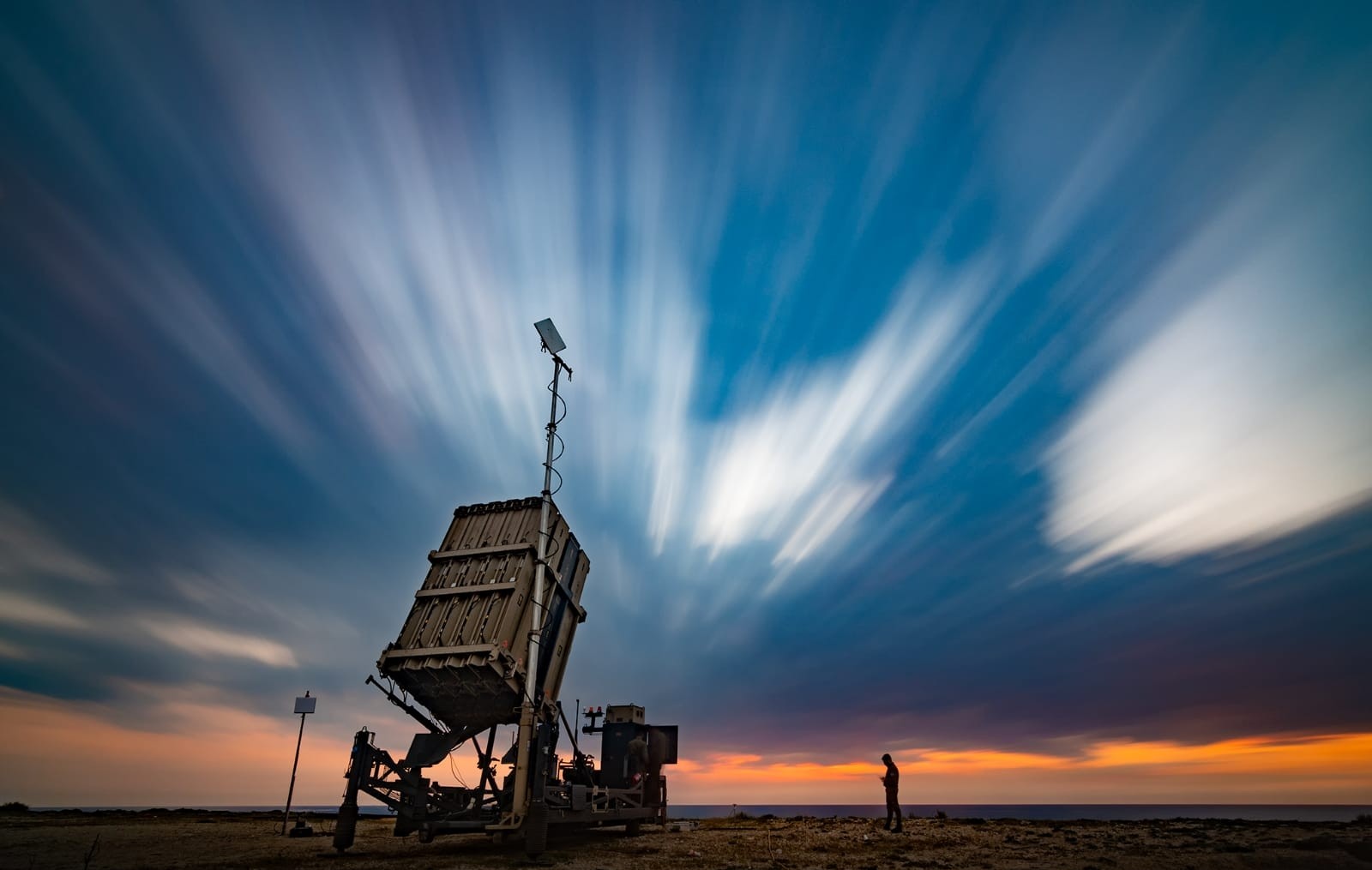
The UAE’s acquisition of the system—or its temporary deployment to fend off Iranian attacks—was not officially disclosed by the Emirati kingdom or Israel. However, it appears to build upon the strengthening of ties between the two countries since they signed the Abraham Accords of 2020.
The Iron Dome is highly effective against short-range rockets, artillery shells, and some low-flying threats, but has been reported to have leaked missiles in the past, as previously reported by the EurAsian Times.
The Iron Dome system is not designed as a primary defense against high-volume ballistic missiles or advanced cruise missiles, but it may have helped the UAE supplement its defenses during the intense Iranian salvo, especially against certain trajectories or saturation attacks. The UAE also uses the US-origin THAAD (Terminal High Altitude Air Defense) and Patriots, Israeli Barak-8, South Korean Cheongung II, and Russian Pantsir, among other systems
- Contact the author at sakshi.tiwari13 (at) outlook.com
- Follow EurAsian Times on Google News