In the last month, France’s Rafale fighter jet has suffered multiple setbacks.
First, there were reports that India could possibly reconsider its massive order for 114 Rafale fighter jets, valued at around Rs 3.25 lakh crore ($36 billion), the biggest export order for the Rafale jets in its over two-decade-long journey.
Earlier this year, the Indian Defense Acquisition Council (DAC) granted “acceptance of necessity” (AoN) for the acquisition of 114 more Rafale fighter jets, the largest single defense purchase in India’s history. For the acquisition process to commence and a contract to be signed, final approval from the Cabinet Committee on Security (CCS) is required.
However, last month, it was reported that France’s reluctance to share source code for the fighter jets, even for integrating India’s domestic weapons and radar system, is forcing New Delhi to recalibrate its options.
Similarly, earlier this month, the French newspaper La Tribune reported that the UAE has abandoned the French Rafale F5 project after encountering Paris’s reluctance to share technologies, particularly those involving optronics, i.e., technologies that detect and control light.
Notably, the UAE is not only the second-largest operator of Rafale fighter jets after France (Abu Dhabi ordered 80 Rafales in a $19.2 billion deal signed in 2011), but it was also considering financing the development of the latest Rafale F5 variant, which is anticipated to include new sensors, armaments, and a faster, more secure means of communication. The cash-rich Emirati kingdom was reportedly planning to contribute about EUR 3.5 billion of the EUR 5 billion project.
However, if the UAE withdraws from the project, Paris will have to fund it independently.
Iran’s F-4 Phantom Escorts Asim Munir to Tehran — Relic Aircraft Once Used by USAF as Target Drone
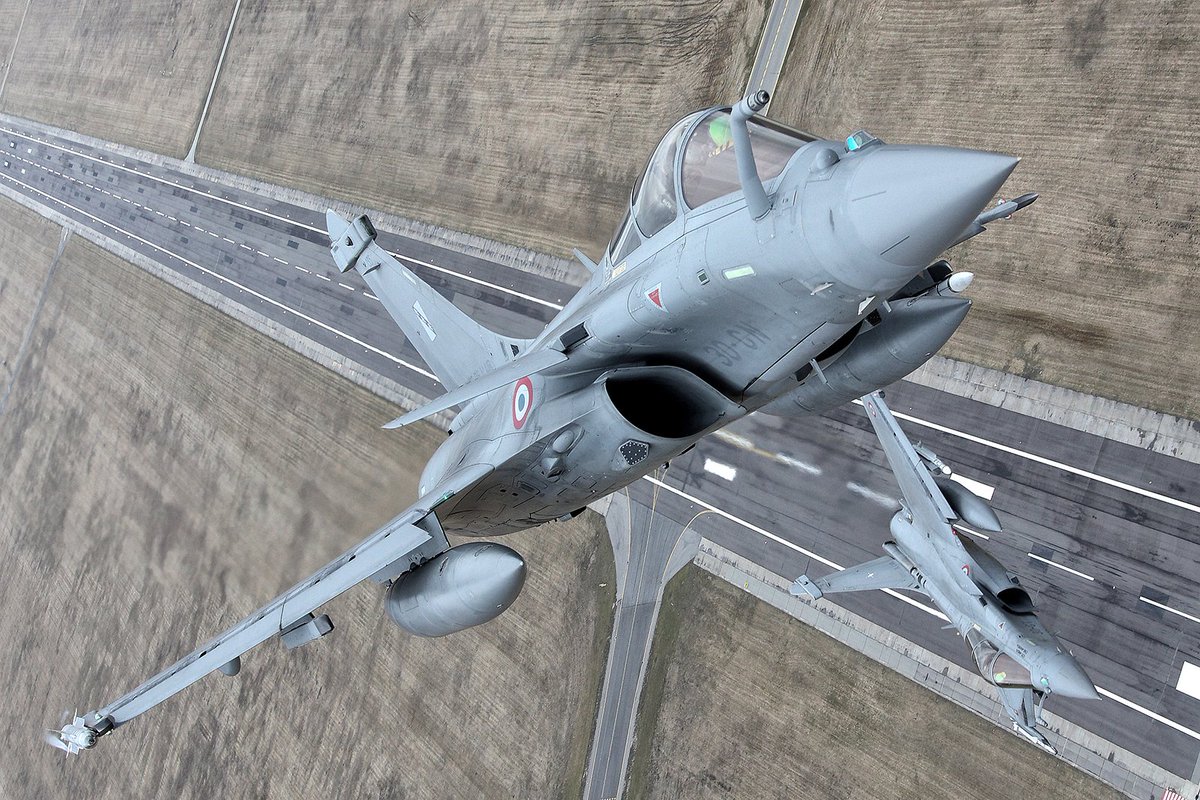
Now, Indonesia has denied reports that it is placing a follow-up order on the Rafale fighter jets.
In 2022, Indonesia inked an $8.1 billion contract for 42 Rafale fighter jets. There was widespread speculation that Jakarta was considering placing a follow-up order for 12-24 more Rafale fighters.
However, on April 16, Indonesian Defense Ministry spokesman Rico Ricardo Sirait told the Jakarta Globe that Indonesia was not considering a follow-up order for Rafale jets.
Nuclear Reactors in Orbit by 2028, Moon by 2030 — Inside America’s Bold Plan for Space Superiority
“There are no technical details that we can give for now. But to this day, [Indonesia] has not made a decision to acquire more Rafale units. The government is still reviewing the idea,” Rico told the Globe.
However, undeterred by these setbacks, France is advancing work on the Rafale F5 variant.
France has confirmed that it will use the MBDA Stratus Rapid Strike (RS) missile to equip its Rafale F5 variant for the suppression of enemy air defenses (SEAD)/destruction of enemy air defenses (DEAD) mission.
An update to France’s 2024 – 2030 Military Programming Law (LPM), published by the country’s National Assembly on April 8, confirmed that the high-supersonic/high-agility ramjet-powered Stratus RS will form the basis of the future SEAD/DEAD capability for the Rafale.
“The F5 standard [Rafale] will rely on a SEAD and anti-ship missile to counter access-denial strategies,” the LPM said.
Notably, France is co-developing the Stratus RS along with the UK.
Apart from the Rafale F5, the missile will also equip France’s future naval platforms, and will feature multi-role strike capability, including SEAD, DEAD, anti-ship warfare, and high-value airborne targets.
The missile is part of the broader Anglo-French FC/ASW (Future Cruise/Anti-Ship Weapon) effort, which MBDA rebranded in September 2025 as STRATUS.
According to reports, MBDA’s Stratus RS will be a ramjet-powered, highly maneuverable missile. It will operate at high supersonic speed below Mach 5.
Its speed and agility allow it to reach targets quickly and strike with greater force during the final phase of flight.
Reportedly, Thales and MBDA UK are involved in testing the missile’s seeker, while propulsion trials for the ramjet have been completed in supersonic wind tunnels at Bourges, France.
The missile’s high supersonic speed and high maneuverability will make its interception very difficult. In mission terms, it will be used for SEAD/DEAD missions, anti-ship warfare, moving targets on the ground, and against high-value airborne assets such as AEW&C or tanker aircraft, making it a multi-role penetrator rather than a narrow anti-radiation missile.
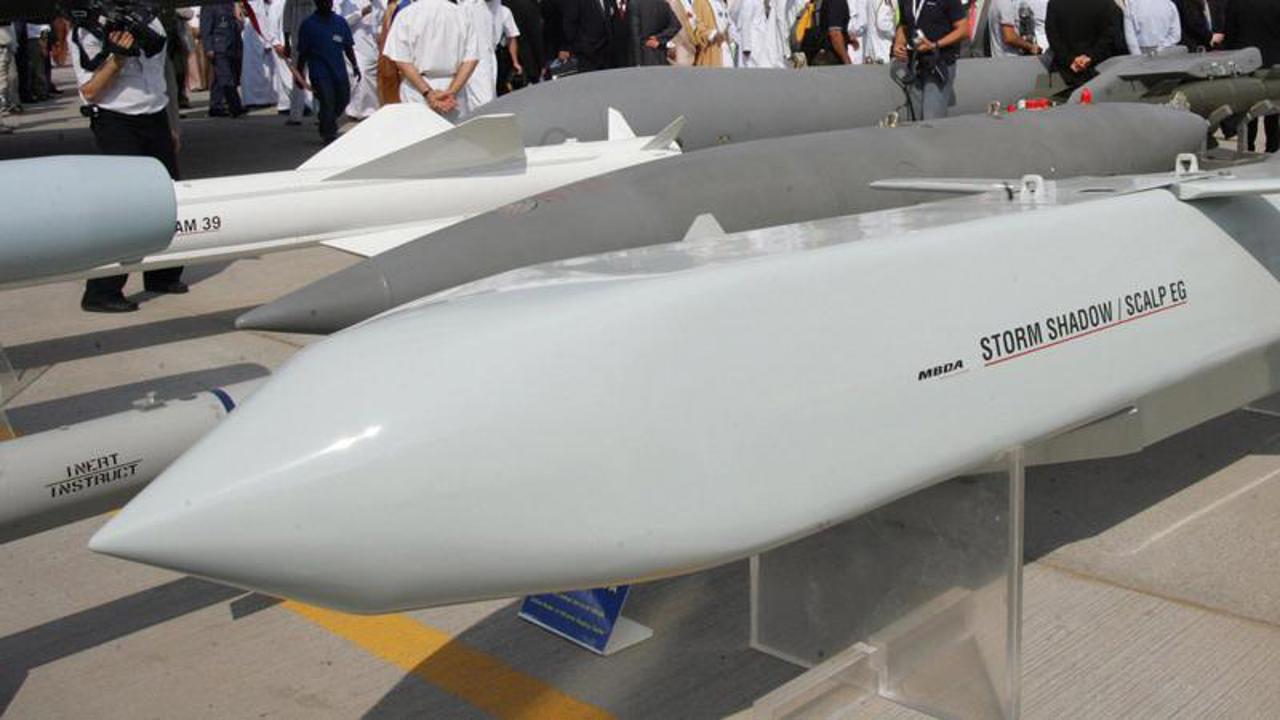
Notably, MBDA already has a cruise missile, SCALP, compatible with current versions of the Rafale, the F3 and F4 variants.
However, the SCALP (STORM SHADOW) is a subsonic, low-observable, terrain-hugging cruise missile that relies on stealth and terrain-following capabilities rather than high-speed supersonic flight. It uses GPS guidance, terrain mapping, and infrared targeting for precision attacks on fixed targets.
MBDA also has a ramjet-powered beyond-visual-range (BVR) air-to-air missile (AAM), Meteor.
Stratus RS will combine the advantages of both missiles, as it will be a ramjet-powered, supersonic cruise missile capable of engaging both static and moving targets.
Additionally, the missile could also be used for SEAD/DEAD missions and for anti-ship warfare.
Therefore, Stratus RS could be highly effective in active air-defense battlegrounds where suppressing hostile radars is crucial before conventional deep-strike missions can be undertaken.
As such, the missile will be a highly valuable asset on the very first day of the conflict, targeting hostile air defense networks and creating gaps that can be exploited by conventional deep-strike penetration missiles and munitions.
The anti-ship aspect of the missile is equally important. Currently, MBDA has two anti-ship missiles from the Exocet family.
The air-launched Exocet AM39 anti-ship missile. It is a subsonic missile with a range of up to 70 km. The ship-launched Exocet MM40 Block 3C is a subsonic, sea-skimming missile offering a range of 250 km.
Additionally, the MdCN provides long-range land attack capability from ships and submarines.
However, Stratus RS is a high-supersonic, highly maneuverable anti-ship missile that also offers anti-radiation utility.
The Stratus RS, therefore, will be a corridor-opening high-speed missile that could be used against static, moving, and naval targets. Therefore, it will offer most of the capabilities of SCALP, Exocet AM39, Exocet MM40, and MdCN, in a high-speed package.
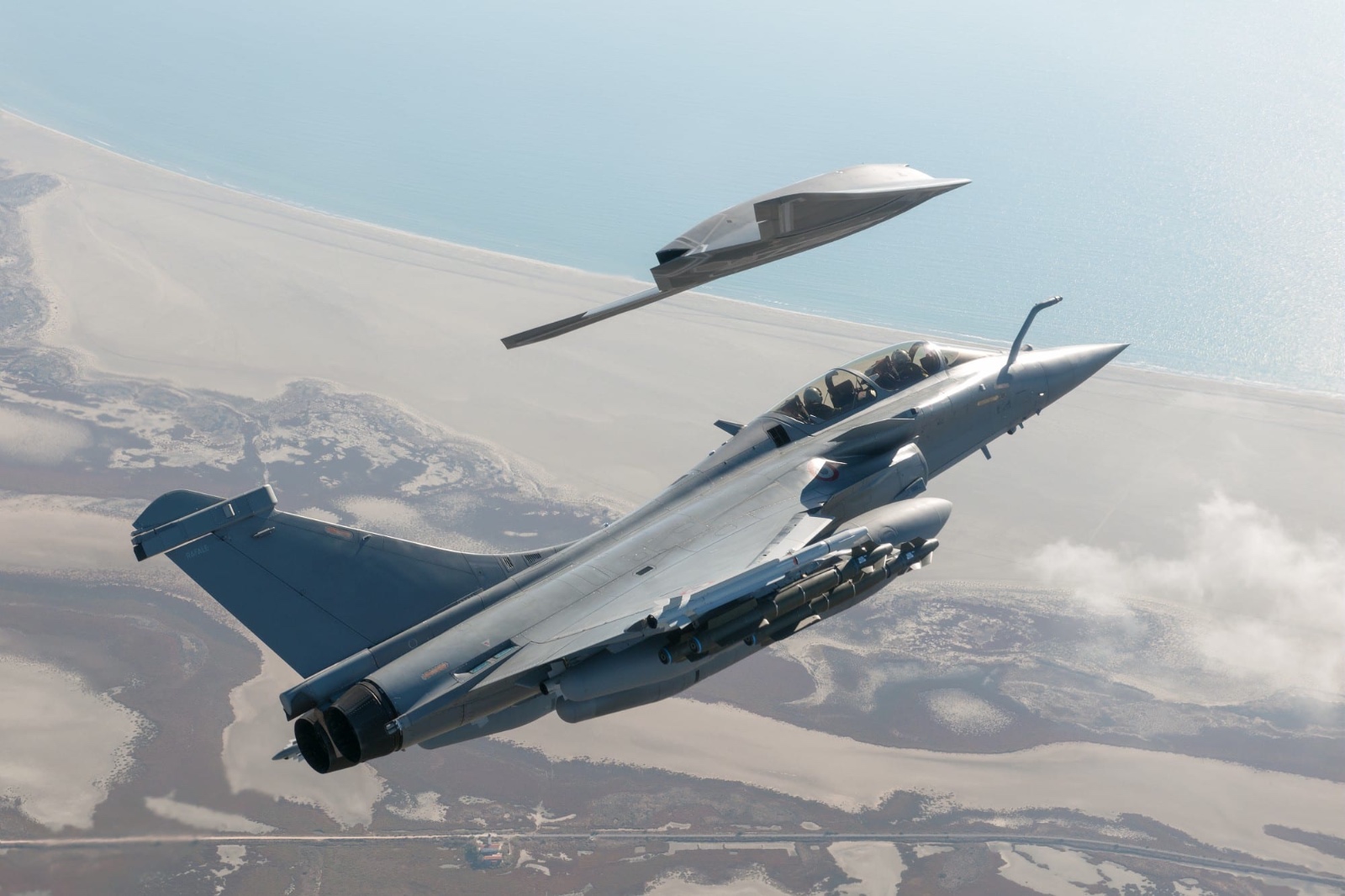
Notably, the Rafale’s F5 variant will also feature collaborative combat drones as loyal wingmen, featuring electronic warfare capabilities. Therefore, a powerful missile like the Stratus RS, capable of SEAD/DEAD missions in active enemy air-defense areas, will enhance the F5’s reputation as a penetration package in hostile environments, and it could be used on the opening day of the conflict to create exploitable gaps for other aircraft.
This is a critical capability in the era of proliferating air defenses and long-range surface-to-air missiles. STRATUS will be a crucial addition to France’s current missile inventory and a force multiplier for the Rafale F5’s kill chain.
- Sumit Ahlawat has over a decade of experience in news media. He has worked with Press Trust of India, Times Now, Zee News, Economic Times, and Microsoft News. He holds a Master’s Degree in International Media and Modern History from the University of Sheffield, UK.
- THIS IS AN OPINION ARTICLE. VIEWS PERSONAL OF THE AUTHOR
- He can be reached at ahlawat.sumit85 (at) gmail.com