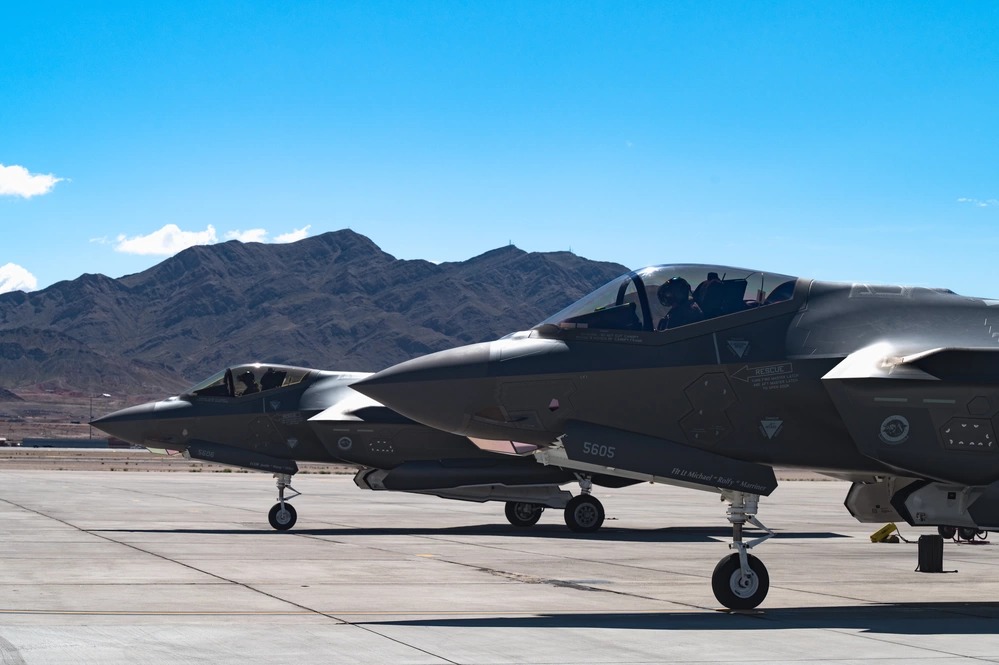
The F-15 Strike Eagle, hailed as one of the most powerful air superiority jets in history, with an unbeaten combat record of over 100 kills and no losses to enemy fire (till 2025), suffered multiple setbacks during the 2026 Iran War.
Early in the conflict, on March 2, three US Air Force F-15E Strike Eagles were lost in a friendly fire incident over Kuwait, reportedly shot down by a Kuwaiti F/A-18 Hornet. Then, on April 3, the Iranian military achieved a historic milestone by shooting down a F-15E Strike Eagle from the 494th Fighter Squadron over southwestern Iran.
The downing of multiple F-1s may not have been a fluke!
The US F-15s faced off against MiG-21s of the Indian Air Force (IAF) during Cope India in 2004 and were trounced in 90 percent of the fights. The thrashing was so intense that the USAF decided to acquire more F-22 ‘Raptors’ for its fleet.
The military.com reporting about the exercise at the time said: “The whole world knows that if you mess with US Air Force pilots, you’re going down. Hard. Except someone forgot to send the memo to India. Because, in recent exercises, Indian flyboys in low-tech Russian and French jets defeated American F-15C pilots more than 90 percent of the time.”
US pilots have been quoted as heaping praise on the Indian pilots. USAF Col. Greg Neubeck acknowledged that Indian pilots were “very proficient in [their] aircraft and smart on tactics. That combination was tough for us to overcome.
There have been various accounts from USAF pilots. But the EurAsian Times spoke to the then Commanding Officer of 3 Squadron ‘Cobras’ of the IAF for the first time to recount the first time the Bisons were pitted against the international force.
Presently, the unit is the last operational squadron of MiG-21 ‘Bisons,’ which are planned for retirement in 2025. The fighter jet is often referred to as a lightweight Soviet ‘rocketship.’
Air Commodore Harish Nayani (Retired) was commanding the 3 Squadron of the IAF when it flew from Ambala air base to Gwalior a few days in advance to prepare for the fighter jet’s first wargame against the US Air Force.
Speaking to the EurAsian Times, Air Commodore Nayani said: “The Cope India 2004 was extremely educational and encouraging for us. We were surprised by the results. It was a lesson that an old machine can be fighting fit after upgrades.” The Bison is IAF’s most advanced MiG-21 variant.
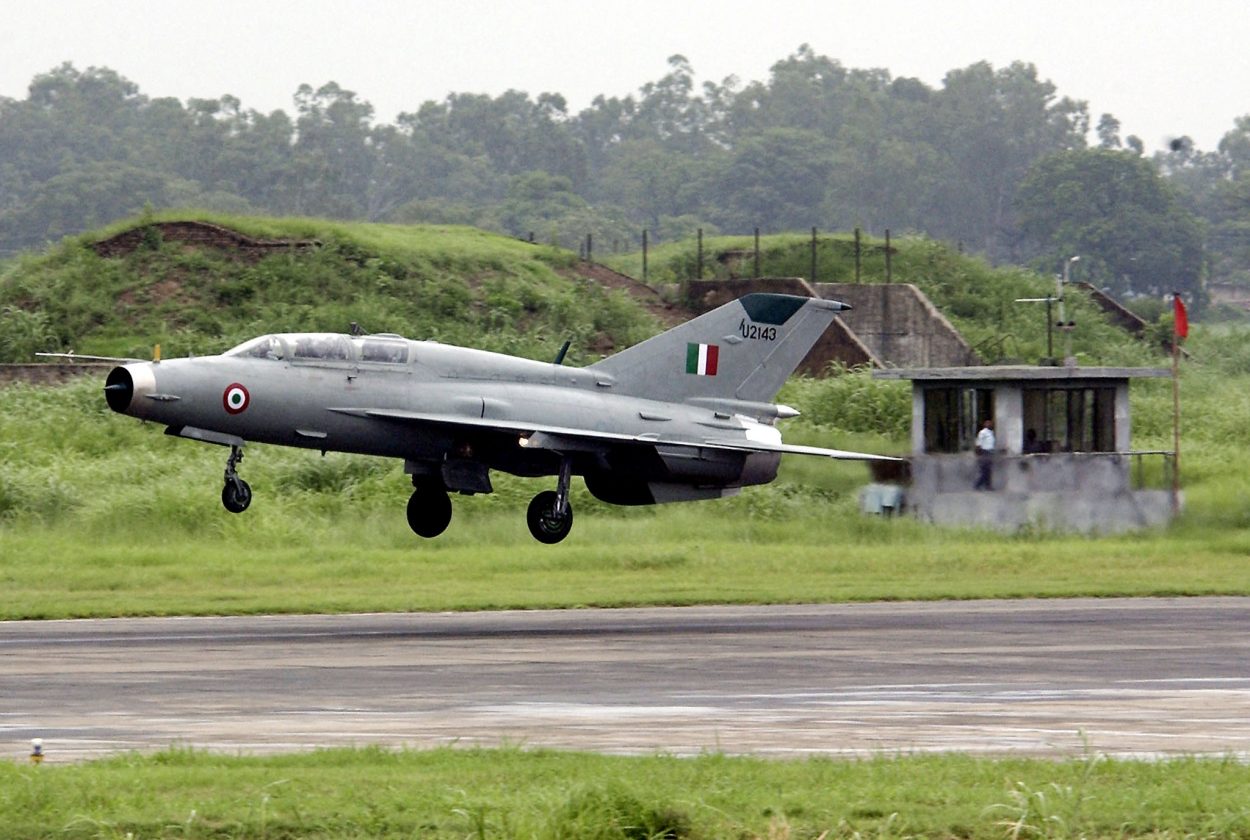
The squadron arrived at Gwalior to load the PFM (pre-flight Message) software package on the EW suite. RWR (Radar Warning Receiver) and airborne self-protection Jammer, which only Bison could carry, were programmed to display and counter the F-15 radar signature.
“It was very exciting to see the F-15 – the best fighter in the world at the time. We had a combined mass briefing, and ground rules were laid down. Safety aspects were taken into consideration,” Nayani recalled the ‘Work Up’ phase.
The two air forces conducted the actual exercise in an Offensive Counter Air (OCA) versus Defensive Counter Air (DCA) setting. “We had the advantage of having AWACS IL-76 with us. We would alternate between OCA and DCA. What was surprising was that Bison, because of its small size, advanced EWS, and radar, could, in certain scenarios, get better than the F-15,” Nayani said.
Nayani could recall one incident when he managed to get a kill on an F-15.
“I remember an F-15 vectored onto us by radar. The F-15 is pretty large, and the MiG-21 is the smallest in the sky. And from a great distance, we can pick the F-15 coming in, and we picked him visually about 20 km.” But the F-15 pilot was oblivious to the MiG-21 in front of him. “He was looking at the radar and not looking visually. And he came so close to us. He was a potshot. We just have to point our nose and take a simulated launch,” the former 3 Squadron CO added.
“They (the USAF pilots) were both surprised and embarrassed. And they went back with a very valuable lesson – once a bison is upgraded, it is equally lethal. Even if it is old, it is lethal.”
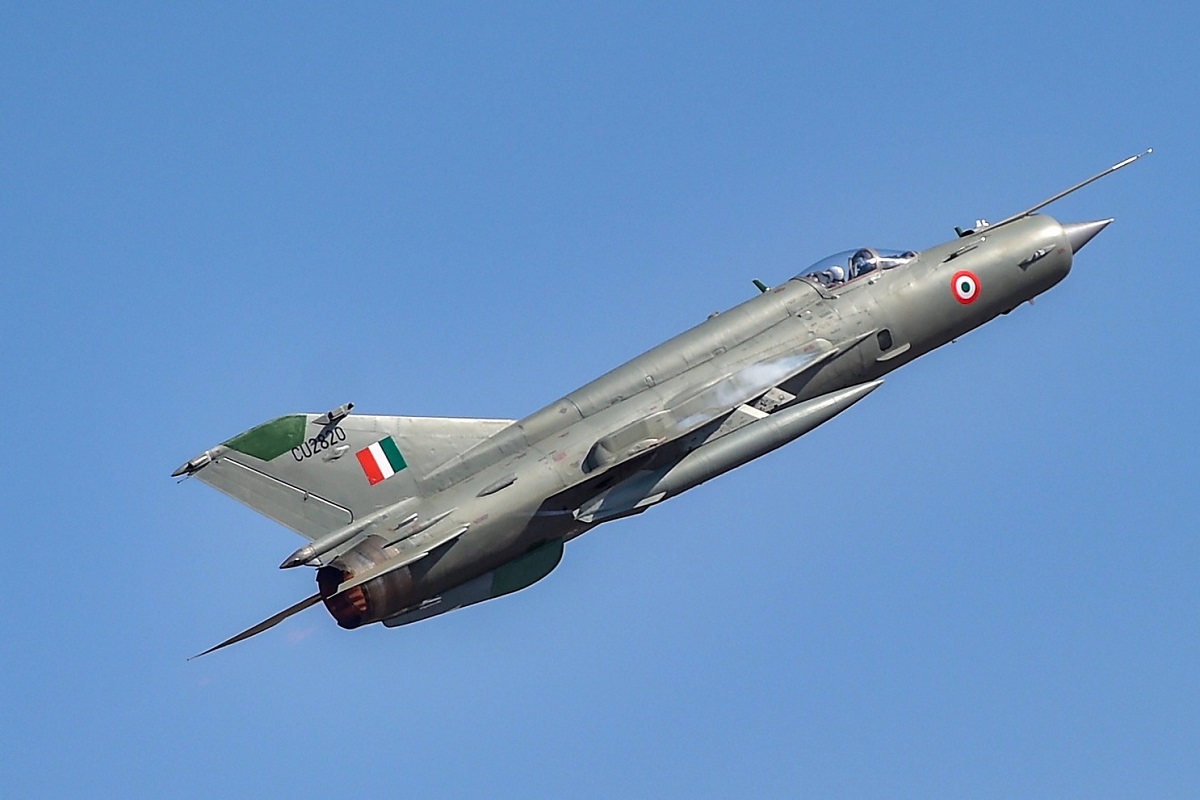
MiG-21s are the IAF’s first supersonic fighter jets and one of the force’s longest-serving aircraft. They will be phased out after 60 years of service, and the IAF is currently the only force in the world flying these vintage jets. The last MiG-21 Bis was produced in 1985.
MIG-21s were chosen to participate in the wargames because India’s latest machine, Su-30MKI, was operational, but it did not want to expose them to the USAF.
Bison’s prowess surprised the USAF pilots so much that they wanted to see its cockpit. “They (USAF pilots) wanted to see the MIG-21 cockpit, and they were surprised. Old Bison was mostly all dials and needles. Bison had a new HUD and multifunction display within its single windshield bubble canopy,” recalled Nayani.
MiG-21s, such as low radar visibility, instantaneous turn rate, and “jackrabbit acceleration,” were critical factors at Cope India. Plus, its new helmet-mounted sight and high-off-boresight R-73 air-to-air missiles turned the MiG-21 into a “Great Equalizer” in the WVR (within visual range) combat scenario.
The Russians could not help but quip at the turn of events. “With the benefit of hindsight, it’s good the Americans discovered their shortcomings in peace rather than war. Had the pilots of the 3rdWing come up against the might of Russian air power during the Cold War, they probably wouldn’t have winged it back to Alaska,” a report in Russia Beyond said.
An American US Air Force’s Constant Peg program pilot has described the ‘Fishbed’ (the NATO name for MiG-21) as a “beefed-up, fighter version” of the Northrop T-38 Talon jet trainer. The MiG was fast, simple, and “surprisingly nimble” in simulated dogfights against American pilots in American planes. Although MiG-21s had numerous shortcomings, the Soviets still produced 11,000 of them, prompting McCoy to call the planes “deadly due to sheer numbers.”
- Originally written by Ritu Sharma for EurAsian Times.
- 2023 Article Republished with Modifications
- The author can be reached at ritu.sharma (at) mail.com
- Follow EurAsian Times on Google News