Will the indefinite extension of the ceasefire by US President Donald Trump in the war against Iran eventually result in a “comprehensive peace agreement”? Is the peace agreement going to be perceived as Trump’s “victory” in terms of the realization of his “goals” when the war started?
While it may be too premature to answer the first question at present, many factors need to be considered when answering the second.
It is increasingly becoming obvious that the mainstream American media, the Democratic Party, and a significant section within Trump’s MAGA base want the President to “End the War” at the earliest.
But how to end the War? Is that by just giving up completely as things stand now? Or, is it going to be the total destruction of the present fundamentalist regime in Tehran and replacing it with a stable regime that the majority of Iranians support and is friendly to America and Israel?
And if a compromise, how is that going to be? Is that going to leave the present fundamentalist regime in Tehran intact, with some face-saving limitations on its nuclear and missile programs?
If anything, all these questions make “the victory” open to various, often conflicting, interpretations. And all this at a time when it is said that the Iran War is going to cost the Republicans their majorities in Congress in the forthcoming mid-term elections, after which Trump would become virtually a lame-duck President for two years.
As it is, going by the mainstream American media, Trump has already lost the war in Iran, and he is certain to lose the Congressional elections in November.
But precisely against this background, there are a few analysts like Ira Straus (Senior Adviser, Atlantic Council) who argue that the only way Trump can win the Congressional elections, and that too overwhelmingly, is if he wins the war in Iran decisively.
“Long before this war started, the Democrats were on track to win big in November. The new thing is that they could lose it because of the war. Trump could easily get a historic win for America in Iran months before the election”, he says.
Giving examples of how Americans love and reward a winning war leader (Washington, Lincoln, FDR, Eisenhower) and punish the loser Presidents (Johnson and Carter), Straus argues that Trump’s choice is simple – Either-Or.
“Either: see this war through to victory. Real victory – a victory so clear and conclusive that even our 24-7 media won’t be able to obscure it. A victory like replacing the Islamic Republic with a friendly, civilized government. And go on to triumph in the November elections. Triumph in a landslide so great that Trump will be able to get almost everything he wants done in the next two years, plus effectively dictate the winner in 2028.
“Or: get tricked into making another fake peace. Endure six months of the media and Dems( Democrats) attacking him 24-7 for both the war and the fake peace – this time semi-honest attacks, for starting and losing a war and leaving us with an even more dangerous Iran. And go on to lose in a landslide in November so bad that it would effectively end his presidency”.
Of course, Trump has already publicly claimed “total victory”. He says that Iran’s Supreme Leader Ayatollah Ali Khamenei is dead; the Islamic Revolutionary Guard Corps (IRGC) high command is shattered; Iran cannot make nuclear weapons in the next 50 years without Chinese or Russian help; and Iran’s missile infrastructure has been significantly degraded.
However, experts say that all this is not enough to be termed a credible “strategic victory” without regime change in Iran because Trump’s stated core objectives—specifically the permanent end of Iran’s nuclear program—remain unfulfilled while the current leadership structure exists.
It is argued that as long as the current regime remains in power, it retains the political will to rebuild and continue its nuclear program, rendering any military “victory” merely tactical and temporary. And, despite assassinations of high-ranking officials, the clerical establishment remains functional.
Critics do seem to have a point that the regime has simply replaced fallen leaders with loyalist hardliners. In fact, it is now apparent that the IRGC is scuttling the peace moves by other organs of the regime, like the Presidency and ministries.
No wonder skeptics point out that Trump’s strategy of winning by using economic blockades and going for limited strikes to force concessions is unlikely to result in either a new nuclear deal or a change in Iran’s regional behavior.
Without total regime collapse, so the argument goes, a war against Iran only results in a “lose-lose” scenario, creating humanitarian crises and regional instability.
In fact, some critics go to the extent of comparing Iran under an Islamist regime with Communist North Korea and point out that any more appeasement of the incumbent regime in Tehran is similar to what happened with North Korea over the decades of temporizing and deal-making.
But North Korea has not been tamed and poses a direct security threat to the US through its intercontinental ballistic missiles. Similarly, right from the very start in 1979, the Iranian regime has been, in some form or another, in an irreconcilable war with not only America but also its friends and interests.
All told, the theocratic regime in Tehran had spent four decades killing Americans, arming proxies from Beirut to Baghdad, pursuing nuclear weapons in sustained defiance of the international community, and, in January 2026, massacring tens of thousands of its own citizens. In that sense, Trump has been seen by these analysts to be a President who rightly rejected the notion that the regime in Tehran posed “no imminent threat” to America.
The contention here is that there can be no real end to war without a fundamentally new regime in Tehran, a regime that would agree to dismantle its nuclear program, limit its weapons development, and end its support for proxies (in Yemen, Lebanon, and Gaza), in addition to reopening the Strait of Hormuz.
But does this new regime have to contain no elements from the present one at all? Not necessarily. The pragmatics among the regime-change thoughts do not want America to go and occupy Iran physically. They realize that Iran is too large with too complex terrain, and is too populous to be occupied by a foreign power, even if it is a benevolent one.
As Gregg Roman, the executive director of the Middle East Forum, suggests, “What is required is not occupation but orchestration: the shaping of conditions under which Iranians govern themselves, supported by American diplomatic, financial, and intelligence instruments channeled through legitimate transitional institutions built by Iranians for Iranians. This is a harder task than occupation—not easier—because it demands that the architecture be designed before the moment of collapse, not improvised afterward”.
Roman would like a mix of talented people from the Diaspora, civil administrators, and security personnel willing to resist the theocrats and run the country together after ousting the theocratic regime. For him, diaspora figures should manage the country’s finances, including banking, while Internal security, transitional justice, and municipal governance are handled by civil servants and local resistance commanders.
Roman points out that Iran’s state apparatus employs roughly 2.5 million civil servants. The Artesh, Iran’s conventional military, distinct from the IRGC, comprises approximately 420,000 personnel, including engineers, logistics specialists—the technicians who keep a nation of 88 million alive. And most of them do not share the ideology of the Islamists.
But then the fact remains that there are hardliners in the IRGC, and it is they who will not allow an easy takeover. However, Roman points out that, as in other military-controlled states, the IRGC in Iran should not be seen solely as a military organization. “It is a corporate conglomerate that happens to possess an army, a navy, a missile force, and a nuclear program”.
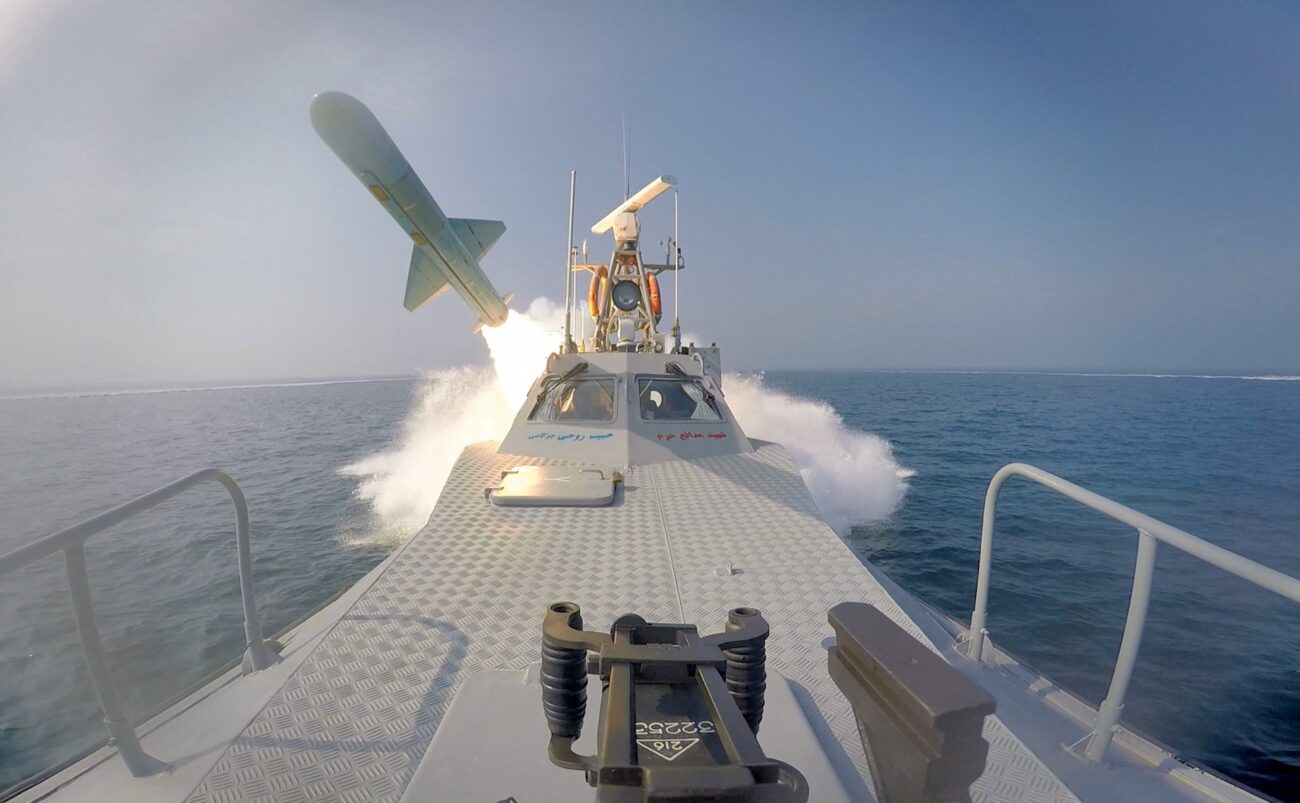
Apparently, the IRGC and its affiliated religious foundations, which report directly to the Supreme Leader, account for over 50 percent of Iran’s GDP. It is deeply involved in the oil, construction, banking, telecommunications, agriculture, medicine, and real estate industries.
Therefore, the likes of Roman are of the view that “the tie that binds in Iran’s IRGC regime is privilege, not fanaticism.”
In other words, it is economic rather than ideological interests that bind many within the IRGC.
And when there is no Supreme Leader to protect them in the new regime, many in the IRGC can be neutralized by the assurance of their “economic protection”.
As Roman argues, “The United States should be mapping these incentives at the individual commander level and designing calibrated offers: asset protection in exchange for institutional surrender, with amnesty for cooperation, and targeted financial strangulation for resistance. This costs a fraction of what sustained bombing costs, and it strikes directly at the structural ligament that holds the regime together”.
All told, all the above suggestions need more active involvement of America in Iran, and that too after victory over the Islamists hardliners, not through a negotiated settlement with them, something that seems to be attempted at present.
And that brings one to the question posed at the very outset – how to define Trump’s “victory”, a victory that will ensure the Republicans’ win in the mid-term elections.
Over to Trump.
- Author and veteran journalist Prakash Nanda is Chairman of the Editorial Board of the EurAsian Times and has been commenting on politics, foreign policy, and strategic affairs for nearly three decades. He is a former National Fellow of the Indian Council for Historical Research and a recipient of the Seoul Peace Prize Scholarship.
- CONTACT: prakash.nanda (at) hotmail.com