Two concurrent wars, with direct and indirect US involvement, have exposed the sorry state of war preparedness within the Pentagon, which is alarmed at the depleting stocks of its missile arsenal.
The Pentagon is worried that its depleting stockpiles are woefully inadequate for a potential intense war with China or Russia, given that just a 40-day war with Iran, a mid-level power reeling under decades of crippling sanctions, exposed the glaring inadequacy of US missile defense stockpiles.
Analysts warn that the Pentagon’s war doctrine is still stuck in a Cold War mentality, which is ill-suited for modern warfare on a scale where countries have hundreds, even thousands, of drones and ballistic and cruise missiles in their arsenal.
Alarmed by the situation, the Pentagon is urging its missile suppliers to ramp up production on a war footing, asking them to double or even quadruple their production rates on a breakneck schedule.
The Pentagon’s Munitions Acceleration Council (MAC) is targeting 12 legacy and two “emerging” munitions as part of its ambitious plan to ramp up production and ink a series of agreements with key vendors to ensure cost efficiency while maintaining production stability, according to fiscal 2027 budget documents.
“These include 12 legacy munitions that are foundational to U.S. military operations, and two emerging capabilities that represent advancements in technology and operational effectiveness,” according to the budget document.
“These investments are vital to ensuring the department’s ability to meet immediate and long-term munitions demands, replenish depleted stockpiles, support the operational needs of US forces, allies, and partners, reestablish deterrence, and meet long-term demand.
“This ensures the US maintains a credible deterrence posture by increasing munitions availability and readiness while supporting sustained operations for US forces, allied nations, and partner countries in the face of evolving global threats,” it added.
The Munitions Acceleration Council (MAC) was established in 2025 to scale critical weapons production, after the Ukraine War, and the 12-day war with Iran in June last year put considerable strain on the stockpiles of US arms, including critical weapons systems, such as air defense missiles.
The 40-day war with Iran this year has further depleted the US arms stockpiles.
To maintain its war preparedness, the Pentagon’s MAC has now identified 14 most critical weapons systems.
These include 12 legacy weapons: Patriot Advanced Capability-3 (PAC-3) Missile Segment Enhancement interceptors, Terminal High Altitude Air Defense (THAAD) interceptors, Standard Missile-3 IIA, SM-6, SM-3 Block IB, Tomahawk Land Attack Missile, Joint Advanced Tactical Missile (JATM), Low-Cost Cruise Missile, Advanced Medium-Range Air-to-Air Missile, Maritime Strike Tomahawk, Joint Air-to-Surface Standoff Missile-Extended Range (JASSM-ER), and Long Range Anti-Ship Missile (LRASM).
“The focus on 12 legacy munitions ensures continued support for proven systems that are essential to current and future operations, such as precision-guided missiles, air and missile defense, and air-to-air and air-to-ground munitions,” the document said.
The top priority is air-defense missile interceptors.
For instance, the budget earmarks US$7 billion for the procurement of Patriot PAC-3 air defense missile interceptors, US$6.1 billion for the US Army to procure 1,429 PAC-3s, and US$874 million for the Navy to procure 207 PAC-3s.
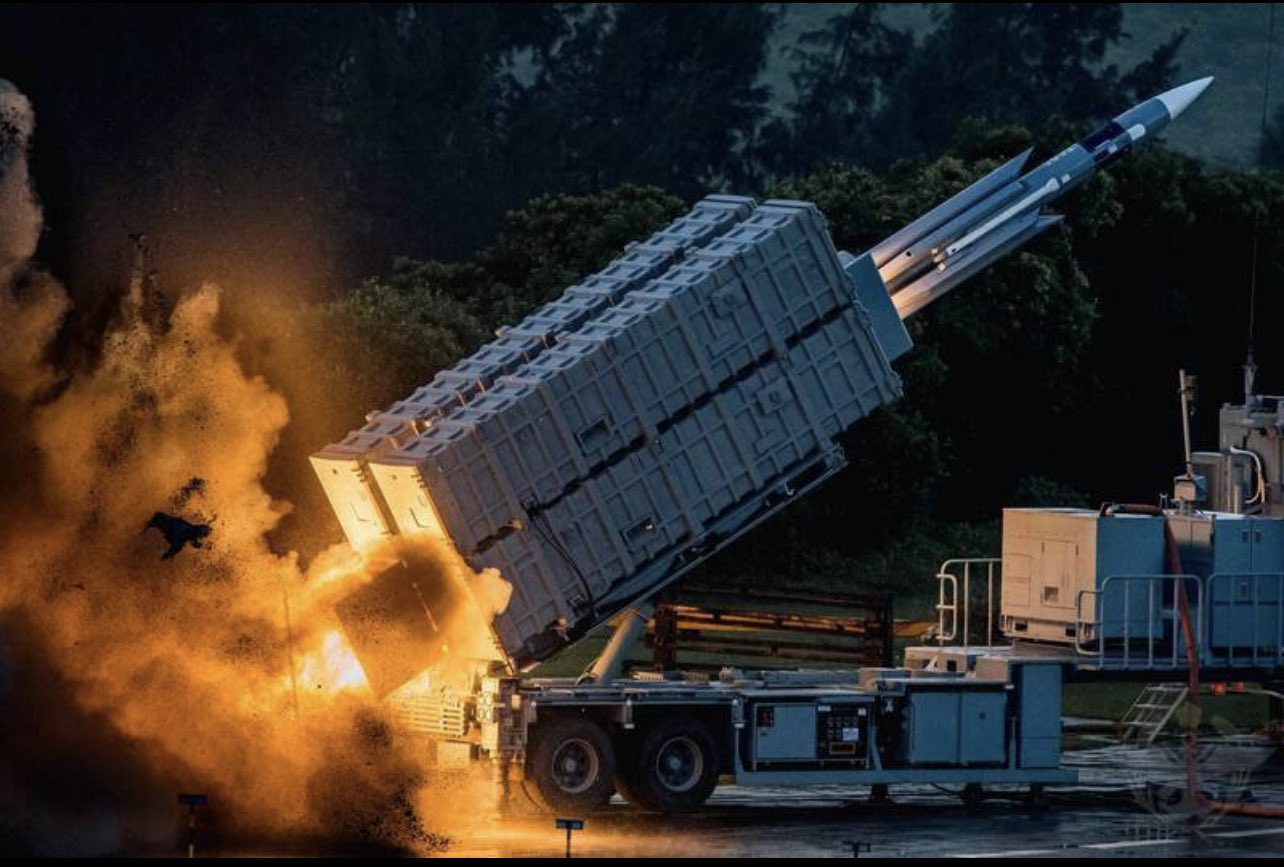
Notably, currently, Lockheed Martin, the manufacturer of Patriot PAC-3s, has a capacity to produce just over 600 missile interceptors annually.
As many as 620 units were delivered in 2025, a record year for Lockheed Martin and a 20% increase on 2024.
Notably, Patriot missile interceptors were heavily used in the Iran War.
According to a Washington-based policy institution, Globsec, over 800 Patriot interceptors were fired in just the first five days of the Iran war.
“The United States and its Gulf partners reportedly expended approximately 800 Patriot missiles in the war’s opening five days — a figure that, placed against annual American production of fewer than 750 rounds across both Lockheed Martin and Raytheon, immediately signals the arithmetic of the problem.”
According to an analysis by the Center for Strategic and International Studies (CSIS), over the last seven weeks of war, the US military has expended at least 45% of its stockpile of Precision Strike Missiles (PRSMs); at least half of its inventory of THAAD missiles; and nearly 50% of its stockpile of Patriot air defense interceptor missiles.
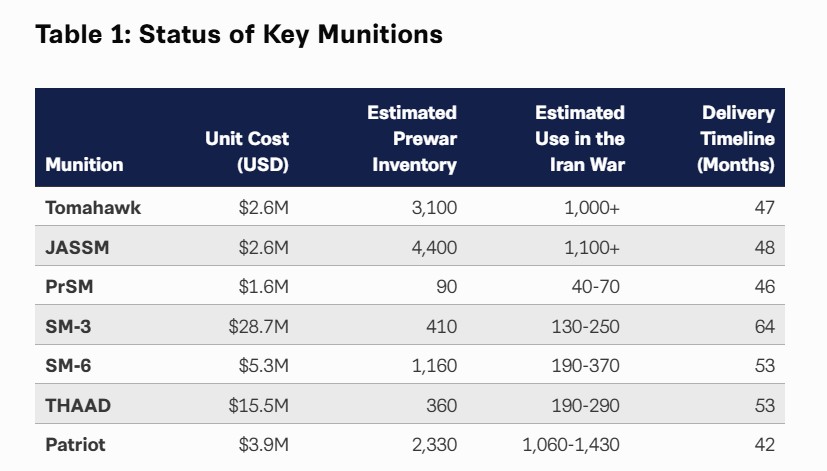
“Even before the Iran war, stockpiles were deemed insufficient for a peer competitor fight. That shortfall is now even more acute, and building stockpiles to levels adequate for a war with China will take additional time,” the CSIS report warns.
The other missiles mentioned in the CSIS report also appear on MAC’s list of 12 legacy munitions.
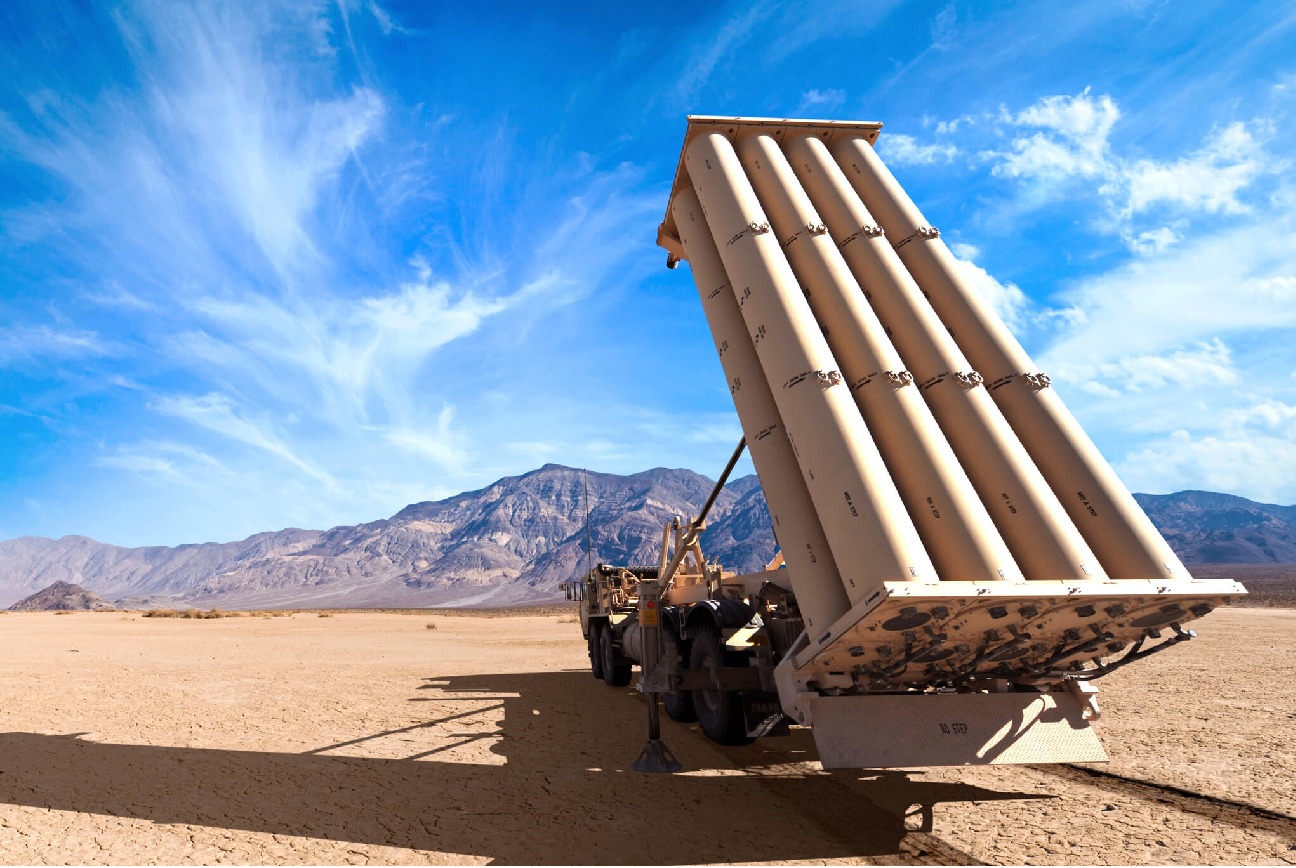
For instance, the US burned through more than half (53%) of its THAAD interceptor missiles.
The budget document allocates US$4.8 billion for THAAD interceptors. The US Army is targeting the procurement of 373 THAAD interceptors to replenish its THAAD stocks depleted over the past year.
Similarly, the budget allocates US$2.4 billion to the Missile Defense Agency (MDA) to procure up to 78 SM-3 Block IIA all-up-rounds (AURs), along with associated canisters and production support.
During the 40-day Iran War, the US expended 64% of its existing SM-3 missile stockpiles.
It further allocates US$2.2 billion to fund SM-6 procurement, US$1.9 billion for the Navy to procure 224 SM-6 IAUs and canisters, and US$330 million for the Army to procure 56 missiles. According to CSIS analysis, the US expended 53% of its SM-6 stockpiles during the Iran War.
Similarly, the US expended 47% of its Tomahawk stockpiles. The budget allocates US$1.8 billion to the US Navy to procure 685 new Block V Vertical Launch System (VLS) Tomahawks with canisters and support costs.
The US also expended 48% of its JASSM-ER stocks. The budget allocates US$1 billion to the US Air Force (USAF) for the procurement of 330 missiles.
Apart from these 12 legacy weapons systems, the Munitions Acceleration Council (MAC) also targets boosting production of two new “emerging” munitions: the Low-Cost Hypersonic Strike Weapon and the Precision Strike Missile (PrSM) Increment 1.
“The inclusion of two emerging capabilities reflects the Department’s commitment to innovation and modernization, addressing future threats, and enhancing operational effectiveness with next-generation long-range munitions and advanced autonomous munitions systems,” the budget document said.
To boost production of these critical munitions over the next seven years, the Trump administration has so far inked a series of framework deals with companies to invest in their manufacturing facilities.
Those agreements have included programs such as PAC-3 interceptors, JASSM-ER, PrSM, and seekers for both THAAD and PAC-3 interceptors.
Overall, the FY27 budget request includes a US$70.5 billion for missile procurement coffers, a 188 percent hike over the FY26 budget.
Speaking to reporters at the Pentagon on Tuesday, Jules “Jay” Hurst, who is performing the duties of the Defense Department’s comptroller, said the plan is to spread those dollars out over several years and ink multi-year contracts.
“We’re making them put skin in the game … and we expect them to meet the ramp rates that they agree to. And, if they don’t, there’ll be penalties for them,” Hurst was quoted as saying by Breaking Defense.
“We’re requiring contractors to foot the bill for CapEx [capital expenditures], right, which is something we haven’t done before,” he added. “So, in order to pay for that CapEx, they have to sell a certain number of munitions to the United States. If they don’t meet their production goals … their initial penalty is the CapEx itself … and then there will be provisions in contracts to penalize contractors who don’t meet production ramp rates as well.”
- Contact EurAsian Times at editor (at) eurasiantimes.com
- Follow EurAsian Times on Google News