With the delivery of nuclear-powered submarines to Australia under the AUKUS agreement years away, the discourse on Australia’s potential purchase of the B-21 Raider stealth bomber has been revived to address the capability gap.
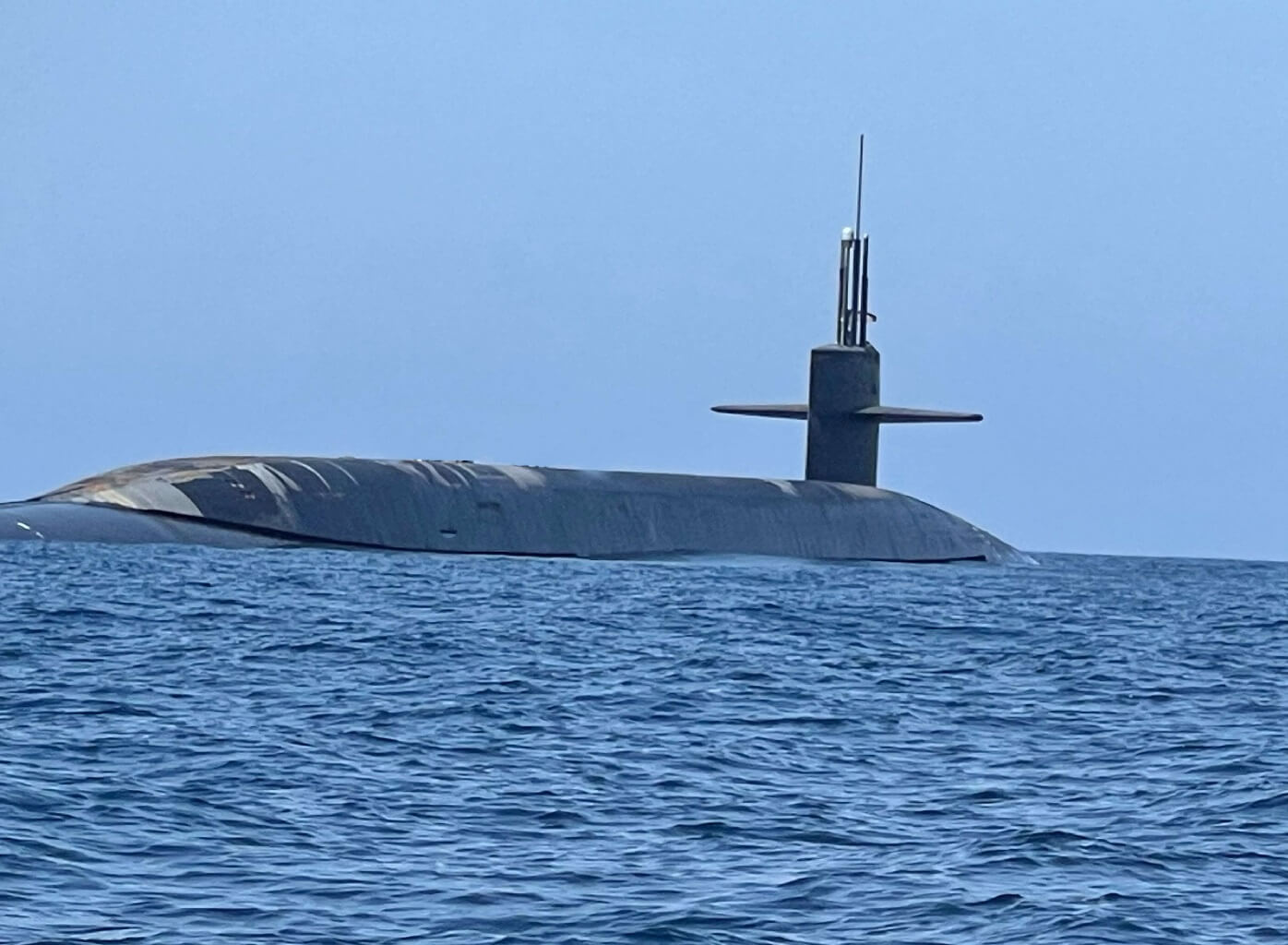
Under the AUKUS agreement, signed by the US, the UK, and Australia in September 2021, the US plans to sell at least three Virginia-class submarines to Australia in the early 2030s, and the UK will help design a new class of submarine, called SSN-AUKUS, in the future. The move aims to counter the security threat posed by China in the Indo-Pacific.
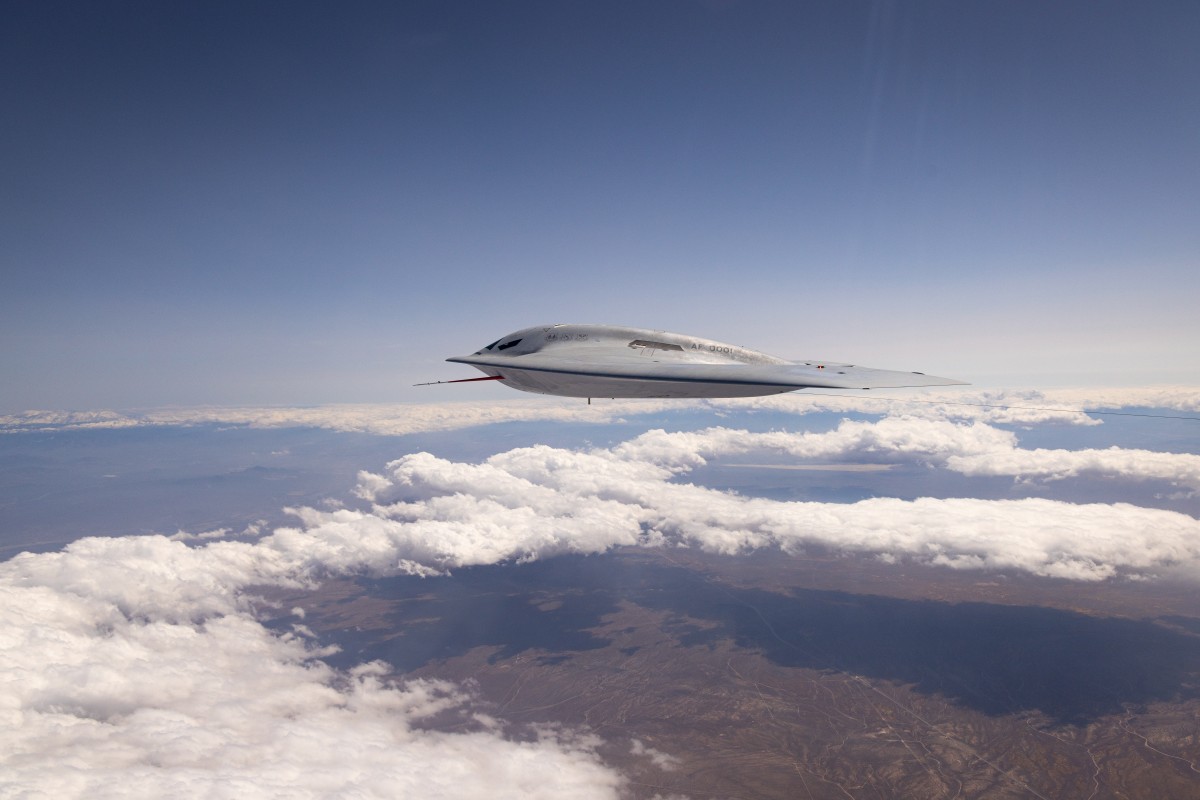
Australia’s Shadow Defense Minister, James Paterson, has proposed that the country consider purchasing the B-21 stealth bomber from the US to fill the capability gap until the AUKUS submarines arrive, arguing that the bombers, currently undergoing testing, would provide a comparable long-range attack capability as Australia awaits the arrival of the Virginia-class submarines.
However, while making his case in a speech to the National Press Club, the Senator also acknowledged that, “Only the government can know whether the [Royal Australian Air Force] is well-placed to acquire these planes and put them into service.” “Perhaps there are good reasons why a B-21 does not work for Australia. If that is the case, I hope the government is very closely examining other similar options that could fill this serious potential capability gap. Because I do not want Australia to enter the moment of maximum peril in the late 2020s and early 2030s without this critical deterrent capability,” he added.
It is pertinent to note that the Australian government, policymakers, and think tanks have contemplated the purchase of American bombers for years. For example, the Australian Defense Minister Richard Marles indicated in 2022 that the B-21 Raider was “being examined” for potential acquisition, and the proposition featured in the country’s 2023 Defense Strategic Review, as previously reported by the EurAsian Times.
However, the plan was later dropped due to the aircraft’s prohibitive cost.
The B-21 is estimated to cost nearly $1 billion—a price considered too prohibitive for a country that has already been chastised for spending billions of dollars on the AUKUS submarine project. So, citing the high cost, the Australian government decided against buying the B-21s and instead opted to acquire more long-range strike weapons for its fifth-generation F-35A stealth fighters and its fleet of F/A-18F Super Hornets.
Despite that, analysts and academics in Australia have consistently toyed with the idea of buying the Raiders.
In 2024, the Australian non-profit research organization the Institute for Public Affairs (IPA) recommended the acquisition of the B-21 Raider “as an additional element” to the AUKUS trilateral defense pact. Australia must seek to procure the B-21 and also offer “to host a US B-21 contingent” to “strengthen deterrence in the 2020s and manage the risk of delays in the AUKUS submarine”, the organization stated in the report at the time.
The Australian Strategic Policy Institute (ASPI) made the case for the purchase of older B-2A stealth bombers in 2025, emphasizing that it may be well-suited to meet Australia’s capability requirements in terms of range, payload, and stand-alone platform survivability.
At the heart of all these recommendations is the same concern: the need to better protect Australia’s air and marine approaches amid China’s arrival to what is Australian doorstep. And, the unpredictability of AUKUS.
Interestingly, James Paterson’s suggestions for purchasing the B-21 Raider from the US come at a time when AUKUS itself has come under scrutiny, given that it is highly unlikely that the US will provide any Virginia-class subs to Australia, as the Americans do not have enough for themselves, as previously explained in detail by the EurAsian Times.
Additionally, a report prepared by the British Parliament’s defense committee warned that the delivery of Australia’s new fleet of nuclear-powered submarines could be hampered by insufficient investment and leadership, and added that the UK’s commitment to the AUKUS partnership is beginning to lag behind. Additionally, the committee questioned the Royal Navy’s capability to send a submarine to Perth to assist in training sailors and technicians, particularly as this would overstretch the British fleet.
While the acquisition of the B-21 may seem a compelling prospect given the AUKUS submarine so far into the future, some dissonance exists in Australia, with analysts favoring investment in long-range strike through distributed networks rather than a single platform, whose potency they acknowledge.
“On the ‘B-21s and Australia’ debate, which is taking off again, I think a better investment would be to focus on increasing long-range strike through distributed networks of advanced uncrewed systems, rather than spending a lot of money to get a small number of very expensive and complex B-21s as a proverbial ‘silver bullet’ solution,” Dr Malcolm Davis, a senior analyst with ASPI, wrote in a long post on X.
Dr Davis argued that the “MQ-28A Ghost Bat is in its early years, but it opens the door to significant evolution into a range of uncrewed, semi-autonomous systems. One variant that could be developed is a long-range, high-payload, high-performance strike system to be acquired in significant numbers. So, something between where the Ghost Bat is now – a small collaborative combat aircraft – and a larger bomber like the B-21.”
Further, he stated that combining the above-stated capability with investment into next-generation GCAP, or possibly the US Navy’s next-generation F/A-XX, or perhaps, even the F-47 to replace the F/A-18F and E/A-18G from 2040, seemed like a better path to him.
That said, the Australian government remains unmoved by its original decision and has shown no interest in acquiring the B-21 in recent times.
A Case For B-21 Bombers For Australia
The B-21 bomber is a sixth-generation stealth aircraft designed to conduct deep-penetrating nuclear and conventional strikes in heavily defended airspace. It is anticipated to replace the B-2 Spirit bombers, as you can read about here.
Some analysts argue that the B-21 stealth bomber would significantly bolster Australia’s combat capability by providing a sovereign, long-range strike option that would complement the nuclear-powered submarines, long-range missiles in the Australian arsenal, and existing F-35A fighter jets and P-8 Poseidon surveillance aircraft.
Experts frequently tout the B-21’s exceptional unrefuelled range, which is expected to be far greater than that of the F-35A jets currently operated by the Royal Australian Air Force (RAAF) (even with refueling).
In the event of a hypothetical conflict between the US and China, the range of the B-21 bomber would allow the RAAF to operate from bases deep inside Australia, such as from the Northern Territory or Western Australia, strike targets, including in highly contested areas near the South China Sea or closer to China, and return without relying heavily on vulnerable forward airbases or extensive tanker support.
However, the EurAsian Times must emphasize that the Australians have never expressed an intent to join any conflict between the US and China.
The B-21 has been particularly designed for high-threat scenarios, such as in the Indo-Pacific. It has the capability to penetrate advanced integrated air defense systems—a key capability in any potential hostilities with China, which has meticulously established a potent Anti-Access/Area-Denial network along its coastline.
The B-21 can deliver large payloads of precision-guided munitions at high-value targets, enabling deterrence by denial. In fact, Marcus Hellyer and Andrew Nicholls, experts on cost and capabilities in defense acquisitions with ASPI, earlier noted in a report that a single B-21 can reportedly carry ordnance equivalent to at least six F-35As.
Notably, the manufacturer of the platform, Northrop Grumman, states: “As adversaries continue to invest in and develop advanced weapons, the B-21 Raider will provide the United States with a strategic asset capable of penetrating enemy air defenses and reaching targets anywhere in the world — something approximately 90 percent of the nation’s current bomber fleet is incapable of doing.”
The B-21 also boasts sophisticated broadband low-observable (stealthy) capabilities, achieved through modern engines and a highly efficient airframe tailored for high-altitude flying. In fact, the platform will be more than just a bomber with its wide range of networking, combat management, electronic warfare, and intelligence, surveillance, and reconnaissance (ISR) capabilities. The B-21 has considerably better radar arrays for targeting, as well as more sophisticated avionics and sensors.
Additionally, the B-21’s sixth-generation open systems architecture makes it easier to incorporate new software and technology. “The B-21 is being designed with open systems architecture to reduce integration risk and enable competition for future modernization efforts to allow for the aircraft to evolve as the threat environment changes,” states the USAF, which is currently testing the bomber for its own use.
However, the purchase of the bomber and the establishment of maintenance, repair, and other infrastructure would cost billions of dollars in investment, which continues to be a major reason for Canberra’s reluctance to the B-21, particularly as the government remains committed to the AUKUS program, whose cost has been repeatedly called into question.
- Contact the author at sakshi.tiwari13 (at) outlook.com
- Follow EurAsian Times on Google News