Pakistan’s use of Chinese weapons during the Indo-Pakistan military clash last year may have turned the fortunes of the Chinese arms industry around, with aircraft maker AVIC Chengdu Aircraft Co. seeing a surge in revenue and profits.
According to a recent Bloomberg report, China’s AVIC Chengdu Aircraft Co. reported record profits in 2025 and saw first-quarter sales nearly double.
The report cited a statement released by the manufacturer on April 28, in which it disclosed that its revenue jumped 15.8% to 75.4 billion yuan ($11 billion) in 2025, while its profit rose 6.5% to 3.4 billion yuan, marking the company’s highest-ever increase. Additionally, the company’s first-quarter sales recorded a 80% year-on-year increase.
AVIC Chengdu Aircraft Co. attributed the impressive 2025 performance to an asset reorganization that now encompasses its jet manufacturing activities.
While the company did not link the surge in profits to the Indo-Pakistan conflict, we know that the four-day border clash served as a live laboratory for Chinese weapons, whose exports had earlier been hindered by a lack of combat experience.
There has been an uptick in global interest in the AVIC Chengdu Aircraft Corporation’s J-10C and the JF-17, the latter jointly produced by Chengdu and Pakistan Aeronautical Complex. For instance, the Libyan National Army (LNA) placed an order for JF-17s in December 2025, while Bangladesh and Sudan had reportedly shown keen interest in acquiring the jet. Reports also suggested that Saudi Arabia was working on a deal with Pakistan to purchase this aircraft, as previously explained in detail by the EurAsian Times.
China, on the other hand, has been exploiting Pakistan’s claims to promote the J-10C fighter in the export market, even though it has been sold only to the Pakistan Air Force so far.
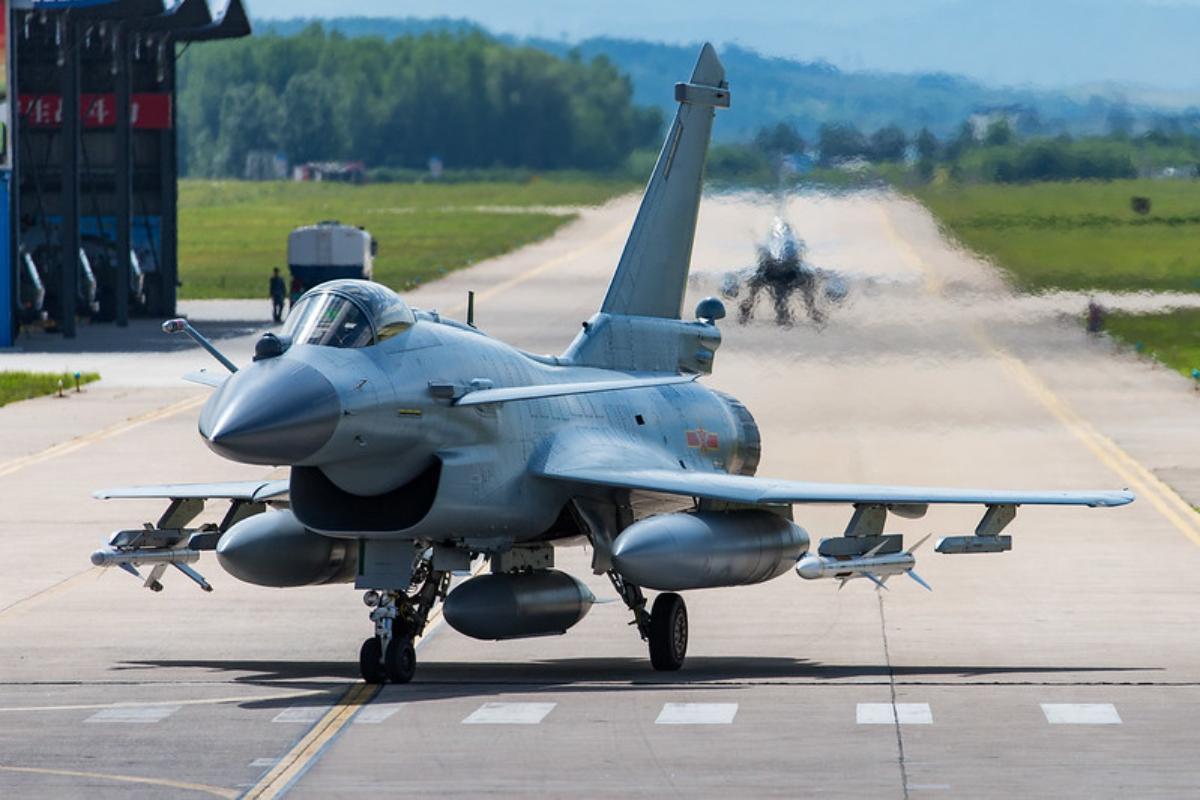
During the brief military conflict between India and Pakistan, the two sides reportedly engaged in an aerial duel. At the time, Pakistan claimed that it had used Chinese-origin J-10CE fighter jets armed with PL-15 long-range air-to-air missiles to down multiple Indian jets.
The Indian side did not accept any combat losses, but a French report quoted Dassault chief Eric Trappier as saying that one of the Rafales participating in the operation crashed due to a technical malfunction. Meanwhile, India claimed destroying nearly a dozen Pakistani aircraft inclding AEW&C aircraft and multiple jets on the ground, but Islamabad rejected Indian claims.
Nonetheless, Indonesia has reportedly been mulling the acquisition of the J-10C, a prospect that appeared to gain traction in Jakarta after Boeing officially ended its pursuit of the F-15EX earlier this year. China offered “battle-tested” J-10C to Indonesia less than a month after the Indo-Pakistan conflict, as disclosed by the Southeast Asian country’s Deputy Defense Minister Donny Ermawan Taufanto.
Most of these export sales have yet to go through and remain in the pipeline indefinitely. In fact, Beijing has been unable to finalize a deal for the J-10C despite aggressively pitching the aircraft to African and Southeast Asian countries over the past few years.
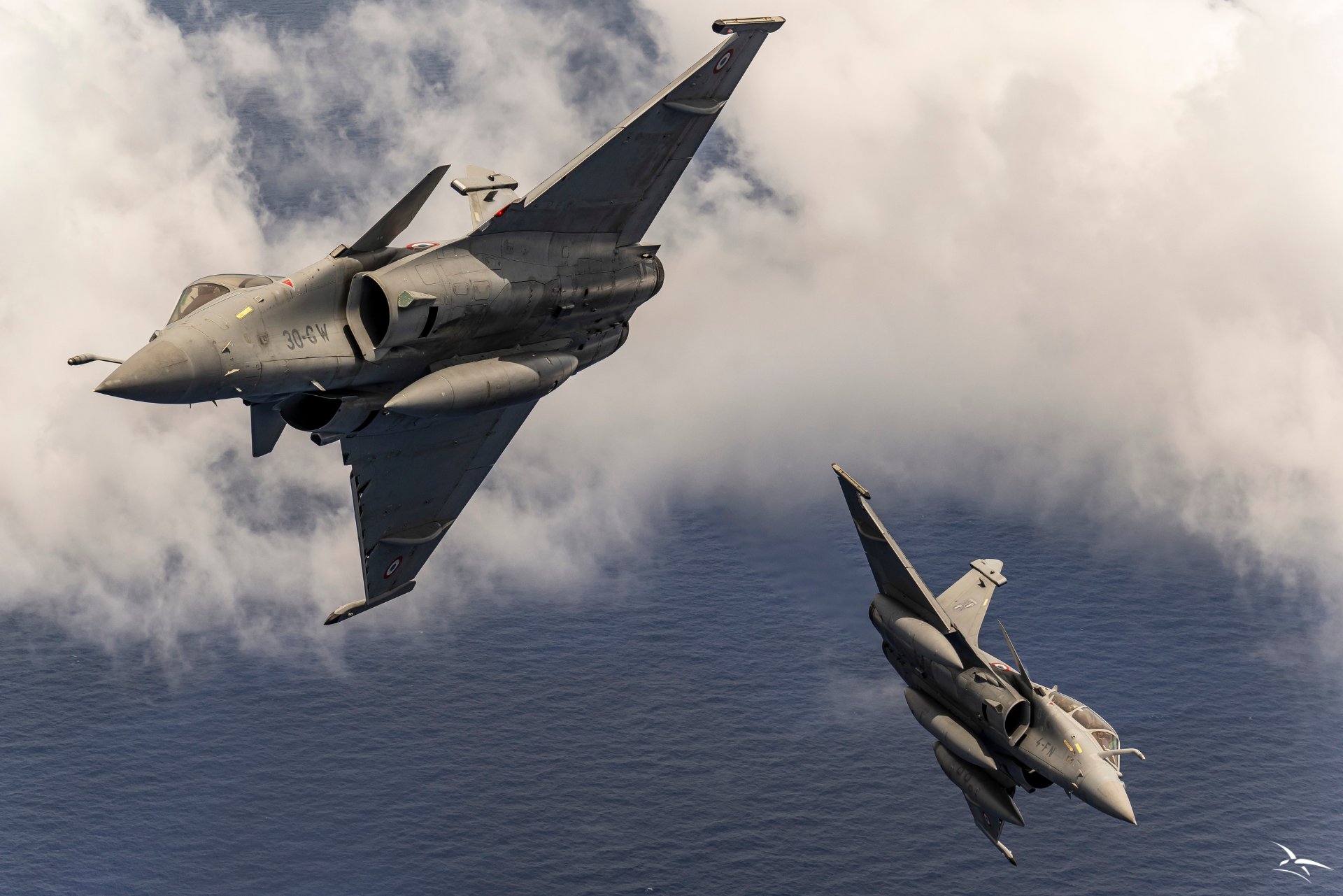
Interestingly, China’s intensified efforts to sell its arms—including fighter jets—to partners come after two popular aircraft suffered setbacks recently: the Dassault Rafale and the Boeing F-15.
While India lost one Rafale during the Indo-Pakistan conflict in May 2025, the US lost four F-15E Strike Eagles (including three cases of friendly fire) during Operation Fury (including friendly fire) in the war with Iran recently, which triggered a massive search and rescue operation for the downed crew and led to cascading losses.
Both jets may have suffered reputational damage, though confidence in them remains upbeat. For instance, India is in the process of finalizing a deal to purchase 114 Rafale fighters, whereas the US budget document reveals that the US Air Force is more than doubling the planned size of its new F-15EX Eagle II fleet.
China’s AVIC Chengdu said at a Q&A last week that global arms sales remain a strategic focus for the state-owned aviation company. However, it remains to be seen whether Chinese aircraft can pose a formidable challenge to the Rafale and the F-15EX in the future.
China Records A Steep Cut In Arms Imports
Besides focusing on arms exports, China has also been ramping up production.
AVIC, which also produces the fifth-generation J-20 stealth fighter, and its home city of Chengdu, Sichuan province, inked a deal in February to increase aerospace production. Meanwhile, AVIC Shenyang Aircraft Co., manufacturer of the fifth-generation J-35 fighter, reported sales of 44.7 billion yuan in 2025 and a 3.7% increase in profit from 2024.
AVIC Shenyang stated that increased sales and continued manufacturing expansion were the reasons for the higher earnings. A new manufacturing facility is expected to begin mass production this year, as notified by the Liaoning provincial government, where AVIC Shenyang is based.
Not just that, it has now drastically reduced arms imports.
A report by the Stockholm International Peace Research Institute (SIPRI) released earlier this year stated that Beijing’s imports of weapons have plummeted by about three-quarters over the last five years as it has substituted indigenous technology for foreign weapon purchases.
At the same time, other regional nations have expanded their arms acquisitions from other countries due to “fears over China’s intentions.”
Between 2021 and 2025, countries in Asia and Oceania purchased 31% of the world’s weapons, second only to Europe’s 33%, according to the report.
However, compared to the preceding five years, the region’s share of weaponry imports decreased by 20%.
The report attributes this to declines in arms sales to China, where imports dropped by 72%; South Korea, which reduced purchases by 54%; and Australia, which reduced purchases by 39%.
The report further noted that for the first time since the 1991–1995 period, China was not among the top 10 recipients of global arms, plummeting to 21st place.
The report highlighted that although China still imports 66% of its arms from Russia, it has been rapidly replacing Russian equipment with its own, such as aircraft engines and helicopters.
Notably, Pakistan’s imports of weapons increased by 66% between 2016–20 and 2021–25, with China as its top arms supplier, accounting for 80% of the nation’s purchases in 2021–25, up from 73% in 2016–20.
“Fears over China’s intentions and its growing military capabilities continue to influence armament efforts in other parts of Asia and Oceania, which often still depend on imported arms,” said Siemon Wezeman, a senior SIPRI researcher in arms transfers. “In South Asia, the high volume of arms that India imports is largely due to the perceived threat from China and to India’s long-running conflict with the main recipient of Chinese arms exports, Pakistan,” Wezeman added.
Despite an 11% increase in arms sales, China fell one spot to fifth in the world rankings for arms exports, with a 5.6% share. With a 5.7% share, Germany surpassed China.
However, going by AVIC’s assertion, it seems as though Beijing is pulling all its cards to expand arms exports.
- Contact the author at sakshi.tiwari13 (at) outlook.com
- Follow EurAsian Times on Google News