Russia’s newest cruise missile, the S-71K Kovyor, is purportedly equipped with a range of Western-origin components, in the latest indication that Moscow continues to circumvent international sanctions to keep its war machine running.
The Main Directorate of Intelligence (GUR) of the Ukrainian Ministry of Defense has released key details of the S-71K Kovyor, most notably, a 3D model. “The new missile was first deployed by the enemy late last year and appears to represent the United Aircraft Corporation’s (UAC) initial venture into missile manufacturing,” the agency stated.
Notably, the missile prominently features a vast majority of electronic components originating from countries like the United States, Germany, Japan, Switzerland, Ireland, China, Taiwan, etc, highlighting how the West has been unable to prevent critical components from reaching Russia despite a strict international sanction regime in place since Russia launched the invasion of Ukraine in February 2022.
“Continued access to foreign technologies and components allows the aggressor state to develop new weapons and scale their use in the war against Ukraine,” the GUR stated.
Russian weapons are regularly found with Western components, as also highlighted by the EurAsian Times on several occasions.
GUR has published details of the Russian S-71K Kovyor cruise missile with a probable range of up to 300km and an OFAB-250-270 aviation bomb as the warhead. Russia is considering arming the S-70 Okhotnik UCAV with it. https://t.co/3JtTqpBrrm pic.twitter.com/oqTPRscZRO
— Rob Lee (@RALee85) April 27, 2026
In October 2024, the Ukrainian forces managed to down the Russian S-70 Hunter drone near Kostyantynivka, Donetsk Oblast. Upon examination, it was discovered that the drone allegedly contained components from US companies such as Analog Devices, Texas Instruments, and Xilinx-AMD, as well as from Swiss company STMicroelectronics and German firm Infineon Technologies.
Not just that, the main irritant for Ukraine—Russia’s Geran-2 or Shahed-136 drone—is also made up of Western components.
Earlier this month, reports in local Ukrainian media revealed that the drone was found with US-origin components manufactured in late 2025. “In Shahed drones used by Russia to attack Ukraine in late March 2026, US-made components manufactured in late 2025 were identified,” Vladyslav Vlasiuk, the Commissioner for Sanctions Policy of the President of Ukraine, stated, emphasizing the short window of time it takes for the parts to reach Russia.
Ukraine’s Defense Intelligence Directorate (GUR) revealed that a downed Russian S-70 Hunter-B drone contained over 30 Western-made components.
— Including microelectronics from U.S. companies like Analog Devices, Texas Instruments, and Xilinx, as well as Infineon (Germany) and… pic.twitter.com/5G7z03BiJu
— Clash Report (@clashreport) November 9, 2024
Ukrainian President Volodymyr Zelensky claimed last year that the drones and missiles Russia used to attack Ukraine on October 5 “contained over 100,000 foreign-made components,” including parts from British, German, and American companies.
In November 2025, the GUR released information on foreign equipment used by Russia in the manufacture of weapons, including from firms such as Taiwanese AKIRA SEIKI, Japanese Okuma Corporation, and Korean Samsung Machine Engineering Company. The agency highlighted that Moscow was producing a Unified Module for Gliding and Guidance (UMPK) kit for glide bombs, missiles, and artillery ammunition through these shipments.
At the time, the GUR highlighted how components from Japan’s Matsuura Machinery Corporation were aiding Russia in producing missiles like the Kh-59 and Kh-101 that frequently strike Ukrainian cities.
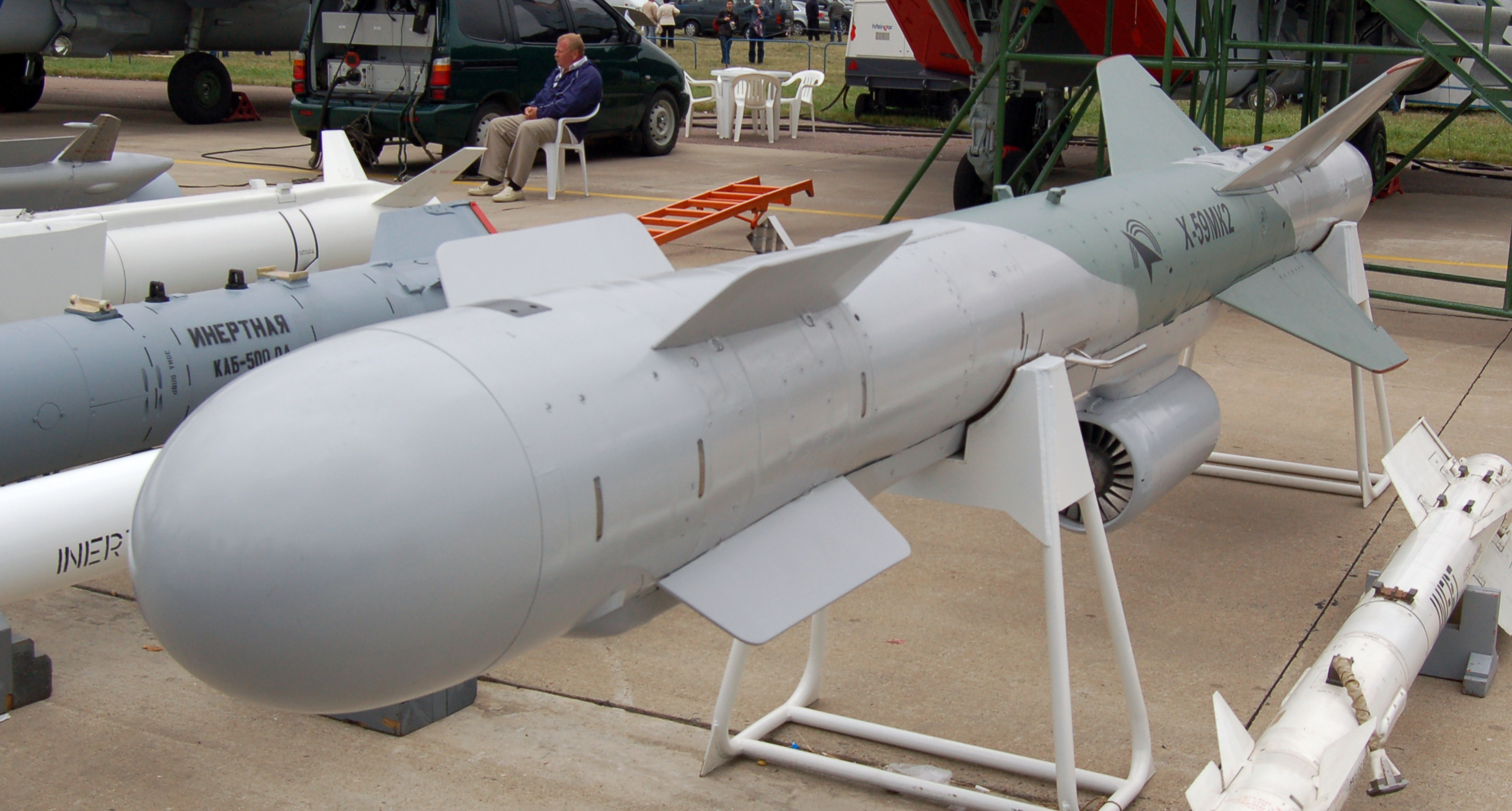
Meanwhile, the components from Japanese Okuma and Chinese Hision machining centers were being used by Russia’s Tactical Missile Armament Corporation to produce planning and correction modules for weapons, such as glide bombs and cruise missiles, and equipment from Korean Samsung Machine Engineering Company (SMEC) was used to produce the external structure for unguided missiles and large and medium caliber shells.
Databases by Ukrainian agencies have cataloged thousands of distinct foreign components across nearly 200 Russian weapon types. Common components include navigation modules, microcontrollers, FPGAs, voltage regulators, oscillators, and memory chips—all of which enable precision guidance, flight control, and targeting —and Russia’s domestic microelectronics industry has purportedly struggled to fully replicate them at scale.
While Western sanctions target military-end-use exports, evasion persists in multiple ways. This includes rerouting through third countries, such as Central Asia, China, and Turkey, and circumventing restrictions by using dubious means, such as shell companies, transshipment, and false end-user declarations. Additionally, Russia also allegedly often exploits dual-use loopholes, as pointed out by Ukrainian agencies.
This has led some analysts and frustrated Ukrainians to question whether the sanctions are even working—a concern that is further confirmed with the newest S-71K Kovyor missile also brandishing Western-origin components.
Notably, the latest revelation comes days after the GUR published details on the companies involved in manufacturing the Su-57 fighter.
“A third of these enterprises are currently not subject to restrictions by any country in the sanctions coalition. This allows them to maintain access to foreign technologies and component bases necessary for the development of russian combat aviation,” the GUR stated at the time.
What Do We Know About The Newest S-71K Kovyor?
The S-71K Kover cruise missile has been developed by the United Aircraft Corporation (UAC) for external carriage on the Su-57 stealth aircraft. It is a standoff air-to-ground weapon designed to strike fixed or pre-surveyed targets, particularly in contested airspace. It complements other Su-57 weapons by offering a simpler, potentially cheaper, and more scalable option than more advanced precision missiles.
“A 250-kg FAB-250-270 high-explosive fragmentation aerial bomb, integrated into the payload frame of the missile’s nose, is used as the warhead,” the GUR stated. The S-71K, which has a low-observable airframe, carries this bomb, developed during the Cold War as a free-fall air-launched weapon.
The missile has a range of up to 300 kilometers and is powered by an R500 turbojet engine, produced by Reynolds LLC, a UAC subsidiary. It reportedly travels at subsonic speeds and can fly at medium altitudes.

“The body is made of a multi-layer fiberglass-based material with additional reinforcement, while internal elements are made of aluminum alloys,” the GUR adds. According to reports, the missile has a somewhat stealthy shape, thanks to its trapezoidal cross-section airframe, chined nose, pop-out, sweeping wings, and inverted V-tail.
The top-mounted conformal engine intake, which feeds a pentagonal intake duct, was also visible in available imagery of the wreckage.
The S-71K is described as “low-observable,” or stealthy, in its shape to reduce radar cross-section (RCS). Its body has an irregular/faceted configuration that lowers its signature compared to conventional cruise missiles like the Kh-59 family.
This helps when launched from the Su-57, allowing the fighter to remain at a safer distance while the missile is harder for enemy radars to track.

The S-71K is carried externally, unlike some internal-bay weapons.
The missile is guided by a basic inertial navigation system (INS) based on simple sensors, possibly with GLONASS support. Moreover, it appears optimized for pre-programmed or coordinate-based strikes rather than highly sophisticated terminal seekers.
The S-71K fits into Russia’s broader effort to modernize the Su-57’s arsenal with a mix of standoff weapons, loitering munitions, and hypersonic options.

The missile essentially complements missiles like the Kh-69 or Kh-101, which have longer ranges and greater precision.
“Its design reflects a hybrid approach, combining elements of guided munitions with relatively simple engineering solutions, suggesting an attempt to balance cost, scalability, and effectiveness,” states Ukraine-based publication, Defense Express.
Currently, there is no indication of whether the missile has been integrated with other tactical jets in the Russian Aerospace Forces. However, with the war dragging on and the Russian military expending missiles faster than they could be produced, the new, cheaper cruise missile may be adapted to arm other combat aircraft attacking Ukraine.
- Contact the author at sakshi.tiwari13 (at) outlook.com
- Follow EurAsian Times on Google News