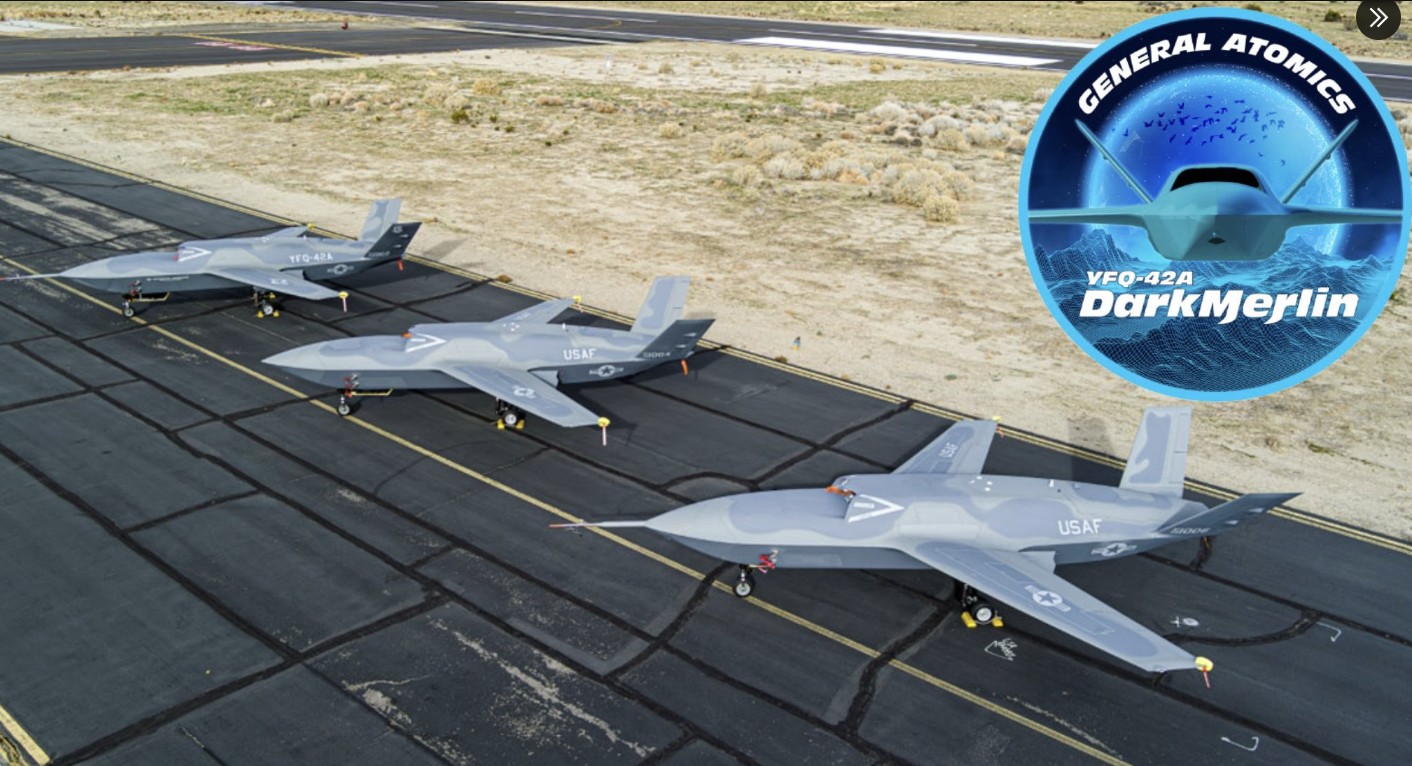
Earlier this week, the U.S. Air Force awarded production contracts to General Atomics for its FQ-42A Dark Merlin and to Anduril for its FQ-44A Fury under the Collaborative Combat Aircraft (CCA) program. These semi-autonomous “loyal wingman” drones mark a major step forward in the service’s push for affordable, attritable uncrewed combat aircraft.
This dual “split buy” decision ranks among the most significant USAF contracts in recent years—second only to Boeing’s selection last year to develop the Next Generation Air Dominance (NGAD) platform, the crewed F-47 (sometimes referred to as the Phoenix), America’s first sixth-generation fighter.
In the coming years, these CCAs will fly alongside the F-47 and other manned fighters, such as the F-35 and F-22.
They will share sensors, act as force multipliers, conduct strikes, serve as decoys, or saturate enemy defenses, ushering in a new era of manned-unmanned teaming that dramatically expands combat mass, reduces risk to pilots, and reshapes aerial warfare.
Though these contracts have been awarded to three different companies – General Atomics, Anduril, and Boeing – the shadow of the F-35 Joint Strike Fighter (JSF) contract, awarded to Lockheed Martin in 2001, still looms large over the U.S. government.
Even 25 years later, that landmark deal continues to shape the language, structure, and risk-mitigation strategies of major U.S. defense contracts.
How The 2001 JSF Contract Still Influences the U.S. Defense Procurement Culture
The U.S. Department of Defense awarded the System Development and Demonstration (SDD) contract for the F-35 Joint Strike Fighter (JSF) program to Lockheed Martin on October 26, 2001. This followed the fly-off between Lockheed Martin’s X-35 and Boeing’s X-32 demonstrators, where the X-35 was selected as the winner.
This contract officially launched full-scale engineering and development of the F-35 Lightning II.
The first F-35 variant officially entered service in 2015.
Over the last decade, the F-35 Lightning II has become one of the most successful fighter jets.
In fact, there are more F-35s in service globally than all other stealth fighter jets (F-22 Raptor, J-20 Mighty Dragon, J-35A, and Su-57 Felon) combined, a testament to the fighter jet’s huge popularity.
Currently, more than 1,300 F-35s are in service globally, with more than 850 in service in the US military alone.
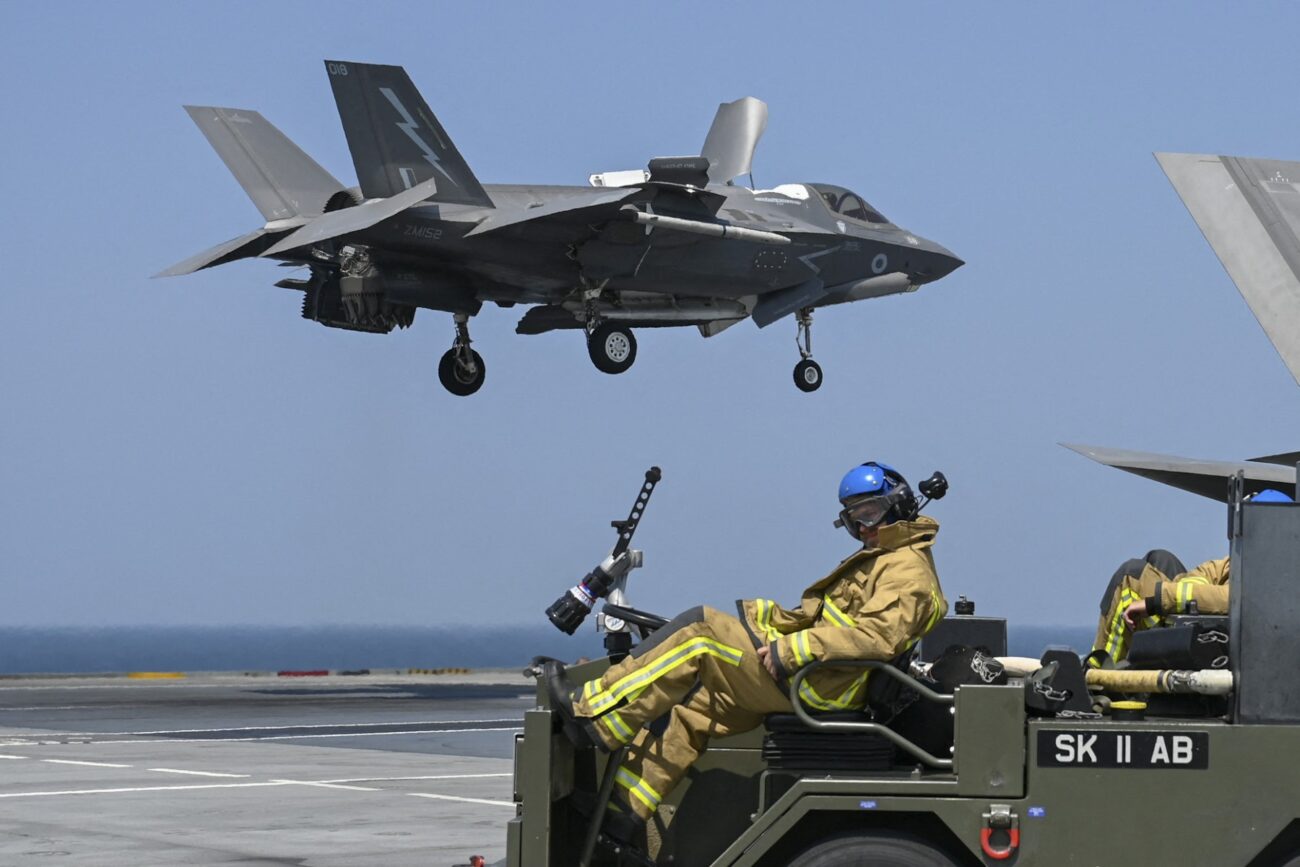
However, the original F-35 contract with Lockheed Martin left critical gaps, particularly in sustainment, technical data rights, and long-term support responsibilities, that have significantly driven up the program’s maintenance, reliability, and upgrade costs.
In fact, the U.S. (along with international partners) is now projected to spend approximately US$2.1 trillion on the full lifecycle of the F-35 program through 2088. This massive figure covers development, procurement of roughly 2,470 aircraft, and decades of operations and sustainment.
Further, the U.S. Government Accountability Office (GAO) reported in April 2024 that the cost to sustain the aircraft fleet through 2088 would be US$1.58 trillion, a 44% increase over GAO’s 2018 estimate.
These challenges highlight ongoing issues with contractor-led maintenance, spare parts availability, and the high cost of maintaining advanced stealth coatings, sensors, and software systems.
Lockheed Martin retains substantial intellectual property (IP) rights over much of the F-35’s software and technical data.
The original contract structure, influenced by the “Total System Performance Responsibility” (TSPR) approach, gave the prime contractor broad control.
This has created ongoing dependency for Software updates and upgrades, Maintenance data, and Sustainment.
In fact, the government has faced repeated issues securing full access or rights, leading to negotiations, litigation, and payments to Lockheed for data.
For instance, Lockheed Martin and the F-35 Joint Program Office (JPO) were in a five-year legal dispute over intellectual property rights for key software algorithms in the F-35-in-a-Box (FIAB) software used in the Joint Simulation Environment (JSE).
The JSE is a high-fidelity virtual simulator used for operational testing, tactics development, and training against advanced threats.
In 2024, Lockheed and the US government reached a settlement.
Similarly, in 2022, senior F-35 program officials publicly stated that the Pentagon would need to pay Lockheed Martin approximately US$500 million to obtain and deliver the technical data needed to properly manage F-35 parts and sustainment.
While the F-35 remains a capable platform, its long-term ownership costs have become a major lesson for future US defense programs such as NGAD and CCA.
In fact, in 2023, then-USAF Secretary Frank Kendall publicly stated that the Air Force is focused on avoiding the mistakes that plagued past programs such as the F-35.
That includes ensuring the Air Force has access to all the sustainment data it needs from the contractor building the Next Generation Air Dominance platform, Kendall told reporters at a breakfast roundtable hosted by the Defense Writers Group.
“We’re not going to repeat the, what I think frankly was a serious mistake that was made in the F-35 program” of not obtaining rights to all the fighter’s sustainment data from contractor Lockheed Martin, Kendall said.
Talking about the ‘Total System Performance Responsibility’ (TSPR), Kendall said that under this approach, a contractor that won a program would own it for its entire lifecycle.
“What that basically does is create a perpetual monopoly,” Kendall said. “I spent years struggling to overcome acquisition malpractice [on the F-35], and we’re still struggling with that to some degree. So we’re not going to do that with NGAD.”
Indeed, the final NGAD contract, awarded to Boeing in March, 2025, clearly incorporated many of these hard-learned lessons from the F-35 program.
For instance, while Lockheed Martin owns complete IP and Data rights for the F-35 program, for the F-47, the IP and data rights will be owned by the government, not Boeing. This will avoid perpetual dependency on the prime contractor.
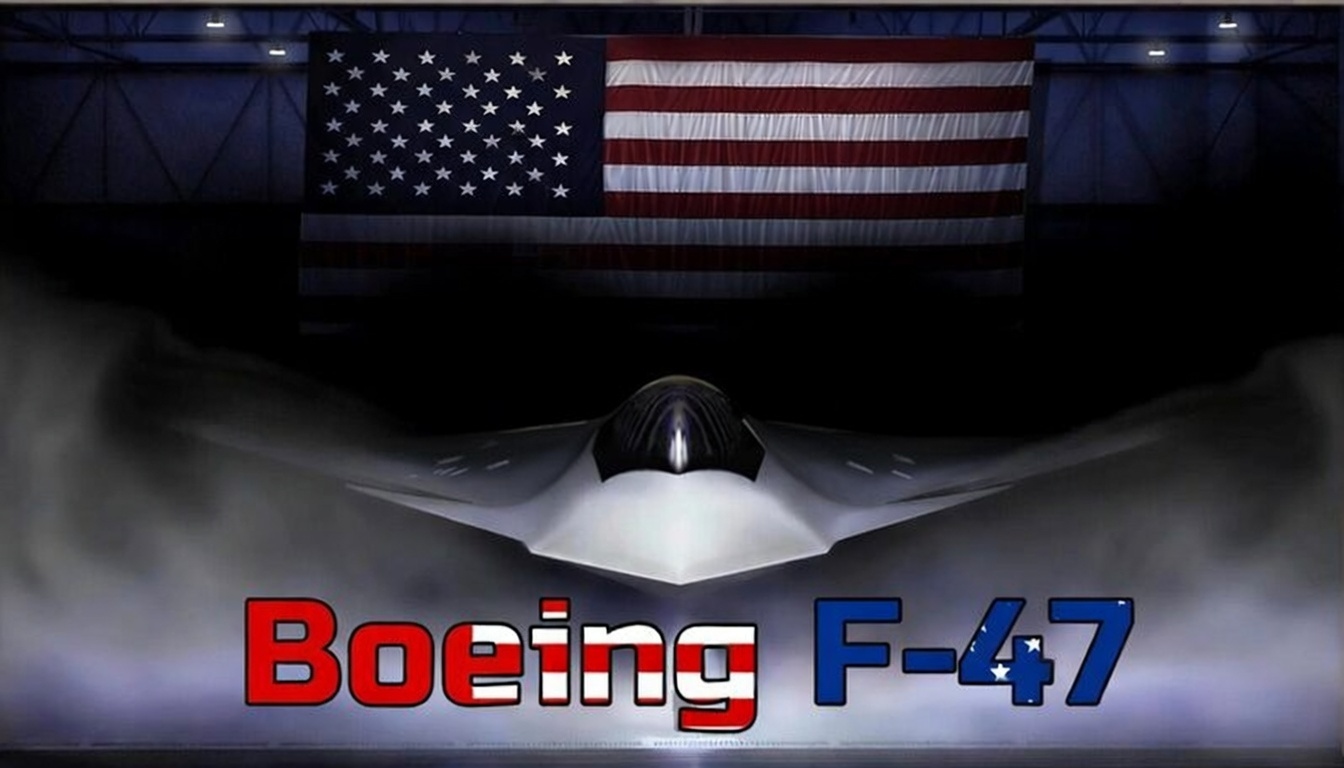
Similarly, Lockheed enjoys a monopoly on the F-35 upgrades; the F-47 contract, however, adopts a Modular Open Systems Approach (MOSA) with an open architecture and standardized interfaces, allowing competition for subsystems and software.
Another handicap with the F-35 program that has driven up JSF costs is excessive concurrency. Lockheed began large-scale production before development was complete, necessitating expensive retrofits.
Again, rather than building an overtly complex system, in the case of the F-47, the USAF wants to follow a distributed responsibility approach, where Boeing will develop the manned fighter jet, whereas its loyal wingman drones will be built by Anduril and General Atomics; therefore, avoiding giving a single company complete monopoly and control over a crucial platform.
This same approach is also followed in the CCA contract.
For instance, instead of allowing vendor lock-in for software and upgrades, the CCA contract decouples hardware from software.
The CCA treats autonomy software as a separate competitive line item.
The contract awarded to Anduril and General Atomics is only for the hardware component.
For the software, the Pentagon has already built a pool of six companies, including Anduril, General Atomics, Lockheed Martin, Northrop Grumman, RTX Collins Aerospace, and Shield AI.
There will be a separate competitive bid for the autonomy/mission software.
The Pentagon has also decided to split the hardware contract into two parts, awarding one to Anduril and the other to General Atomics, thereby ditching the long-favored ‘winner takes all’ approach and avoiding excessive dependence on a single contractor.
Furthermore, the CCA contract also follows Mandatory MOSA (Modular Open Systems Approach) with open interfaces. This will ensure that no single company will own the core autonomy “brain,” and multiple vendors can develop algorithms that work across platforms.
The US government will also own full data rights from day 1.
All these measures help break the prime contractor’s stranglehold on software and upgrades through open architecture, government-owned reference architectures, and the deliberate decoupling of hardware and software acquisition.
Clearly, the Pentagon has learned its lessons from the costly mistakes in the F-35 contract and is determined not to repeat them in future procurement deals.
- Sumit Ahlawat has over a decade of experience in news media. He has worked with Press Trust of India, Times Now, Zee News, Economic Times, and Microsoft News. He holds a Master’s Degree in International Media and Modern History from the University of Sheffield, UK.
- He can be reached at ahlawat.sumit85 (at) gmail.com