The U.S. has approved a possible Foreign Military Sale (FMS) to Ukraine to purchase Air Defense Development Upgrades and related equipment & services at an estimated cost of $2.68 billion.
Ukraine will likely finance the weapons acquisition through a combination of European contributions and U.S. Foreign Military Financing (FMF) appropriated during the Biden Administration.
Kyiv has requested to acquire S-300 Clone missiles, GAM-67 missiles; Range-Extended Air Defense Laser Guided Rocket missile systems, Improvised Transporter Erector Launcher 1.5, mobile launching system modification kits, RPS 202 counter-Unmanned Aircraft System radars, erectable mast trailers, major modifications, and maintenance support; spare parts, consumables and accessories, and repair and return support; software; publications; transportation support; U.S. Government and contractor engineering, technical, and logistics support services; and other related elements of logistics and program support.
The principal contractor(s) will be selected through competitive procurements conducted by the Pentagon in accordance with the Federal Acquisition Regulation.
If the sale goes through, it would boost Ukraine’s capability to meet current and future threats by further equipping it to conduct self-defense and regional security missions with a more robust air defense capability.
One of the most interesting weapons systems that catches instant attention is the S-300 clone missile.
Ukraine entered the full-scale war with one of Europe’s largest leftover Soviet-origin S-300 AD systems. The S-300 launchers are still very much operational, but Kyiv has a limited stock of the interceptor missiles.
Russia originally developed the 5V55-family interceptors, but those stocks have been burned through over four years of defending cities and critical infrastructure in Ukraine.
Washington has been circling this problem since at least September 2024, when then-Defense Secretary Lloyd Austin said Washington was working with Kyiv and European industry on a replacement for the S-300 missile and the R-27 air-to-air missile.
In August 2026, retired U.S. Army Col. Robert Hamilton said a joint U.S.-Ukrainian effort to retrofit old S-300 missiles or field a newer variant was expected to become operational near the end of 2026, with output of about 100 to a couple hundred missiles a year.
The State Department has not confirmed the exact numbers.
Interestingly, the S-300 is not really a copy of the 5V55 missile. It is a new interceptor that can be fired from Ukraine’s S-300 launchers. Like the US developed drone similar to the Iranian Shahed, i.e., LUCAS—it’s not a copy but is greatly inspired by Shahed drones. The same appears to be the case with the S-300 “clone missile”.
Ukraine has been pleading for more Patriot missiles and even urged the US to grant it a license to produce Patriot interceptors domestically, as it remains helpless against Russian ballistic threats.
Ukraine cannot defend itself with Patriots alone. Patriot interceptors are scarce, expensive, and now also in demand because of the ongoing war in Iran. If the US can stock the S-300 launchers, Ukraine would have a capable system to defend its airspace.
It could at least neutralize the cheap laser-guided rockets and the daily Shahed problem that would otherwise consume high-end interceptors. The American aim is clear: to boost Ukraine’s ability to conduct “self-defense and regional security missions with a more robust air defense capability.”
However, this is a possible sale, not a confirmed delivery schedule. Congress can still object.
Competitive contracting means the first missiles may be months away even after approval. Production of 100–200 S-300-class interceptors a year, if Hamilton’s figure is right, would not refill a pre-war force of dozens of battalions, but it would at least fill some gaps in Ukraine’s air defense.
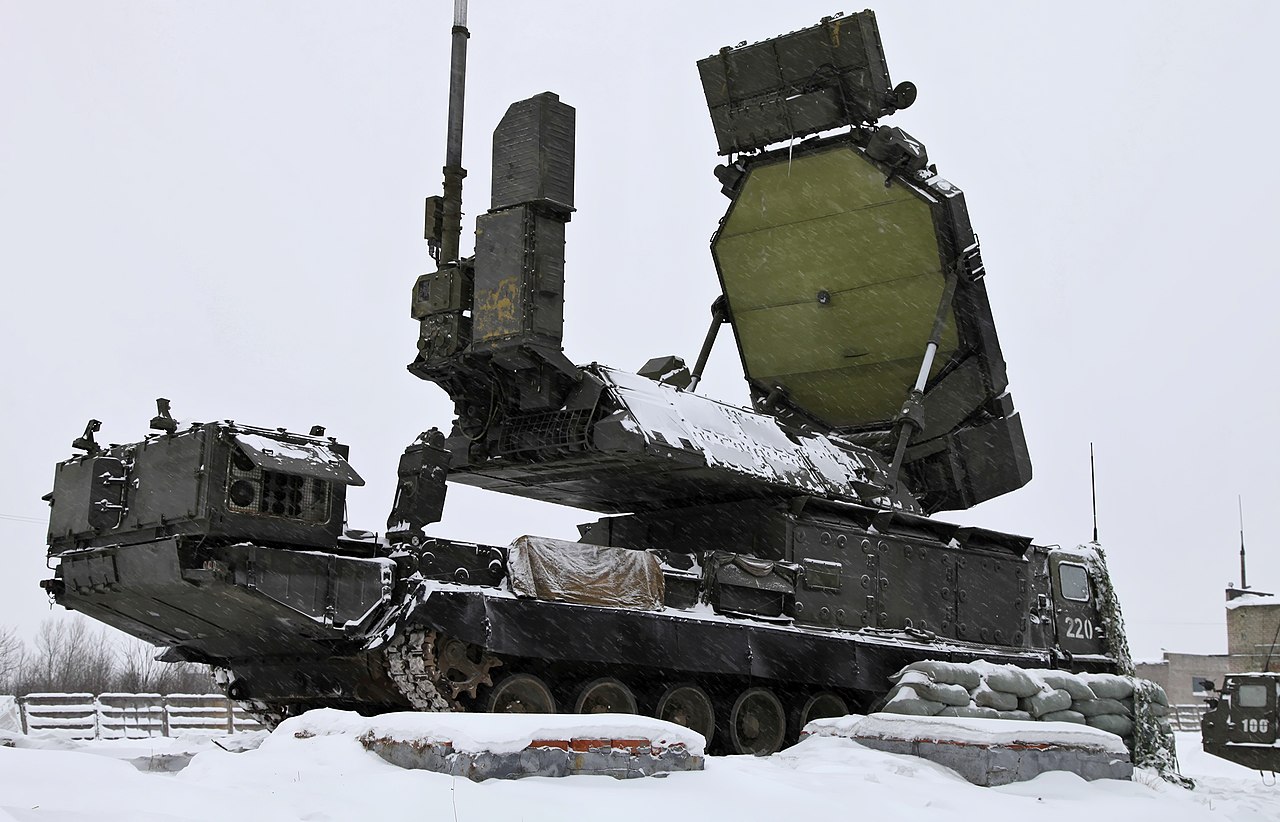
5V55 Missile
Designed by Fakel and fielded with the S-300PT from 1978, it was the Soviet answer to the Western threats: a long-range interceptor that could be fired vertically and engage targets near the stratosphere.
There is not one 5V55. The first service missile, the 5V55K, was command-guided from the ground and reached about 47 kilometers. The 5V55R, adopted in the early 1980s for the S-300PS and later PT upgrades, added track-via-missile guidance.
The missile picked up radar energy reflected from the target, sent that picture back to the engagement radar, and received corrected steering commands. That stretched the fight out to about 75 kilometers and made the shot harder to jam than a pure command round.
Later stretches, including the 5V55U and 5V55RUD, pushed the published envelope toward 90 kilometers. Top speed is in the Mach 5 class. Early variants were rated against targets flying around 1,300 meters per second — fast aircraft and cruise missiles, not the ballistic problem Ukraine now.
The 5V55 was built to kill bombers, fighters, and low-flying attack aircraft. It was not built to do the job of a Patriot interceptor missile, which could neutralize missiles like the Iskander or “hypersonic” Kinzhal.
Russia is the original producer of the missile, and Ukraine cannot buy from Russia, and leftover allied stocks of 5V55-family rounds are finite. A new “S-300 Clone” only makes sense against that background.
The launcher is still there. The 5V55 is what is running out. The question is: how quickly can the US supply the S-300 “clone missiles” to Kyiv?
By: ET Online Desk