

Iran’s effort to acquire Russian fighter jets is nothing new. Now, as EurAsian Times reported, Iran’s Army spokesperson said Tehran has completed the purchase of Russian Su-35 jets and could receive them after the conflict with the US ends.
On multiple occasions, the US managed to block or thwart the sale of cutting-edge jets to Tehran, whether it was MiG-29 nuclear-capable fighter jets or MiG-31 Interceptors, arguably the most successful warplane in the ongoing war in Ukraine.
Iran purchased about 18 MiG-29 fighter jets from the Soviet Union in 1989. Deliveries began the following year, in 1990, giving the Iranian Air Force its first modern jets after years of struggling to keep its older American aircraft flying.
During the 1991 Gulf War, several more Iraqi MiG-29s were flown to Iran by pilots seeking to escape the conflict. Iran kept the aircraft and later incorporated them into its own fleet.
After the Soviet Union collapsed in 1991, Iran tried to buy more MiG-29 fighters from Moldova, a former Soviet republic. Washington stepped in and purchased the aircraft instead, particularly to stop Iran from laying hands on an advanced, nuclear-capable combat jet.
US intelligence agencies noticed the MiG-29 as soon as it appeared in satellite photographs in the late 1970s. The aircraft looked sleek and advanced, and analysts judged it capable of matching the best American fighters of the period, including the F-15 and F-16.
The MiG-29 was a highly agile warplane. One of its most striking features was the AA-11 Archer short-range missile, which the pilot could aim using a helmet-mounted sight. This let the MIG-29 pilot lock onto targets well off the aircraft’s nose, at angles greater than those possible with American fighter jets.
When the Soviet Union finally disintegrated in December 1991, many former Soviet states inherited these advanced jets, including cash-strapped Moldova.
Washington worried another country could buy the MiG-29s and later use them in ways that threatened US interests or those of its allies. The US was especially concerned about the MiG-29C nuclear-capable version of the aircraft, which Iran allegedly sought at the time.
The US believed that Iran’s acquisition of nuclear-capable fighter jets could destabilize the entire Middle East and put its closest ally, Israel, in a precarious situation. Iran could have also threatened other key US allies like Saudi Arabia, UAE, Qatar, etc.
So, it decided to buy the aircraft from Moldova instead.
Then-Defense Secretary William Cohen said the United States had “credible information” that Iran and other countries were trying to buy advanced Russian equipment left over from the Soviet collapse.
“These MiG aircraft were on their shopping list,” he said.
Fourteen of the jets were MiG-29Cs, a version capable of carrying nuclear weapons. Cohen added that Iran was seeking chemical, biological, and nuclear capabilities, and that it was in US interests to keep the aircraft out of Iranian hands. The deal, funded through the Cooperative Threat Reduction program, cost roughly $40 million plus aid, according to Moldovan officials.
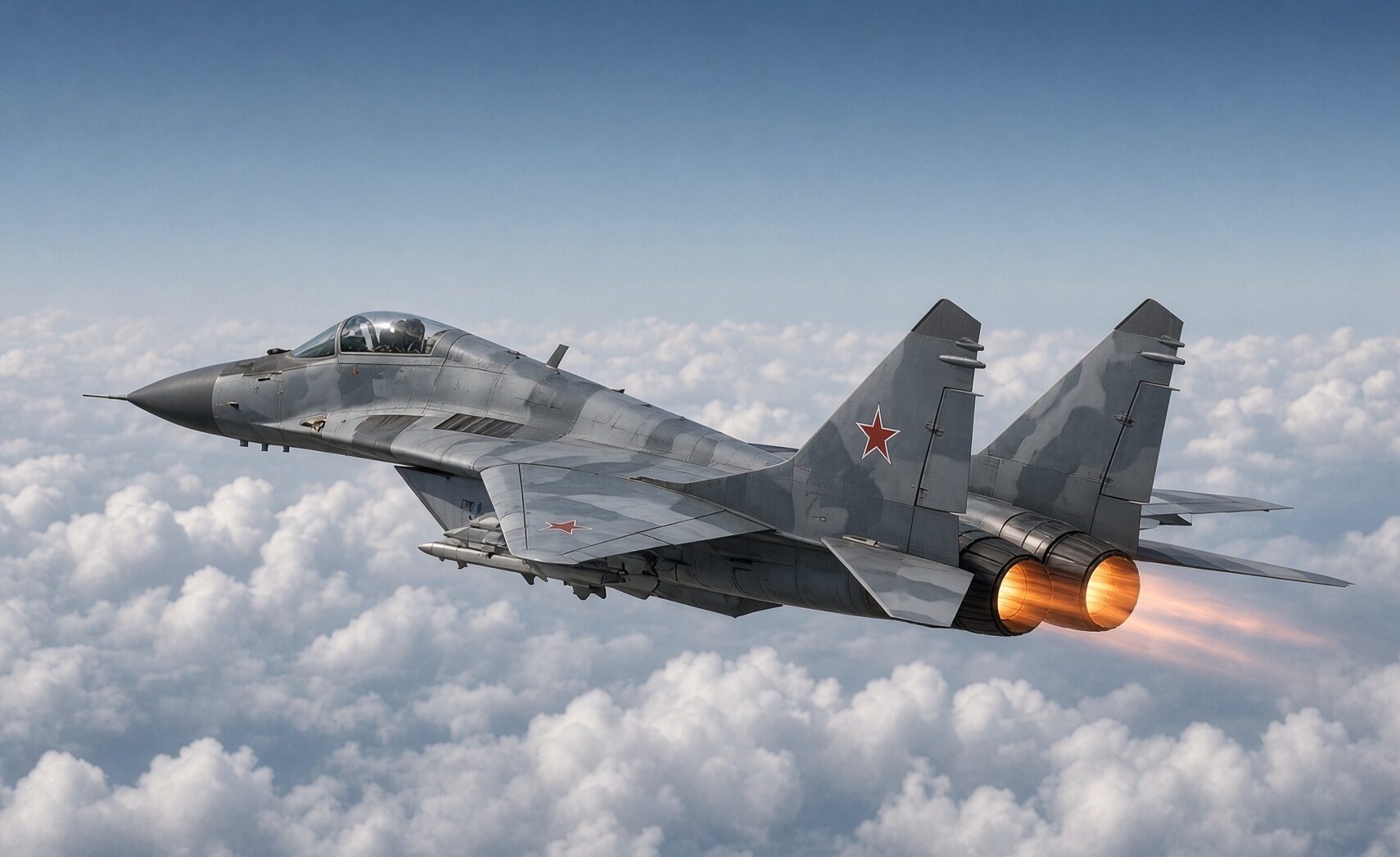
Under a deal reached in October 1997, the US purchased six MiG-29As, one MiG-29B, and 14 MiG-29Cs, along with 500 air-to-air missiles and all spare parts and diagnostic equipment at the Moldovan air base where the aircraft were stationed.
The US transported the jets to Wright-Patterson Air Force Base’s National Air and Space Intelligence Center on C-17 military transport aircraft.
This was a major setback for Iran.
The Iranian Air Force already operated a fleet of MiG-29s, and the Moldovan jets would have been a quick way to increase its military might and stature in the region.
Once the aircraft reached the US, they disassembled the airframes and tested each component’s capabilities. The US pilots studied, trained on, and flew the MiG-29s. Around the same time, the Israeli Air Force, keen to get a first-hand look at the MiG-29s, rented three fighter jets from an undisclosed East European country.
The MiG-29s greatly impressed the Israelis.
“It’s an advanced aircraft, and in close maneuvering engagements, it is terrific,” Israeli Air Force LTG M. said, according to reports. “It makes sharp turns, it’s quick, and in my opinion, as a platform, it does not fall short of our advanced fighter jets.”
Some former Moldovan MiG-29s were reportedly tested in the United States, including in dissimilar air combat training (DACT). This would have provided invaluable insights into the Soviet-built fighters, particularly the Fulcrum-C variant.
Meanwhile, years later, the deal returned to haunt Moldova.
Valeriu Pasat, who held the post from 1997 to 1999, was arrested in March 2005 and charged with abuse of power in connection with the sale of the 21 MiG-29s to the US.
Prosecutors said he sold the jets to the United States for only about $40 million, when Iran had reportedly been willing to pay far more, causing the state to lose roughly $55 million.
In January 2006, a Chisinau court convicted him and sentenced him to 10 years in prison. His lawyer, Gheorghe Amihalachioae, called the verdict “not fair” and said he would appeal.
During the trial, former Moldovan president Petru Lucinschi testified that Washington had pressed Moldova to sell the planes to the United States so they would not end up in Iran.
Pasat spent more than two years in prison. In 2007, an appeals court acquitted him on the MiG-29 charges and ordered his release under an amnesty. In July 2009, a further ruling cleared him of the remaining charges.
MiG-31 for Iran
The Moldova deal was not Iran’s only attempt to buy advanced Russian combat jets.
In 1990, while the USSR was intact, Tehran ordered 24 MiG-31 interceptors along with other aircraft.

The MiG-31 is a heavy, long-range interceptor designed to track and destroy aircraft at high altitude and long distances. It is much larger and more powerful than the MiG-29.
However, the Soviet Union collapsed before it could deliver the jets.
In 1992, Iran tried again. It placed a new order with Russia for 24 MiG-31s, along with more MiG-29s, Su-24s, and other aircraft.
Russian officials wanted the sale to succeed as Moscow needed hard cash after the collapse of the USSR. However, the US strongly opposed selling the cutting-edge interceptor jets to Tehran.
According to reports at the time, Washington pressured Moscow and even offered to buy the MiG-31s at a higher price than Iran was willing to pay.
Finally, Russia canceled the deal under American pressure.
Iran tried once more in 2001. This time, it reportedly paid in advance for 24 MiG-31 fighters to make it harder for Washington to block the sale. Again, US pressure on Russia led to the cancellation. Instead of fighters, Russia reportedly delivered air-defense systems to Tehran.
It would be interesting to see whether the US or Israel tries to block the sale of Su-35 jets, which can be dubbed Russia’s most advanced operational combat jets.
- Nitin holds a double master’s degree in Journalism and later Business Management from the University of Glasgow. He has over 20 years of global experience in MARCOM and Journalism and has worked & traveled widely across Europe, the Americas, and Asia. Nitin is the Editor of the EurAsian Times.
- Mail us at: editor (at) eurasiantimes.com