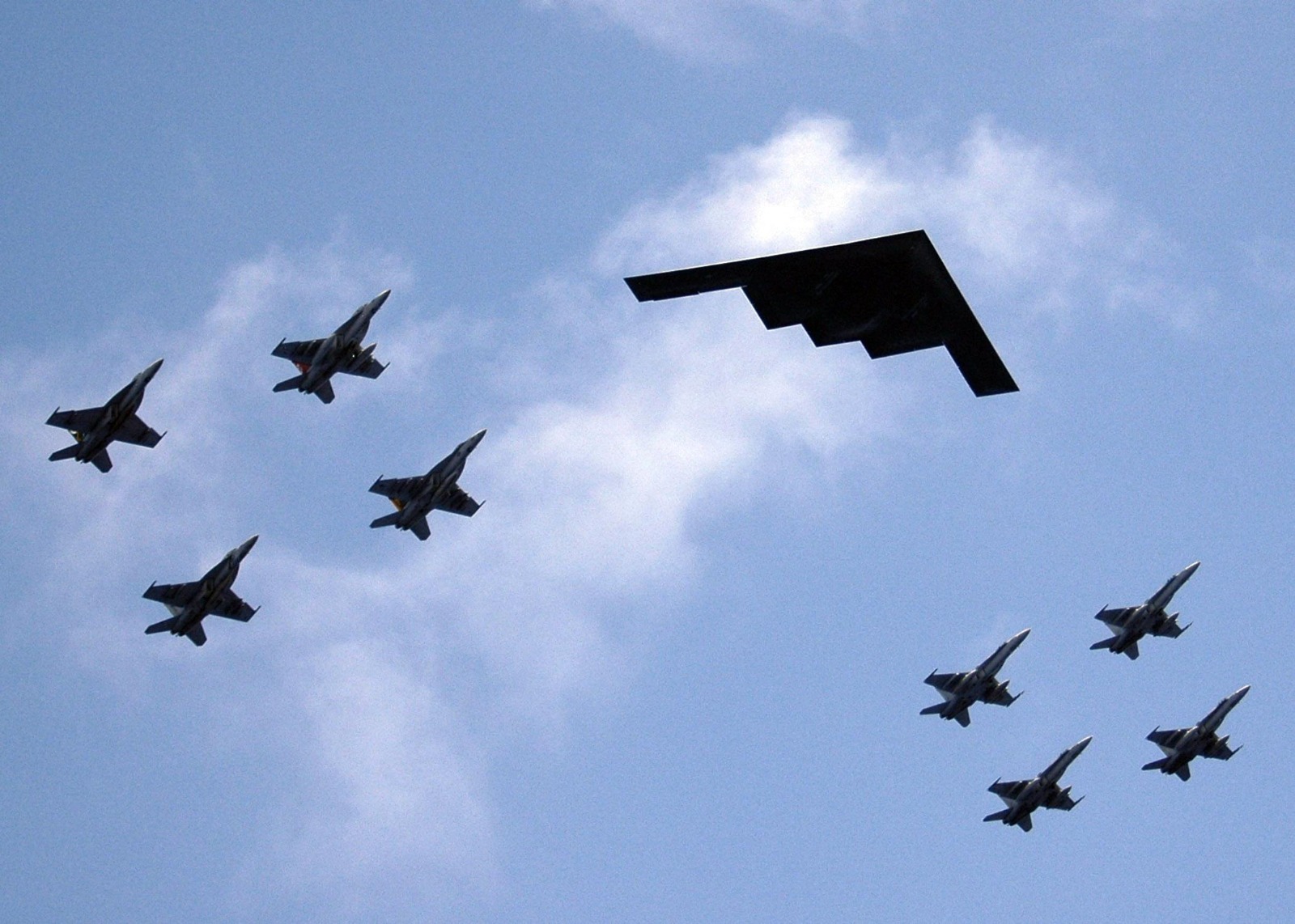


Had President Donald Trump achieved a perceptible victory in the Iran War, would the Republicans have won the mid-term elections by retaining their majority in both the Senate and the House of Representatives?
Perhaps.
An analysis in the EurAsian Times in April had suggested that Trump’s lack of clarity on Iran was only helping the Democrats, who, in any case, were projected to win even then in the opinion polls, in the absence of any significant achievements during Trump’s second term.
It was argued that Trump could still turn things around by going for “a win in Iran” months before the mid-term elections. That eventually did not happen, and even his MAGA supporters tried their best to stop him from winning the war, not to speak of the opposition Democrats. And the results are there now for all to see.
This is not to belittle several domestic issues, particularly inflation and the cost of living, that contributed to the Republican setback. But the Iran war seems to have emerged as a determining factor.
The EurAsian Times analysis draws on the historical lesson that Americans have little sympathy for Presidents who appear to start wars but cannot deliver victory. They may initially rally behind their commander-in-chief when the country goes to war. But if the conflict becomes prolonged, expensive, and inconclusive, patriotic enthusiasm gives way to frustration, anger, and electoral punishment.
This historical lesson has another angle. That is, a President who can present the American electorate with an unmistakable victory or a satisfactory conclusion against an enemy or adversary is always in a much stronger position to win elections.
Trump chose neither a decisive victory nor a politically convincing settlement. The consequences are now visible.
Let us see some examples:
In 1950, President Harry Truman, a Democrat, was riding high. He won an upset victory in 1948, contained communism in Europe, and authorized the Marshall Plan (for Europe’s economic recovery). Then came the war in Korea.
Truman went to war but was seen as hesitant to win it. He fired General Douglas MacArthur when the latter demanded total victory over China and North Korea. Truman eventually settled for a bloody stalemate along the 38th parallel.
However, the result was that in the 1950 midterms, Republicans came to control both the House and the Senate, running on the slogan “Korea, Communism and Corruption.” Truman’s approval collapsed to 22%. In 1952, Dwight D. Eisenhower, a general who promised “I shall go to Korea” and end the war on American terms, crushed the Democrats and won the Presidency.
The case of President Lyndon Johnson, another Democrat, proved to be more tragic, thanks to the Vietnam War. Otherwise, he was viewed as a legislative genius who passed the Civil Rights Act, the Voting Rights Act, and Medicare and Medicaid. On domestic policy, he was said to be one of the most successful American Presidents in history.
Though he had inherited a difficult situation in Vietnam, his decision, however, to dramatically escalate American military involvement transformed it into a defining political liability. He micromanaged bombing targets, ruled out invading North Vietnam, and tried to fight a war of signaling.
The Tet Offensive in January 1968, though a military defeat for North Vietnam, was portrayed as proof that America was not winning. Militarily, communist forces suffered enormous casualties, but the offensive did not achieve its immediate objectives.
Politically, it shattered the Johnson administration’s assurances that victory was approaching. Television images of fighting, together with growing American casualties, created a perception that Washington was losing control of the situation.
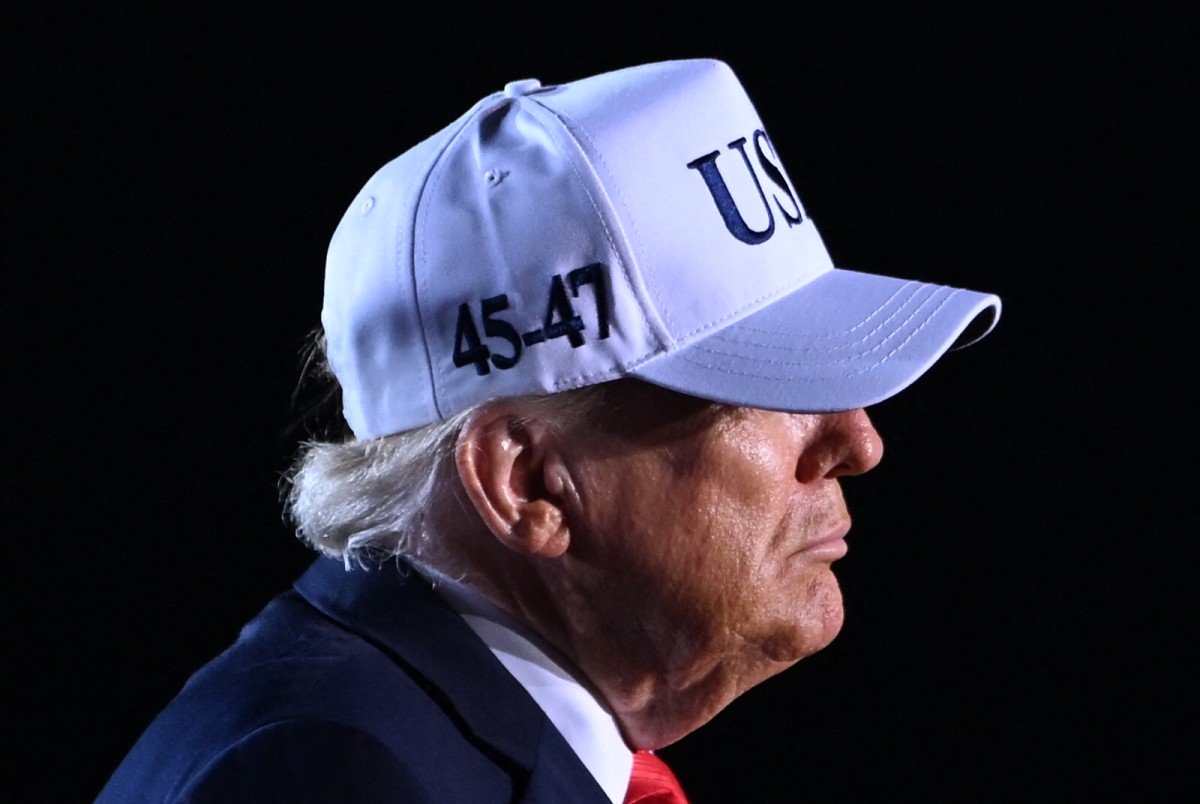
What was Johnson’s reward? In the 1966 midterms, Democrats lost 47 House seats, 3 Senate seats and barely managed to keep their hold on Congress. In 1968, his approval was 35%. He was challenged inside his own party by Eugene McCarthy and Robert Kennedy and was forced to announce that “I shall not seek, and I will not accept, the nomination of my party for another term as your President.”
Thus, the Vietnam War, which was not won, destroyed Johnson, a giant of domestic politics.
Richard Nixon, Johnson’s Republican successor in 1968, understood the mistake. He came in promising “peace with honor,” escalated the war massively with Operations Linebacker I and II, mined Haiphong harbor, and forced Hanoi to the table. In 1972, just after the bombings made it clear America would use overwhelming airpower, incumbent Nixon won the Presidency again with a 49-state landslide (he lost only the state of Massachusetts ).
The American people rewarded the image of a President who would bomb his way to victory. That he resigned subsequently over the Watergate scandal, the Congress later cut off funding, and South Vietnam fell in 1975 is a different story.
The Presidency of Jimmy Carter, another Democrat, was destroyed not by a declared war, but by the perception of American impotence in Iran. The Islamic Revolution of 1979 took American hostages and humiliated the United States for 444 days. Carter’s Operation Eagle Claw, the Desert One rescue attempt in April 1980, ended in burning wreckage in the Iranian desert. No wonder that the Republican Ronald Reagan won the Presidency in a landslide in 1980.
Incidentally, President George W. Bush’s case showed signs of both victory and defeat because of American wars. After 9/11, he invaded Afghanistan and toppled the Taliban in weeks. His approval hit 90%.
Similarly, after the initial invasion of Iraq in March-April 2003, when American tanks rolled into Baghdad and Saddam’s statue fell, his approval surged again, and Republicans expanded their majority in the 2002 midterms — a rare feat for a president’s party — and Bush won re-election in 2004.
Then came the insurgency, Abu Ghraib, and the perception of a quagmire. By 2006, with no chemical weapons found and American casualties mounting with no decisive victory in sight, Bush himself admitted the war was in a difficult phase.
In the 2006 midterms, Democrats swept back, taking the House and Senate for the first time since 1994. Nancy Pelosi became Speaker directly on an anti-war wave. The same Republican President who was rewarded for perceived victory was punished for perceived defeat.
President Barack Obama, a Democrat, came to power promising to end wars. But his half-war in Libya — “leading from behind” to topple Gaddafi without boots on the ground and without a plan for what came after created chaos and the rise of ISIS.
His red line in Syria that was not enforced made America look weak. Voters did not punish Obama directly in 2012, but in the 2014 midterms, when ISIS was beheading Americans on video and taking Mosul, Republicans won 9 Senate seats in the largest Senate wave since 1980. In fact, they took control of both the Senate and House. The perception was again that America was losing.
The lesson was not that America lacked military strength. It was that military superiority without a politically sustainable definition of victory could become an enormous liability.
Trump did not seem to realize this lesson.
Had he pursued a more comprehensive strategy from the beginning, combining military pressure, economic warfare, intelligence operations and political inducements designed to fracture the Iranian establishment, as argued in the Eurasian Times’ April analysis, he might have created a very different situation.
It was argued that, alongside immense military pressure, he should exploit the IRGC’s financial and institutional interests, as regimes are not necessarily monolithic. Even powerful ideological establishments contain individuals and factions with different ambitions, economic interests, and calculations about their future.
Had Trump declared that the aim of the war was not the destruction of Iran’s physical infrastructure but the replacement of the fundamentalist regime in Tehran, had he coupled total air dominance with the total financial purchase of the IRGC’s loyalty, offering every IRGC brigadier general who defected a province and a share of Iran’s oil future, Trump would have had his victory parade today.
He would have walked into the midterms not as a President who started another endless Middle East war, but as the first American President in 46 years to win the war in Iran that Carter lost, Reagan avoided, and every President since has only managed.
The historical lesson is that in the United States, if any President goes to war but fails to stage a victory parade, he loses elections, with perhaps the exception of President George H. W. Bush (The senior Bush), who won the 1991 Gulf War by leading an international coalition that expelled Iraqi forces from Kuwait in a remarkably short military campaign, but he lost in 1992, thanks to the domestic economic dissatisfaction, famously captured by the campaign slogan ‘It’s the economy, stupid’).
But exceptions do not prove the rule.
That losers, or those perceived to be losers, do not win elections has been true for 75 years. Truman learned it in Korea. Johnson learned it in Vietnam. Carter learned it in the desert of Tabas. George W. Bush learned it in the alleys of Fallujah in 2006. Now Trump has learned it in Iran in 2026.
- Author and veteran journalist Prakash Nanda is Chairman of the Editorial Board of the EurAsian Times and has been commenting on politics, foreign policy, and strategic affairs for nearly three decades. He is a former National Fellow of the Indian Council for Historical Research and a recipient of the Seoul Peace Prize Scholarship.
- The author can be reached at prakash.nanda (at) hotmail.com