History offers many examples of national cuisine used strategically as a tool for public diplomacy. Scholars like Paul Rockower, a prominent American public diplomacy practitioner, called it “gastrodiplomacy.”
The concept of gastrodiplomacy has become a prominent topic in India’s public and political discourse following the recently concluded BRICS summit.
Hostile reactions on social media and critical statements from opposition leaders, who rarely miss a chance to denounce Narendra Modi, have followed since the Indian Prime Minister hosted the world leaders at the BRICS summit with a vegetarian menu, which was, otherwise, rich with pieces of paneer simmered in gravy, Himalayan morel mushrooms with saffron, lentil broth with tomatoes and curry leaves.
The criticism has centered on the premise that India’s culinary landscape is not limited to vegetarian dishes and that the foreign dignitaries should have been given the option to taste India’s equally rich non-vegetarian cuisines.
However, the BRICS dinner was not an isolated example. Since becoming Prime Minister, Modi, a lifelong vegetarian, has served non-vegetarian food at all state banquets he has hosted, including those for US Presidents Obama (in 2015) and Trump (in 2020).
The same was the case when India hosted the Group of 20 Summit in New Delhi in 2023. G-20 leaders were served a dinner that prominently featured millet grains—at a time when India’s government had successfully proposed that the United Nations declare an International Year of Millets.
According to Modi’s cabinet colleague Kiren Rijiju, the guests enjoyed vegetarian dishes that reflected India’s “diverse regional traditions.”
After all, the menu served was regionally inclusive — Kashmiri haakh, Tamil millet pongal, Goan kokum, Northeastern black rice. In that sense, it was a political map of the country on a plate. He said it also aligned with the global trend of plant-based diplomacy for climate.
In fact, some of Modi’s defenders say that vegetarian dishes at international meets projected India as “a land of ahimsa (nonviolence), sustainability, Ayurveda, and culinary plurality — not just curry.
Of course, some critics of Modi say that a host should not impose his personal ethic on guests who are essentially non-vegetarians, particularly when the country he leads has a pluralist food culture. In that sense, a purely vegetarian menu projects a homogenized, upper-caste Hindu identity, not plural India.
But it can be argued that the rule, rather than the exception, is for hosts during international parleys to keep their country’s culinary tradition.
For instance, Arab nations strictly exclude pork and alcohol from state banquets hosted for visiting foreign dignitaries. This practice is rooted in Islamic dietary laws (Halal), which classify pork and alcohol as haram (expressly forbidden).
Menus at these state functions feature only halal-certified meats. Instead of traditional wine pairings or champagne toasts, guests are served gourmet fruit juices, mocktails, flavored waters, or traditional Arab beverages like mint lemonade, qahwa (Arabic coffee), and spiced tea.
However, in international statecraft, while the host nation sets the menu, it also considers the needs of individual leaders. Western nations accommodate visiting Arab or Muslim leaders by arranging alcohol-free and pork-free tables. One assumes Modi is served vegetarian food when he travels to foreign capitals.
According to Keri Matwick, a scholar at Nanyang Technological University in Singapore who studies food and culinary diplomacy, meals served to visiting dignitaries can have an important diplomatic function. “It’s a way to try to highlight something about the country to another country, and it can also be a way to show respect to a visiting leader or facilitate conversation”, she argues.
Though food has been a “soft power” for countries for centuries, modern diplomacy offers many examples of its efficacy in resolving or lowering the temperature of intricate disputes.
The most important example of gastrodiplomacy is the Congress of Vienna in 1814-15. Following the defeat of Napoleon Bonaparte, the victorious European powers gathered in Vienna to redraw the map of Europe. France faced the very real threat of being aggressively carved up and financially ruined by its conquerors.
And here, the legendary French diplomat Charles-Maurice de Talleyrand fought back with gastronomy. He brought France’s most celebrated chef, Antonin Carême, to Vienna. Talleyrand hosted daily, breathtaking banquets featuring elaborate sugar sculptures and masterpieces of French haute cuisine.
Sated by world-class food, the allied leaders grew lenient. Talleyrand successfully negotiated a peace deal that allowed France to keep its pre-war borders and retain its status as a major European power.
Apparently, Talleyrand had told Napoleon, “Give me a good chef and I’ll give you good treaties.” He proved right. France kept its borders.
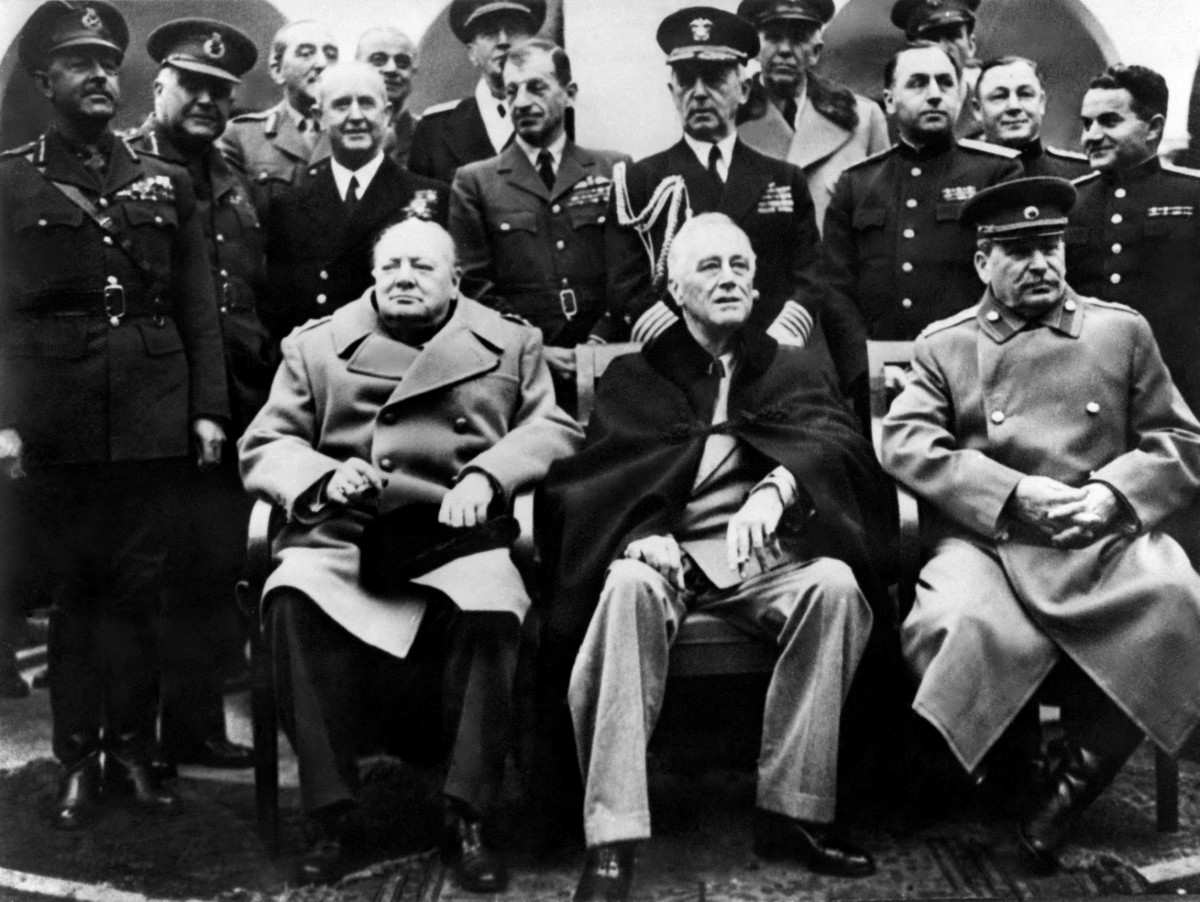
The second example is that of late British Prime Minister Winston Churchill.
At Tehran in November 1943, talks among the then “Big Three”—US President Franklin Roosevelt, Churchill, and Soviet President Joseph Stalin—had deadlocked. On November 30, Churchill’s 69th birthday, a dinner was arranged: Persian soup, Russian caviar, American turkey, copious Pol Roger champagne, a birthday cake with 69 candles in a “V” for victory.
In his biography on Churchill, “The View from Churchill: Travels in the Footsteps of Britain’s Greatest Statesman”, Mathew Mills Stevenson wrote: “Churchill used dinner parties to achieve what could not always be accomplished in the conference room.”
Dining together reduced suspicion among the three. The conference ended with agreement on D-Day, the USSR’s war on Japan, and the creation of the United Nations. According to Stevenson, if Churchill’s menu had been no good, perhaps there would not have been any UN.
The third example is US President Richard Nixon’s visit to China in 1972.
For more than two decades, the United States and the People’s Republic of China shared no diplomatic relations and viewed each other with fierce Cold War hostility. When President Nixon made his surprise trip to Beijing to change this, the tension in the Great Hall of the People was incredibly thick. Both he and Chairman Mao Zedong could not come out of their respective obduracy.
Apparently, what did wonders was Chinese premier Zhou Enlai’s planned 8-course banquet for Nixon, with Peking duck as centerpiece, a dish requiring 24-hour preparation, slicing with military precision.
Peking Duck was paired with Moutai, a fiery, 106-proof Chinese sorghum liquor. Zhou Enlai personally demonstrated how to wrap the duck and repeatedly toasted Nixon with the potent spirit. Nixon, caught up in the warmth of the hospitality, famously toasted to the health of Chairman Mao and the Chinese people.
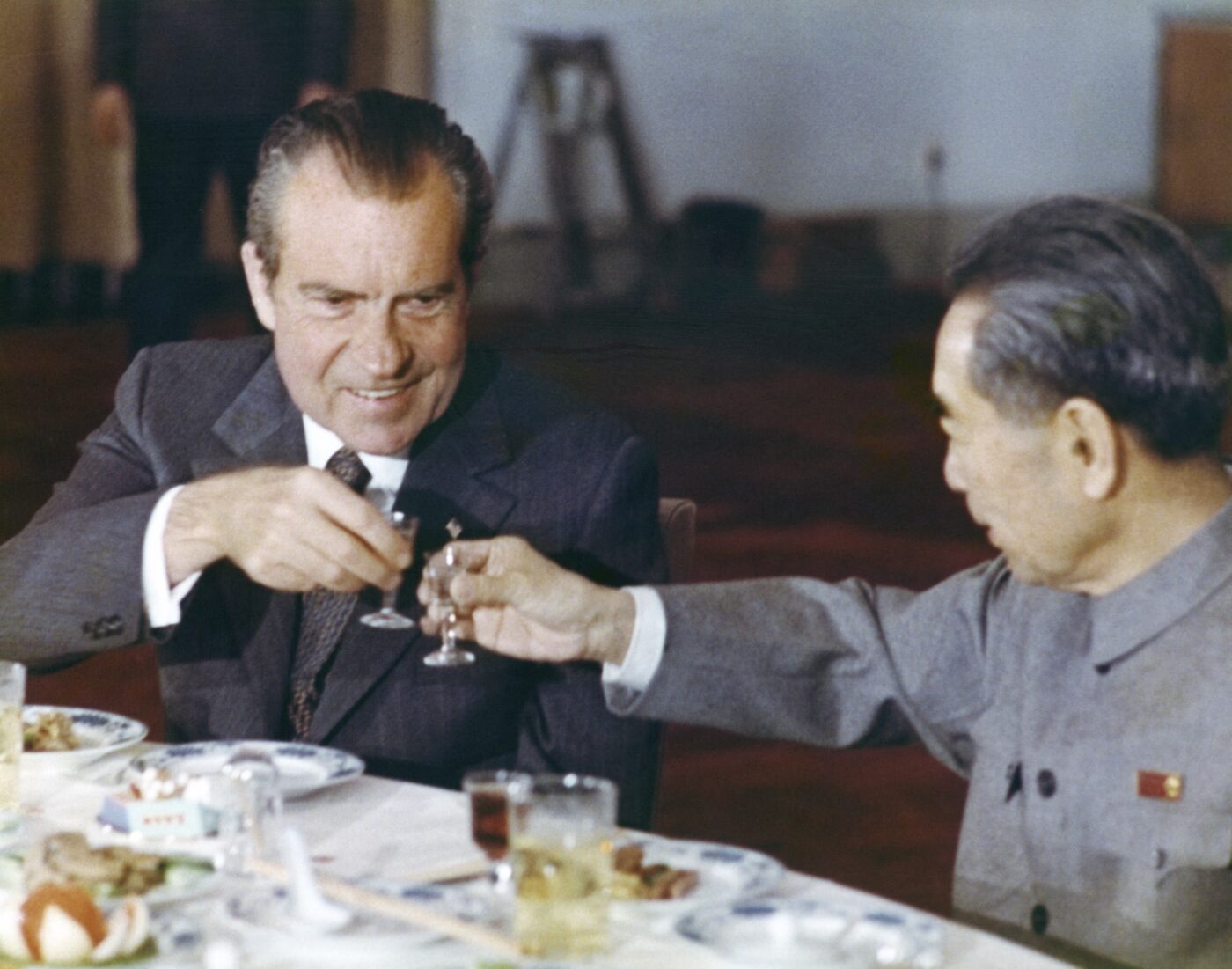
This led to the televised images of American and Chinese leaders clinking glasses and laughing over shared platters that stunned the world. The goodwill generated at that specific dinner table thawed decades of frozen relations, leading directly to the signing of the Shanghai Communiqué and completely shifting the global balance of power during the Cold War.
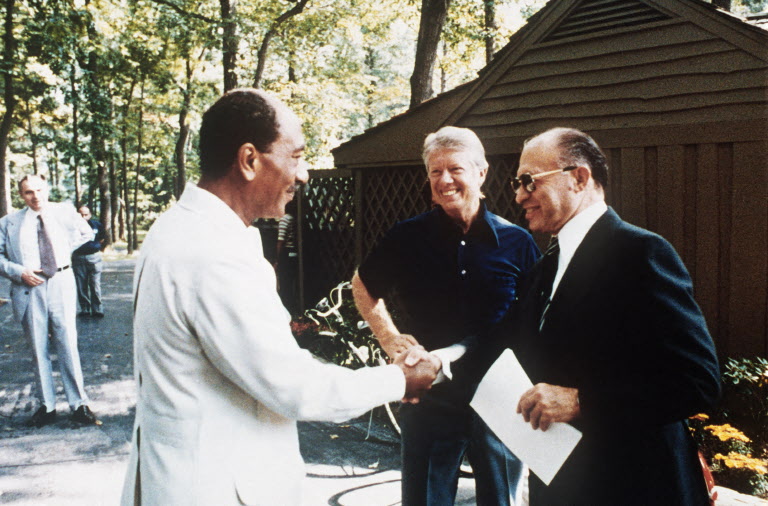
The story of Camp David in 1978, involving Egyptian President Anwar Sadat, Israeli Prime Minister Menachem Begin, and the host US President Jimmy Carter, was equally interesting.
After thirteen days of deadlock at Camp David, Carter reportedly used food strategically. He knew Egyptian President Sadat loved American sweet corn and Israeli PM Begin loved gefilte fish.
He ensured kosher and halal were respected, but also held a joint barbecue where both leaders had to wait for burgers. The informal barbecue broke the ice. The accords resulted in Egypt getting back Sinai and peace with Israel.
Food is also said to have helped facilitate the process of ending the Cold War between the US and the USSR. This was during the Reykjavík Summit on October 11-12, 1986, between US President Ronald Reagan and Soviet leader Mikhail Gorbachev.
They met in Iceland to discuss the radical possibility of eliminating all intermediate-range nuclear weapons. The official political negotiations were grueling, combative, and ultimately collapsed on the final afternoon over disagreements about America’s “Star Wars” missile defense shield.
However, despite the official collapse of the talks, a formal closing dinner went on as scheduled at the Hofdi House. The Icelandic hosts served a sophisticated menu featuring seared Icelandic lamb and wild berries. The two leaders, it is said, liked the menu immensely.
Their body language now changed. So, while the summit was technically labeled a failure by the press that evening, the amicable dinner helped Reagan and Gorbachev realize how close they were to an agreement.
The trust solidified over that final meal kept the diplomatic channels open, leading directly to the signing of the historic Intermediate-Range Nuclear Forces (INF) Treaty just one year later in Washington.
The above examples are illustrative, not exhaustive. Scholars have also studied how food can be used as a diplomatic tool to make and break political alliances. Most interesting is a study in Portugal that examined 100 years of menus from Portuguese diplomatic dinners from 1910-2023.
The study found five functions: tactical meals for territory transfers; geopolitical meals to confirm alliances; economic diplomacy meals for trade; scientific-cultural meals demonstrating shared development interests and mutual research goals; and cultural proximity meals — e.g., Cozido à Portuguesa for Lusophone countries ( Portuguese-speaking countries) to strengthen cultural bonds.
The point that emerges is that menus reflect and shape foreign policy.
However, whether Modi’s vegetarian menu factored into the BRICS summit’s outcome will remain debatable. The BRICS leaders unanimously adopted “the New Delhi Declaration 2026” by consensus on the afternoon of September 12, 2026, while the special millet-focused, plant-based gala dinner at Bharat Mandapam took place later that evening, beginning around 7:30 PM.
- Author and veteran journalist Prakash Nanda is Chairman of the Editorial Board of the EurAsian Times and has been commenting on politics, foreign policy, and strategic affairs for nearly three decades. He is a former National Fellow of the Indian Council for Historical Research and a recipient of the Seoul Peace Prize Scholarship.
- The author can be reached at prakash.nanda (at) hotmail.com