A French Navy Rafale-M (Marine) fighter jet recently landed on India’s indigenous aircraft carrier INS Vikrant on its first attempt, the Indian Navy said. It marked a key milestone in integrating French naval jets into the Indian Navy.
The landing and subsequent ski-jump take-off took place on Oct. 29 aboard the 45,000-tonne carrier, the Indian Navy said in a statement.
“The ongoing trials mark the first steps towards operationalization of the aircraft in the Indian Navy,” it added.
India signed a contract with France in April 2025 for 26 Rafale-M jets, including 22 single-seat and four twin-seat trainers, for approximately $7.5 billion. Deliveries are expected to begin in 2028-29.
The aircraft will operate from both India’s indigenous INS Vikrant and the Russian-origin INS Vikramaditya, supplementing and eventually replacing the aging MiG-29K fleet.
Before the carrier trials, the Rafale-M jets underwent compatibility testing at the Shore-Based Test Facility in Goa, which replicates the ski-jump configuration used by India’s carriers.
Unlike France’s Charles de Gaulle, which uses catapults, Indian carriers employ a short take-off but arrested recovery (STOBAR) system. Officials said minor modifications to aircraft elevators may be needed to fit the Rafale M’s delta wings into the Indian carrier.
Indian Air Force already operates the Rafale jets and could possibly order another 114, making it the biggest Rafale operator outside France. The Indian government is also contemplating 6th-gen FCAS aircraft with France.

Rafale-M During India-Pakistan Conflict
In 2002, during the height of military tension between India and Pakistan, French Rafale-M jets, operating from the aircraft carrier Charles de Gaulle, conducted combat air patrols in the Arabian Sea.
According to a report in the French daily Libération, French jets tried to create a buffer between India and Pakistan for about ten days at the height of the standoff.
“For the first time, France’s new combat aircraft, the hugely expensive Rafale, carried out missions of ‘combat air patrol’ from its base on board the newly refurbished aircraft carrier Charles de Gaulle,” the report said.
“Flying off the Indian and Pakistani coastline, these fighters ‘neutralized’ the zone,” military experts told reporters.
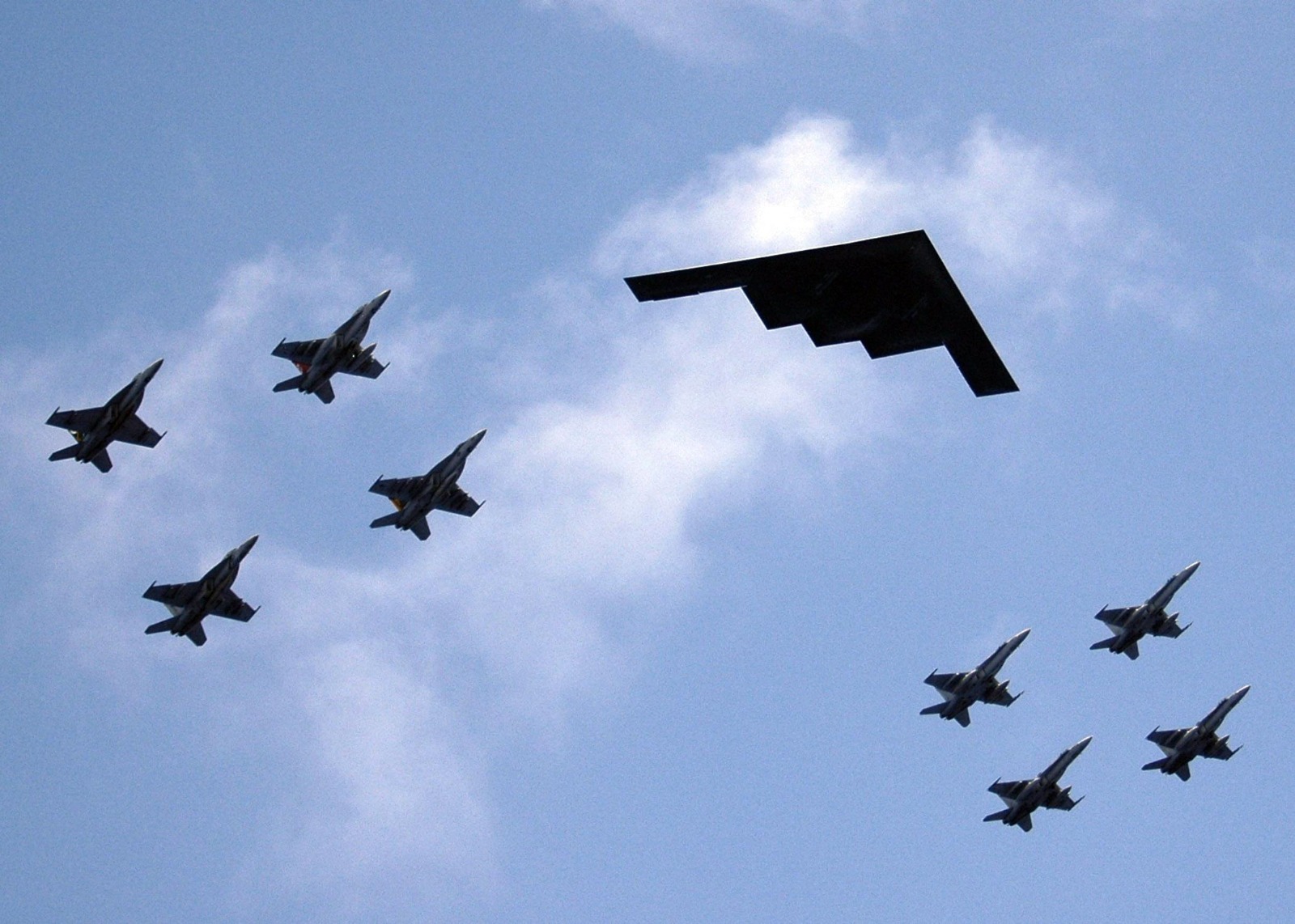
Armed with air-to-air missiles, the Rafales flew several daily two-hour patrols alongside U.S. Navy F-14 Tomcats and F/A-18 Hornets. American E-2C Hawkeye airborne early-warning aircraft was also deployed to conduct maritime and aerial surveillance.
“With their dissuasive presence, the Rafales prevented Indian and Pakistani fighter planes from using the sea route to carry out incursions into each other’s territory, as was their wont in the past,” the report noted.
The reference was to earlier incidents, including the 1999 Kargil conflict, when India shot down a Pakistani Atlantique maritime patrol aircraft. Incidentally, the aircraft that India shot down was a French-origin aircraft, which killed all 16 on board after it reportedly entered Indian territory and refused to comply.
French naval histories also record that in June 2002, while Charles de Gaulle was in the Arabian Sea, Rafales conducted several patrols near the India-Pakistan border.
The deployment was part of the broader Mission Héraclès in support of operations in Afghanistan, but the French carrier group’s presence in the Arabian Sea coincided with the India-Pakistan standoff.
The episode marked one of the Rafale Marine’s early operational deployments and demonstrated the aircraft’s ability to project power far from French shores—a capability India is now seeking to integrate into its own carrier strike groups.
Interestingly, the Rafale-M jets flying from the French aircraft carrier Charles de Gaulle were still early versions. These jets were built to what is known as the F1 standard.
At that time, the Rafale was a new fighter, and the F1 version was mainly designed for air-to-air combat. It could carry air-to-air missiles and perform combat air patrols, but it did not yet have full air-to-ground attack capability.
Later versions of the Rafale, known as F2 and F3 standards, added the ability to drop bombs, fire air-to-ground missiles, and carry out more complex strike missions.
During the 2002 deployment, the early F1 Rafales were still limited mainly to air defense and patrol work. This was enough for the task they were given — maintaining a strong presence in the air and helping reduce the risk of conflict between India and Pakistan.
- By ET Online Desk
- Mail us at: editor (at) eurasiantimes.com