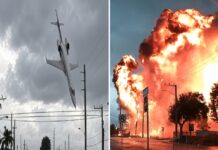


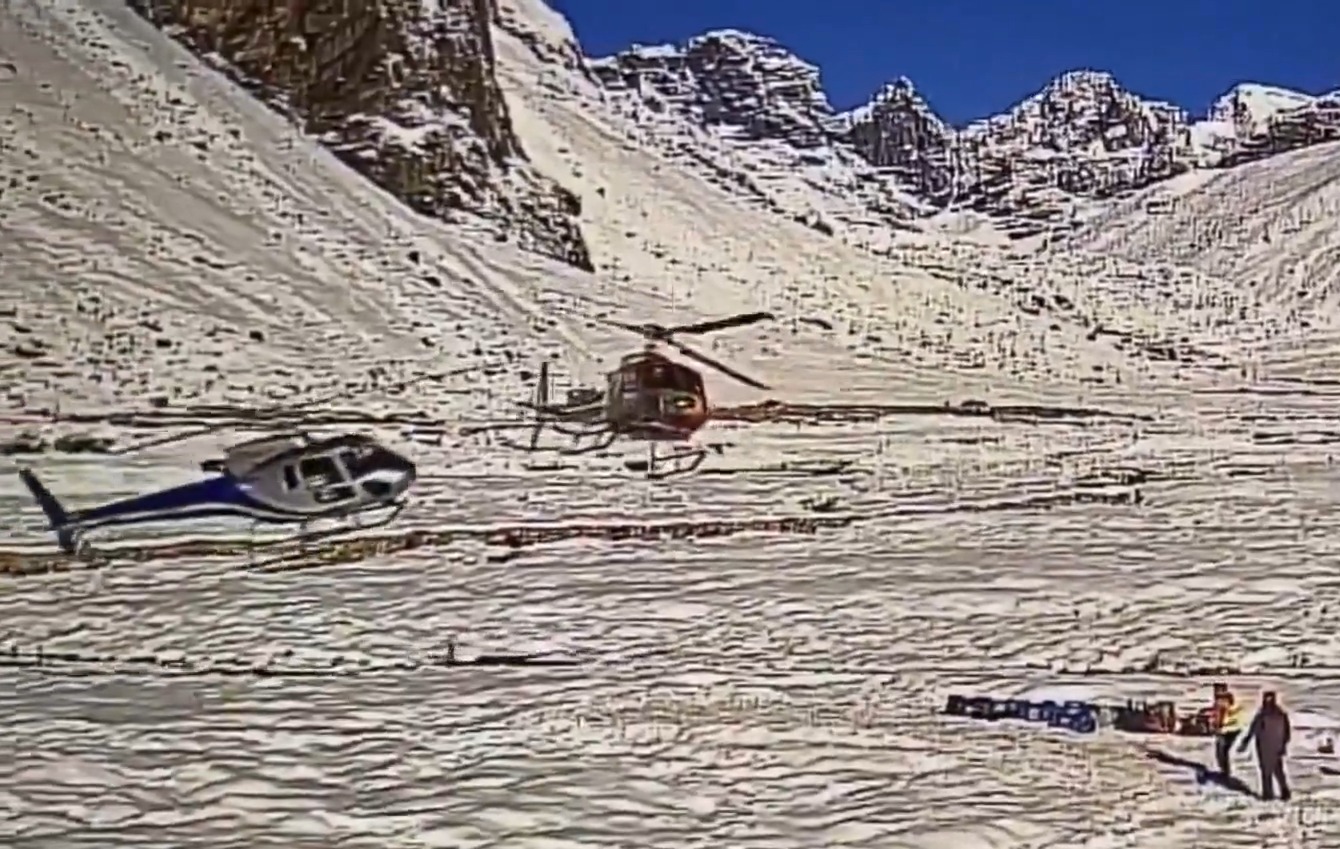
Two helicopters collided and crashed while attempting to land at the same time on a small, snow-covered helipad at 4,371 meters (14,340 feet) in Nepal’s Solukhumbu district, near Mount Everest.
An Indian tourist was killed, and a New Zealand national and both pilots were injured.
The fatal crash once again highlights Nepal’s poor aviation standards, the overcrowding of helicopter flights in the high Himalayas, and longstanding allegations of a lucrative “medical evacuation” racket that generates substantial revenue for operators, insurers and hospitals.
Together, these factors create a dangerous environment in which wealthy tourists and climbers, drawn by the romance of Everest, willingly accept some of the world’s most hazardous flying conditions.
The Mid-Air Collision Near Mount Everest
The mid-air collision occurred on the morning of November 3, as both helicopters attempted to land at a helipad in Pheriche, a popular stop for trekkers and climbers on their way to Everest Base Camp (EBC).
According to a statement from the Civil Aviation Authority of Nepal (CAAN), one of the choppers was on a cargo flight from Lukla Airport to the Pheriche helipad, nearly 16 kilometers before EBC.
The second flight was a medical evacuation flight that took off from Gorakshep in Solukhumbu (just 4 kilometers before the EBC) and carried two foreign nationals.
A video circulating widely on social media shows one of the helicopters making a rapid descent despite warnings from ground staff, while another helicopter was also attempting to land from the opposite direction. Moments later, the rotor blades of one helicopter struck the passenger compartment windows of the second chopper while they were still 2 to 3 meters above the ground.
The helipad is more than 4,200 meters above sea level and is not covered by Air Traffic Control (ATC). This means that during takeoff and landing, pilots must communicate manually with ground staff or other choppers attempting to land at the same time.
Any miscommunication at such heights could be fatal.
“Preliminary reports suggest miscommunication between the pilots, as the area is outside the coverage of Lukla Airport’s air traffic control tower and pilots have to communicate with each other,” said Mukesh Dangol, director general of the Civil Aviation Authority of Nepal. “We are recording the statement of the injured pilot.”
Multiple Chopper Crashes in Everest Region
Notably, this is not the first fatal chopper crash in the roadless Everest region, where high altitude, thin air, snowy conditions, and rapidly changing weather make flying extremely dangerous.
At those altitudes, air density is roughly 60% of sea level, and visibility is often poor due to wind, snow, and overcast conditions. The lack of ATC further complicates flights.
Helicopters operate near performance limits; rotor clearance, hover power, and downwash are tighter. Simultaneous landings and take-offs are particularly risky.
According to the Kathmandu Post, at least 22 fatal helicopter crashes have occurred across the country since the aviation authority began maintaining records in 1966. However, these crashes have become more frequent in recent years.
In the last three years, there have been at least three fatal crashes and multiple smaller incidents.
In October 2023, a Manang Air chopper crash-landed at the Lobuche helipad near the EBC, killing the pilot, who was the sole occupant of the helicopter.
Earlier, in July of the same year, a Manang Air helicopter crashed in the same Solukhumbu district, killing all six people on board: five Mexican tourists from the same family and the pilot.
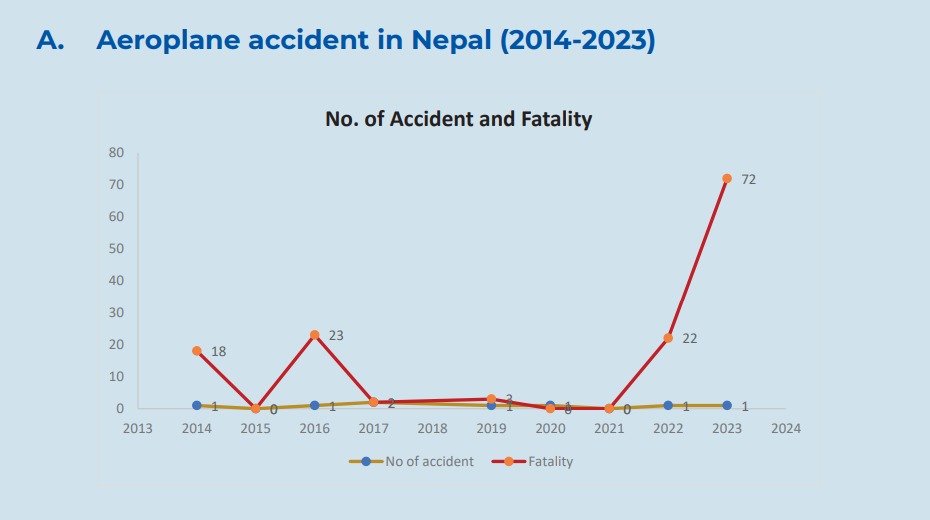
Nepal also has a poor aviation safety record, including for civil airlines. It ranks high in fatalities relative to its modest air traffic volume.
Airports in Nepal’s mountain regions are notorious for their tricky runways and quickly changing weather conditions. The country experienced nearly 40 accidents with more than 400 fatalities between 2010 and 2024.
Due to this litany of accidents, Nepal is one of 16 countries on the EU Air Safety list, which bans all airlines from that country from operating in the EU.
However, helicopter operations in Nepal’s Everest region are now also under scrutiny because of the rising number of accidents. A key factor behind the rise in helicopter accidents in the Everest region is the higher volume of daily flights required to meet growing tourist demand.
Why Are Chopper Operations Increasing in the Everest Region?
According to the Nepal Tourism Ministry, 47,524 tourists visited the Sagarmatha National Park (the Everest region) in 2025; nearly 35,000 reached Everest Base Camp (EBC), and nearly 1,519 climbers reached the Everest summit, including 585 tourists and 934 hired workers.
The trek to Everest Base Camp and return can take 12-14 days, while the full summit trek can take 60 to 75 days.
Many tourists book helicopters to cover the full or part of the journey to the EBC.
For instance, many tourists trek to EBC on foot and book a helicopter for their return journey. Choppers are also required for logistics, cargo flights, and medical evacuations.
Due to these demands, the number of helicopter flights in this dangerous and ecologically sensitive region is increasing.
In 2024, the Everest region recorded 5,600 helicopter flights. On some days during the peak season (April to May and October to November), more than 100 helicopter flights took place daily.
A single helicopter ride could cost US$1,400 to US$2,200.
However, helicopter flights are also increasing due to the large number of medical evacuations required from the Everest region.
Entry to the Everest region is strictly controlled, and travel and health insurance are strictly mandatory for trekking to Everest Base Camp (EBC) in Nepal.
Notably, these health insurances must include emergency air/helicopter rescue and medical evacuation.
However, this mandatory helicopter rescue insurance also fueled an elaborate medical evacuation scam.
The $20 Million Medical Evacuation Scam
Earlier this year, Nepali authorities uncovered a massive medical evacuation scam.
According to investigators, guides allegedly poisoned foreign tourists to create fake medical emergencies and claim insurance payouts.
The Associated Press reported in February that travel and mountain executives were accused of staging fake rescues on the country’s mountain peaks to defraud international insurance companies of millions of dollars.
Investigators said local guides mixed baking soda into tourists’ food. This caused severe stomach illness that mimicked altitude sickness.
Once trekkers fell ill, they were pressured into emergency helicopter evacuations.
Local guides, helicopter operators, trekking companies, and many Nepali hospitals were all part of this elaborate medical evacuation scam.
A rescue flight from the Khumbu region can cost anywhere from US$6,000 to US$10,000. These tourists were then admitted to Nepali hospitals, which created fake bills running into thousands of dollars.
As a result, helicopter operators and hospitals raked in millions of dollars, while guides and trekking companies took their commission.
Police said more than 300 fake rescues took place between 2022 and 2025, and the fraud was worth more than US$ 20 million. Notably, authorities also uncovered a fake medical evacuation scam in Nepal in 2018, and after a few years’ gap, the scam restarted.
Nearly 32 people were charged under organized crime and fraud laws; however, no one can be sure that the scam has stopped completely after the April crackdown.
Incidentally, one of the flights involved in the fatal crash on November 3 was also a medical evacuation flight.
We’re not insinuating this was also a fake medical evacuation; however, Nepal has long suffered from such rackets, which also contribute to the rising number of helicopter flights in the region and make flights riskier.
According to the World Travel & Tourism Council Economic Impact Research 2024, Nepal’s tourism industry supports nearly 1.2 million jobs, accounting for about 15.2% of the country’s total employment. The industry also contributes nearly 6.7% of the country’s GDP.
Given the tourism industry’s vital importance to Nepal’s economy and the Everest region’s central role within it, Kathmandu must strengthen its aviation safety standards. Otherwise, the rising number of fatal accidents risks deterring foreign visitors.
- Sumit Ahlawat has over a decade of experience in news media. He has worked with Press Trust of India, Times Now, Zee News, Economic Times, and Microsoft News. He holds a Master’s Degree in International Media and Modern History from The University of Sheffield, UK.
- He can be reached at ahlawat.sumit85 (at) gmail.com