After Canada became the first country to join the Global Combat Air Program (GCAP) as its first observer nation, Lorenzo Mariani, CEO of Leonardo, said at Farnborough that if a nation wishes to join the GCAP program, it must do so by the end of 2026, with a final deadline of 12 months
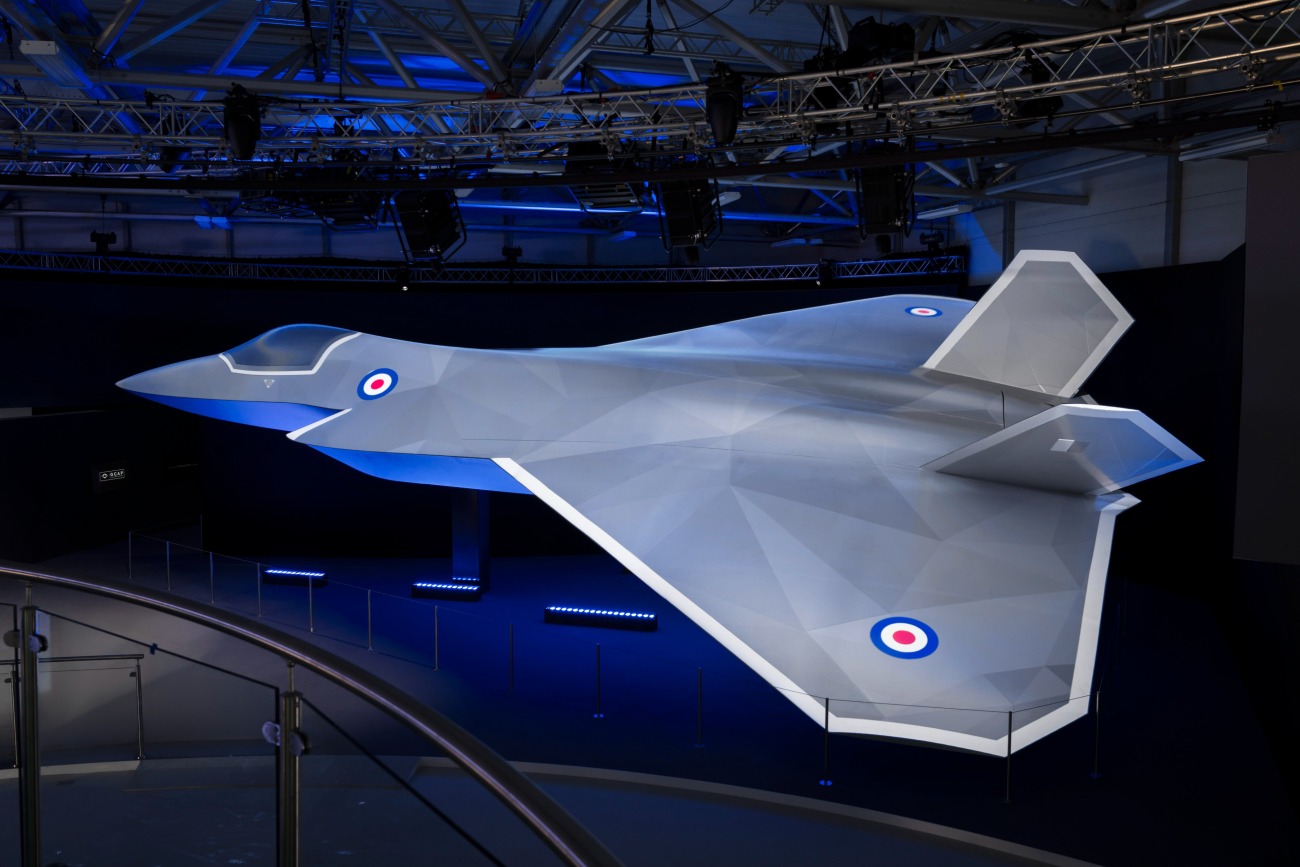
The tri-national Global Combat Air Program, launched in 2022, aims to develop a supersonic sixth-generation stealth fighter by 2035 to replace the Eurofighter Typhoon used by some European countries and Japan’s Mitsubishi F-2.
Earlier this week, Canada confirmed it is joining GCAP as an observer country. While Canada’s observer status does not make it a full program partner, it will still provide Ottawa with greater visibility of GCAP’s governance, capabilities and industrial structure, as it looks to diversify its defense partnerships away from the US.
Meanwhile, following the collapse of the Franco-German-Spanish Future Combat Air System (FCAS), Germany is also exploring its options for joining the GCAP.
On July 22, Germany’s largest fighter jet manufacturer, Airbus Defense and Space, said at the Farnborough Air Show in the UK that it was open to joining forces with Britain, Italy and Japan on the GCAP program.
The head of Airbus’s defense division in Munich, Michael Schoellhorn, said the company could collaborate with the UK on developing the new aircraft if it had sufficient control over the program and work share.
“What we’re ready to do is to join something or to build something where we have a significant portion of the work and the leadership. That’s currently being explored,” Schoellhorn told reporters.
Separately, Leonardo chief executive Lorenzo Mariani said on the sidelines of the Farnborough airshow that German participation in GCAP would be “beneficial”.
Mariani said “strong competence of the German industry, debt funding capability from the German state and joint experience within the community” on previous fighter jet projects would be beneficial for all partners.
“The only real risk is disruption in timescales and work share,” he said.
While the FCAS Collapsed, GCAP gained momentum after receiving a major funding boost this month with the award of a £4.6 billion (approximately US$6.1 billion) contract from the UK-Japan-Italy to continue its development.
On July 3, the GCAP awarded the 18-month contract to Edgewing, the trinational joint venture of BAE Systems (UK), Leonardo (Italy), and Japan Aircraft Industrial Enhancement (JAIEC).
This came shortly after the UK’s Defense Investment Plan committed £8.6 billion (US$11.5 billion) in UK funding to GCAP over four years, ending months of uncertainty and delays.
The momentum gained by GCAP, the recent funding boost, and Canada’s accession as an observer country will definitely enhance GCAP’s appeal to countries seeking to join a sixth-generation project.
In fact, after the collapse of FCAS, GCAP is the only practical option available to countries, as both the US (F-47) and China (J-36 and J-50), which have sixth-generation fighter jets under development, are not looking for international partners.
France’s Dassault has announced plans to pursue a next-generation fighter jet development program and is seeking partners, but the program is still in its infancy, and Paris has been an “unreliable partner” in joint fighter jet development programs.
In its presentation of its half-year results, Dassault Aviation stated that “discussions are under way with the French government to launch an alternative, either on a purely French basis or through cooperation, involving a demonstrator for a future combat aircraft.”
Éric Trappier also said that the aim would be to secure “a demonstrator, based on French requirements, which could fly in 2031 or 2032.” However, he also clarified that Dassault would not be interested in an arrangement in which the French aircraft manufacturer would be lead contractor without sufficient industrial control.
This non-compromising attitude, single-minded focus on French requirements, and France’s previous unreliable role in joint fighter jet development programs, including FCAS, Eurofighter Typhoon, and Tornado, mean that any country seeking to join a reliable sixth-generation fighter jet program has only one credible option: the GCAP.
Can India Join GCAP?
In March this year, India announced that it is considering joining one of Europe’s ambitious ‘sixth-generation’ fighter jet programs.
The 20th report of the Standing Committee on Defense said the IAF is exploring collaboration with one of two European consortia currently working on sixth-generation fighters.
“The committee has been informed that two consortia are working on the sixth-generation aircraft. One is a consortium of the UK, Italy and Japan and the other is a consortium of France and Germany, and both are developing aircraft. The committee has also been informed that Air Force (IAF) will try to join forces with one of the consortia and begin considering a sixth-generation fighter right away with a view to ensure that they do not lag behind in achieving the target for advanced aircraft.”
The IAF is in a dire state now as not only is it critically short on squadron strength, but it is also trailing behind China in next-generation fighter jets. Though the IAF’s authorized strength is 42 fighter squadrons, it now has only 29 active fighter squadrons.
Also, China already has over 300 fifth-generation J-20 stealth fighter jets and is on its way to operationalizing a second stealth fighter, the J-35. China is also testing two sixth-generation fighter jets, the J-36 and the J-50.
Reportedly, Pakistan is also planning to buy J-35A jets from China.
“The committee understands that in view of technical advancement of fighter aircraft globally and to meet the present security scenario, technical upgradation of aircraft is required on top priority for enhancement of its combat capability. The committee recommends the ministry to chalk out a trajectory in this regard and step forward the planning process for development and acquisition of sixth-generation (6G) aircraft which would eventually enhance India’s air domain capabilities in today’s highly air-centric modern warfare,” it said.
The standing committee shortlisted two consortiums: GCAP and FCAS.
However, since the FCAS has already collapsed, the only realistic option for India is to join GCAP.
Also, India has already received an invitation from GCAP to join the program. Japan reportedly approached India to join the GCAP program earlier this year.
Japanese officials visited India in February. They explained the Japan-UK-Italy “Global Combat Air Program (GCAP)” to Indian officials and proposed their participation.
Following the reports of Japan’s offer to India to join GCAP, an editorial in Japan Times in June 2025 said that “the idea of including India, one of the world’s fastest-growing economies and an increasingly assertive geopolitical actor, makes strategic sense.”
It further said that including India in GCAP could re-energize the Japan-India relationship by offering a “high-stakes, high-visibility partnership that aligns with India’s long-term security and technological ambitions.”
“Including India could bring financial investment, manufacturing capacity and political clout to the initiative,” it said.
However, it suggested that India should join GCAP around 2027-2028, when the project has already passed the foundational design and industrial division phases.
Earlier, the UK had also reportedly invited India to join its Tempest program, the predecessor to GCAP. “We are looking for international partners to access the best assured capability [for developing the Tempest],” Nik Khanna, the head of BAE Systems India, was quoted as saying by the Business Standard. As to India’s specific role in the Tempest project, Khanna said: “A big cost driver for a futuristic aerospace system is going to be the requirement for more and more software engineers. India has a huge capability in that area.”
Several military experts and veterans who have spoken to the EurAsian Times in the past have said: buy Rafales to manage squadron strength and bolster numbers, develop the fifth-generation AMCA for long-term capability, buy off-the-shelf Su-57 fifth-generation fighters to bridge the current stealth gap with China, and join a sixth-generation fighter program to stay ahead of the curve.
The GCAP has set a very ambitious target: to fly its first demonstrator by 2027 and field the aircraft by 2035.
If India joins GCAP, it could have a sixth-generation fighter jet by 2035, bridging the widening capability gap with China.
Furthermore, participation in a sixth-gen fighter jet program could also help India in its own underdevelopment fifth-generation fighter jet program, the AMCA.
Retired Air Marshal Sanjeev Kapoor (former Director General, Inspection and Flight Safety, IAF) said, “India should Look East in fighter jet manufacturing. Japan runs the F-35 final assembly line and is working on FX platforms; India must partner with Japan on #GCAP (fresh MoD invite, Mar 2026) & South Korea on KF-21-style programs to set up full co-production & final assembly right here in India… To fast-track, we must use the model of global tech + distant local manufacturing, which leads to jobs, tech sovereignty & Atmanirbharta. Added advantage, Asian Value System which is different.”
- Sumit Ahlawat has over a decade of experience in news media. He has worked with Press Trust of India, Times Now, Zee News, Economic Times, and Microsoft News. He holds a Master’s Degree in International Media and Modern History from the University of Sheffield, UK.
- He can be reached at ahlawat.sumit85 (at) gmail.com