With the Franco-German-Spanish FCAS fighter program now dead, Germany is reportedly exploring a once-rival project — the UK-Italy-Japan Global Combat Air Program (GCAP).
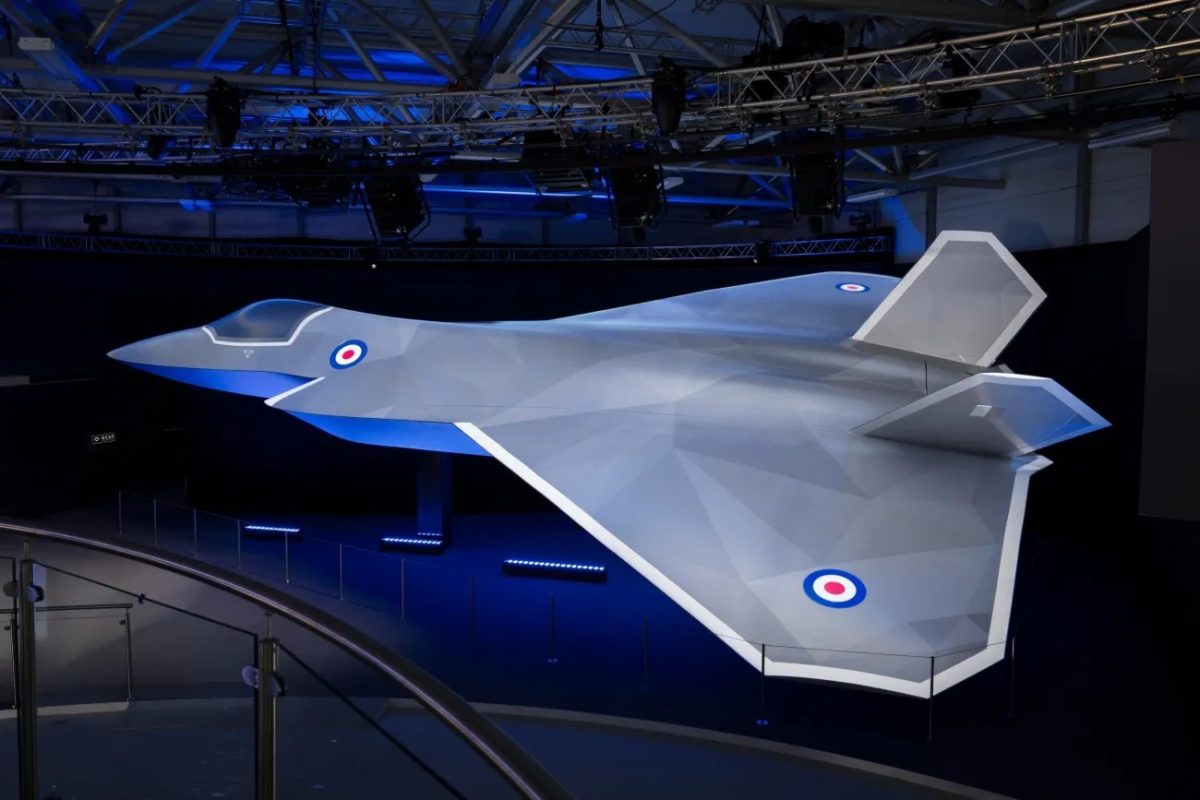
Germany’s largest fighter jet manufacturer, Airbus Defense and Space, said at the ongoing Farnborough Air Show in the UK that it was open to joining forces with Britain, Italy and Japan on the Tempest program (the British name of the sixth-generation aircraft being developed under the GCAP framework), The Telegraph reported.
The head of Airbus’s defense division in Munich, Michael Schoellhorn, stated that the company could collaborate with the UK on the development of the new aircraft if it had sufficient control over the program and work share.
“What we’re ready to do is to join something or to build something where we have a significant portion of the work and the leadership. That’s currently being explored,” Schoellhorn told reporters on July 22.
The statement comes nearly a month after the Friedrich Merz government pulled the plug on the FCAS program it was pursuing with France and Spain. The program had remained stalled amid unresolved disputes between Airbus and France’s Dassault Aviation over work-sharing, design philosophy, and supplier selection, as EurAsian Times explained earlier.
Following the FCAS collapse, an Airbus-led group of defense companies, called “Team Gen 6,” submitted a position paper on a sixth-generation fighter project to the German government, signaling an industry push to shape Europe’s future combat jet program amid prevailing uncertainty. This was one of the first indications that Airbus was determined to forge ahead with the aircraft’s development in one way or another.
Interestingly, Germany has been toying with the idea of joining the GCAP since before the end of the FCAS cooperation. Chancellor Merz even raised the possibility of his country joining the GCAP during a visit to Italy earlier this year and purportedly received a positive signal from Italian Prime Minister Giorgia Meloni, Japan Times reported at the time.
At one point, as it grew frustrated over the logjam with Dassault, it hinted it could explore a partnership with Swedish defense manufacturer SAAB. Michael Schoellhorn said he was eager to work with Sweden and Saab on the next-generation fighter during an exclusive interview with the Swedish financial newspaper Dagens Industri on the sidelines of the Airbus Defense & Space Summit.
However, there seems to be an evident shift in that position, especially since GCAP has now picked up speed after a rocky few months.
After months of delays and uncertainty that sparked fears about its future, the GCAP received a fresh impetus last month, with London committing $11.7 billion to the program in the Defense Investment Plan (DIP).
In fact, the program expanded this week and welcomed Canada as an observer, which does not automatically translate into a partnership but does provide the observer with access to critical information about the technologies and paves the way for a potential acquisition of the system.
As for Germany, the GCAP is the only existing multinational fighter jet development program, since the American F-47 is not open to collaboration.
“If we do a mental exercise and project ourselves back to 2017, and we had not started the old FCAS, then likely we would have continued with the Eurofighter team,” Schoellhorn said, referring to the Eurofighter Typhoon consortium, which consists of Germany, the UK, Italy and Spain. “That would have been an organic answer. But time has passed. There’s a project that has already started; Japan has joined. So, to be determined.”
Schoellhorn further stated that an agreement reflecting Germany’s contribution would be necessary. The country requires up to 150 aircraft.
The GCAP is led by an Edgewing, the GCAP’s industrial joint venture for the design and development of the next-gen fighter, which includes BAE (representing the UK), Mitsubishi Heavy Industries (representing Japan), and Leonardo (representing Italy). The GCAP grouping has set a very ambitious target: to fly its first demonstrator by 2027 and field the next-generation aircraft by 2035.
Interestingly, Leonardo has hinted that the group would be willing to expand beyond offering observer status to Ottawa. Lorenzo Mariani, CEO of Leonardo, said at Farnborough that if a nation wishes to join the British, Italian, and Japanese GCAP fighter jet program, it must do so by the end of 2026, with a final deadline of 12 months.
He said Germany would be a good partner given its experience, its expanding military budget, and its current work on the Eurofighter Typhoon with the UK and Italy.
Germany’s Entry Into GCAP Not Free Of Challenges
Both the United Kingdom and Italy have shown an inclination to expand the program to welcome new members. Japan, on the other hand, has been rather direct about its reservations about opening the GCAP to new members amid concerns of delays.
When asked about Germany’s potential partnership in GCAP, a Japanese official told The Japan Times that the joint project “has been designed with cooperation with allies and like-minded countries in mind.” However, Japan has actively opposed the inclusion of new partners, such as Saudi Arabia, citing concerns that additional members could slow the program’s momentum while contributing little to advanced technology.
For Japan, delivering a next-generation fighter by the mid-2030s is non-negotiable, as the new fighter is expected to replace the aging F-2 jets of the Japanese Air Self-Defence Force (JASDF).
Moreover, a delay will create a significant capability gap with China in the East China Sea, which is already testing two different sixth-generation fighter prototypes—the J-36 and the J-50. Therefore, Tokyo could block GCAP’s expansion into Germany, citing concerns about potential delays and offering only observer status instead.
Douglas Barrie, a senior fellow for military aerospace at the UK-based International Institute for the Strategic Studies (IISS) think tank, earlier told Breaking Defence that because of “where GCAP partners are in terms of the program at the moment, what they don’t want to do is to start to have to renegotiate stuff, introducing somebody else at this point and then slow the program down.”
In addition, adding new members could lead to further disagreements over program requirements and design philosophies.
There is already a slight mismatch in priorities within the grouping: While the UK and Italy are reportedly more interested in GCAP developing a state-of-the-art “system of systems,” a fighter that collaborates with a swarm of drones under a less strict timeframe, Japan’s objective is to just develop a new fighter by the middle of the 2030s to replace the F-2.
Germany may have to accept a junior or subordinate role, with limited say over design, architecture, and key decisions — unlike the co-leadership it sought in the FCAS.
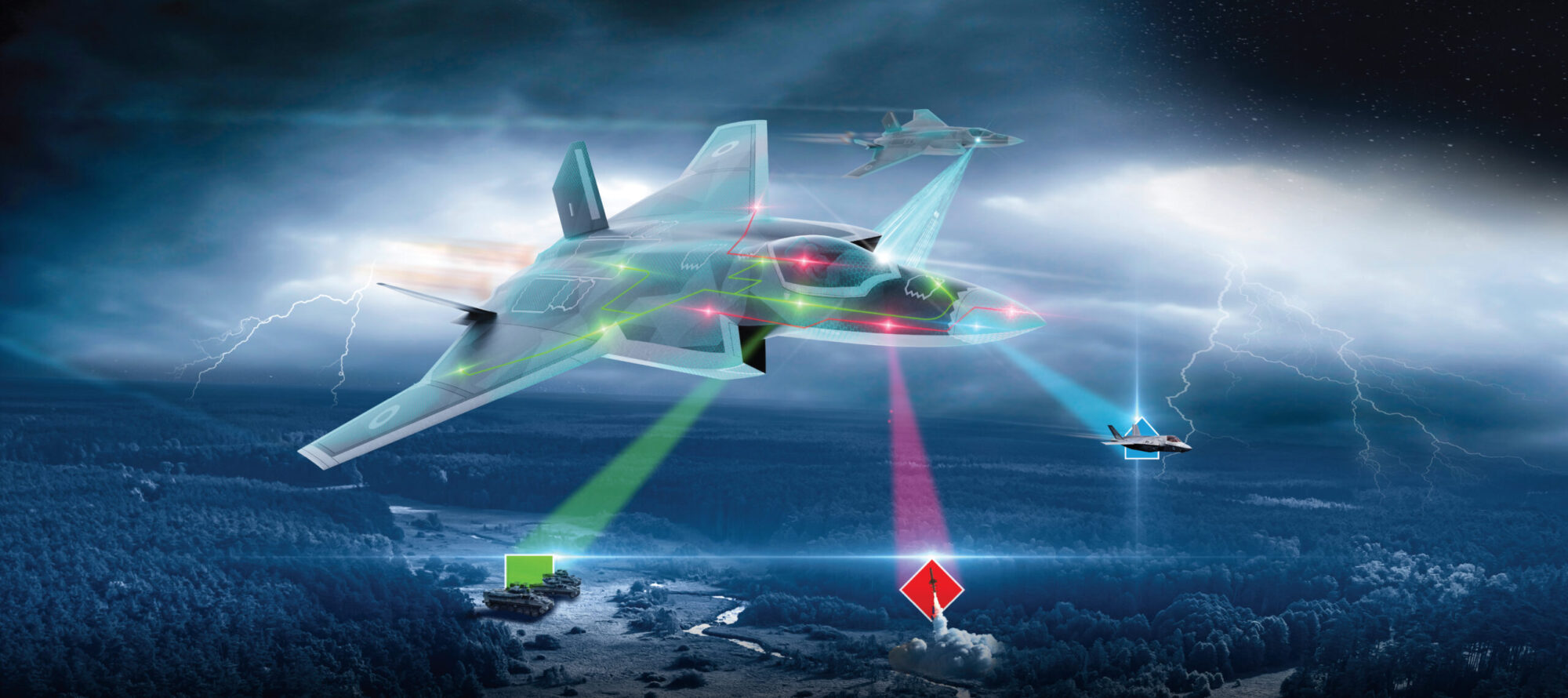
Another major challenge to Germany jumping ship to GCAP is that its entry into the program could upset the carefully struck balance among the UK, Italy, and Japan, who have already established the joint venture, divided responsibilities, and set program structures via Edgewing and GIGO (GCAP International Government Organization).
Disagreements over work-sharing caused gridlock within the FCAS grouping, as neither side was willing to concede a higher share to another’s industry.
Bringing Germany into the GCAP at this stage could reopen sensitive negotiations on industrial participation, production shares, and intellectual property, and risks diluting the stakes of current partners.
Airbus, for one, made its entry into the GCAP conditional on the work share, and it is likely to demand more than others might be willing to delegate.
Elio Calcagno, Senior Fellow at Istituto Affari Internazionali – IAI, a defense and security expert, spoke in his Substack post about the scenario in which there are too many players in a grouping and little to gain from each partner. He argued that programs that have many partners “may find it easier to raise the required funding, but also risk being weighed down by conflict around the many industrial interests and ideal requirements by end users, making cooperation more difficult as a result.”
“Leaving workshare issues aside, in the GCAP context, the UK, Italy, and Japan will likely have to evaluate whether the money Germany could bring to the table is game-changing enough to make everyone accept a smaller slice of the program’s cake. While on the surface GCAP has been much smoother sailing than its counterpart, there has been some friction regarding the UK’s reluctance to share technology with its two partners, according to Italian Defense Minister Crosetto,” he added.
Some analysts believe that German industry may receive only limited development roles or subcontracting work, rather than core design authority—the exact issue that led Berlin to pull the plug on FCAS, as France insisted that Dassault construct the next-generation fighter all by itself.
Moreover, Germany’s entry into the tripartite GCAP grouping could create differences over issues such as export policies and technology-transfer rules.
“The participation of any new country depends on complex negotiations over financial contributions, industrial roles, and control of technology. Should Germany seek a central decision-making role, coordination with existing partners could introduce new variables. As a result, discussions over Germany’s potential entry into GCAP are widely seen as a test not only of the program’s capacity for expansion, but also of its ability to restructure financial and industrial participation frameworks,” wrote Stefan Schneider in an article for The Economy back in February 2026.
For now, it remains to be seen whether Berlin can negotiate favorable terms with existing GCAP partners and expand the program’s scope.
- Contact the author at sakshi.tiwari13 (at) outlook.com
- Follow EurAsian Times on Google News