


The US Air Force’s next-generation stealth bomber, the B-21 Raider, has completed its first weapons-release test, marking a major step in validating its conventional strike capability and weapons-integration architecture.
The Air Force says the first operational B-21 aircraft are expected at Ellsworth Air Force Base in 2027.
The Department of the Air Force conducted a weapons-release test for the B-21 Raider last week, the US Air Force (USAF) and Northrop Grumman announced on November 13.
During the test, a B-21 test aircraft flying from Edwards Air Force Base, California, released a conventional weapon, validating its digital models and the maturity of its open systems architecture.
In an official statement, the Air Force said the test proves the B-21’s strike capability, demonstrates its ability to rapidly onboard new weapons, and solidifies its role as the future backbone of the US bomber fleet. However, it did not reveal the date or the type of munition released.
The B-21 stealth bomber is designed for deep-penetrating nuclear and conventional strikes in heavily defended airspace. It is expected to eventually replace the B-2 ‘Spirit’ stealth bomber.
Unlike the current B-2 Spirit, which has two side-by-side bays, the B-21 is thought to have a single, large central weapons bay. Moreover, the Raider is likely to have a smaller payload capacity than the B-2, given its smaller size. However, its precise weapons capacity has not been officially disclosed.
“The B-21 is designed to deliver improved combat capability to the warfighter, combining reliability and maintainability to quickly integrate new weapons,” Secretary of the Air Force Troy Meink said in the official statement. “This successful test demonstrates our ability to adapt rapidly and hold any target at risk if deterrence fails.”
Meanwhile, USAF Chief of Staff Gen. Ken Wilsbach said, “This weapons test proves the B-21 program is excelling. We are building an impressive fleet that will give our joint force credible, penetrating strike options for decades to come.”
The USAF statement also emphasized that the test validated the maturity of the B-21’s open systems architecture and showed the aircraft can “rapidly onboard new weapons.”
The announcement highlights one of the B-21’s most important design features: an open systems architecture intended to make future weapons and technology upgrades easier to integrate.
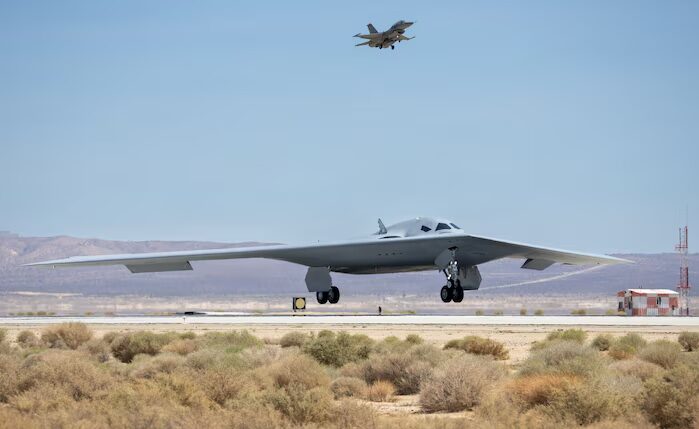
B-21 Raider’s Open-Architecture
The B-21 has an open systems architecture intended to reduce integration risks, facilitate competition for future modernization efforts, and allow the aircraft to evolve. Both the USAF and Northrop Grumman have repeatedly highlighted the importance of this approach, built around the principles of the Modular Open Systems Approach (MOSA).
Notably, open architecture in aircraft development is a design approach in which an aircraft’s systems, hardware, and software are built using open, standardized interfaces and modular components rather than being tightly coupled to a single manufacturer or proprietary technology.
Earlier, aircraft systems were built on closed or proprietary architectures, meaning that changing or upgrading a subsystem required extensive changes to other interconnected systems.
However, open architecture establishes standardized interfaces and clearly defined communication protocols, allowing individual components to be replaced or upgraded with considerably less disruption to the overall aircraft design.
Previous USAF strategic bombers such as the B-2 Spirit and B-52 Stratofortress relied on tightly integrated mission systems, making it difficult to introduce new weapons, sensors, and other capabilities. Such modifications or upgrades included significant hardware changes, additional flight-test campaigns, software changes, and recertification efforts. This caused delays in capability upgrades amid rapidly evolving threats.
By contrast, the B-21 was designed from the outset to allow its software, sensors, weapons, and mission systems to be updated or replaced with far less disruption than legacy platforms typically require.
The Raider’s mission computers, weapons-management systems, and data interfaces are intended to support integrating new capabilities through standardized interfaces and software modifications, while reducing the need for extensive hardware changes or fundamental redesigns of the aircraft.
Similarly, the internal weapons bay and stores-management system are intended to support a range of conventional and nuclear munitions, providing greater flexibility for future weapons integration.
This allows the USAF to consider technologies developed by different suppliers rather than remaining entirely dependent on the aircraft developer. The Congressional Research Service (CRS) has also noted that open architecture can facilitate integrating new sensors and subsystems from multiple vendors, while allowing these capabilities to be competed and developed independently of the broader aircraft development program.
Furthermore, the B-21 has a partitioned architecture intended to isolate mission-system functions from flight-critical functions, alongside standardized interfaces and an evolving software development capability. In fact, the developers are already working on capabilities beyond the aircraft’s initial operational baseline.
This reflects a shift towards treating the aircraft as an adaptable, software-enabled platform rather than a fixed configuration whose capabilities can only be improved through large-scale periodic upgrade programs.
This approach becomes particularly significant because the aircraft is expected to remain in service for several decades. During this time, adversary air-defense systems, radar detection technologies, electronic warfare capabilities, and other emerging threats will continue to evolve.
Therefore, the B-21’s open architecture may ensure the aircraft can respond to these developments through continuous technology and capability upgrades without requiring extensive redesigns.
Another important aspect of the B-21 program is its use of digital engineering, which complements the bomber’s open architecture. This enabled engineers to evaluate design modifications, detect potential integration problems, and simulate aircraft performance before implementation.
The USAF also highlighted the importance of this digital engineering approach in the recent statement: “The execution of the test was built on thousands of hours of virtual modeling within the B-21’s digital twin environment. This allowed the B-21 Combined Test Force to accelerate weapons integration and predict and refine the weapon’s trajectory with unparalleled precision before the aircraft ever left the ground,” it stated.
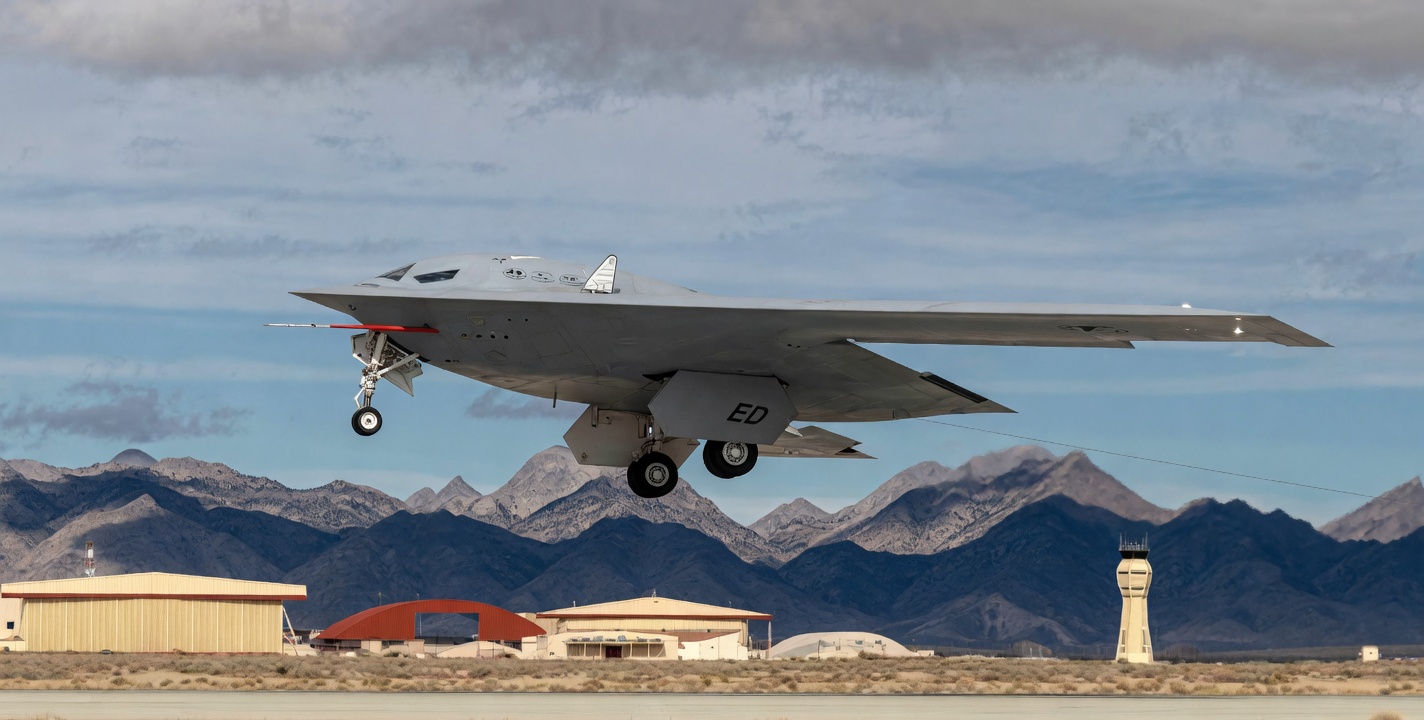
The B-21 Bomber: Logging One Milestone After Another
Details about the B-21 are scarce due to operational security, but the bomber is believed to feature significantly more advanced stealth technology than its predecessors, including narrower, recessed air intakes that reduce the radar cross-section and a smoother radar-absorbent coating.
Moreover, it will have a wide range of networking, combat management, electronic warfare, and intelligence, surveillance, and reconnaissance (ISR) capabilities, as the EurAsian Times earlier explained. Northrop claims that its ability to penetrate airspace deemed impenetrable sets it apart from existing USAF bombers.
The Air Force is currently flying two B-21 pre-production aircraft. The first aircraft arrived at Edwards AFB for flight testing after its first flight in 2023, while the second was welcomed only in 2025. The arrival of the second Raider allowed the program to move beyond the initial flight sciences and envelope-extension activities conducted with the first aircraft. It was designed to enable weapons and mission systems testing.
Unveiled in December 2022, the first aircraft flew in November 2023 and entered low-rate initial production in January 2024. More recently, in February this year, the Air Force and Northrop Grumman agreed to increase annual production capacity by 25%, supported by $4.5 billion in funding.
The latest weapons release comes after two more major milestones the Raider achieved in 2026.
In March, the B-21 was photographed flying alongside a KC-135 Stratotanker over the Mojave Desert in Eastern California. The USAF initially described the encounter as a close-proximity flight rather than a refueling test. Later in April, USAF and Northrop Grumman confirmed that the bomber had begun aerial-refueling tests and released photographs of the aircraft with the tanker.
In June, an operational test pilot flew alongside a developmental test pilot, sharing the cockpit for the first time. This was meant to shorten the overall timeline from testing to initial operational capability (IOC), as the EurAsian Times explained in a detailed report.
These milestones, coming one after the other, underscore the urgency of fielding the B-21, which is expected to replace the existing B-2 and B-1Bs. The weapons release aligns with the breakneck speed at which the B-21 Raider program has been advancing.
- Contact the author at sakshi.tiwari13 (at) outlook.com
- Follow EurAsian Times on Google News