The Indian Air Force (IAF) faces mounting pressure to rethink its next-generation fighter strategy. Its indigenous fifth-generation Advanced Medium Combat Aircraft (AMCA) remains at least a decade from induction, while both major sixth-generation programs it is evaluating — the UK-Italy-Japan GCAP and the France-Germany-Spain FCAS — are plagued by delays and internal disputes.
Earlier this year, the Indian Ministry of Defense (MoD) informed the Parliamentary Standing Committee on Defense of its interest in two sixth-generation fighter jet consortia: the Global Combat Aircraft Program (GCAP) and the Future Combat Air System (FCAS).
The document stated rather categorically that the IAF will “seek to join one of them” to ensure it does not fall behind in advancing next-generation, cutting-edge technologies.
However, both the GCAP and the FCAS seem to have encountered problems that have cast a shadow over their respective futures.
The GCAP, for one, could be delayed by several years from its 2035 rollout schedule, as the Defense Investment Plan (DIP) is expected to confirm that the funding for the program wouldn’t be released until the mid-2030s, The Telegraph reported. This means the next-generation fighter will enter service by the late 2030s or early 2040s.
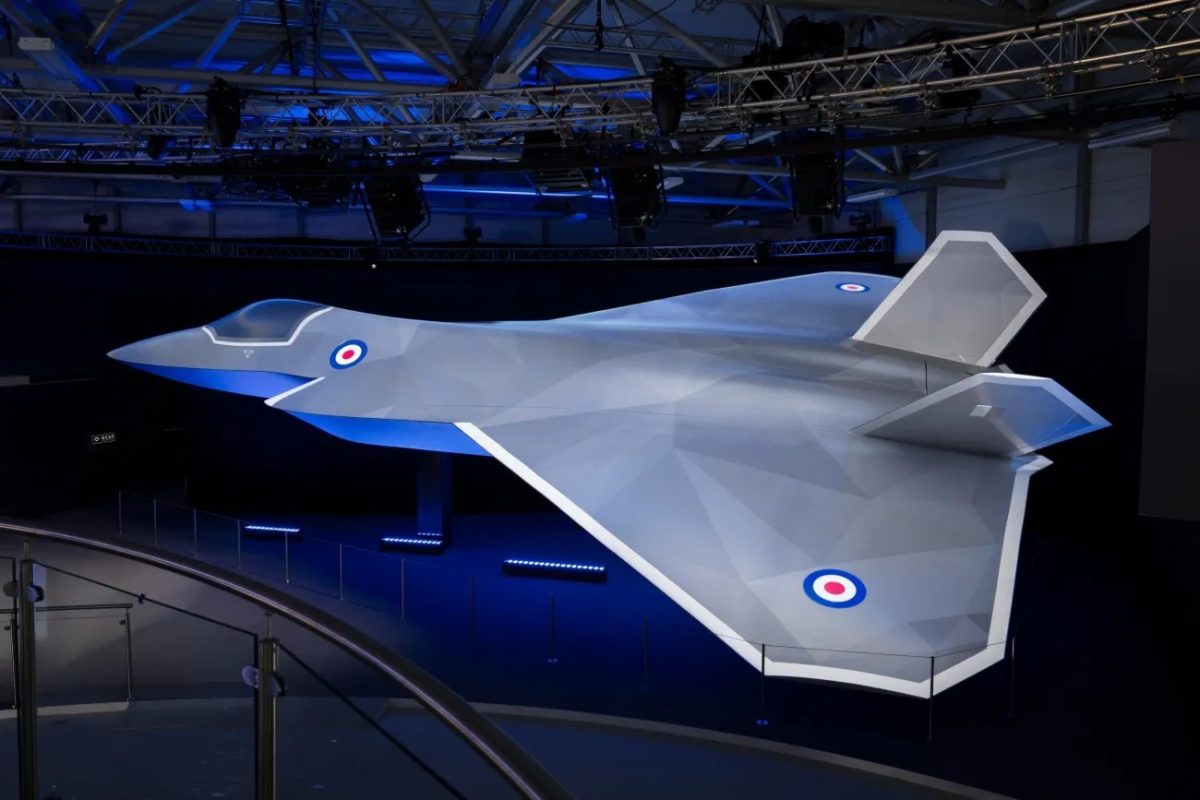
The DIP was originally due last fall but has been delayed amid ongoing wrangling between the British Treasury and the Ministry of Defense over the amount and source of funding, as previously explained by EurAsian Times.
The GCAP International Government Organization (GIGO) signed a bridging contract with Edgewing (the industrial joint venture tasked with producing the aircraft) in April 2026 to give momentum to the stalled program and buy Britain some more time to sort the financing. However, the contract merely runs through June.
Recent reports suggested that the UK was preparing to allocate around £6 billion in additional funding to GCAP.
However, experts believe that if The Telegraph’s claims are accurate, the program may face unprecedented delays, prompting a frustrated Japan to abandon it.
The FCAS, on the other hand, is staring at a bleak future itself.
With France and Germany unable to resolve their differences over issues such as work sharing, aircraft design control, and supplier selection, the program has effectively stalled, and experts believe that even if the two sides fix their issues and get to work right away, the next-generation fighter will not be rolled out before the mid-2040s.
There is a strong likelihood that Airbus (representing Germany and Spain) and Dassault Aviation (representing France) will develop their own separate next-generation fighters. Airbus, for one, has stated that it is already in talks with the Swedish defense and aerospace manufacturer Saab.
Limited Options For India?
Down to 29 squadrons, India is now inching closer to its planned acquisition of 114 Rafale multi-role fighters to augment its numbers.
According to reports in the Indian media, a Letter of Request (LoR) — an official government-to-government document used to initiate defense purchases under the intergovernmental agreement or the Foreign Military Sales (FMS) route — had been finalized and was set to be forwarded to France soon. Moreover, the IAF chief, Air Chief Marshal Amar Preet Singh, is on a three-day visit to France, where he will meet officials from Dassault Aviation and other French defense manufacturers.
In addition to the Rafale, India has been advancing work on the AMCA. The Aeronautical Development Agency (ADA) recently issued a Request for Proposal (RFP) to three shortlisted bidders. The winning bid will be selected based on the technical evaluation and the bid price, and the winner will manufacture five prototypes and one Structural Test Specimen (STS), according to the reports.
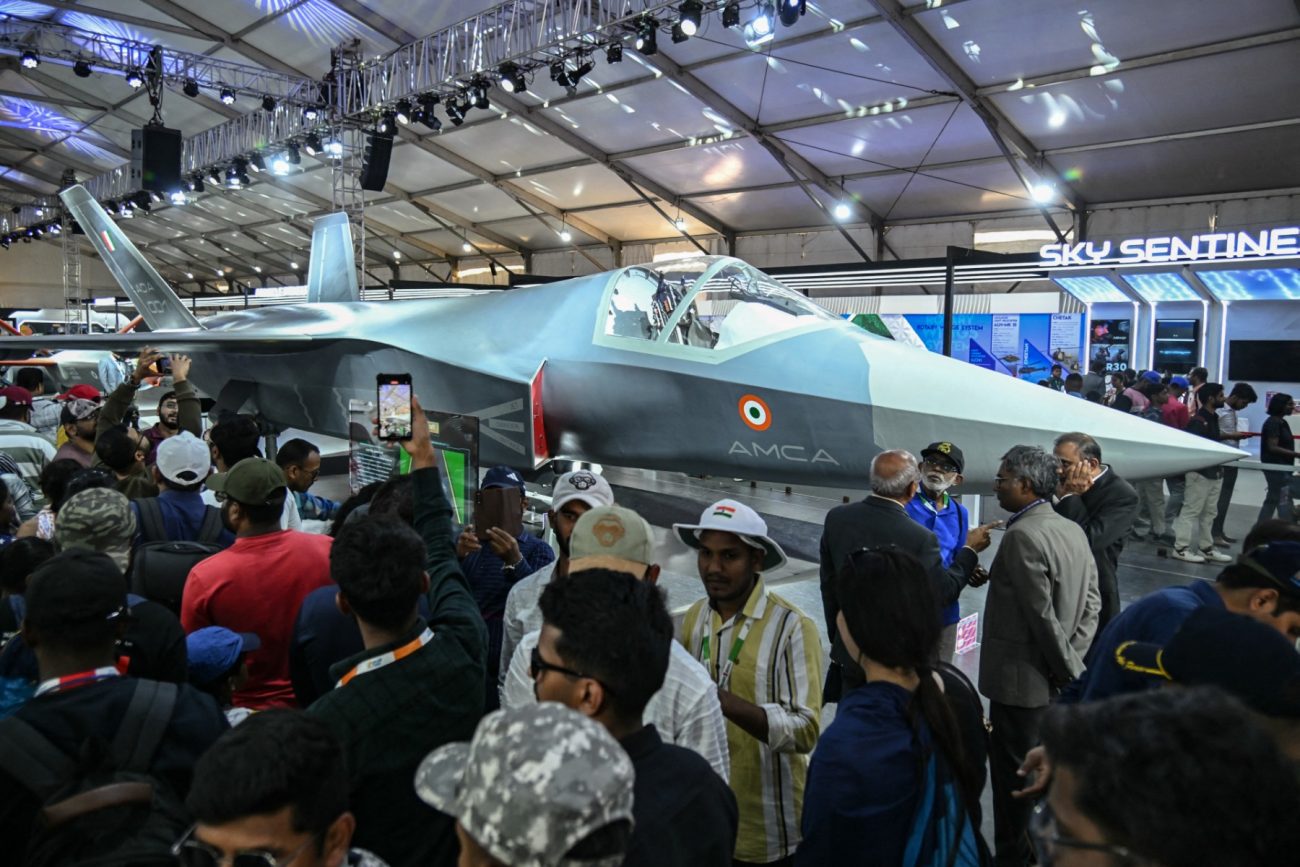
Notably, the RFP mandates that the first prototype be ready within 24 months of contract signing and that the maiden flight occur within 30 months of contract signing. However, defense observers and veterans have expressed skepticism that a private manufacturer can meet a compressed timeline. They speculate that the first flight might not occur until 2032.
As of now, India faces a stark capability gap vis-à-vis the Chinese People’s Liberation Army Air Force (PLAAF), which has both numbers and technological superiority over the IAF.
While China has two operational fifth-generation fighters, the J-20 and the J-35, India has none at the moment. In addition, China has been testing two different sixth-generation prototypes: the J-36, produced by Chengdu Aircraft Corporation (CAC), and the J-50, produced by Shenyang Aircraft Corporation (SAC). Both prototypes are regularly spotted in flight, suggesting that development is taking place at an unprecedented pace.
This means that by the time India inducts its first AMCA, China would have amassed a fleet of 1,000 J-20 fighters and would be ready to induct a sixth-generation fighter, further widening the capability gap.
India’s position could become increasingly perilous if Pakistan acquires the Chinese J-35A stealth fighters. Some reports suggest that Pakistani fighter pilots are being trained to fly the J-35A in China.
With AMCA years away, and sixth-generation multinational fighter programs experiencing internal chaos and delays, India is left with limited options.
“China’s deployment of J-20 and J-35 stealth fighters, along with plans to supply J-35s to Pakistan, underscores the critical need to accelerate the AMCA program. But the program timeline is demanding.
India’s earlier flirtation with GCAP/FCAS was marginal. With both programs now deeply troubled, that door is effectively closing. Meanwhile, the US option was always doubtful due to concerns about cost, technology sharing, and delivery timelines. Recent actions and statements by the USA against Indian interests have widened the trust deficit, effectively closing that option,” IAF veteran and ex-Vice Chief of IAF, Air Marshal Anil Khosla told the EurAsian Times.
“The confluence of GCAP’s financial drift, FCAS’s industrial paralysis, AMCA’s 2035 horizon, and the IAF’s squadron hemorrhage creates a genuine capability vacuum in the coming decade. The 114 Rafales will address the quantitative requirement but not the qualitative enhancement requirement. That leaves only the Su-57 as the only available near-term option, though it is not perfect,” the veteran added.
When asked whether India could opt for the Su-57, the former Vice Chief of IAF said, “A deal for a limited number may be considered, provided it helps advance the AMCA program rather than curtail it. Some important aspects, such as reasonable costs, firm delivery timelines, the transfer of critical technology, and the sharing of source code, must be agreed upon. At the same time, other options should still be monitored closely for any positive developments and the possibility of a better deal.”

Notably, the IAF chief, Air Marshal A.P. Singh, last year indicated that the service might have to opt for an off-the-shelf purchase of a fifth-generation stealth aircraft.
Russia has been aggressively pitching the Su-57 for export to India, offering a “golden deal” that includes supplying ready-made aircraft, producing the Su-57 in India by leveraging existing Su-30MKI infrastructure, and providing assistance with India’s fifth-generation AMCA, as previously explained by the EurAsian Times.
Russia subsequently sweetened the deal again by offering full licensed production, technology transfer, and a “potential two-seat variant.”
Not just that, Russia also recently offered India the source code to the Su-57.
Currently, doubts remain about the aircraft’s stealth characteristics and how much technology Moscow would be willing to part with. However, Indian experts believe that the two-seat variant of the Su-57, which entered testing last month, could be the only viable option when New Delhi is practically starved for choices.
Another IAF veteran, Air Marshal Anil Chopra, told EurAsian Times: “India should focus on producing the Rafale locally, advance work on AMCA and its variants, accelerate production of the indigenous Tejas fighters, and buy about 40 Su-57 fighters off-the-shelf from Russia as an interim solution instead of getting into local production.”
If the IAF decides to buy the Su-57, it would likely become the second export customer of the aircraft after Algeria, which is believed to have acquired the Russian stealth fighter.
At the same time, experts believe that India should keep an eye on multinational sixth-generation fighter programs to ensure it doesn’t repeat past mistakes and isn’t left behind even if the programs themselves face delays.
- Contact the author at sakshi.tiwari13 (at) outlook.com
- Follow EurAsian Times on Google News