Israel is reportedly examining the acquisition of the US P-8 Poseidon maritime patrol and anti-submarine aircraft amid concerns over regional naval threats, particularly from Turkey.
The Israeli Defense establishment is considering purchasing a maritime patrol and multirole aircraft designed primarily to detect submarines, the Jerusalem Post reported, citing a source in the Israel Defense Forces (IDF).
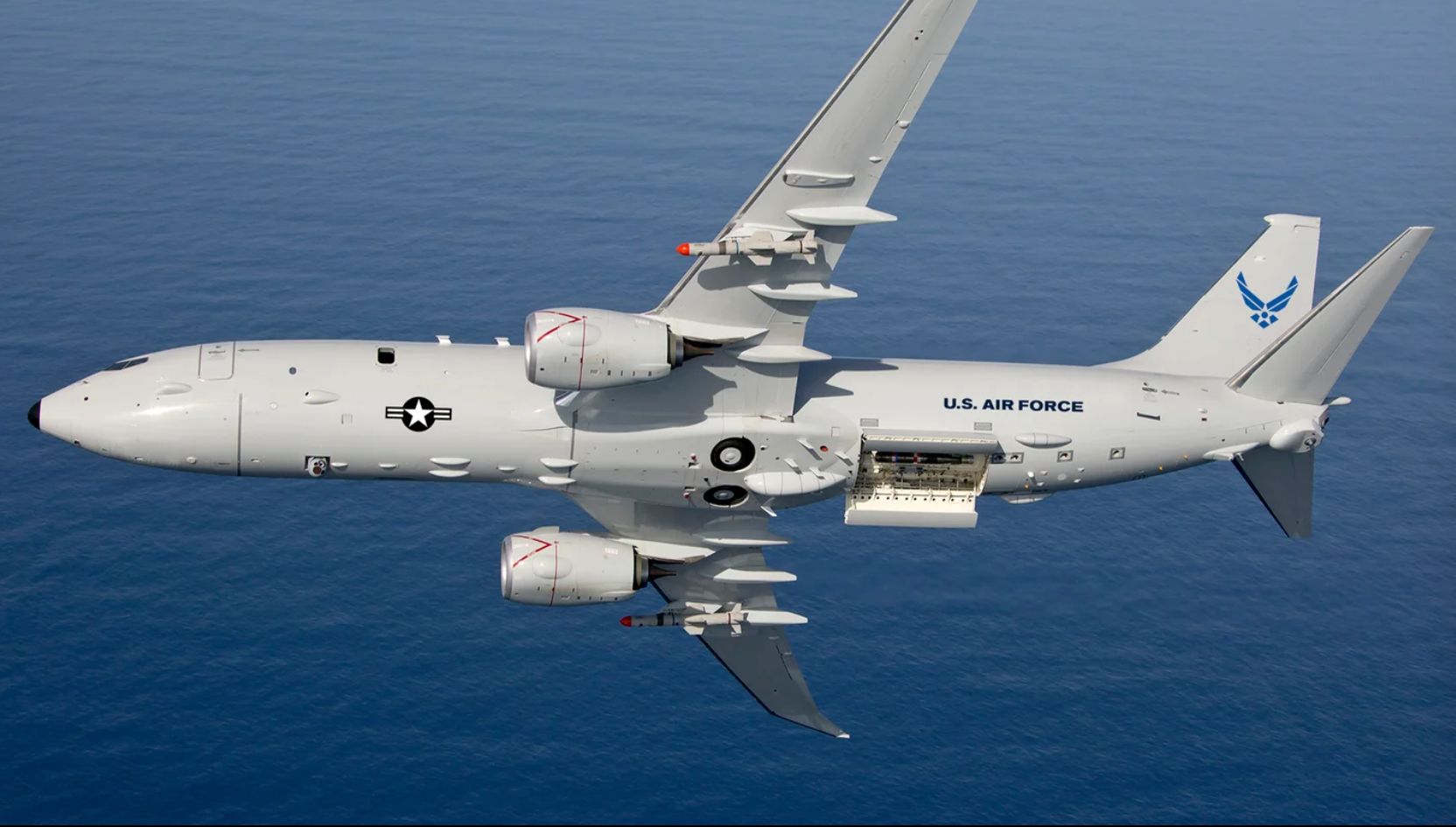
The P-8 is a militarized derivative of the Boeing 737-800, primarily used for maritime patrol, anti-submarine warfare (ASW), anti-surface warfare, and intelligence, Surveillance, and reconnaissance (ISR), among other roles.
Officials maintain that the IDF possesses a high level of existing ASW capability and operates a unique, advanced strategic intelligence and surveillance aircraft, named Oron, capable of supporting missions involving several branches and agencies, including the Air Force, Military Intelligence, the Navy, and the Defense Ministry.
The addition of P-8 aircraft to the IDF inventory would allow Israel to deploy dedicated long-range endurance and specialized submarine-hunting sensors or weapons to large maritime areas that existing platforms cover less optimally.
However, the source stated that the IDF would have to pay a hefty price for the aircraft.
It is believed that even buying a small number of P-8 Poseidon aircraft is considered extremely expensive for the IDF due to sky-high unit costs and the already stretched Israeli wartime defense budget. Some recent Foreign Military Sales (FMS) packages and US Navy figures show the real price tag is far higher than in older deals—the P-8 has a flyaway cost of roughly $328.5 million per aircraft, according to the US Navy’s FY2027 budget request.
The source indicated that the only realistic path forward would likely require the purchase to be embedded in a broader diplomatic or strategic agreement with the United States.
If Israel presses ahead with the purchase—which seems unlikely at this stage amid budget constraints—it will become the 12th operator of the P-8, after the US, the UK, Australia, India, Norway, New Zealand, South Korea, Germany, Canada, Singapore, and Denmark.
The report states that the purchase is reportedly being considered due to concerns over Turkey’s expanding naval and submarine capabilities in the Eastern Mediterranean.
While Israel continues to view Iran and its regional proxies—Hamas, Hezbollah, and the Houthis—as its primary adversaries, relations with Turkey are at their lowest in decades, marked by mutual accusations, suspended trade, and intensifying strategic competition.
Israeli officials have expressed concern that increasingly aggressive and bellicose rhetoric from Turkey against Israel could escalate into direct confrontation. Earlier this year, the friction manifested into a confrontation-like situation when Turkey threatened to escort an aid flotilla bound for Gaza with missile ships, a plan abandoned only after intense diplomatic pressure from Israel and the United States.
Israel is closely watching Turkey’s military expansion and remains acutely aware of the fact that the Turkish navy is one of the largest and most powerful in the Middle East.
Moreover, it has modernized through foreign purchases from countries such as Germany and domestic programs. The Turkish Navy has more than 10 active diesel-electric submarines. It is constructing new subs with AIP (Air Independent Propulsion), which extends the time a submarine can stay submerged without refueling, and is using the oldest vessels for training and slowly phasing them out.
Additionally, it has a host of frigates, corvettes, missile ships, fast patrol vessels, amphibious forces, and the TCG drone carrier with TB3 onboard.
In contrast, Israel’s navy is much smaller and focused primarily on coastal defense, submarine operations, and the protection of offshore gas fields. This creates a power imbalance in the maritime sphere that could be addressed through additional acquisitions, such as the P-8 Poseidon, which will keep a watchful eye on Turkish naval movements.
“There could be direct contact with the Turkish army at sea,” Diaspora Affairs Minister Amichai Chikli warned in a press conference. “This is not an impossible scenario; it could happen as early as tomorrow morning.”
P-8 Could Keep A Vigil Against Turkish Navy
Derived from the civilian Boeing 737-800 airliner, the P-8 is a versatile maritime patrol aircraft capable of performing roles like anti-submarine and anti-surface warfare, intelligence, surveillance, and reconnaissance, and search-and-rescue missions.
“The P-8 has the proven capability to effectively conduct overland ISR and battle space command and control (C2) of land forces using its advanced mission system, data link, and electro-optical/infrared sensor suite,” states the manufacturer, Boeing.
The P-8 is designed precisely for the missions Israel is concerned about. It has a maximum range of about 7,500 kilometers and an endurance of 10 hours, allowing the aircraft to conduct long-range patrols, which could be expanded with aerial refueling support.
This would enable it to monitor chokepoints and patrol lanes for extended periods, which would be useful if Israel wants to monitor the approaches to the Eastern Mediterranean.
The aircraft carries a long-range X-band radar capable of detecting maritime targets at hundreds of kilometers, sophisticated electronic warfare systems, and high-resolution electro-optical and infrared sensors. Its AN/APY-10 multi-mode radar provides synthetic aperture radar (SAR) and inverse SAR (ISAR) modes for surface search, periscope detection, and imaging, as previously explained by the EurAsian Times.
More importantly, the P-8 is equipped with a magnetic anomaly detector and an acoustic system that can deploy and process large numbers of active and passive sonobuoys, capabilities particularly relevant against Turkey’s growing fleet of quiet submarines.
In terms of weaponry, the P-8A is equipped with air-to-surface missiles for precision targeting of maritime threats and torpedoes for anti-submarine operations. With its High-Altitude Anti-Submarine Warfare Weapon Capability (HAAWC), the P-8A can engage submarines quickly and accurately without being exposed to low altitudes by deploying MK-54 torpedoes as glide bombs from as high as 30,000 feet.
Notably, the P-8 Poseidon features secure data and functions as a networked sensor platform that can share real-time data with Israeli ships, aircraft, and command centers. This will allow the IDF to facilitate inter-service coordination and, if at all, expand cooperation with regional partners such as Greece and Cyprus.
Against submarines, the P-8 would expand Israel’s capacity to detect, localize, and track quiet diesel and air-independent-propulsion boats across wide areas—something difficult to sustain continuously with surface ships or shorter-range aircraft alone. Meanwhile, against surface forces, its radar, optical, and electronic sensors would improve tracking of combatants and amphibious groups while providing early warning and targeting data.
The platform would raise the risks and costs of adversarial naval activity in Israeli waters or near Israeli energy infrastructure, serving both as a practical operational tool and as a deterrent. It would, in fact, complement rather than replace Israel’s existing capabilities.
Additionally, it would allow Israel to enhance interoperability with other aircraft operators and bolster cooperation with the US in the West Asian region.
- Contact the author at sakshi.tiwari13 (at) outlook.com
- Follow EurAsian Times on Google News