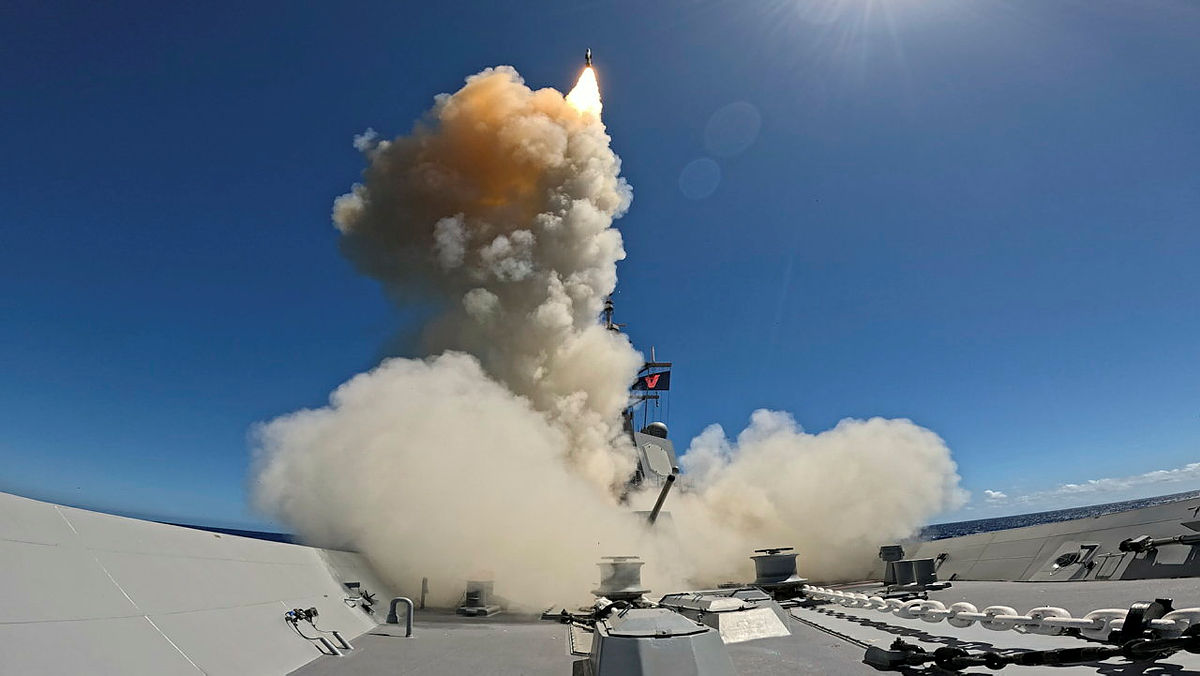
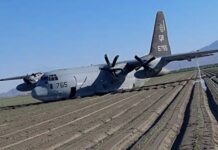
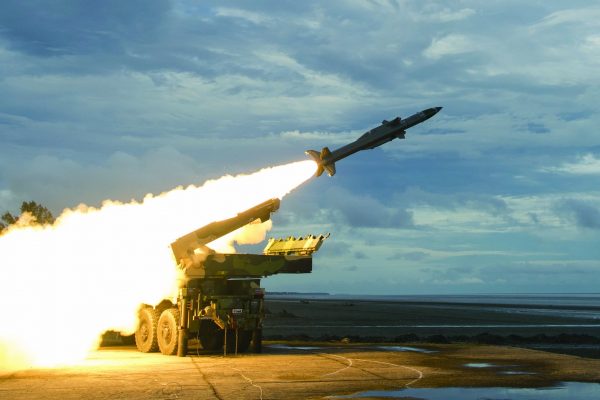
As India hosts Tarang Shakti 2026 multinational drills, one learns not only from large-force engagements or one-on-one combat debriefs, but also from peculiar approaches, mannerisms, body language, and professional conduct.
The Americans have long followed the dictum of stating capabilities as they evolved, and in a way intimidating and making the opponent subservient with their larger-than-life persona.
Americans have led and driven military technologies and used never-ending conflicts to test weapons and doctrines. This gave them confidence and sometimes overconfidence in their approach.
Also, after the end of the Cold War, they chose to be global policemen and thought they would dictate all geopolitical outcomes, although they burned their fingers in most cases, at great cost to American lives and the exchequer.
The Soviet Union invested heavily in military, space, and nuclear power in the four decades after WW II and was a major competitor to the USA and the West. But the Soviet communist economy was otherwise hollow, and geopolitical power ultimately became unsustainable.
For long, the Russians, and their Soviet predecessors, believed in secrecy that kept the opponents guessing, and often being unsure, were frightened of the unknown capabilities.
The French have long worried about a possible Soviet juggernaut overwhelming and running over Europe, and have traditionally not trusted the Americans for their security. They just chose to have their own independent aircraft industry.
Indian military aviation gained valuable experience in WW II and, immediately after independence, began seeing air combat action that continued as recently as Op Sindoor. India benefited from exposure to British, Russian, American, and French aerial platforms and learned operational employment concepts from each.
It is worth understanding each one’s peculiarities.
American Air Operations Approach
The U.S. Air Force (USAF) operations approach has traditionally focused on integrating airpower across all domains to deter, compete, and win in contested environments. They believe in the “Competition Continuum” and view operations through a continuous framework of cooperation, competition, and conflict as part of their core operational concepts.
They believe that you are either with them or against them.
USA has long tried to use its technological edge to overwhelm its opponents. But that did not always work. American air power achieved tactical and operational successes in Vietnam, but it ultimately failed to accomplish its primary strategic and political objectives.
Coercion may not break the “Will” of a determined enemy.
The strategic bombing campaigns, such as “Operation Rolling Thunder” (1965–1968), failed to break the resolve of the North Vietnamese leadership or stop the continuous flow of men and supplies down the Ho Chi Minh Trail.
Political constraints of employment prevented air power from delivering a decisive blow. Heavy conventional bombing can be counterproductive against an asymmetric, rural insurgency, as was the case in Vietnam, often alienating the local population instead of winning “hearts and minds”.
US air power worked well in uncontested campaigns in Iraq and Afghanistan, but failed to achieve worthwhile political objectives. More recently, in “Operation Epic Fury” against Iran, the massive air campaign combined high-altitude dominance with sustained heavy bomber strikes against Iranian infrastructure.
They used stealth platforms (B-2 and F-35) and heavy bombers (B-52) to strike command centers, air defenses, and missile sites simultaneously across Iran. The B-52 missions were meant to target deeply buried, fortified military installations.
The US air power largely achieved its technical objectives, degrading conventional Iranian military production, force projection, and air defense networks. But the air dominance failed to force an unconditional surrender or collapse the regime.
Iran adapted by ceding high skies and shifting focus downward to the lower airspace over the Strait of Hormuz using low-cost drones and missiles, disrupting global shipping and raising transit costs for the U.S. Navy. Iranian missile and drone counter-attacks successfully struck regional forward bases in countries like Saudi Arabia, Jordan, Bahrain, and Kuwait, damaging U.S. ground infrastructure and support aircraft.
The U.S. has been focusing on Joint All-Domain Operations (JADO), synchronizing air, space, cyberspace, land, and maritime capabilities seamlessly across services. NATO has shifted to Agile Combat Employment (ACE), moving operations away from large, centralized bases to dispersed, makeshift locations to increase survivability.
New approach to “Point Defense” requires integrated systems to protect critical base infrastructure from drone and missile threats. USAF is now preparing for “Force Generation” by restructuring how combat-ready forces are presented, trained, and sustained for high-end peer conflicts with China in the Indo-Pacific.
USAF continues to prepare for global vigilance, global reach, and global power. US air warriors are highly professional and focused on leading the world in technology employment, doctrine, and tactical concept development.
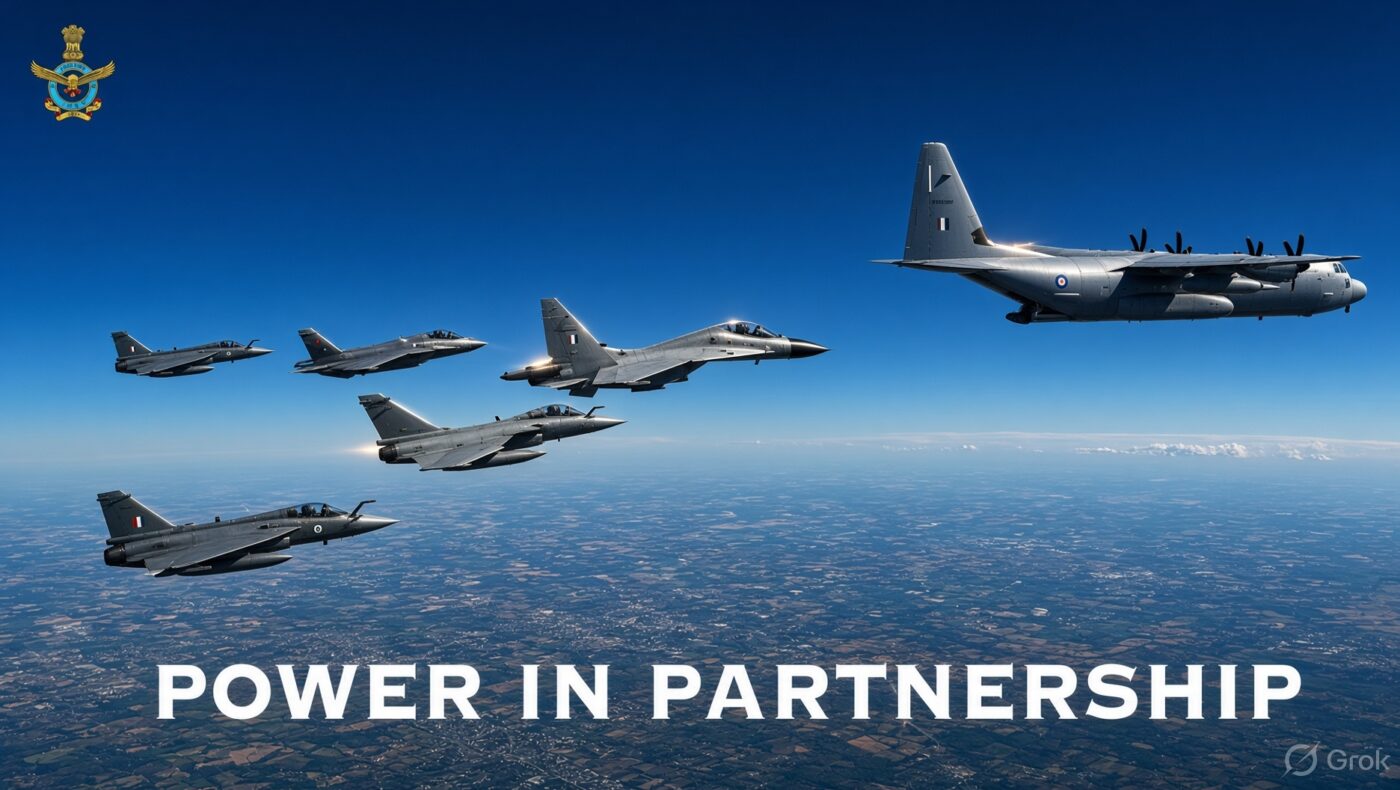
Russian Approach to Air Operations
Russia fields the world’s second-ranked military power. Russia possesses the largest nuclear weapons stockpile globally, estimated at over 5,400 warheads.
Russia operates the world’s third-strongest air force, backed by a massive total inventory of over 4,000 military aircraft. Production lines for key tactical aircraft like the Su-34 strike fighter and Su-35 air superiority jet have continued, helping offset operational attrition.
The integration of ultra-long-range air-to-air armaments, such as the R-37M missile, allows Russian jets to threaten targets at extended stand-off ranges.
Advanced 4.5-generation aircraft like the Sukhoi Su-35S feature thrust-vectoring engines for high maneuverability, powerful phased-array radars, and robust electronic warfare suites, alongside early-production fifth-generation Su-57 stealth fighters. Large stockpiles of cruise and ballistic missiles allow for persistent strategic and tactical bombardment.

Russian forces maintain advanced, dense electronic warfare systems that can disrupt enemy communications and neutralize incoming drones. The highly sophisticated integrated air defense systems feature long-range surface-to-air missile (SAM) platforms like the S-400 and S-500.
During the Cold War, the Soviet air arm was designed for long-range, high-altitude interceptions under close ground control. Aircraft were supplemented with long-range air-defense missiles.
Aircrews train extensively in extreme post-stall maneuvers such as the “Cobra,” using vectored engine thrust to maintain control at near-zero airspeeds. For long, Russia treated airpower as an army-centric, ground-support extension, or flying artillery, rather than an independent offensive strike force.
The Russian Aerospace Forces (VKS) was not designed to execute independent, deep-penetration air campaigns like NATO doctrine. Russia lacks comprehensive suppression of enemy air defenses (SEAD) capabilities for wide offensive dominance.
Russia prioritizes layered defense against adversary aerospace threats using advanced mobile SAMs integrated closely with fighter aviation. Lessons from Ukraine have made them switch to stand-off attacks.
Fighters like the Sukhoi Su-34 release glide bombs from 35 to 50 kilometers away to mitigate the risk of entering dense adversary air defenses. They are switching to high-volume usage of tactical and long-range attack drones, along with synchronized cruise missile strikes.
Integration of domestic and foreign-supplied drone technology has expanded real-time reconnaissance and strike coordination on the front lines.
French Approach to Air Operations
The French approach to air operations relies on centralized command and control, rapid global power projection, and a strategic doctrine focused on using precise, minimal necessary force. France has combined air and space into a single force, as the domains are considered contiguous.
The National Air Operations Center (CNOA) at Lyon-Mont Verdun acts as the core command node. This setup allows France to control domestic airspace defense and international expeditions simultaneously.
The French Air and Space Force (FASF) emphasizes rapid responses. French aircraft are designed for agile response. They can project global power, such as deploying multiple Rafale fighters and multi-role tanker transports within hours.
FASF believes in “precision over mass,” using high-tech advanced sensors and specialized platforms like the Rafale. By maintaining very small fleets, they can handle technological upgrades and logistics better.
France favors swift, lethal, targeted actions over extended, nation-sapping campaigns. France is also actively pushing for longer-range air-to-air missiles to counter advanced peer competitors.
The FASF is participating in joint global deployments like Mission Pégase and multinational exercises like Tarang Shakti in India. They also regularly study partner experiences and the Indian Air Force’s (IAF) operational insights to refine modern combat tactics.
France is one of the few countries that builds entire aircraft domestically, reducing dependence and arm-twisting from larger powers like the USA.
French aircrews are heavily trained in dynamic, austere tactical approaches designed to operate in high-threat or completely unprepared environments.
French transport aircrews regularly qualify for tactical approaches onto unprepared surfaces like grass, dirt, and raw Arctic sea ice. French tactical air traffic controllers work alongside aircrews to coordinate stealthy, steep tactical descent profiles to avoid ground fire.
During transits, crews do not fly standard civilian airline tracks, instead simulate full tactical engagements, utilizing low-altitude terrain masking, defensive manoeuvring, and variable cockpit configurations.
The French take some of the most intensive approaches to joint crew mission debriefs, structured around a meticulous three-pronged framework: a specialized learning mode, learning structure, and learning culture. The goal is to seamlessly blend individual pilot progression with overall collective squadron performance, capitalizing directly on individual tactical mistakes to systematically update institutional knowledge.
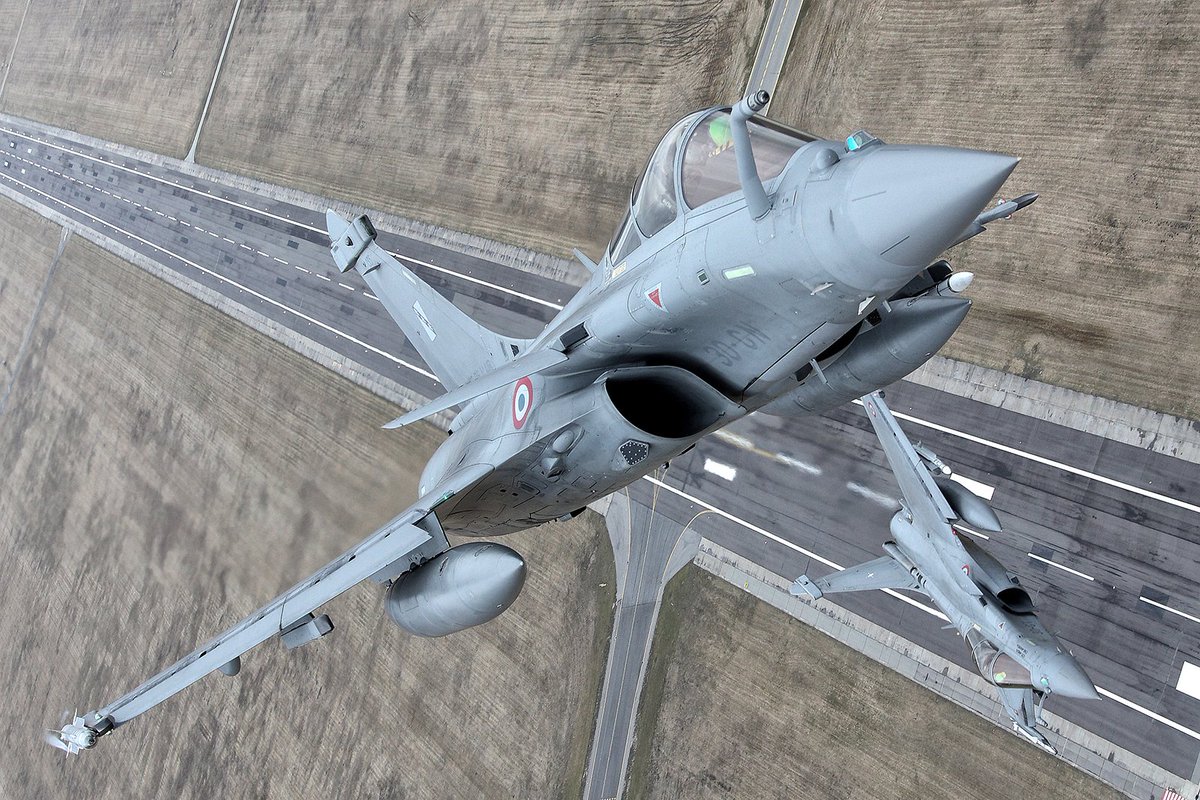
The “Pégase” doctrine trains to rely less on massive permanent foreign bases and to demonstrate its aircrews’ ability to deploy multi-role Rafale fighters, A330 MRTT tankers, and A400M transports anywhere in a short time. FASF prioritizes decentralized command and empowering junior aircrew leaders with high autonomy to execute missions quickly inside an adversary’s OODA loop without waiting for centralized approvals.
Indian Aircrew and Dynamic Operations
From years of real combat experience and exercises with major global air forces, the Indian approach to air operations has fundamentally transformed, evolving from a traditional tactical army-support instrument into a highly lethal, multi-domain, strategic aerospace power.
Documented across successive IAF doctrines, India’s operational philosophy is dictated by unique regional geopolitics, primarily the two-front challenge of Pakistan and China, both with nuclear arms.
The IAF operates on a refined Western-style command philosophy tailored for high-tempo operations. IAF believes in centralized command, distributed control, and decentralized execution. While headquarters handle macro-level operational decision-making and resource allocation, local commanders retain execution autonomy to ensure flexibility, agility, and rapid responsiveness in highly dynamic environments.
Historically restrained, India’s modern operational blueprint emphasizes strategic coercion and escalation dominance through its “No-War-No-Peace” strategy. The IAF acknowledges a grey-zone interregnum between total peace and overt war. India mandates using air power as a deterrent instrument of statecraft, with selective tactical application to manage cross-border crises, without inevitably triggering full-scale escalations.
Unlike Western concepts that envision protracted air campaigns, the Indian leadership focuses on intense, precise, and swift achievement of objectives to decisively penalize an aggressor before international political pressures force a ceasefire. A clear plan for quick action and conflict termination.
Faced with advanced missile networks and drone saturation, India has fused its defensive and offensive architectures. IAF’s Integrated Air Command and Control System (IACCS) is the backbone of India’s air operations. IACCS aggregates data from satellites, AWACS, ground radars, and fighter sensors into a single, real-time digital picture. Systems like the indigenously developed Akashteer (Army) seamlessly mesh with the IAF’s IACCS.
This enables autonomous low-level airspace tracking and swift coordination between ground-based systems (like the S-400 and Akash missiles) and interceptor aircraft.
Air operations depend heavily on space for targeting, navigation, and early warning. This evolution has driven an official push to rename the service the Indian Air and Space Force (IASF) to solidify its cross-domain mandate.
Through large multilateral exercises like Exercise Tarang Shakti, the IAF tests its ability to plan and communicate alongside global air assets (such as the F-35, Rafale, and Su-30MKI), building the plug-and-play capability needed for coalition frameworks.
Driven by the national Make in India initiative, India is transitioning from “threat-based” procurement to a “capability-demanded” force structure. Operational planning actively favors indigenously produced platforms (like the Tejas fighter, Light Combat Helicopter, and SkyStriker loitering munitions) alongside advanced electronics, AI-driven sorting algorithms, and electronic warfare suites to ensure technological self-reliance during a prolonged crisis.
Indian aircrew balance high-stakes strategic execution with advanced technological adaptation across diverse geographical environments. Indian military aircrews operate in some of the world’s most unforgiving geographies, requiring specialized tactical approaches. Modern aircrew treat the air and space domains as a single continuum. Crew maintains readiness for both kinetic, punitive precision strikes and non-kinetic shaping operations.
Aircrew train for complete tri-service integration and multi-domain synergy. IAF and Army Aviation crews continuously practice high-tempo combined maneuvers, such as combat para-drops, fast-roping troops from Advanced Light Helicopters (ALH Dhruv), and deploying heavy underslung artillery via Chinook helicopters. Exercises like Yudh Abhyas and tri-service operations (Kargil, Operation Sindoor) train crews to blend air assets seamlessly with ground-based precision weapons, air defense grids, and electronic warfare units.
Indian crews train in agile combat employment, practicing approaches, controlled landings, and rapid departures from dual-use public infrastructure, such as national highway emergency landing strips. India’s aircrew approach leans heavily on simulation and advanced technical upgrades. Indian military crews have traditionally excelled in international air exercises and earned wide recognition.
US vs Russian vs French Networking Traits
The American personal and professional networking culture relies heavily on a mix of proactive communication, authenticity, and a “give-first” mindset.
They listen more than they speak, following a two-ears-to-one-mouth ratio to understand others’ needs.
They are sincere and unpretentious, avoid feigned interest, and build trust quickly. Successful professionals share resources, insights, and introductions freely without keeping an immediate score. They exhibit an upbeat, approachable demeanor and act as a social magnet.
They turn brief chats into long-lasting bonds. Once friendly, they enjoy drinks and laughs.
Russian networking culture relies heavily on deep, trusted inner circles and the traditional exchange of mutual favors, contrasting sharply with more superficial or transactional Western networking styles.
Initially, Russians are naturally suspicious or reserved toward strangers and people outside their immediate circle. Trust is not given automatically. It must be earned over time through repeated, honest interactions.
Once you are accepted into a Russian’s inner circle, the relationship becomes a deeply loyal, enduring bond marked by mutual support and strong personal generosity.
Russians value blunt honesty, clarity, and directness over polite small talk or excessive smiling, which they may view as insincere. They are open to leveraging personal connections to bypass bureaucratic hurdles or solve complex problems.
They love Indians and have watched portrayals of the underprivileged’s carefree, happy-go-lucky demeanor in Hindi movies from the 1950s to the 1980s. They will dance over shots of vodka, singing Hindi songs. Long “Hindi-Russi Bhai Bhai” speeches are always punctuated with shots of neat Vodka.
French personal networking relies on building deep, long-term trust, intellectual engagement, and strict boundaries between professional and personal life.
So don’t expect to be invited to someone’s home or meet their family until you’ve built a deep, multi-year relationship.
Unlike the transactional and rapid-fire approach often seen in Anglo-Saxon business cultures, the French value quality over quantity. First impressions are heavily anchored in respect and hierarchy.
The French value critical thinking and logic. Conversations with the French often turn into a discussion about industry trends, philosophy, or culture. Politely challenging ideas is not seen as rude.
The French love long lunches, paired with wine and cheese. They have a subtle sense of humor. With Indian aviators, they find common ground in the Mirage-2000 and Rafale.
Indians befriend everyone quickly. They can be loud. But they are great hosts and may overdo gifting.
A hug is a very natural way of greeting in India. Handshakes can be firm.
Finally, aviation has its own language. Aviators can get together and drive each other crazy with jokes, fun, laughter and mirth. In a bar, one can see all aviators ending up scissoring and locking their arms into combat maneuvers. Socializing is no less exciting than the air combat they did earlier in the day.
Tarang Shakti is about all this and more.
- Air Marshal Anil Chopra (Retired) is an Indian Air Force veteran fighter test pilot and former director-general of the Center for Air Power Studies. He is currently the strategic advisor (aerospace) at SIDM.
- He tweets @Chopsyturvey
- Follow EurAsian Times on Google News