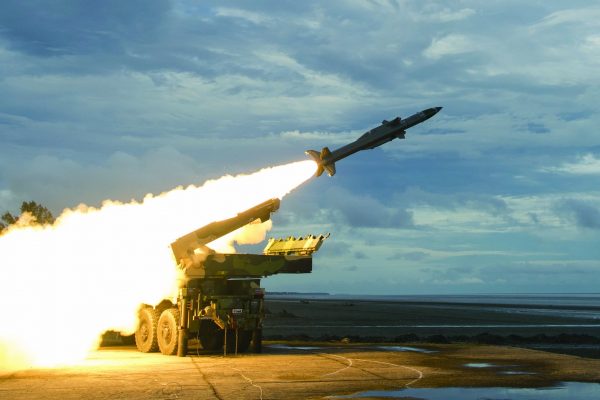
The Pentagon recently announced a whopping US$24.4 billion contract to defense giant Raytheon to speed up the production of “three-in-one” SM-6 missiles.
The Pentagon called the SM-6 “a critical anti-air and anti-surface warfare munition.” It said the five-year agreement, with two additional option years, “will drive faster production, increase manufacturing throughput, and deliver significant cost savings.”
The deal “provides the defense industry with the long-term predictability needed to expand workforce capacity and secure critical supply chains,” the Pentagon added.
The award lands after a year in which interceptor stocks were burned down. The US Defense Department’s inspector general reported last month that acquisition officials said: “the munitions expenditure on Operation Epic Fury has resulted in strategic inventory shortfalls and revealed industrial base bottlenecks for munitions resupply.”
A September 15 Congressional Budget Office assessment said the United States has probably used between one-half and two-thirds of its stocks of certain missile-defense interceptors since June 2025, naming the SM-6 alongside Patriot, THAAD and the SM-3.
Rebuilding those inventories would take at least five years even if production rose, the agency said, and would leave the Pentagon with fewer interceptors for a possible clash with China.
The CBO put the cost of a Patriot or an SM-6 at about $4 million a round, compared with about $12 million for a THAAD interceptor and $28 million for an SM-3. It said the weapons were used in large numbers defending Israel and then during Operation Epic Fury.
Outside estimates run higher: a table compiled by the Center for Strategic and International Studies and carried by the Financial Times in April put the SM-6 at $5.3 million a round, with a pre-war stock of about 1,160 and wartime use of 190 to 370.
The Pentagon has not published an SM-6 round count for the war.
Raytheon confirmed in a statement that its SM-6 “has been successfully fired from various US Navy ship-based platforms and launchers on land,” calling it a “combat-proven weapon.”
The weapons-maker also acknowledged increased efforts to meet demand. “By continuously investing in our operations and facilities, we are removing constraints and boosting capacity to ensure we deliver this critical capability our sailors depend on,” Raytheon President Phil Jasper said.
SM-6 Missile
The SM-6 missile was created for extended-range anti-air warfare (ER-AAW), including defense against UAVs, military aircraft, anti-ship cruise missiles, and terminal ballistic missile defense. It also acts as a high-velocity anti-ship missile.
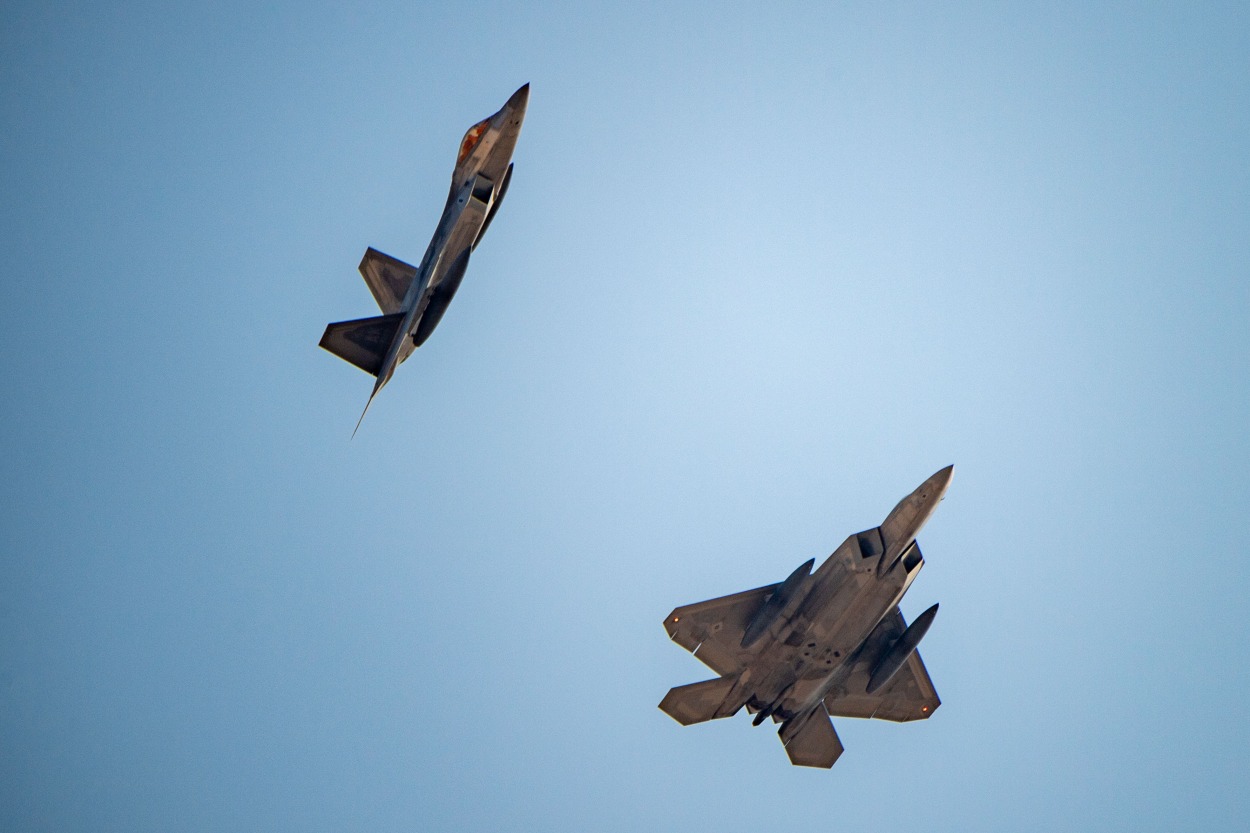
U.S. Awards F-22 ‘Raptor’ Pilots for Ops Midnight Hammer as Pentagon Sends 3rd Carrier Towards Iran
The SM-6 is based on the earlier SM-2ER Block IV (RIM-156A) missile airframe, with the AIM-120C AMRAAM active radar-homing seeker replacing the former design’s semi-active seeker.
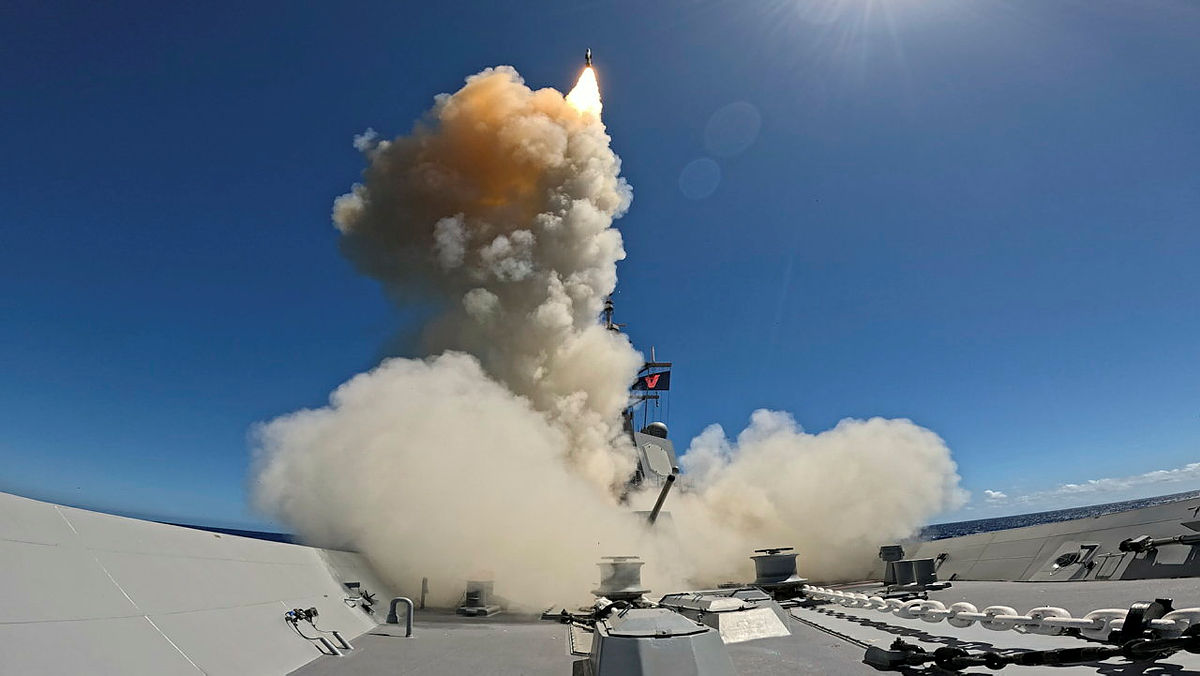
The official designation is RIM-174 Standard Extended Range Active Missile, or ERAM. It is fired from the Mk 41 vertical launching system already fitted on US and allied destroyers and cruisers, so a ship does not need a new launcher to carry it.
What makes the SM-6 different from the older Standard missiles is that it does not have to rely only on the firing ship’s radar. Through Naval Integrated Fire Control-Counter Air, or NIFC-CA, it can take targeting data from an E-2D Hawkeye, another ship, or a fighter such as the F-35, and engage a target beyond the horizon of the ship that launches it.
The active seeker then finishes the intercept on its own. In plain terms, the missile can be cued by a sensor the target cannot see, and still home in the last miles.
Raytheon describes the SM-6 missile as “three missiles in one,” and says it is the only weapon that can perform anti-air warfare, anti-surface warfare, and ballistic missile defense or sea-based terminal missions.
The Block IA and IB updates improve the seeker and guidance against harder, complex targets, while the Block IB adds a larger rocket motor for more range and speed against high-end air threats. Its exact range remains classified, but it is widely believed that it could reach over 200 nautical miles and fly at roughly Mach 3.5.
That spread of roles is also why the missile is expensive, and why magazines matter. A destroyer that fills its cells with SM-6s gains reach, but it burns through a scarce inventory if it uses the same missile for aircraft, cruise missiles, ships, and terminal ballistic shots.
China has reportedly been wary of the missile because of its capabilities. US allies in the region, including Japan, Australia, and South Korea, are lined up to acquire it.
The SM-6 on the Typhon Mid-Range Capability launcher is a ship missile adapted for strikes against land and sea targets. The Army has described the battery as a “strategic” weapon system to be used against higher-value targets such as air defense facilities and command and control centers — an important weapon given the region’s prevailing tensions.
In that ground-launched form, it sits alongside the Tomahawk, giving land forces a strike option that once belonged only to ships.
The US has also developed an air-launched variant of the SM-6, known as the AIM-174B, mounted on a US Navy Super Hornet, which broke cover during RIMPAC 2024. Fired from altitude and speed, it pushes an air-to-air engagement far outside the range of a carrier group’s older missiles.
- Contact EurAsian Times at admin (at) eurasiantimes.com
- Follow EurAsian Times on Google News