


The Quad (Quadrilateral Security Dialogue) summit on November 17, the seventh in the series, at the Philippine capital, Manila, on the sidelines of the ASEAN Meet, may have silenced the critics who had said that the grouping, representing Australia, India, Japan, and the United States, had been on “life support” for the past two years and that it had no future.
But how long will they remain silent, given the paradoxical policies of US President Donald Trump?
The question is worth pondering.
Because Trump’s relationship with the Quad is ironic. It was he who had helped revive and consolidate the grouping in 2017 during his first presidency, recognizing the strategic significance of bringing the four countries together in a shared commitment to work as “a force for global good and to support an open, free, and inclusive Indo-Pacific that is prosperous and resilient”.
Incidentally, the first meeting of Quad officials had taken place on the sidelines of the ASEAN Regional Forum Summit in Manila in May 2007.
But the idea became dormant, with the then governments of Australia and India hesitating to show urgency, fearing the grouping would be misunderstood as an anti-China forum. China had, incidentally, criticized the initiative.
Viewed thus, Trump’s initiative in 2017 was noteworthy. This initiative subsequently acquired greater institutional momentum under President Joe Biden, culminating in regular leaders’ summits and an expanding agenda.
However, during his second term, Trump’s policies raised questions about the very strategic continuity that made the Quad credible.
As the EurAsian Times once explained, several of Trump’s policies jeopardized the Quad. Trump’s decision to drop plans to attend the scheduled Quad Leaders’ Summit in India in late 2025, combined with public remarks suggesting the US had “lost India” to China, cast serious doubt on the group’s future.
Trump’s imposition of steep tariffs—up to 50 percent—on Indian imports, treating India like an adversary, undermined the trust required for strategic alignment.
In addition, Trump’s transactional “America First” worldview did not align with the broader, non-military Indo-Pacific cooperation framework developed during the Biden administration.
As if that were not bad enough, the EurAsian Times further noted that Trump’s “2026 US National Defense Strategy” omitted any explicit mention of the Quad, sending confusing signals to Indo-Pacific partners.
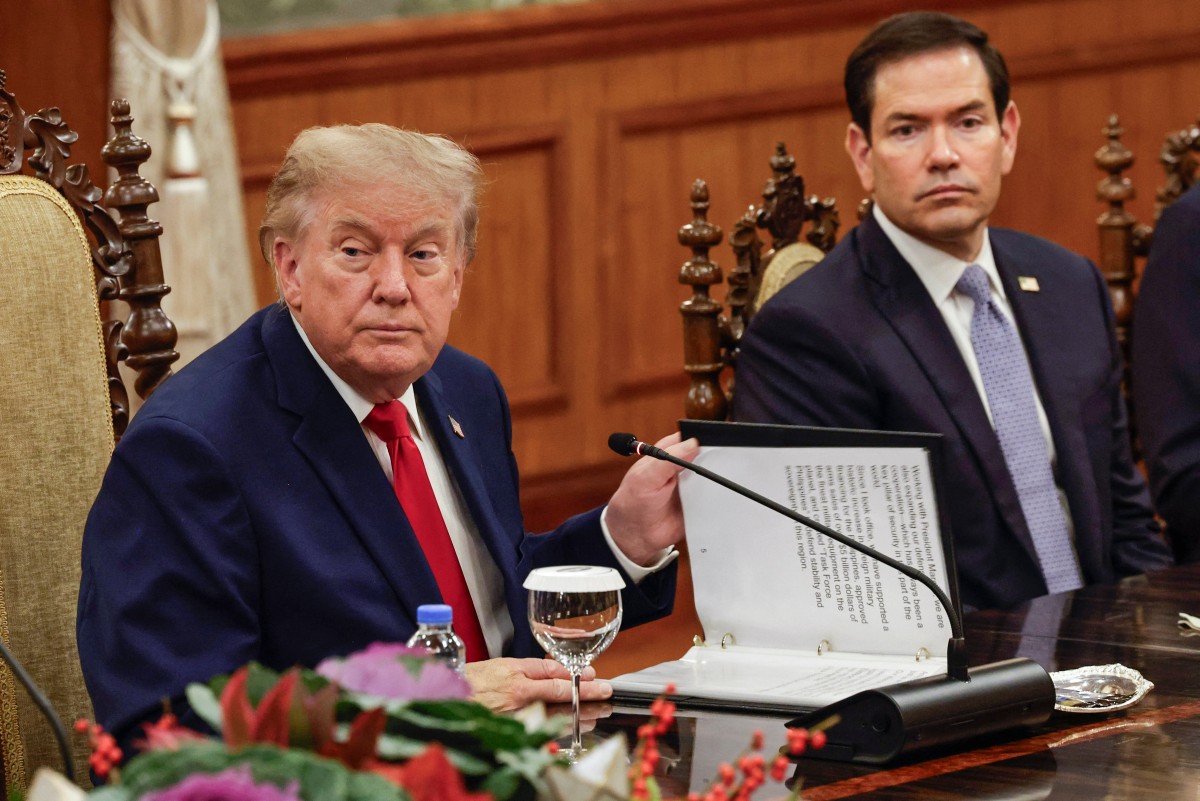
Against this background, if the Quad summit has been revived by Trump and his three “partners” – Prime Minister Anthony Albanese of Australia, Prime Minister Narendra Modi of India, and Prime Minister Takaichi Sanae of Japan- credit may also go to their foreign ministers, who had always faith in the Quad and its ideals.
Marco Rubio, US Secretary of State, S Jaishankar, India’s external affairs minister, Australian foreign minister Penny Wong, and Toshimitsu Motegi, Japan’s Minister for Foreign Affairs, had met three times this year – May 26, July 22, and October 31 to prepare for the Tuesday summit. They also met twice in 2025, though Japan had a different foreign minister last year.
In fact, all the major decisions the four leaders mentioned in their summit press release formalize what their foreign ministers had decided earlier in the year while working on the suggested agenda at previous summits.
In that sense, one can appreciate Rubio’s contribution in helping Trump, his President, recognize the virtues of the Quad.
The announcement of “the inaugural Quad Business Leaders’ Forum which is scheduled to be held in early 2027, bringing together business leaders, government officials, and policy experts from Quad countries to foster greater business ties across their private sectors, including the promotion of commercial deals and partnerships critical to the prosperity of the Indo-Pacific; the AI Accelerator to coordinate and fund efforts to support trusted AI access, deployment, and technical assistance across the Indo-Pacific; the Indo-Pacific Maritime Surveillance Collaboration to enhance information sharing and maritime domain awareness; the Quad Partnership for Cable Connectivity and Resilience, which has expanded access to secure and trusted communications infrastructure across the Indo-Pacific; enhanced Quad Cybersecurity Cooperation to work together to achieve an open and secure cyberspace; and strengthening the Quad’s ongoing cooperation on counterterrorism, were all announced by the foreign ministers in their meetings during the year.
Trump’s forceful announcement of “several important new critical mineral deals to secure our supply chains and ensure that none of our nations is vulnerable to coercion by any single foreign supplier” endorsed what the foreign ministers had said in May. Of course, it remains to be seen whether the US can match China’s rare earth supplies in 10 months, as the American President was confident.
Similarly, at the 2023 Quad Leaders’ Summit, “the Quad Partnership for Cable Connectivity and Resilience” was announced to strengthen cable systems in the Indo-Pacific, drawing on the Quad partners’ world-class expertise in manufacturing, delivering, and maintaining cable infrastructure.
Since 2023, Quad partners have committed over $140 million to undersea cable builds in the Pacific. It may be noted that on July 16, 2025, India and the United States hosted the ‘Wavelength Submarine Cable Forum’ in New Delhi, with participation from Quad partners to identify opportunities for digital infrastructure collaboration.
Likewise, Quad partners have been working to build a more secure cyberspace and strengthen cyber resilience and critical infrastructure protection in the Indo-Pacific. The Quad Senior Cyber Group convenes regularly at an expert level to foster collaboration between government and industry to advance a positive and ambitious cyber agenda.
Its focus spans initiatives ranging from adopting shared cybersecurity standards and secure software development to capacity building and cultivating a skilled workforce.
Incidentally, Quad Cyber Senior Officials met on October 13, 2026, in Singapore and pledged to continue advancing Quad countries’ unique capabilities to support a trusted and resilient cybersecurity environment in the Indo-Pacific region.
If anything, the above decisions, as well as those from past summits, make it clear that, contrary to popular perceptions, the Quad is not exactly a military organization. There is no doubt that four partners are concerned about a hegemonic China and are collaborating militarily at bilateral levels and multilaterally on other forums, but QUAD, as such, has broader objectives of working together across the Indo-Pacific region on a series of initiatives on health, education, new technologies, maritime domain awareness, technology, infrastructure, cyber security, climate change adaptation and mitigation.
If Quad is still viewed in some quarters as anti-China (Quad meetings rarely name China specifically), it is precisely because its principles oppose China’s, or, for that matter, any country’s, unilateral and forcible attempts to change the territorial status quo and maritime boundaries, disregard for international law, and threats to free and open navigation. But that does not make QUAD anti-China, something that Beijing always alleges.
Incidentally, Trump is heading to China for APEC and talks with Xi Jinping immediately after Manila. Given his paradoxical nature, nobody is sure what he will say to please XI at the cost of America’s Indo-Pacific partnerships such as the Quad.
The Indo-Pacific needs a credible Quad. Whether Washington continues to provide the leadership it promises will likely remain uncertain under Trump’s mercurial thinking in his second term. Hopefully, he will listen to Rubio, who seems to believe strongly in the necessity of the Quad.
- Author and veteran journalist Prakash Nanda is Chairman of the Editorial Board of the EurAsian Times and has been commenting on politics, foreign policy, and strategic affairs for nearly three decades. He is a former National Fellow of the Indian Council for Historical Research and a recipient of the Seoul Peace Prize Scholarship.
- The author can be reached at prakash.nanda (at) hotmail.com