Turkey’s “indigenous” KAAN fighter jet will join India’s AMCA, South Korea’s KF-21, and Sweden’s Gripen to rely on American engines for their aircraft.
The Trump administration is expediting the sale of dozens of jet engines to Turkey, worth hundreds of millions of dollars, despite reservations from some US lawmakers, according to a recent Reuters report.
The General Electric engines, probably the GE-F110, will power Turkey’s first indigenous combat jet, KAAN, and could cost about $700 million, according to a source cited by the report. The package will reportedly be submitted to the US Congress in the coming days.
Notably, the reports come months after Turkish Foreign Minister Hakan Fidan said his country was awaiting US Congressional approval to receive American-made engines for the first batch of KAAN. Speaking on the sidelines of a Trump-Erdogan meeting on September 26, 2025, Fidan said, “The KAAN’s engines are waiting for approval in the US Congress.”
KAAN is Turkey’s most aspirational defense project in decades, which will ensure its entry into a select group of states that have built an indigenous next-generation stealth fighter.
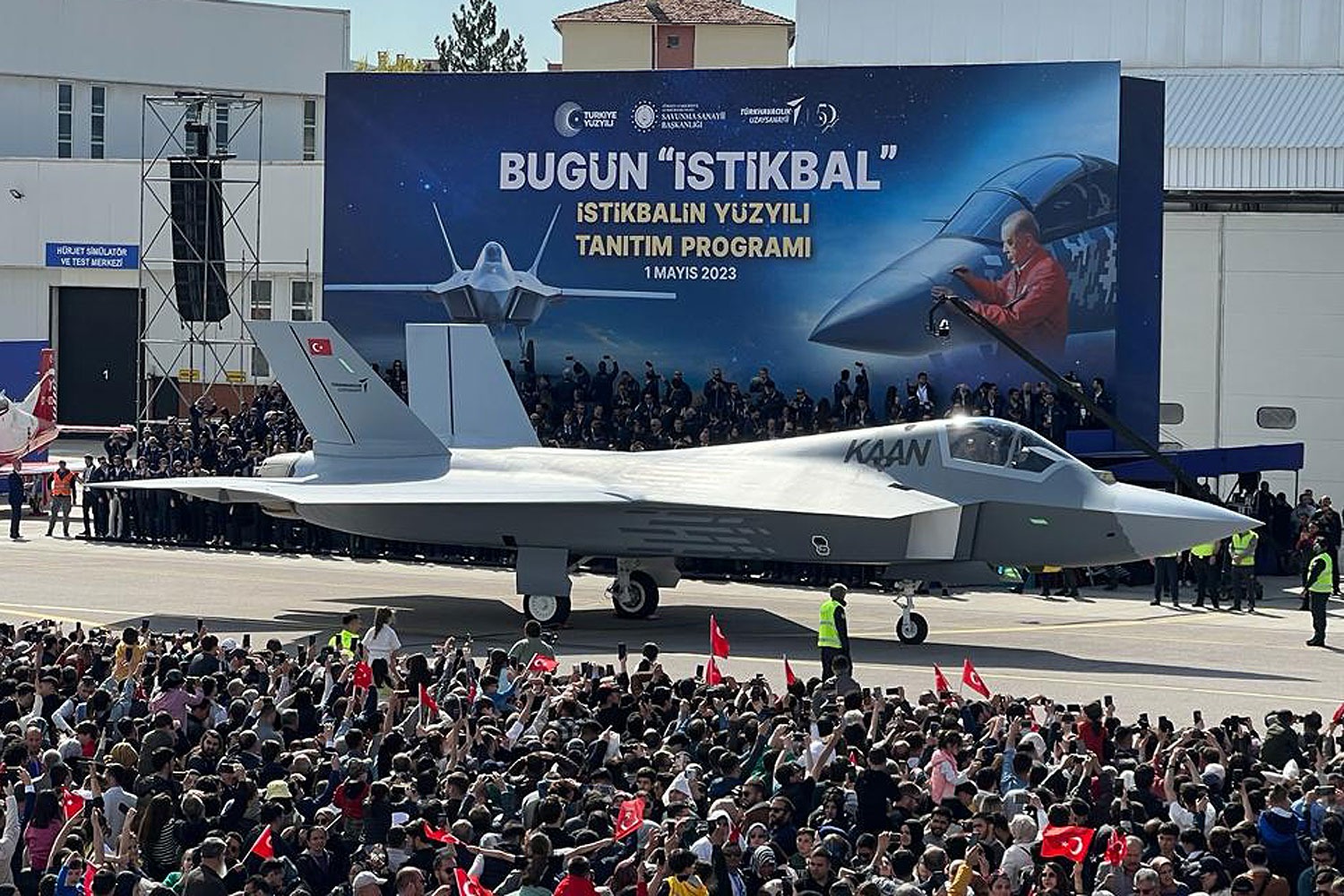
Turkey was expelled from the F-35 consortium in 2019 over its decision to acquire Russian S-400 air defense systems despite repeated US warnings. The expulsion forced Ankara to look inward and forge ahead with developing its own next-generation fighter to secure much-needed tech sovereignty and reduce reliance on the US.
Indigenous Aircraft But Powered By US Engines
Developing a modern, high-performance afterburning turbofan from scratch can cost billions of dollars and take decades due to the extreme demands on materials science, precision manufacturing, reliability under combat conditions, and testing requirements.
In fact, very few countries — the US, Russia, the UK, France, and China — have ever succeeded in developing their own jet engine technology. Therefore, many countries developing their own fighter jets prioritize the localization of airframes and avionics for prestige and self-reliance, while relying on proven foreign engines, such as those from General Electric.
For example, Sweden’s Gripen E/F, which Saab heavily promotes for export as a cost-effective, independent, sovereign alternative to US platforms like the F-35, is powered by the GE F414, an American-origin engine. In fact, even the previous C/D variant of the platform was powered by the Volvo RM12, a licensed derivative of the GE F404.
Saab usually offers high technology transfer, local assembly, the ability to integrate national weapons and sensors, lower operating costs, and a “software-defined” approach for upgrades. This narrative appeals to countries seeking to avoid full dependence on the US, but the presence of the US engine means the aircraft is subject to the International Traffic in Arms Regulations (ITAR).
Similarly, India’s Tejas-class fighter jets—poster child for India’s indigenous defense manufacturing and “Make in India” initiative—are also equipped with General Electric engines.
The Tejas Mk-1 and Mk-1A, produced by Hindustan Aeronautics Limited (HAL), are powered by the General Electric (GE) F404-IN20 afterburning turbofan engines, while a more advanced variant of the jet, the Tejas Mk2, is expected to be powered by the General Electric F414-INS6 engines.
The dependency has cost the Indian Air Force (IAF) dearly in the past, as delays in the delivery of these engines, caused by supply chain disruptions, have pushed back the delivery of Tejas Mk1A, even as the IAF stares at dwindling squadron strength.
Critics have, in fact, flagged this dependence as a strategic vulnerability.
Despite that, India’s fifth-generation AMCA (Advanced Medium Combat Aircraft) is anticipated to be powered by the GE414 engines.
In fact, recent reports in the Indian media suggest that negotiations over the engines have hit a roadblock, with costs surging sharply, raising concerns about affordability and timelines. The engine is expected to equip the first few squadrons of the stealth fighter until an indigenous engine is operationally ready.
Another country whose so-called indigenous fighters are propelled by American engines is a key American ally in Asia: South Korea. The South Korean KAI KF-21 Boramae, a 4.5-generation multirole fighter with semi-stealth features, is actively promoted as South Korea’s first domestically developed fighter.
South Korea markets the jet as an affordable, capable bridge to true 5th-generation fighters, featuring AESA radar, advanced avionics, reduced radar cross-section, and internal weapons bay plans for later variants. In fact, the aircraft has been positioned as a cost-effective alternative to the American F-35 for export markets.
Interestingly, though, the KF-21 is also currently powered by two General Electric F414-GE-400K engines, licensed-produced by Hanhwa.
Most of these countries recognize the risks and vulnerabilities associated with foreign power plants and are already advancing indigenous jet engine development to reduce reliance on American engines, including Turkey.
Haluk Görgün, head of the Presidency of Defense Industries (SSB), Turkey’s top defense procurement agency, said earlier that the indigenous fighter jet program is advancing as planned and will not depend on any single foreign engine supplier.
“Kaan’s future is in no way dependent on the engine of a single country,” he told Anadolu Agency (AA).
In the same vein, he said work is advancing on the indigenous TF35000, which will power the aircraft in the long run. “Development activities for KAAN’s main engine, the TF35000, and its auxiliary power unit, the APU60, are successfully continuing. This is always how the process works in the defense industry: it starts with existing engines, and then national engine projects are introduced,” he noted.
Meanwhile, Turkey publicly unveiled the new 42,000-lbf-class Güçhan turbofan engine during last month’s SAHA 2026 defense expo in Istanbul.
The Güçhan’s announced 42,000 lbf output sits only marginally below the 43,000 lbf afterburning thrust of the F-35’s F135, as the EurAsian Times reported at the time. Although Turkey did not specify the aircraft for this engine, these specifications collectively suggest it could be used in a fifth-generation manned aircraft.
Ecologists Slam $300 Billion U.S.-Iran 14-Point MoU for Ignoring Environmental Damage
Turkey’s Unending Quest For F-35
“I’m going to probably do something that will make them very happy,” US President Donald Trump said when asked about the jet engines, the F-35 program, and his plans for the upcoming NATO summit in Ankara, Turkey.
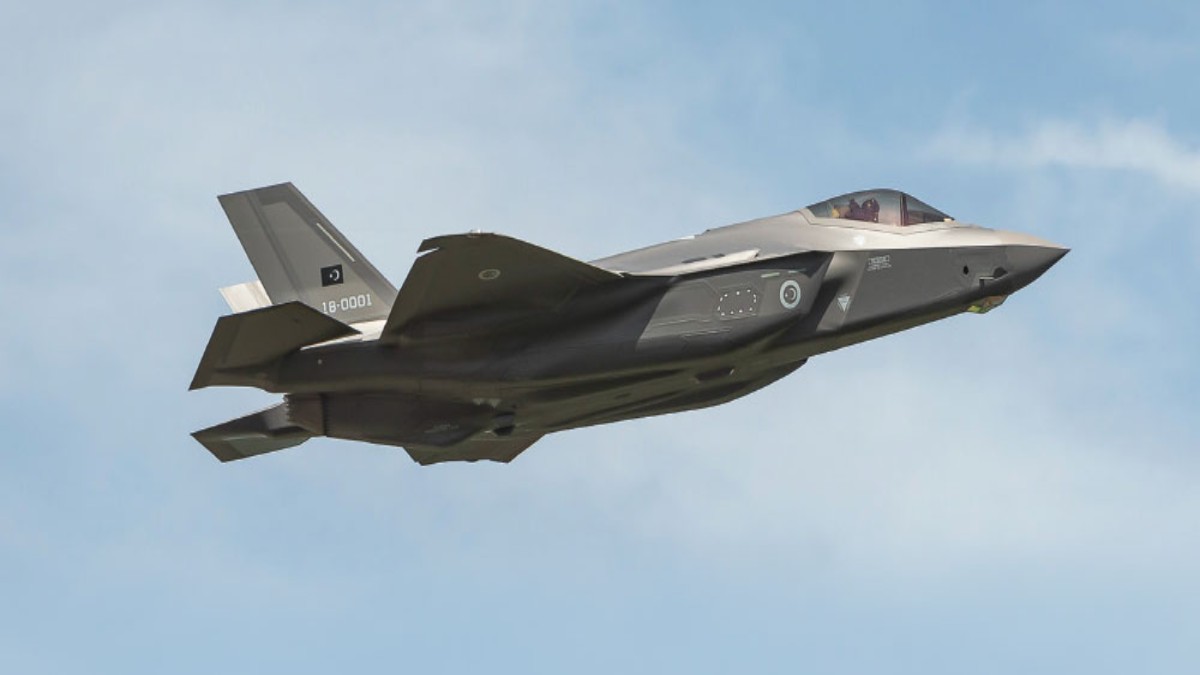
While some lawmakers have openly opposed the F-35 sale to Turkey as long as it retains the S-400, the Trump administration has reportedly threatened to bypass the Congressional hold on several weapons sales.
“As a matter of general policy, we do not comment on pending arms transfers. Official correspondence with Congress is conducted through official channels,” a State Department official told Reuters.
Speaking alongside Trump, US Vice President J.D. Vance stated that an assessment was underway to determine whether Turkey had complied with US regulations to obtain the F-35. “Pete and the entire team are reviewing this right now, because there are certain things that we have to certify have happened … in order to comply with American law,” he stated, referring to Secretary of Defense Pete Hegseth.
U.S. Renews Push for F-35 Stealth Fighters to Spain After European 6th-Gen FCAS Program Falls Apart
In December 2025, Tom Barrack, the US ambassador to Turkey and a close aide to US President Donald Trump, stated that Turkey is closer to removing the Russian missile defense system, which has created tensions with NATO allies and has become a hurdle to Turkey’s acquisition of the F-35. “My belief is that those issues will be resolved in the next four to six months,” Barrack had said at the time.
Before that, a March 2025 report indicated that Trump would consider selling the F-35 to Ankara if the two sides could reach a consensus that would render the S-400 system inoperable. The US could either demand that the S-400 be disassembled or moved to a US base in Turkey, the report had noted at the time.
Later in the year, Trump hinted during Turkish President Recep Tayyip Erdogan’s September visit to the White House that he would allow Turkey to buy the stealth aircraft. However, no decision has been made yet, and ambiguity continues to dominate all conversations about Ankara’s F-35 purchase.
- Contact the author at sakshi.tiwari13 (at) outlook.com
- Follow EurAsian Times on Google News