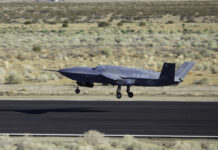
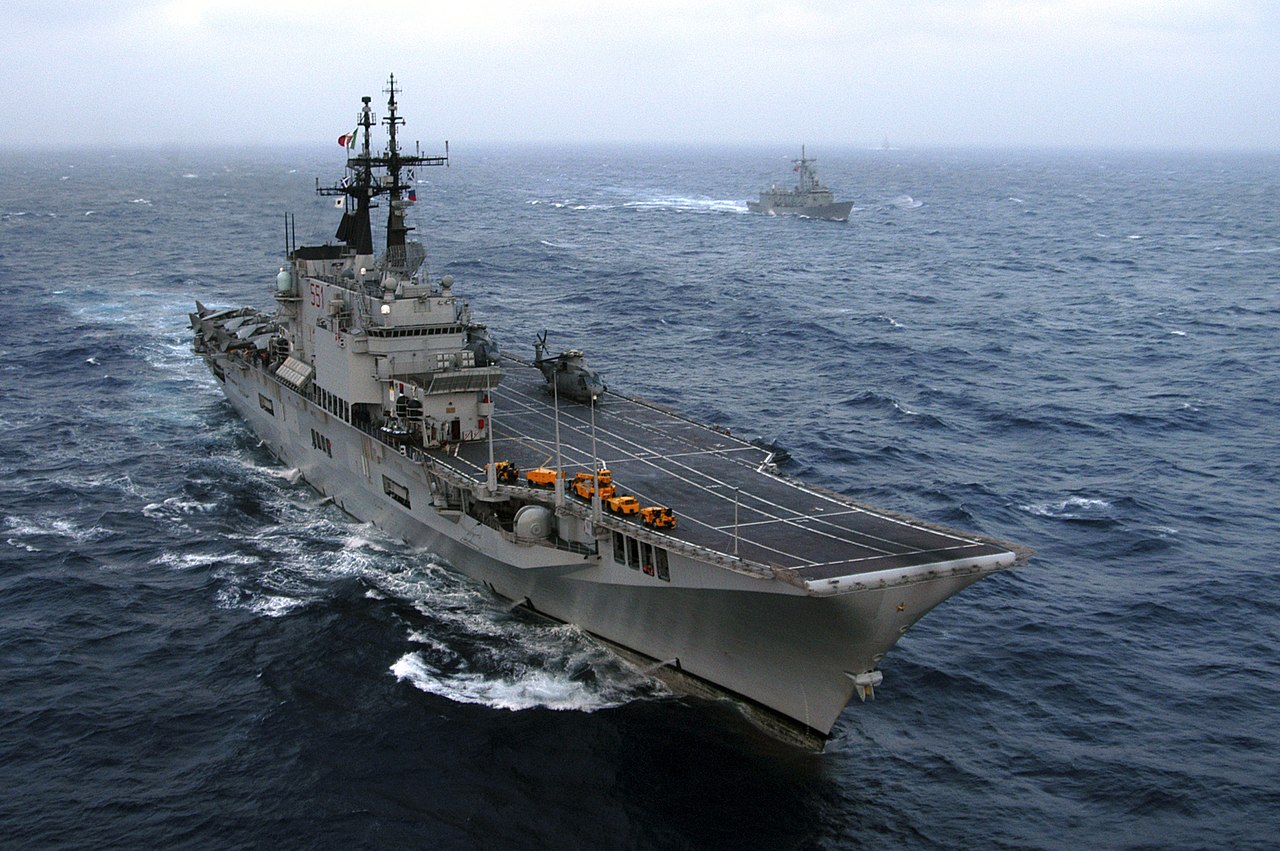
From the F-117 (Nighthawk), B-2 (Spirit), F-22 (Raptor), and F-35 (Lightning II) jets, the US has been at the forefront of stealth technology.
However, as the US used stealth fighters in combat, other countries, particularly China and even Russia, closely watched their development and combat use.
China, in particular, closely monitored US stealth aircraft and invested heavily in its own counter-stealth platforms and stealth jets.
Over the last decade, China claimed to have developed multiple anti-stealth radars and has also fielded two stealth fighter jets, the J-20 Mighty Dragon and the J-35A. It is also working on two 6th-generation aircraft.
According to a recent U.S. Air Force analysis, Beijing might have picked all the wrong lessons.
A new paper – ‘Chinese Perceptions of Stealth‘ – by Major Derek Ecklebe, a U.S. Air Force officer and a fellow at the Air Force’s China Aerospace Studies Institute, suggest that Chinese perceptions of U.S. stealth capabilities are “often incomplete or skewed, leading to an overreliance on hardware solutions, an underestimation of U.S. operational adaptability, and a framing of stealth as a technical rather than an operational problem.”
Beginnings of Stealth
The stealth technology emerged during the last years of the Cold War, as the US, after suffering heavy losses in Korea and Vietnam, sought to develop a more survivable fighter aircraft.
The F-117 Nighthawk was the world’s first stealth aircraft. Soon, the US also delivered the B-2 Spirit Bomber.
In 1999, during Serbia’s bombing campaign, an F-117 Nighthawk was shot down by a Soviet-era air defense system. To this date, this remains the only stealth aircraft ever shot down.
Reports suggest that the Chinese embassy in Serbia was collecting the parts of the downed F-117 Nighthawk to smuggle them to China, so that Beijing can advance its own stealth fighter jet program and also develop countermeasures to track it.
In fact, there is evidence to suggest that the US Bombing of the Chinese embassy in Belgrade in 1999 was intended to destroy the wreckage of the F-117 Nighthawk that the embassy staff might have collected.
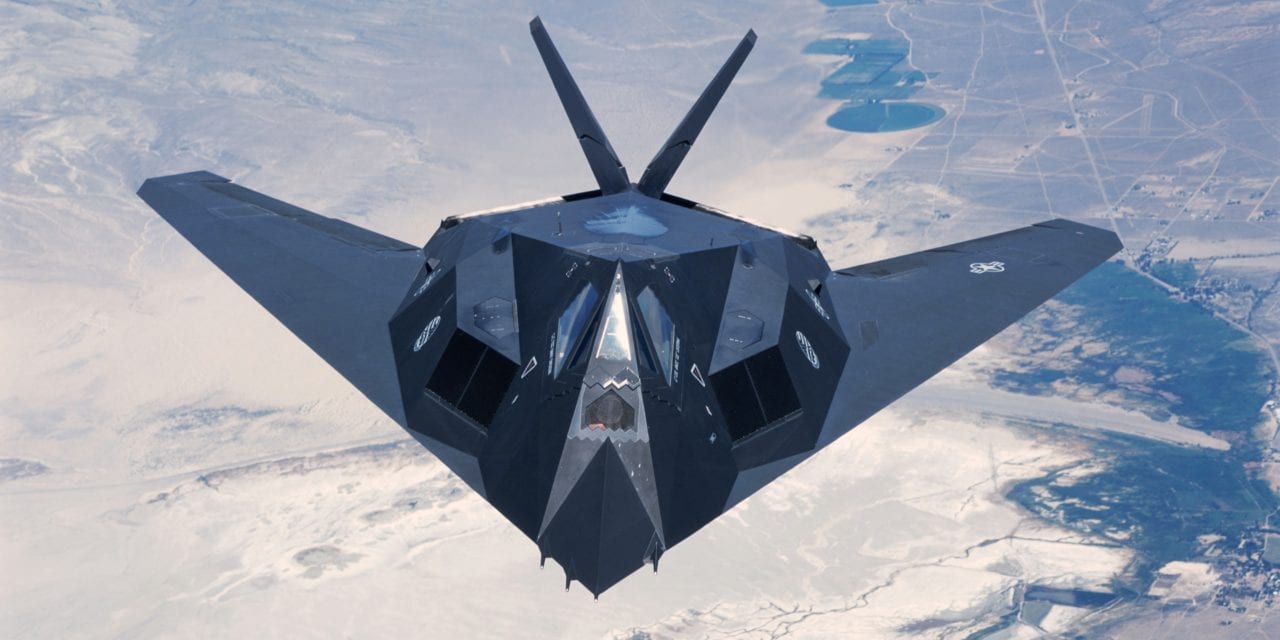
This incident underscored how Beijing saw stealth technology both as a threat and an opportunity.
“In the years that followed, China maintained a dual interest in stealth technology: developing countermeasures to U.S. capabilities and advancing its own capabilities.”
Meanwhile, the U.S. introduced two more stealth aircraft: The F-22 Raptor and the F-35 Lightning II.
Over the next decade, China viewed the development of defenses against stealth as critical to any future conflict with the United States.
In 2017, it introduced the J-20 Mighty Dragon, its first stealth aircraft. Over the next nine years, significant improvements have been made in this aircraft.
China also unveiled J-35A, its second stealth fighter, which appears heavily influenced by the F-35, at the Zhuhai Airshow in November 2024.
Furthermore, last year, China started testing two tailless stealth aircraft, tentatively named J-36 and J-50, and is also developing a stealth bomber, H-20.
However, according to the paper, China has fundamentally misunderstood stealth technology and its application in combat, and these misconceptions have influenced the development of Beijing’s anti-stealth radars and its stealth fighter jets.
Chinese Misconceptions of Stealth
According to the paper, China misunderstood stealth, its applications, and its vulnerabilities from the very beginning.
China’s stealth program began in earnest in 1999 when a Soviet air defense system shot down an F-117 Nighthawk over Serbia.
“PLA writings repeatedly reference this incident, presenting it as proof that stealth is not invincible and is highly vulnerable to low-frequency radar.”
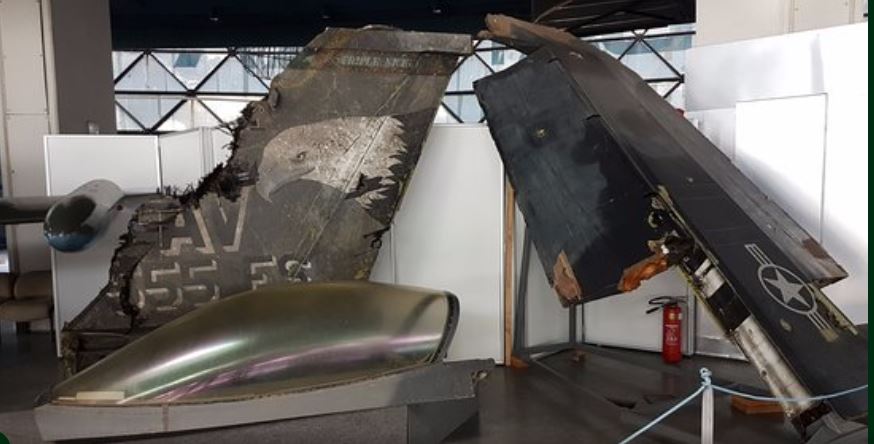
U.S. investigations, however, determined that the loss stemmed from operational complacency, repeated use of the same ingress and egress routes, and insufficient suppression of known threats, rather than any fundamental flaw in the aircraft itself.
“The aircraft operated as expected; however, insufficient mission planning and the operator’s inexperience contributed to the shootdown. Subsequent missions quickly incorporated those lessons, and no operational stealth aircraft have been lost to enemy fire since.”
Basically, while Chinese strategists stressed hardware and platform vulnerabilities in the shoot-down, US investigators emphasized operational errors in the loss.
The PLA has used its lessons learned to guide the development and acquisition of what it deems “counter-stealth” radars, in hopes of replicating the Serbian success in shooting down a stealth aircraft.
“These interpretations shaped subsequent Chinese analyses, which increasingly emphasized technical detection solutions while giving less attention to operational and adaptive factors. They drive impressive engineering efforts and large budgets, yet leave gaps that a more holistic opponent can exploit.”
Chinese sources often view stealth as a technical problem and focus on detection to counter U.S. advantages. At the same time, there is less appreciation of operational practice and adaptability.
“Chinese assessments place too much faith in low-frequency radar. They ignore U.S. operational adaptability and prioritize hardware over doctrine or organization.”
For instance, Chinese military planners fail to take into account that the US has also learned intangible lessons after decades of strategic, operational, and tactical iteration.
“Modern U.S. mission planning leverages numerous tools, including the Joint Mission Planning System, which incorporates threat libraries and dynamic routing to maximize stealth.”
For the US strategists, the paper argues, stealth is a multifaceted capability that integrates technology with operational tactics to maintain air superiority.
“Stealth technology, while expensive, complex, and important, is only part of the equation. If mission planning is insufficient or incomplete, the technology will be used suboptimally, increasing the risk to the aircrew and the airframe,” the paper warns.
For instance, China treats stealth solely as a property of the aircraft rather than as part of a larger, adaptive, and holistic operational system.
Whereas the U.S. doctrine emphasizes that low-observable characteristics are only one element of survivability.
“Equally important are mission planning, real-time rerouting, electronic warfare support, force packaging, and the critical experience gained by operators and support personnel.”
Underscoring this Chinese thinking, its radars are labeled “anti-stealth” or “counter-stealth,” such as the YLC-8E and JY27A, underscoring Chinese optimism about developing a conventional counter to U.S. stealth
assets.
However, these so-called Chinese “counter-stealth” radars performed badly in Venezuela.
Venezuela deployed the Chinese-made JY-27 and JY-27A meter-wave radars, which were heavily marketed by the China Electronics Technology Group Corporation (CETC) as “counter-stealth” systems capable of detecting fifth-generation fighters like the F-22 and F-35.
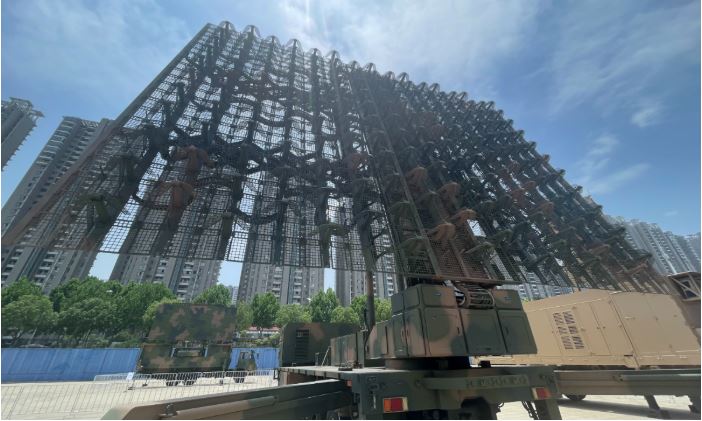
But during the US military operation in Venezuela in January this year, these radars failed to detect any stealth aircraft, highlighting how hardware alone can not solve the stealth problem.
Chinese planners possibly also underestimate the advantages of the US’s software-centric adaptability.
China’s “hardware-heavy focus appears to contrast with the growing U.S. emphasis on software-driven adaptability and mission-system integration in developmental programs, where advanced AI, dynamic routing, and real-time environmental adaptation are intended to mitigate the very predictability and rigidity that Chinese planners may assume constrain U.S. stealth operations in contested environments.”
“U.S. doctrine emphasizes survivability as the integration of stealth, command and control, and adaptive planning; PLA texts prioritize material solutions and technological prowess, setting the stage for divergent defensive and developmental trajectories,” it said.
Ironically, the U.S. military and intelligence agencies are often depicted as being fixated on technology at the expense of strategy and tactics. But the paper argues that, when it comes to stealth, China is overemphasizing tech.
The paper argues that China made the same hardware-centric mistakes while developing its stealth aircraft.
For instance, the J-35A, which is heavily inspired by the F-35, “replicates features of the U.S. F-35 platform but prioritizes hardware metrics over U.S.-style software-defined adaptability coupled with [tactics, techniques and procedures] modernization.”
The paper suggests that, despite making remarkable progress in developing counter-stealth radars and stealth fighter jets, China’s overt focus on a hardware-centric approach might mean that these systems will perform sub-optimally in real-world combat situations.
- Sumit Ahlawat has over a decade of experience in news media. He has worked with Press Trust of India, Times Now, Zee News, Economic Times, and Microsoft News. He holds a Master’s Degree in International Media and Modern History from the University of Sheffield, UK.
- Article republished with Modifications
- He can be reached at ahlawat.sumit85 (at) gmail.com