Commercial negotiations for the GE F414 engine, selected to power India’s Tejas Mk-2 and the initial variants of AMCA, have hit a serious roadblock. Despite an earlier agreement on technology transfer, GE Aerospace has sharply escalated its price demands — nearly tripling the per-unit cost.
Initial estimates had put the cost of each F414 engine at ₹70- ₹80 crore ($8- $9M). However, during commercial negotiations, GE Aerospace quoted prices nearly three times higher, exceeding ₹200 crore per unit.
Alongside engine costs, GE reportedly sought an investment exceeding $800 million (nearly ₹6,000 crore) to establish a dedicated assembly and manufacturing line in India. While the broad technical agreement, which featured a massive 80 percent technology transfer, was previously finalized, the finer economic and logistical details of producing, servicing, and sustaining these engines locally have now become a major sticking point.
The GE F414 power plant is meant to power India’s upcoming indigenous aircraft, specifically the Tejas Mk-2 and the initial twin-engine Advanced Medium Combat Aircraft (AMCA). Because the AMCA and Tejas Mk-2 airframes have already been designed around the exact dimensions and specs of the GE F414, switching to an entirely different engine at this late stage would require costly, time-consuming software overhauls, flight testing, and structural adaptations.
The combination of elevated unit costs and lengthy commercial negotiations threatens the development and induction timelines of these aircraft, which are desperately needed to maintain and regain the Indian Air Force’s (IAF) squadron strength.
Due to the standoff, Indian defense agencies (DRDO and ADA) have begun exploring alternative engine collaborations, holding preliminary talks with international aerospace companies such as Safran (France) and Rolls-Royce (UK) as a backup. Choices are complex and need a closer look.
With the GE 404 engine already powering the LCA Mk1 and Mk1A, has India put all its eggs in an unreliable American basket?
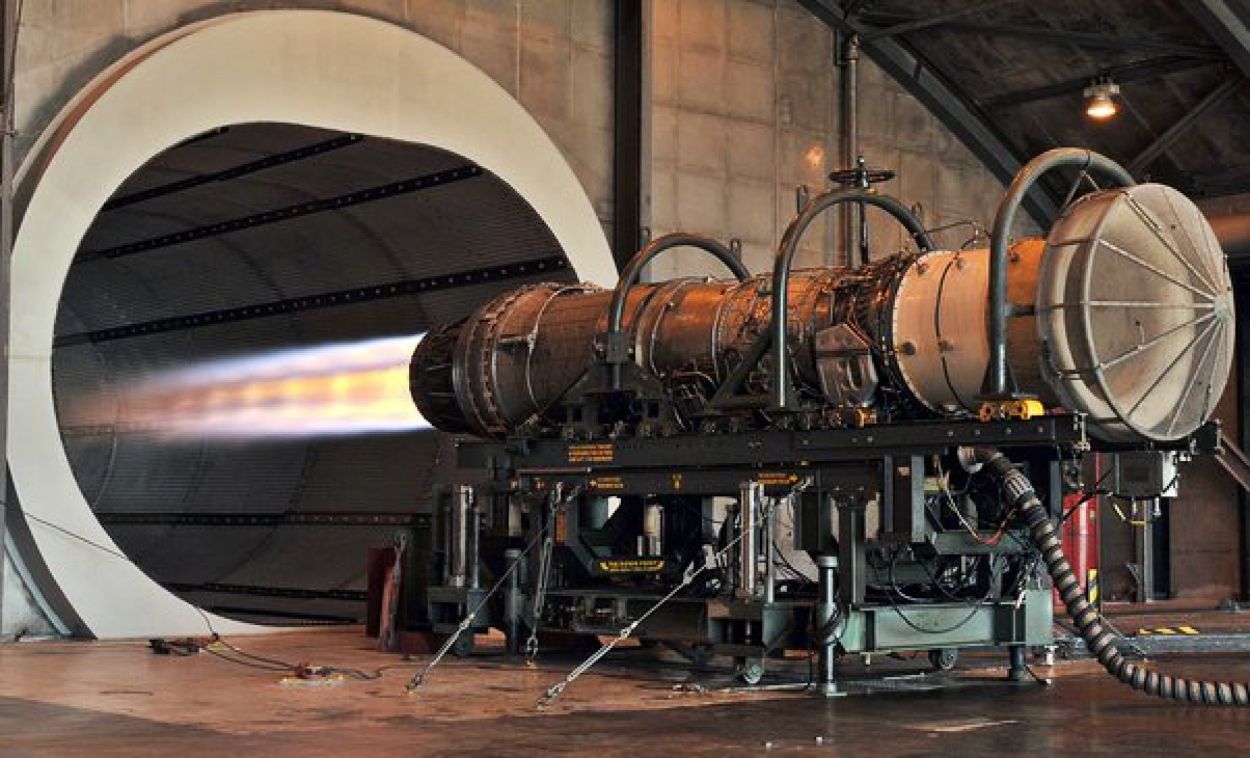
GE-414 Engine
The General Electric F414 is an American afterburning turbofan engine in the 22,000-pound (98 kN) thrust class produced by GE Aerospace. The F414 originated from GE’s widely used F404 turbofan, enlarged and improved for use in the Boeing F/A-18E/F Super Hornet. The engine was developed from the F412 non-afterburning turbofan, planned for the A-12 Avenger II, which was canceled.
F414-GE-39E is the new version of the F414G and powers the Saab JAS-39E/F Gripen. F414-GE-400K, co-developed by General Electric and Hanwha Aerospace for the South Korean KAI KF-21 Boramae, is to be manufactured jointly and assembled locally in South Korea by Hanwha Aerospace. F414-GE-INS6 is the variant selected for use on HAL Tejas Mk2. Proposed for HAL TEDBF and initial variants of the AMCA.
Interestingly, GE 414 ranks among the top engines in its class for performance.
Important Engine Performance Measures
The best fighter aero-engines are ranked by their thrust-to-weight ratio (TWR), the amount of force generated per unit of engine weight. The highest-performing modern military turbofans achieve TWRs around 9:1 to 10+:1 in afterburner, maximizing aircraft maneuverability and climb rates.
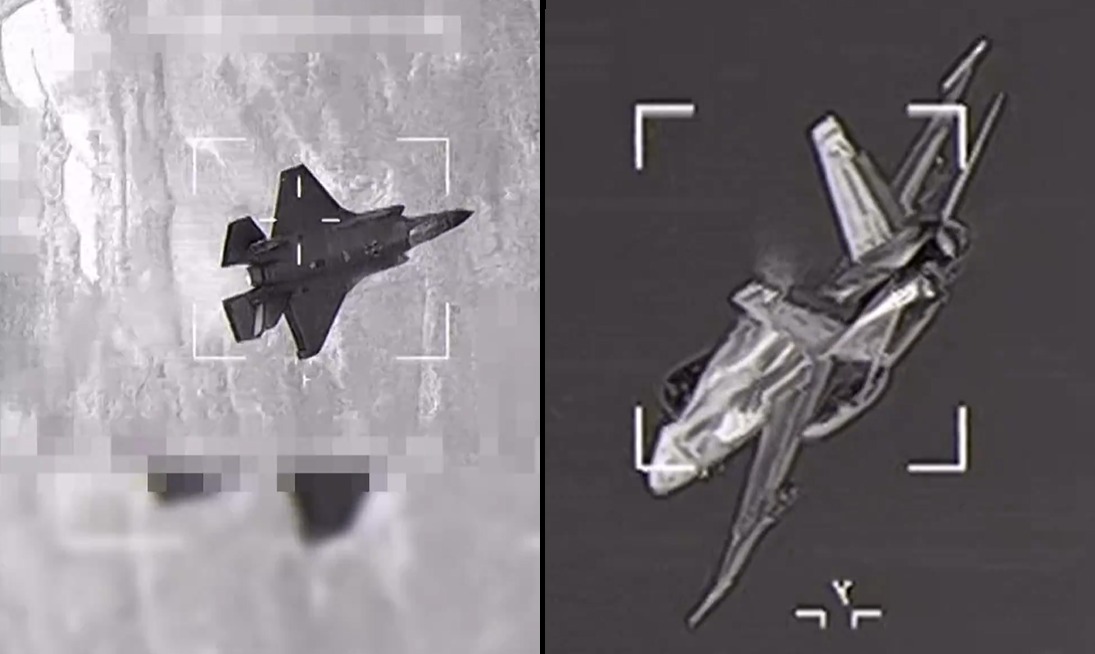
Top fighter engines by TWR are Pratt & Whitney F119 (F-22 Raptor) with 10:1 in afterburner. Eurojet EJ200 (Eurofighter Typhoon) has a ratio of 9.2:1. Saturn AL-41F / AL-51F (Su-57 Felon) TWR exceeds 10:1. Pratt & Whitney F135 (F-35 Lightning II) has a TWR of 11.5:1.
While its host aircraft (F-35) is heavily loaded and drag-optimized, the raw power output is unrivaled for a single-engine configuration. General Electric F414 (F/A-18 Super Hornet, Gripen E, Tejas Mk2) has a TWR of 9:1. It is considered the premier “medium” fighter engine. It is renowned for exceptional reliability and is widely exported for twin- and single-engine 4.5th-generation fighters.
Equivalent Engines for GE 414
While the GE F414 is a highly successful engine in the 98 kN thrust class, the direct, in-service equivalents and performance-class competitors include the Eurojet EJ200 and the Snecma M88, though each differs in physical integration and thrust profile.
EJ200 is the primary European counterpart powering the Eurofighter Typhoon. It is in a similar 90–95 kN thrust class. It is physically lighter and more compact than the F414, but lacks a maritime navalised variant for corrosive maritime environments.
The Snecma M88, built for the Dassault Rafale, sits a bit lower than the F414 in the 75–90 kN thrust class. While fundamentally smaller and lighter, it is not a direct drop-in replacement.
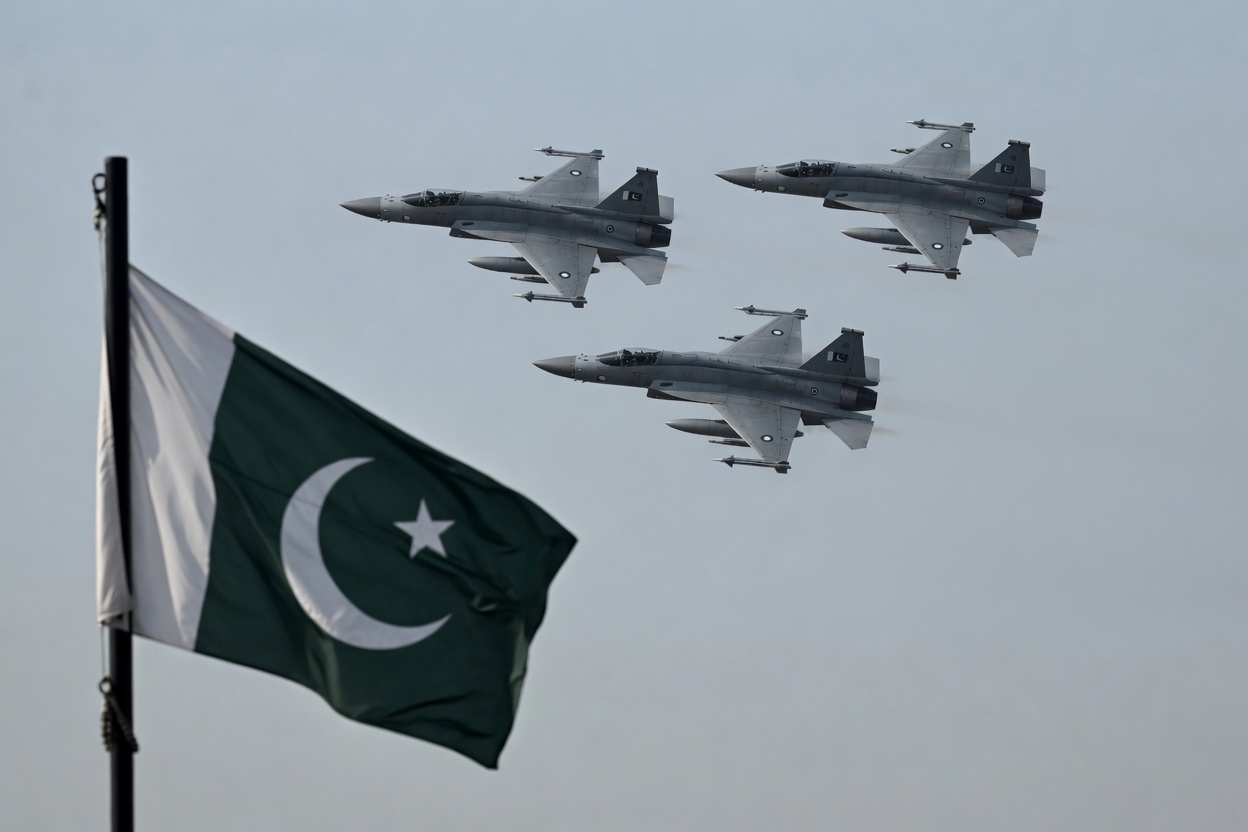
Upgrading or switching to the M88 requires significant aircraft modifications. Klimov RD-93, the Russian turbofan (used in the JF-17), is low on thrust (81.4 – 83.0 kN). It also lacks the advanced materials, full-authority digital engine control (FADEC), and overall reliability of GE’s design.
China is developing a turbofan engine, the Guizhou WS-19, which is intended to match the F414/F404 thrust class for lightweight and medium fighters such as the FC-31.
For applications requiring enhanced performance without airframe redesigns, GE Aerospace offers upgraded variants of the F414. F414-GE-39E is specifically tailored for the Saab JAS 39E Gripen, focusing on increased thrust and fuel efficiency without increasing the engine’s external dimensions. F414 Enhanced Performance Engine (EPE) offers up to 26,400 lbf (116 kN) of thrust, delivering a 20 percent power boost over the standard model while keeping an identical physical footprint.
India’s Kaveri Engine
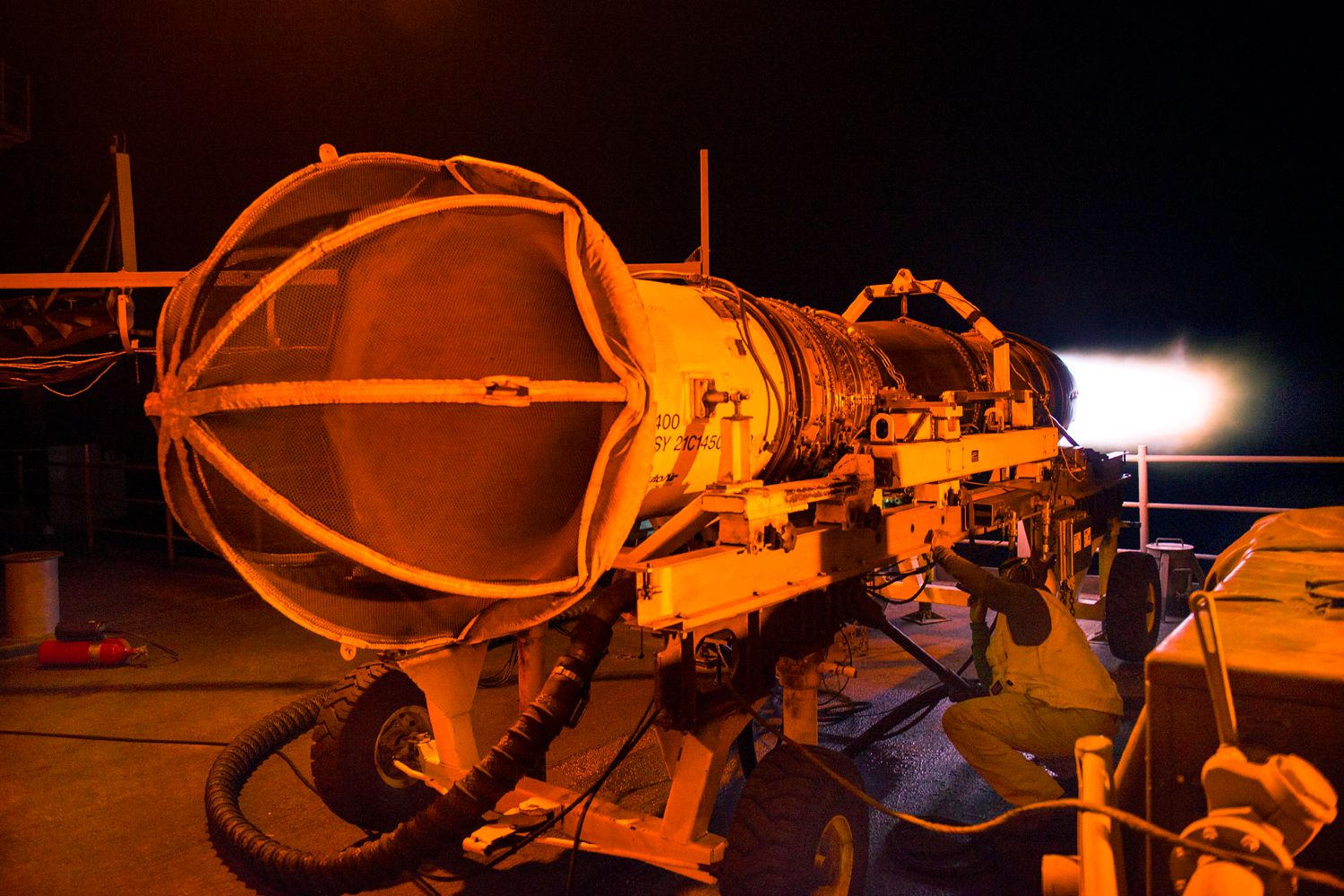
India’s GTX-35VS Kaveri is an indigenous afterburning turbofan engine developed by the Gas Turbine Research Establishment (GTRE). Conceived to power the HAL Tejas fighter, it missed its early thrust targets but has since evolved into a “dry” engine variant for Unmanned Combat Aerial Vehicles (UCAVs) such as the Ghatak, paving the way for advanced, localized aerospace metallurgy.
The program was launched in 1986 by the DRDO to achieve strategic independence in military aviation. While the Kaveri engine underwent significant ground and altitude testing, it failed to meet the thrust and weight specifications required for the operational LCA Tejas, leading to its delinking from the fighter program in 2010.
The Kaveri program was revived for the UCAV projects. Groundbreaking advancements in materials science, particularly the indigenization of single-crystal turbine blades, have breathed new life into the project.
Kaveri Derivative Engine (KDE) is a non-afterburning (dry) variant that generates around 49–51 kN of thrust and is perfectly optimized for India’s stealth drone projects, such as the Ghatak UCAV. India is actively working to evolve the afterburning “Kaveri 2.0” design into an 80–85 kN thrust afterburning engine to power future iterations of indigenous fighters. The Kaveri core has also been successfully adapted into a 12 MW Marine Gas Turbine utilized by the Indian Navy.
Complexities of Making a Fighter Engine
Designing and building a fighter jet engine is widely considered one of the most complex feats of engineering. Unlike commercial airliners, fighter engines must produce immense thrust, withstand temperatures that exceed the melting point of their own metal components, and remain lightweight, all while powering advanced onboard electronics and maneuvering at supersonic speeds.
The intricacies of developing a fighter engine span multiple specialized disciplines. Single-Crystal Blades for the turbine, situated directly behind the combustion chamber, experience continuous temperatures approaching 2,000°C while spinning at tens of thousands of RPM. These blades must be machined from a single crystal of nickel-based super-alloys to prevent structural failure at grain boundaries.
Because gas temperatures routinely exceed metal melting points, blades require complex internal cooling channels and thermal barrier coatings. Creating these microscopic, laser-drilled holes requires atomic-level precision. There are issues related to fluid dynamics and aerodynamics for compressor efficiency. Roughly half the energy extracted from the exhaust is needed to drive the front compressor.
Losses here are devastating to the engine’s performance, requiring aerodynamic blades engineered with sub-millimeter tolerances. The engine bearings are highly engineered, precision components designed to support rapidly spinning turbine shafts. They must withstand extreme conditions, high rotational speeds, massive aerodynamic thrust, and high temperatures, while minimizing friction and maintaining vital rotor stability.
Fighter jets perform aggressive maneuvers at varying angles of attack, which means the air entering the engine is highly turbulent. The compressor must be designed to handle inlet distortion without experiencing stalls or surges.
Modern fighter engines are controlled by Full Authority Digital Engine Control (FADEC). This onboard computing system continuously monitors engine health and makes micro-adjustments. It ensures that the engine delivers optimal thrust without exceeding mechanical limits, operating flawlessly across a wide range of altitudes and speeds.
Fighter jets operate in extreme maneuvers, supersonic speeds, and rapid temperature fluctuations; their engines operate in a far more punishing environment, from zero altitude to nearly 20 kilometers, and at speeds from zero to many Mach numbers. The aircraft maneuvers at up to 9 G. An average fighter aircraft engine lasts between 3,000 and 10,000 flight hours.
Production and ecosystem prerequisites of the supply chain and tooling are important. The creation of these alloys is highly proprietary. The broader ecosystem requires specialized machines, rare minerals, and a highly skilled workforce that can only be cultivated over decades. Fighters often fly with single-engine configurations, meaning engine reliability must be flawless.
Furthermore, the engine’s modules must be easy to service and upgrade while delivering a high Time Between Overhaul (TBO). Maintenance, Repair, and Overhaul (MRO) has its own challenges.
India’s Aero-Engine with IPR
To achieve strategic autonomy, India is prioritizing aero-engine programs in which it retains full Intellectual Property Rights (IPR) and design technology, moving away from past models of restricted tech transfer.
India’s key aero-engine development initiatives include the Safran-DRDO co-development. The French aerospace giant Safran and the GTRE are co-developing a $5+ billion, 120 kN jet engine. It is intended to scale up to 140 kN for the AMCA Mk2 and is being developed entirely in India under Indian IPR.
UK-based Rolls-Royce has also proposed co-developing a 120-kN engine for the AMCA stealth fighter. This pitch notably includes the transfer of full IP ownership and extensive design technology to make India a primary development hub.
India’s long-standing indigenous Kaveri program has transitioned from experimental development to a critical phase of serial production and certification.
Entities like Godrej Aerospace have begun manufacturing validation units (D2, D3) to establish a sovereign engine foundation. While full IPR and proprietary design data are the ultimate goals, India is also securing deep assembly rights for its current fleet. The GE Aerospace F414 Agreement to power the Tejas Mk2 features an 80 percent Transfer of Technology (ToT), allowing HAL to domestically assemble, test, and maintain the aircraft, significantly advancing India’s indigenous aerospace manufacturing capabilities.
India’s GE 414 Engines Requirements by Numbers
India requires roughly 200 GE F414-INS6 engines to power the LCA Mk-2 and the AMCA prototypes. 162 units are designated for the LCA Mk-2 fighter program. 10 units will be required for the first five AMCA flying prototypes. 30+ units are projected to be fielded across future batches, including the Twin Engine Deck-Based Fighter (TEDBF).
Initially valued at around $1.5 billion (approximately ₹12,500 crore) for technology transfer and co-production, recent commercial negotiations revealed a steep increase in the estimated cost per engine from initial projections of ₹70–80 crore to well over ₹200 crore. The technology transfer elements include critical processes like hot-end coatings, single-crystal blades, and laser drilling.
Following the finalization of technical and commercial agreements, a formal contract will pave the way for a dedicated manufacturing facility near Bengaluru.
Indian Military Heavily Invested in American Platforms
In the last two decades, India has tilted considerably towards the USA for defense platforms and now operates a wide array of American systems, shifting from a traditional reliance on Russia towards advanced US technology and joint production.
These platforms are supported by multi-million dollar sustainment agreements (e.g.,) to ensure operational readiness across the armed forces.
Key American defense platforms include Boeing AH-64E Apache attack helicopters, Boeing CH-47 Chinook helicopters, Boeing P-8I Neptune Maritime patrol and anti-submarine warfare aircraft. Sikorsky MH-60R Seahawk multi-role helicopters deployed by the Indian Navy for anti-surface and anti-submarine warfare. C-17 Globemaster III & C-130J Super Hercules strategic and tactical transport aircraft. BAE Systems M777 A2 ultra-light howitzers. MQ-9B high-altitude, long-endurance unmanned aerial vehicles (UAVs). FGM-148 Javelin portable anti-tank guided missiles (ATGMs), among others.
Unreliability of the US as a Defense Partner
Concerns about the reliability of the United States as a defense partner stem from its strict domestic export controls (ITAR), unilateral foreign policy shifts, and legislative roadblocks that routinely stall major technology transfers and joint co-production agreements.
Long-term defense modernization projects are frequently delayed by bureaucratic inefficiencies and heavy-handed export restrictions. For example, despite the landmark 2023 memorandum of understanding to co-produce F414 jet engines, severe supply delays and cost escalations have impacted India’s indigenous fighter programs.
The US is transactional with “America First” policies. United States foreign policy can shift rapidly with changing domestic administrations, leading to threats of sudden economic tariffs and transactional “deals” that can strain long-term strategic trust.
The threat or use of U.S. secondary sanctions, such as penalties over the continued purchase of Russian arms or oil, creates friction for nations attempting to maintain a policy of strategic autonomy. High operational demands on the U.S. defense-industrial base and complex regulatory compliance mean that Washington often prioritizes its own geopolitical conflicts and military readiness over timely equipment deliveries to allies.
There is thus a big question mark on the reliability of the USA as a defense partner. Many analysts have argued that India should not allow the US to enter its fighter aircraft ecosystem.
Final Options India
Is India stuck between the two ends of the vise?
The LCA Mk-2 and the AMCA have been designed around the F-414. The engine is reliable and good. There is no equivalent choice at this stage. Replacing the GE F414 aero-engine at this late stage is not a very viable option.
The airframe design and stealth profile are frozen around the specific dimensions, thrust, and power dynamics of the F414. Switching power plants now would require massive redesigns and stall the much-needed timeline.
The AMCA’s stealth shaping, air-intake angles, and internal weight distribution have been meticulously engineered specifically for the F414. Shifting to an alternative power plant would require retrofitting a new engine into the existing airframe, severely compromising the jet’s low observability (stealth) and overall aerodynamic efficiency. A new engine requires restarting the entire flight-testing and certification loop.
The AMCA prototype phase requires around 1,500 kg of payload in the weapons bay and an intense seven-year, 1,800-sortie flight-testing campaign. Introducing a new engine would drastically stretch these timelines. The F414’s roughly 98 kN of thrust, which is critical for the AMCA’s ability to super-cruise (sustain supersonic speeds without afterburners).
The other immediate foreign off-the-shelf options, such as the Safran M88, generate notably lower thrust in their current forms. A clean-sheet engine from manufacturers like Rolls-Royce would require prolonged development and cannot fulfill immediate prototype testing needs. Because GE knows that the AMCA’s design relies on its engine, it holds significant leverage in commercial discussions. This is called strategic and cost inflation monopoly leverage.
India already has a high dependency on the USA, Russia, France, Israel, and even its adversary, China. India is already committed to the GE-404 engine for nearly 200 LCA Mk1 variants. These numbers will increase throughout their life cycle. With F-18s gradually fading away, India will be the main cash cow for the GE-414 engine.
Aero-Engine has been India’s Achilles heel. We could not find a suitable engine for the excellent airframe of the HF-24 Marut. There was an insufficient whole-of-nation approach to the Kaveri engine.
The time has come to catch the bull by the horns. There is a need to push the indigenous engine with Indian intellectual property with a suitable European partner who will have fewer means to arm-twist. There must be a task-force-like approach, and the team must report directly to the PMO. It is time to put the money on the table.
Meanwhile, India would be forced to stick to GE 414. While the nation’s displeasure must be conveyed, diplomacy and hard negotiations will be required.
- Air Marshal Anil Chopra (Retired) is an Indian Air Force veteran, fighter test pilot, and ex-director-general of the Center for Air Power Studies. He has been decorated with gallantry and distinguished service medals during his 40-year tenure in the IAF.
- He can be reached on X: @Chopsyturvey
- Follow EurAsian Times on Google News