President Lai Ching-te’s government has been at loggerheads for months with the Kuomintang (KMT) and Taiwan People’s Party (TPP) over how much to spend on improving the island democracy’s defense capabilities against China. China claims Taiwan is part of its territory and has threatened to seize it by force if necessary.
Lai’s government wants to allocate up to NT$210 billion ($6.6 billion) over more than five years for Taiwan-made unmanned vehicles, including coastal surveillance, attack, and surface drones.
But the KMT and TPP, which hold the majority of seats in parliament, refused on Friday to consider the bill while they develop their own versions.
KMT lawmaker Hsu Yu-chen said the party “supports the development of the unmanned systems and drone industry” and will propose its own version.
“We hope all sides can discuss the different versions once they are proposed,” Hsu told AFP.
Chung Chia-pin, a lawmaker for Lai’s Democratic Progressive Party (DPP), criticized the opposition for the hold-up.
“If next week or the week after they come up with their own version, will they agree at that point to allow other versions to be put under review as well?” he told AFP.
“If that happens, it will only further prove that they are laggards and cheaters.
“They haven’t even stepped up to the starting line, but they won’t let anyone else run either.”
KMT lawmaker Ma Wen-chun said the party “cannot accept” the government’s latest bill.
“It simply brings back the parts we opposed in the past,” Ma told AFP.
“For overall development of the industry or of drones, we hoped they would present a concrete and comprehensive vision and plan, and basically allocate funds through the annual budget, instead of constantly resorting to special budgets at the drop of a hat.”
In May, the KMT and the TPP passed a $25 billion special defense budget, slashing by a third the amount sought by the DPP. The opposition stripped out around $15 billion that the government had wanted to use for domestic drone procurement and other efforts to boost defenses.
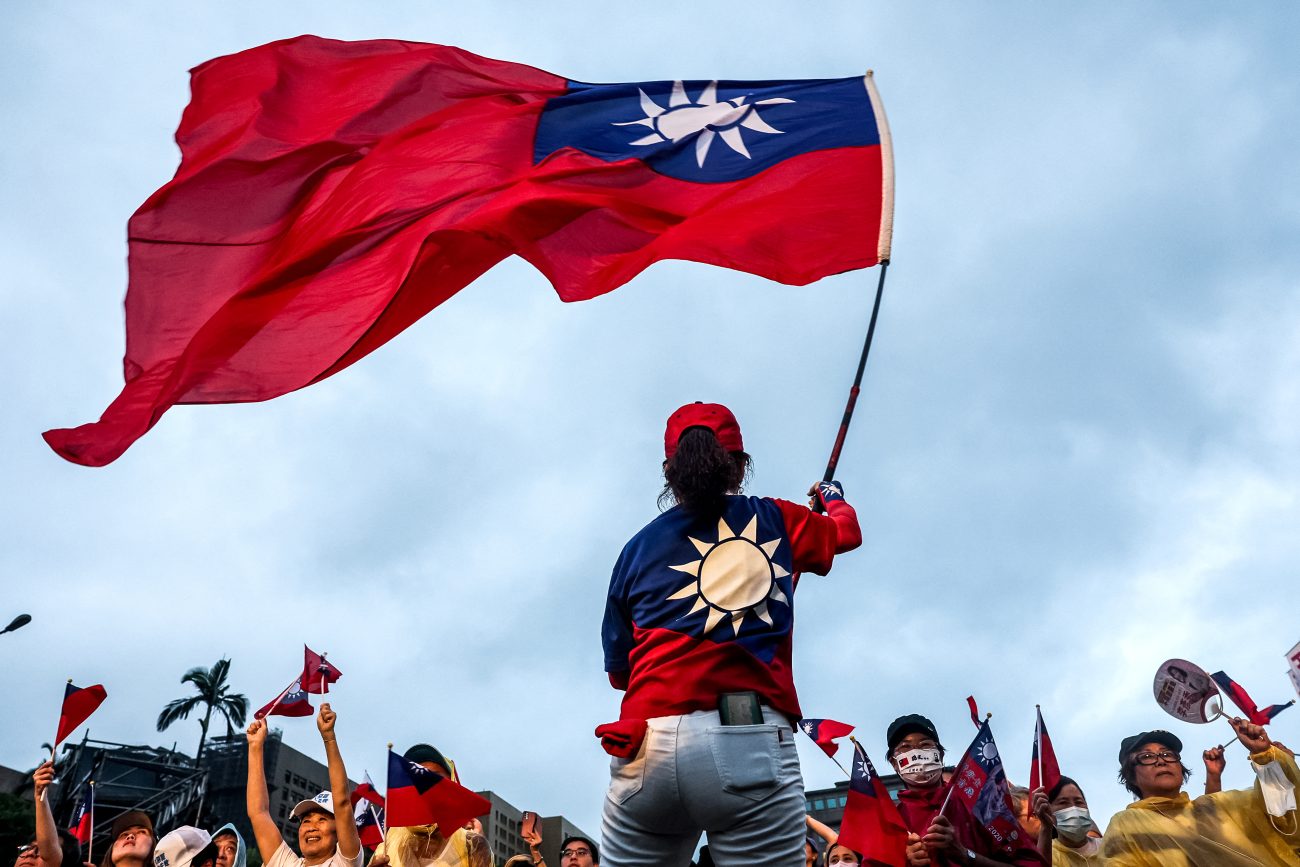
Taiwan Awaits $14B US Arms
Last week, Taiwan’s president said he hoped the United States would approve a $14 billion arms sale “as soon as possible”, reiterating that the democratic island “rejects unification” with China.
Taipei relies heavily on Washington’s support to counter growing pressure from Beijing, which claims Taiwan as part of its territory and has not ruled out seizing it by force.”We hope that the arms purchases can be approved as soon as possible,” President Lai Ching-te told reporters in Taipei.
“Taiwan’s efforts to safeguard its national security, uphold its democratic and free way of life, and reject unification and the rule of the Chinese Communist Party should not be seen as a provocation against China or a troublemaker in the region,” he said.
US Secretary of State Marco Rubio said this month the proposed $14 billion package was “under review”, while officials said in May they were assessing whether American weapons stockpiles were sufficient for its Iran operations.
Asked about Lai’s comments, Chinese foreign ministry spokesperson Lin Jian warned Taiwan that “seeking independence by relying on the United States or through military means is a dead end”.
The Taiwanese leader’s rhetoric “only exposes his deep-seated anxiety and insecurity”, Lin told a news conference.
Lai’s government has vowed to increase overall defense spending to more than three percent of GDP this year.
It has proposed NT$1.25 trillion (US$40 billion) for weapons purchases, including US-developed arms as well as Taiwan-made drones and other items. But Taiwanese lawmakers have disagreed over how much to spend on improving defense capabilities.
Opposition parties, which hold a majority in the legislature, passed a $25 billion special defense budget last month, slashing by a third the amount sought by Lai’s ruling party.
The US commitment to Taiwan’s security “remains unchanged”, Lai said, adding that both sides “share the goal of strengthening security and accelerating efforts to strengthen Taiwan’s self-defense capabilities”.
Earlier, Taiwan’s cabinet approved an extra NT$210 billion ($6.6 billion) in spending on indigenous unmanned systems, after the defense ministry said the scaled-back budget was “insufficient to fully build the military’s overall combat capabilities”.
Lai also said China “exerted pressure” on Japan and the Philippines during their negotiations over maritime boundaries in waters east of Taiwan.
Tokyo and Manila said in late May that they would begin formal talks to “delimit the maritime boundary” of their exclusive economic zones and continental shelves.
China called the talks “illegal” and has also claimed exclusive control over the waters concerned.
Taipei rejects Beijing’s claims, insisting Taiwan and China are “not subordinate” to each other.
“China is not only pressuring Taiwan, but also other countries in the Indo-Pacific region,” Lai said Thursday.
China’s military expansion in the East and South China Seas and Taiwan Strait had extended to the western Pacific, he said, and its “various forms of coercion continue to increase”.
Shared concerns over China’s maritime claims have brought Japan and the Philippines closer in recent years.
Like most countries, neither recognizes Taiwan’s claim to statehood, but both maintain close unofficial relations with the island.
By Agence France-Presse