In yet another remarkable operation, Ukraine reportedly destroyed S-400 launchers by making use of its Magura naval drones that have wreaked havoc on Russia’s Black Sea Fleet (BSF).
Ukraine has become a key innovator in sea drone technology, proving that a country without a conventional Navy can use cheap drones to cripple a major naval power like Russia.
“They do not approach our shores because of the capabilities of our naval drones,” Ukrainian President Volodymyr Zelenskyy said earlier this year, referring to the blows that Ukrainian sea drones have delivered to state-of-the-art Russian warships and submarines.
However, in addition to hitting Russian maritime vessels, these sea drones specialize in hitting ground-based assets.
In one such recent incident, Group 13, a special unit under the Defense Intelligence of Ukraine (DIU), reportedly struck two Russian S-400 Triumf launchers and an antenna used to control Orion unmanned aerial vehicles (UAVs) in Crimea, with First Person View (FPV) drones launched from a Magura sea drone.
Without disclosing the date, the DIU claimed that the operation was conducted earlier this month.
Additionally, the DIU published the video of the purported operation, along with a caption that read: “DIU’s Group 13 used multifunctional MAGURA naval platforms carrying FPV drones to strike high-value russian targets in Crimea. The operation may have inflicted tens of millions of dollars in losses on the russian occupation forces.”
While the DIU did not name the target, military observers were too quick to identify it as the S-400 Triumf air defense system, the cornerstone of Russian long-range air defense.
Although the DIU video shows two launchers being struck, some open-source analysis of the footage, including from Ukrainian military observers, has suggested that one of the two S-400 launchers shown may have been a decoy or a mock-up.
The claims could not be independently verified by the EurAsian Times, and the Russian Defense Ministry has yet to acknowledge the attack at the time of writing this report.
Ukraine has repeatedly adapted naval drones beyond ship- or port-based strikes, using them as floating carriers that approach the coast and release FPV or other aerial drones against land targets, such as air-defense systems and radars.
For example, the same Group 13 used the Magura sea drones to strike two Russian radar assets in late July 2026, a Pantsir-S1 air defense missile and gun system earlier this month.
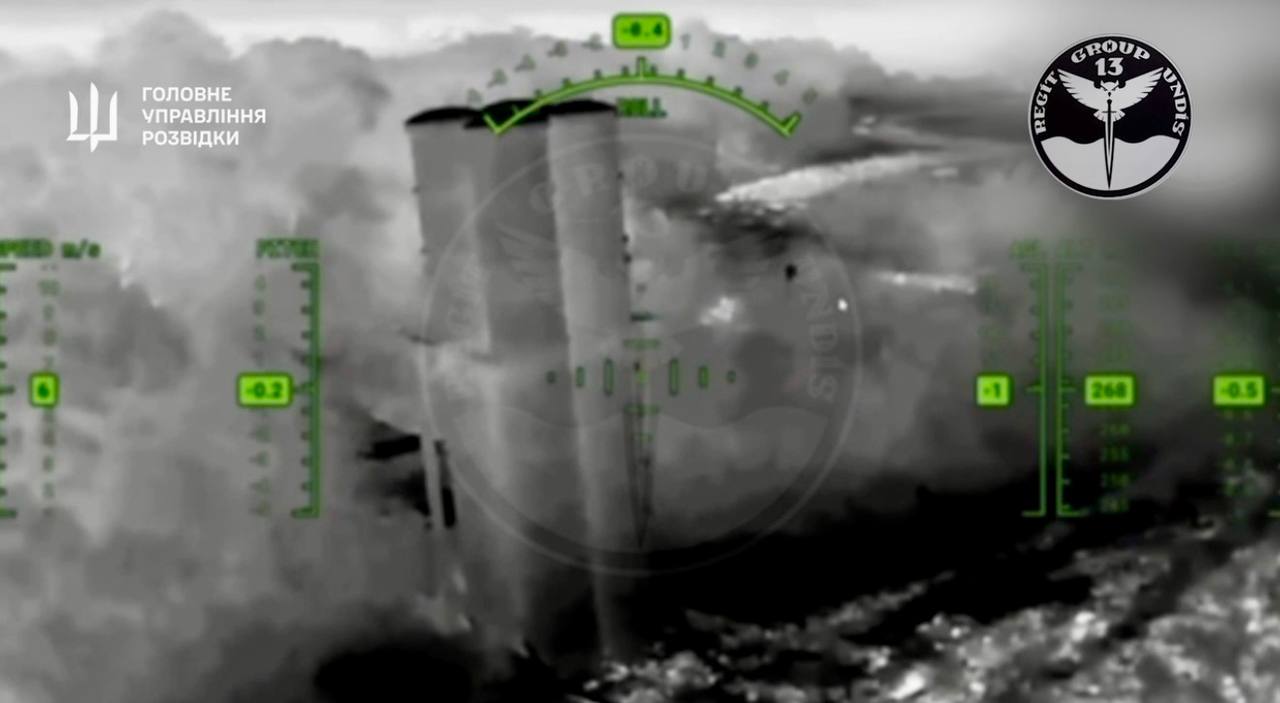
These attacks expand Magura sea drones’ target profile to include advanced ground-based air defenses and degrade a critical, high-value layer of Russia’s air defenses in and around Crimea, imposing expensive, hard-to-replace losses.
At the same time, it is worth noting that visual confirmation of hits is not equivalent to confirmed destruction or permanent loss of a functional launcher, especially since launchers can be repaired or replaced from stock.
A highly sophisticated Russian transportable long-range surface-to-air missile (SAM) system, the S-400 Triumf is intended to provide layered air defense against a variety of threats, including aircraft, cruise missiles, ballistic missiles, and unmanned aerial vehicles (UAVs). It can hit targets up to 400 kilometers away, but a full battery is very expensive—estimates for a full system frequently reach the millions of dollars.
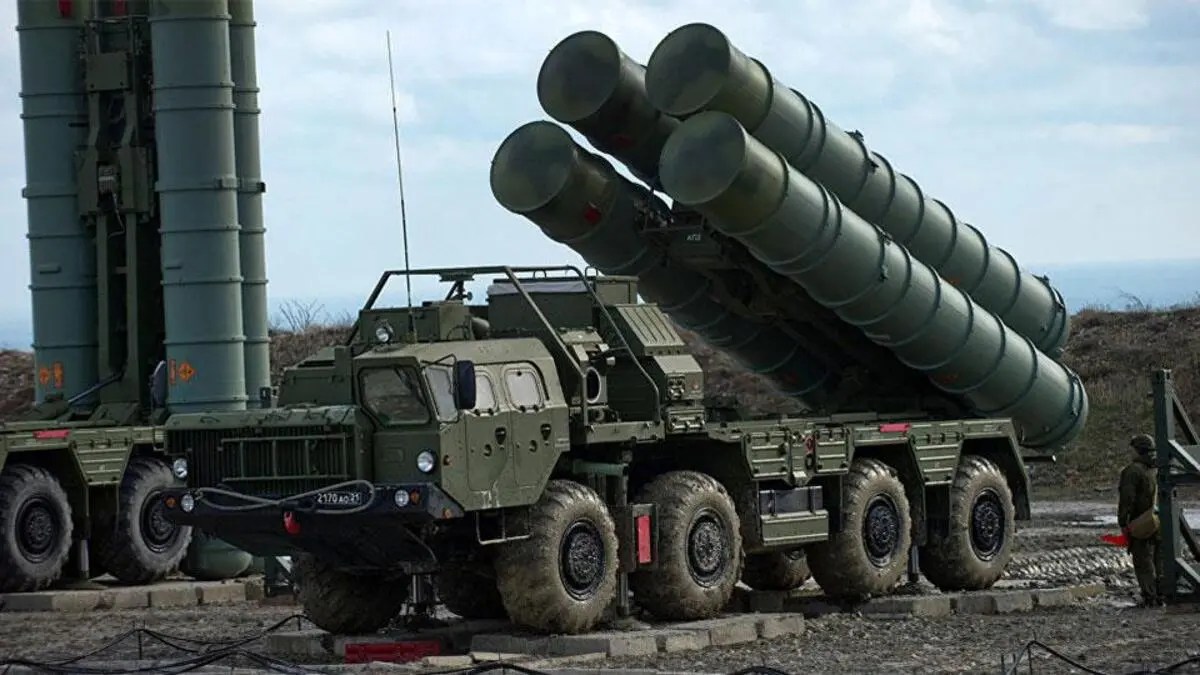
In Crimea and the Black Sea region, S-400 batteries form a key part of the layered air-defense umbrella protecting Russian bases, logistics hubs, the approaches to the Kerch Bridge, naval assets, and the peninsula itself. Additionally, they also contribute to the broader network that can engage Ukrainian aircraft, long-range drones, and missiles.
In fact, the attack comes weeks after reports indicated that Russia was deploying them to the capital Moscow and the Kerch Bridge that connects mainland Russia to Crimea.
Experts have observed that Ukraine’s tactic of using Magura sea drones as motherships to launch low-cost FPV drones against multi-million-dollar launchers is extremely effective.
The Magura launches short-range FPV drones that can hit precisely once they are close, making it more difficult for land-based defenses to counter them as they approach from the sea. This increases Ukraine’s ability to strike high-value targets along or close to the coast without endangering manned aircraft or costly long-range weapons.
Moreover, using a cheap, expendable FPV to target an S-400 launcher creates an asymmetry. Even if Russia can replace individual launchers, each confirmed loss costs tens of millions of dollars.
Although individual launcher losses are not decisive by themselves, an S-400 battery typically has multiple launchers, and repeated hits may force Russia to disperse systems, increase mobility, and allocate more short-range defenses such as Pantsir to protect the S-400s. Thus, creating coverage gaps.
More importantly, though, the strikes on high-value air defense systems, such as the S-400, essentially open the door to further strikes.
Destroyingg or degrading long-range air defenses reduces the risk to Ukrainian drones, cruise missiles, and aircraft operating over or toward Crimea and southern Russia. In the past, Ukrainian commanders have described systematic reduction of air defenses as enabling deeper and more frequent strikes on logistics, energy infrastructure, airfields, and other targets.
These strikes also expand the role of Magura naval drones beyond maritime strikes and further lend validity to Ukraine’s notion that these systems are game-changers in combat.
Ukraine’s Sea Drones
Between 2023 and 2024, Ukrainian sea drones damaged Russian intelligence vessels such as the Ivan Khurs and were instrumental in the sinking or disabling of several valuable targets. A notable incident from this period was the destruction of a Tarantul-class corvette, Ivanovets, and a large Ropucha-class landing ship by a Magura-V5 sea drone in February 2024, as previously reported by the EurAsian Times.
Subsequently, these sea drones demonstrated the effectiveness of asymmetric naval warfare by assisting Kyiv in sinking or seriously damaging almost one-third of Russia’s Black Sea Fleet.
Later, on December 31, 2024, a Russian military helicopter was shot down by a Magura drone with an air-to-air missile close to Cape Tarkhankut in Crimea, marking a historic first. At the time, Ukraine’s Intelligence agency, the HUR, stated that during a battle in the Black Sea off the western coast of Crimea, the special unit Group 13 fired an R-73 “SeeDragon” missile from the Magura-V5 drone.
This incident changed the face of warfare in Ukraine and established that even aircraft were not off-limits for sea drones.
In May 2025, a Ukrainian Magura-V7 naval drone achieved its greatest kill by downing a Russian Su-30 fighter jet, as the EurAsian Times reported.
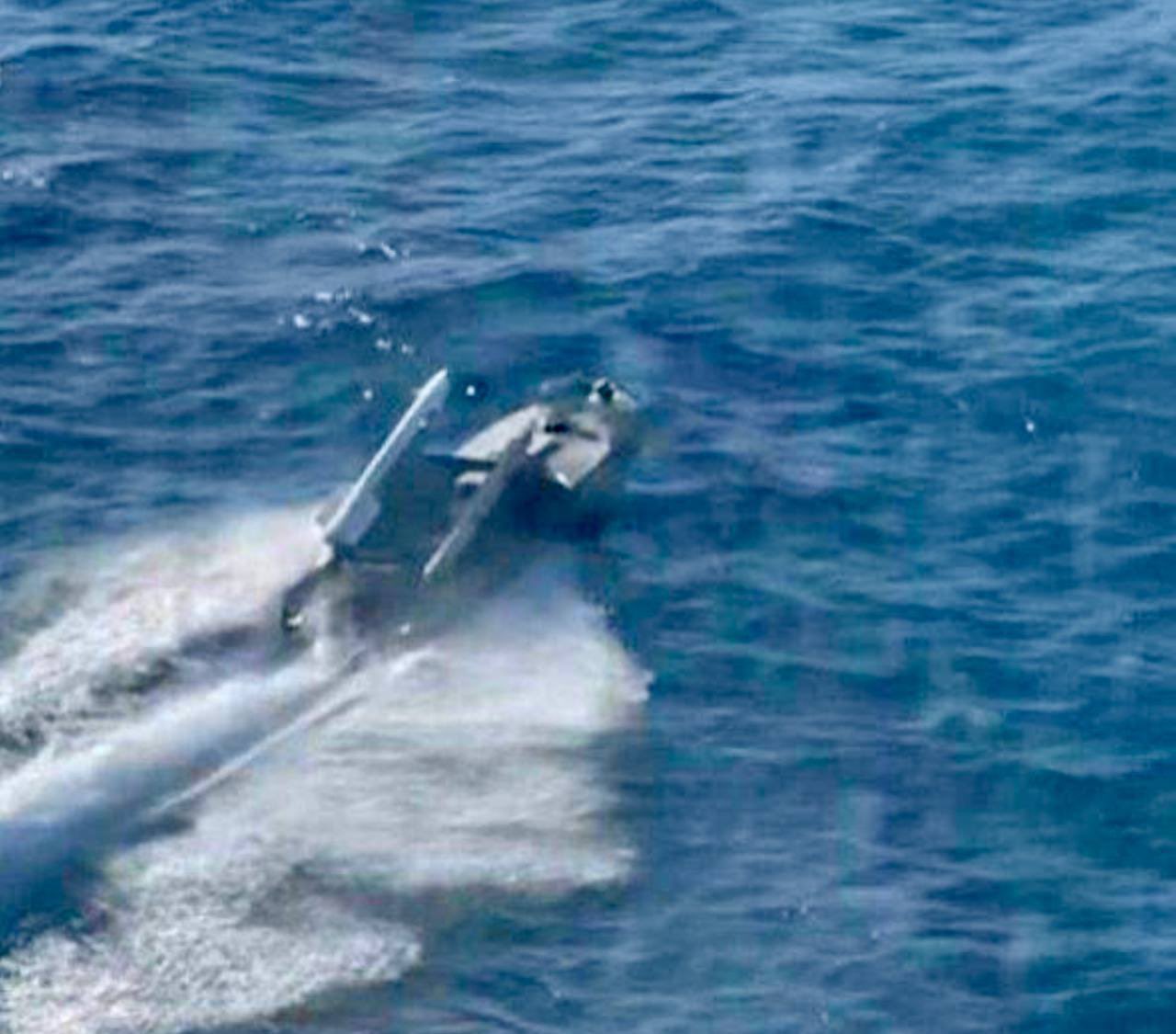
According to Ukrainian media sources, Magura drones have a 560-kilometer range and can transport a payload of about 770 kilograms. They assist with a range of tasks, including launching smaller drones, conducting mine countermeasures, towing sonar arrays for submarine detection, and conducting offensive strike operations.
The Magura V5 features a quasi-stealth hydrodynamic design and streamlined profile that provide high mobility and reduced detectability. Meanwhile, the Magura V7 is designed as a modular multi-purpose platform rather than a pure kamikaze boat, and features multi-channel satellite communications, resistance to electronic warfare, day/night electro-optical systems, and autonomous navigation modes.
Priced under $500,000, depending on configuration, the drones represent a highly affordable option. Countries around the world, including the United States, have been closely watching the asymmetric destruction caused by sea drones and are now set to be manufactured by a US-based company.
- Contact the author at sakshi.tiwari13 (at) outlook.com
- Follow EurAsian Times on Google News