At the NATO Summit in Ankara, US President Donald Trump showcased stunning deal-making diplomacy as he extended major new arms support to key allies despite openly venting frustrations over NATO’s reluctance to join the Iran war.
For one, Washington approved the sale of Tomahawk cruise missiles to Germany, putting all speculations about blocking the deal to rest.
On July 9, 2026, German Chancellor Friedrich Merz told the Bundestag in an address that the “results” of the summit in Turkey “exceeded all of my expectations,” emphasizing that the alliance was “united, strong and self-confident.”
“On the sidelines of the NATO summit in Ankara, we agreed with the American government that Tomahawk missiles would be purchased by us and stationed in Germany,” Merz stated. “With this, we are closing an important strategic gap in our defense. And at the same time, we will work on developing our own European systems and deploying them in Europe.”
The approval comes months after Friedrich Merz said he hopes to convince the Trump administration to approve the sale of long-range Tomahawk missiles and Typhon amid rising security threats from Russia. Tomahawk cruise missiles have a range of about 1,600 to 2,500 kilometers, depending on the variant.

The US approval is noteworthy, as it comes after a prolonged period of tension between US President Donald Trump and German Chancellor Friedrich Merz.
Earlier this year, Merz sparked controversy by saying it had been “humiliated” in the war through non-negotiation and by casually declaring that the US President had no exit plan. In a scathing rebuttal, Trump told Merz to focus on Germany’s own issues, accused him of wanting Iran to have nuclear weapons, and later threatened to withdraw about 5,000 US troops from Germany.
At one point, the spat between the two leaders cast doubt on the US plans to deploy Tomahawk cruise missiles on German soil.
In fact, Merz announced that Washington had no plans to deploy the long-range missiles in the country due to a shortage in their own arsenal. “The Americans don’t have enough for themselves right now. Objectively speaking, there is virtually no possibility of the US supplying weapons systems of this kind,” Merz said. However, he noted at the time that there was no “definitive cancellation” by Washington regarding Tomahawk.
Soon after, Merz began efforts to repair ties with the American President. He publicly emphasized that his personal relationship with Trump remained “good” and publicly downplayed differences.
“I’m not giving up on working with Donald Trump either,” Merz said. While admitting that Trump held opposing views, the Chancellor said, “That doesn’t change the fact that I remain convinced that the Americans are our most important partners in NATO.”
Judging from the approval of Tomahawks, Merz finally seems to have made a breakthrough with the US President.
Turkey & Ukraine Promised Big Things!
Seven years after he expelled Turkey from the F-35 program and sanctioned it under CAATSA (Countering America’s Adversaries Through Sanctions Act) for buying the Russian S-400 air defense system, Trump has hinted that he would be willing to lift sanctions and may even approve F-35s.
“That’s a decision we’re going to make… It’s a great plane, the best plane by far, and it’s certainly something we will consider,” Trump said in Ankara.
“We’re going to be taking the sanctions off. We don’t want to sanction friends,” Trump said when asked about the CAATSA.
Although the American President stopped short of making a firm commitment, the latest assertion has piqued interest and got observers to speculate that a deal may now be closer than ever.
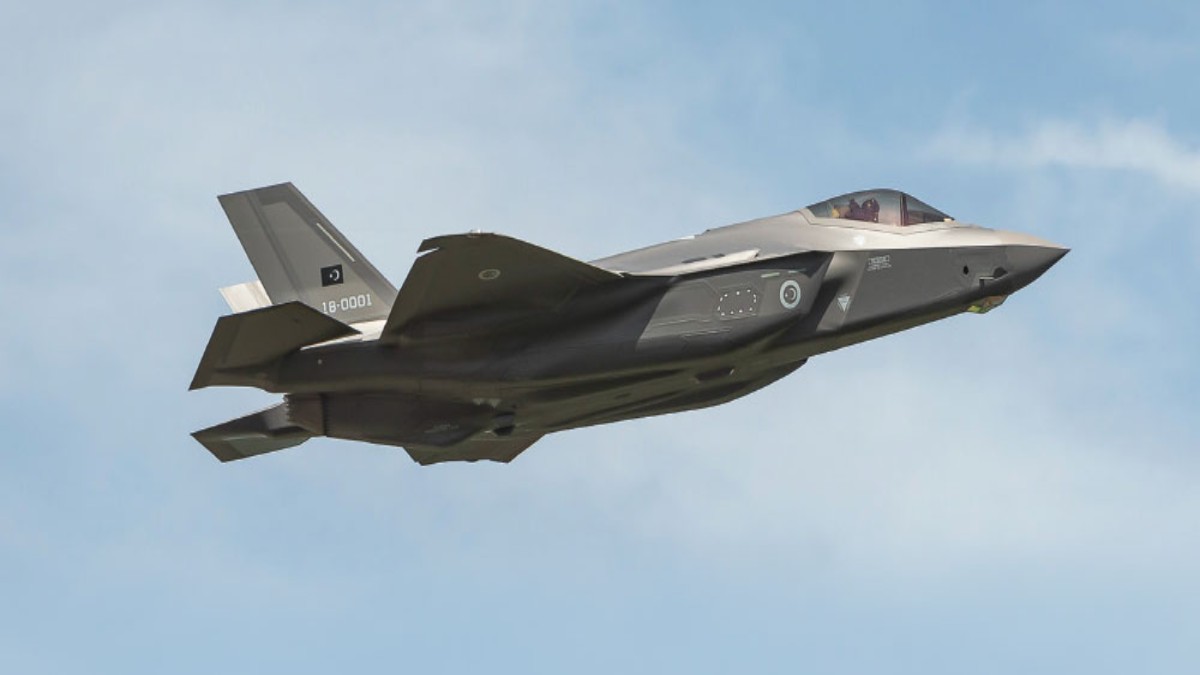
The optimism is believed to be a result of a long-running campaign for the jets undertaken by Recep Tayyip Erdogan. What Turkey will do with the S-400s, as recently explained in a detailed EurAsian Times report, remains to be seen.
Though Trump left it ambiguous, a new Bloomberg report citing Turkish sources states that the US could deliver a batch of six F-35s, depending on when the ban on Ankara is lifted. Turkey originally planned to buy 40-odd F-35 jets before it was expelled from the program in 2019.
The Bloomberg claims could not be independently verified, but Erdogan told a press conference after the NATO summit that the American President is in favor of selling F-35 jets to Turkey, and added he hoped Washington would keep its promise.
Another big highlight of this summit was that US President Donald Trump told Ukrainian President Volodymyr Zelenskyy he could grant the embattled country the license to manufacture Patriot interceptors locally.
“A little birdie told me this, about the fact that we’ll give them the right to make Patriots. We’ll show them how to do it; it’s actually very complex. But it’s – you’ll figure out the complexity quickly,” Trump said on the sidelines of the NATO Summit, sitting next to the Ukrainian President.
“We’re going to give a license to you to make Patriots. This way, you can’t complain that we’re not giving you enough.”
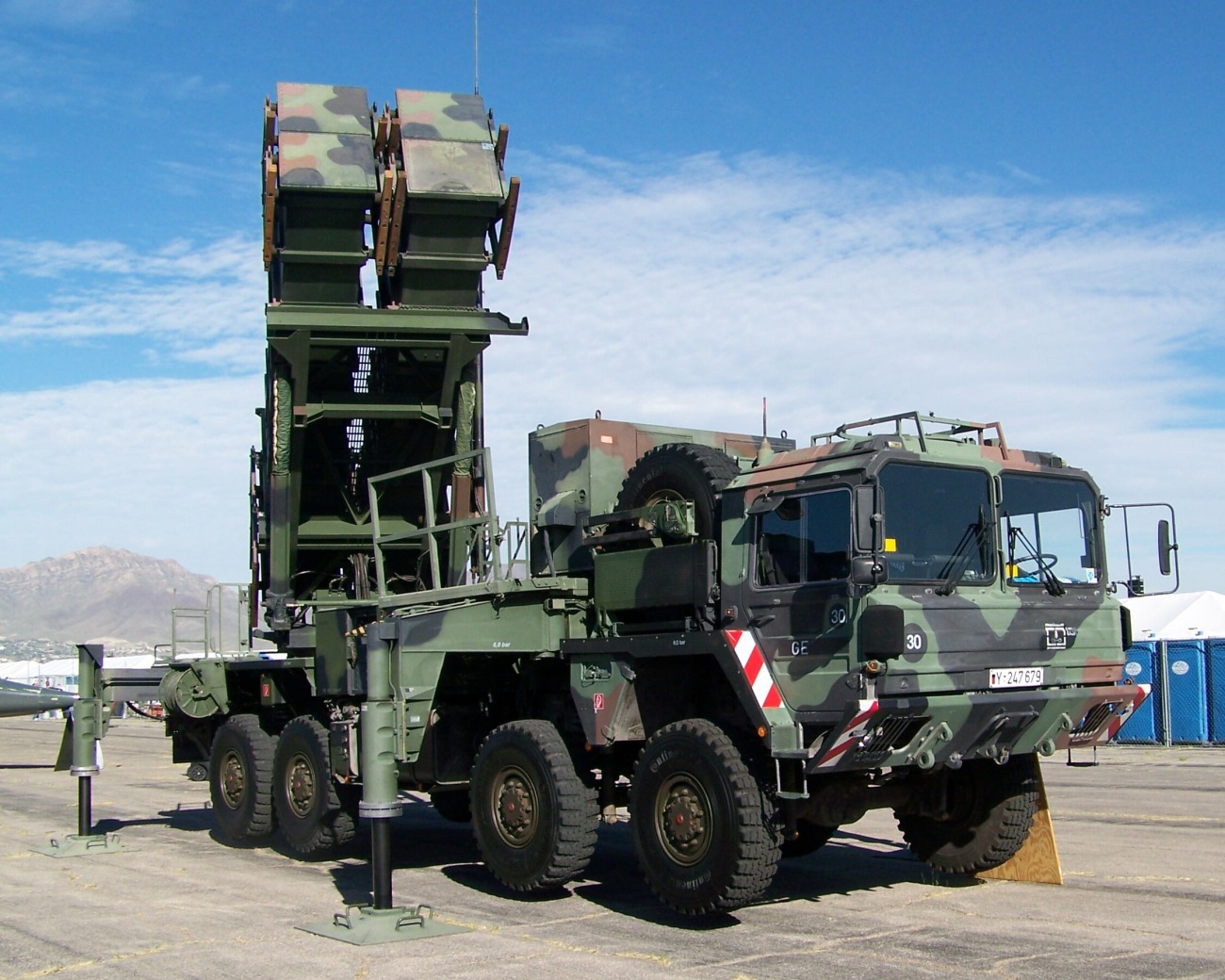
Notably, the US President clarified that he had not spoken to Lockheed Martin and RTX Corporation, which produces the Patriot system, but assured, “that’ll work out alright.”
Ukraine has repeatedly made the case for local production of Patriot missiles, citing short stockpiles and low production rates of these critical munitions in the West.
“Today’s wars have shown that current Patriot production is not enough to meet the growing demand for protection against ballistic missiles. That is a fact. And we must respond to that fact. Those who defend life need more Patriots. We have also discussed Patriot production licenses with our American partners. I ask you to support our efforts to make this happen,” Zelenskyy said at the NATO Defense Industry Forum.
According to the Pentagon, only 600 Patriot missiles are produced annually.
Earlier this week, the spokesperson for the Ukrainian Air Force, Yuriy Ignat, alleged the Russian military “is deliberately exploiting Ukraine’s shortage of Patriot interceptor missiles by relying heavily on ballistic weapons, which are far more difficult to intercept than cruise missiles or drones.”
It is pertinent to note that Trump clarified that the US won’t transfer Patriot interceptors from its own stockpile to Ukraine. “We have Patriots, but we don’t have that many. We need them for ourselves, too,” Trump said.
Nonetheless, the warmth shown by Trump towards Zelenskyy, Merz, and Erdogan is notable.
- Contact the author at sakshi.tiwari13 (at) outlook.com
- Follow EurAsian Times on Google News