When the Pentagon redirected the USS Abraham Lincoln carrier strike group (CSG) from the Indo-Pacific to the Middle East in January 2026, it may not have anticipated that this symbol of American pride would come under relentless attack during Operation Epic Fury.
US President Donald Trump has disclosed that the Iranian forces heavily targeted the USS Abraham Lincoln aircraft carrier during the 40-day war with Tehran. Trump made the comments during a meeting with Ukrainian President Volodymyr Zelensky on the sidelines of the NATO Summit in Ankara, Turkey, on July 8, 2026.
“We had 111 missiles shot by the Islamic Republic of Japan,” Trump stated, accidentally referring to Iran as Japan in an embarrassing gaffe. Japan is a long-term US ally and its closest partner in the volatile Indo-Pacific region.
The US President claimed that Iran had launched 111 missiles on the USS Abraham Lincoln within a one-hour window, all of which were intercepted by the American forces. “They didn’t hit the ship, and you know what would have happened if they did,” he emphasized.
The remarks may be the first time that the US has acknowledged the severity of a missile attack on an aircraft carrier, although they haven’t been vetted by the Pentagon yet.
Before this, the IRGC claimed on March 1 that USS Abraham Lincoln was attacked by four ballistic missiles. However, CENTCOM quickly refuted these claims, saying, “The Lincoln was not hit. The missiles launched didn’t even come close.”

The Abraham Lincoln Carrier Strike Group (CSG) was deployed to the CENTCOM area of responsibility in January 2026 as part of a massive military buildup in the region ahead of “Operation Epic Fury” in February 2026.
The CSG included guided-missile destroyers and cruisers equipped with Tomahawk cruise missiles, as well as Carrier Air Wing 9, which operates F-35C stealth fighters, F/A-18 Super Hornets, electronic warfare aircraft, and helicopters. The carrier was escorted by the Arleigh Burke-class destroyers USS Frank E. Petersen Jr., USS Michael Murphy, and USS Spruance, as previously reported by the EurAsian Times.
Notably, the Iranian military doctrine emphasizes anti-access/area-denial (A2/AD) in the region. As earlier reported by the EurAsian Times, Iran had amassed anti-ship missiles with ranges exceeding 1,000 kilometers and converted its large ballistic missiles into anti-ship variants that could seriously threaten American naval assets, such as the USS Lincoln.
In fact, an attack consisting of a large volume of missiles in a seemingly small window of time suggests that Tehran had launched a saturation attack against the USS Abraham Lincoln to either sink or severely damage the carrier.
Iran has long planned to overwhelm US naval defenses by firing large numbers of missiles and drones in coordinated waves. The goal is to use up the limited defensive missiles on the escort ships, overload their radar systems, and allow some weapons to slip through and strike high-value targets — such as the aircraft carrier USS Abraham Lincoln.
However, the US Navy’s aircraft carriers—the symbol of American pride—are not easy to sink because their air wings provide multi-layered defense.
There are early warning radars on ships that are part of the carrier group and airborne early warning (AEW) platforms, such as the E-2D Hawkeye, that give early warning. The USS Abraham Lincoln CSG includes Aegis destroyers with SPY radars that can track more than 100 targets at once, as well as the lethal SM-3 and SM-6 interceptors to counter the threat before it reaches the aircraft carrier.
Additionally, the carrier is protected by its own weapons, including the Evolved Sea Sparrow (ESSM), Rolling Airframe Missiles (RAM), and close-in Phalanx CIWS guns mounted on the decks of the carriers.
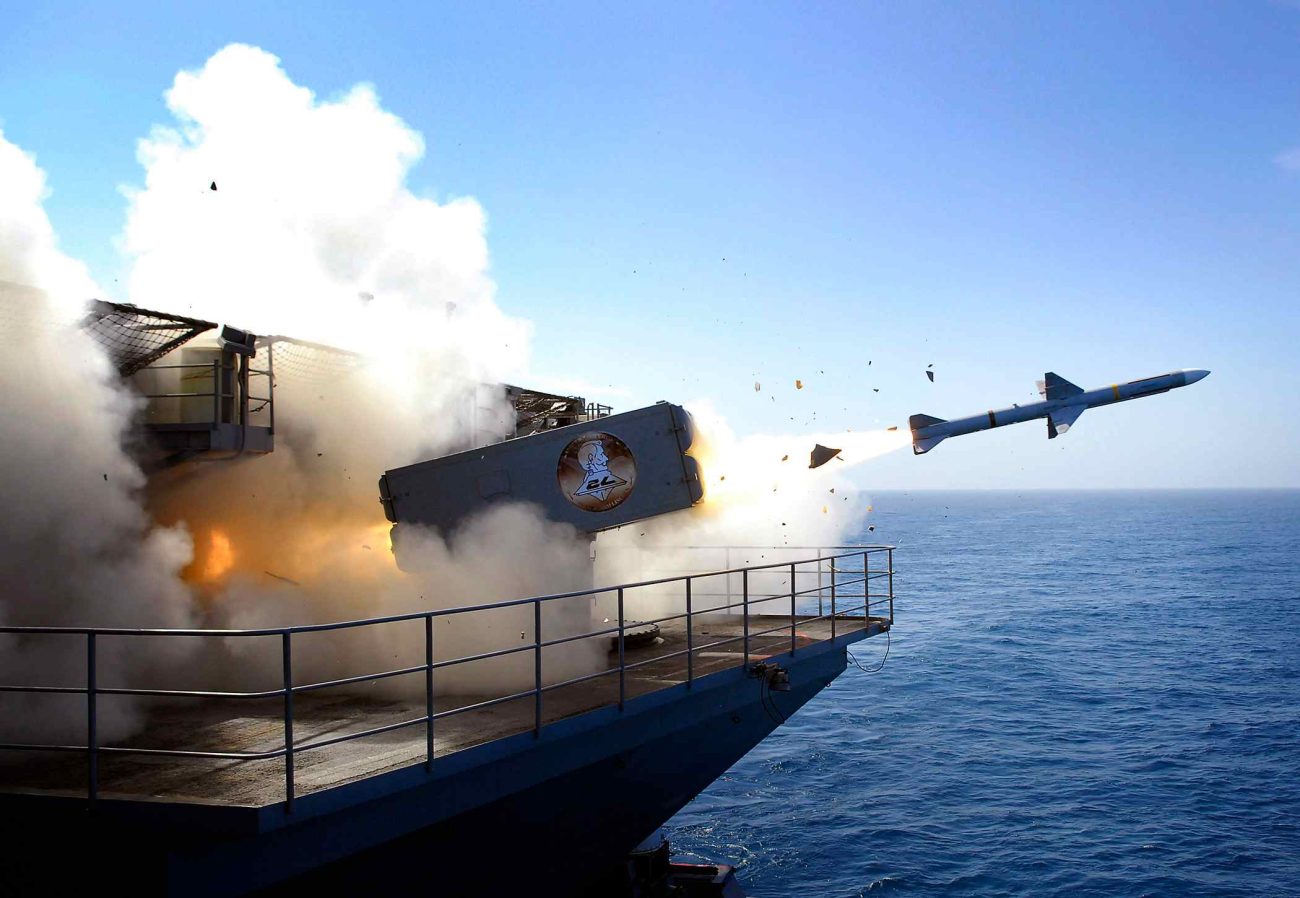
US aircraft carriers are escorted by several warships, each with hundreds of vertical launch cells, providing powerful capability to neutralize incoming projectiles.
Moreover, aircraft carriers are much harder to target than fixed land-based sites. While Iran could have pre-mapped stationary targets before the conflict, the USS Abraham Lincoln can move at speeds of up to 35 knots. In the time it takes a ballistic missile to reach its intended impact point, the carrier can travel several miles, forcing attackers to constantly update its position.
A successful strike could have been a major setback for the US Navy, as the other carrier in the region, the USS Gerald R. Ford, had already suffered a major fire on March 12, 2026, which forced it to sail to Greece.
However, analysts talking to EurAsian Times suspect that Trump’s claims may not be true in the first place, given his penchant for pomposity and a flair for making headlines.
“I am not sure this is true, notwithstanding President Trump’s assertion. The Lincoln had been attacked by four ballistic missiles at the beginning of the war, and since then, I don’t think there have been any further missile attacks. In fact, the carrier is currently deployed in the Arabian Sea and is armed and ready for any eventuality should the ceasefire break down and hostilities resume,” Commodore (retd) Anil Jai Singh told the EurAsian Times.
US-Iran Tensions Escalate
Speaking on the sidelines of NATO, US President Donald Trump blasted the Iranian regime and declared that the ceasefire was over. The remarks came after the US and Iran launched tit-for-tat strikes after Iran struck a tanker sailing along Oman’s shore in the Strait of Hormuz.
The President said Iran “lies” and “cheats” and accused the country of violating the interim agreement that called for the end of the conflict. The President earlier said US negotiators could continue talks “if they want” but said he saw it as “a waste of time”.
When asked about the ceasefire, Trump said: “I think it’s over. I don’t want to deal with them any more, they’re scum… they’re led by sick people, and they’re vicious, violent people.” “We make a deal… They [Iran] go outside, talk to the press, they say ‘we never even talked about it’. There’s something wrong with them. They’re cuckoo. As far as I’m concerned, it’s over,” he added.
Subsequently, Trump told reporters that the US “hit them very hard last night” and will “probably hit them hard again tonight.”
Meanwhile, Iran’s Foreign Minister Abbas Araghchi responded to these threats in a post on X, saying, “We do not answer vulgarity with vulgarity, but with action: fearlessly and with great valour.”
Currently, the situation is said to be precarious, as recent reports suggest that the US military launched a second night of strikes against Iranian targets late on July 8, and Tehran retaliated with attacks on US bases in Bahrain, Kuwait, and Qatar.
The US is reportedly preparing for a potential multi-day or possibly multi-week conflict with Iran over the Strait of Hormuz. The fate of the new campaign, including the length and severity, would be determined by Iran’s response.
- Contact the author at sakshi.tiwari13 (at) outlook.com
- Follow EurAsian Times on Google News