The World Directory of Modern Military Aircraft (WDMMA) has released its 2026 rankings, giving a comprehensive view of global air power. It ranks 129 military air arms across 103 countries, mapping their strengths and weaknesses.
The WDMMA rankings use a complex formula to assess the overall fighting capability of air wings worldwide, taking into account not only total fighting strength but also modernization, logistical support, and both offensive and defensive capabilities.
Using these metrics, the WDMMA produces the definitive TruVal Rating (TVR) for various air wings, which is judged not simply by the total size of the aircraft inventory but by the actual quality, the general balance of the fleet, and mission-specific capabilities.
Not surprisingly, the United States Air Force (USAF) was ranked at the top, getting the highest TVR score of 242.9. However, the US Navy ranked second, ahead of the Russian Air Force, which ranked third.
Again, the US Army’s air wing ranks fourth, followed by the US Marines at number five.
Together, four of the five top spots have been filled by various branches of the US military.
China’s PLA Air Force (PLAAF) was ranked seventh, behind the Indian Air Force (IAF) at number 6.
The PLAAF, which sees itself as a near-peer adversary of the USAF, was ranked behind the USAF and the air wings of the US Navy, the US Army, and the US Marine Corps (USMC).
So, how is it that the US Army’s air wing is ranked higher than the PLAAF?
Why is the US Army’s Air Wing Ranked Higher Than PLAAF?
The US Army’s air wing has a TVR of 112.6, whereas the PLAAF’s TVR is only 63.8.
So the US Army’s TVR score is nearly double the PLAAF’s.
The US Army’s air wing has 4,333 units in its active aircraft inventory, compared with the PLAAF’s 3,733.
Notably, the US Army was ranked ahead of the PLAAF, even though it has no combat attack aircraft. In fact, 94% of its aircraft inventory consists of helicopters.
According to the WDMMA database, the US Army has 2,167 helicopters at a 50% readiness rate and 3,466 helicopters at an 80% readiness rate.
The total helicopter strength in the US Army is 4,071 units; it also has 152 transporters, 88 special mission aircraft, and 22 trainers.
The US Army’s air wing has also ordered 226 new helicopter units.
In total, helicopters make up 94% of the US Army’s air wing strength. Of the total 4,071 helicopters in its inventory, 2,299 are multi-mission UH-60L/M helicopters.
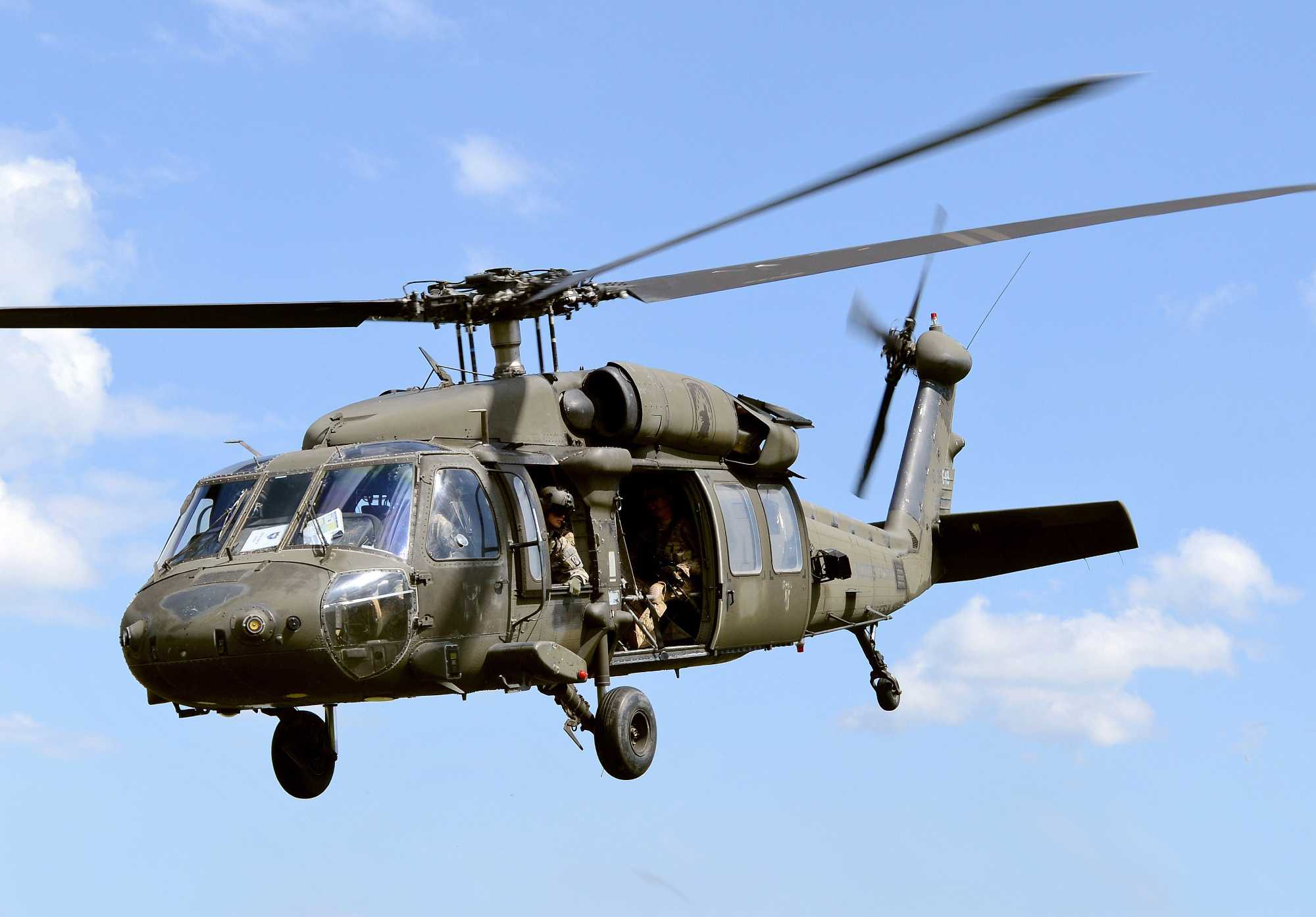
The UH-60L and UH-60M are advanced variants of the legendary Sikorsky UH-60 Black Hawk medium-lift utility helicopter. Manufactured by Lockheed Martin, both feature twin engines and are built for extreme durability, troop transport, MEDEVAC, and combat operations, justifying their multi-mission categorization.
Notably, the U.S. raid on Osama bin Laden’s compound (Operation Neptune Spear) utilized four heavily modified, stealth variants of the Sikorsky UH-60 Black Hawk helicopter.
It also has 824 AH-64D/E attack helicopters.
The AH-64D and AH-64E are advanced variants of the Boeing AH-64 Apache, the primary twin-engine attack helicopter utilized by the U.S. Army and allied defense forces.
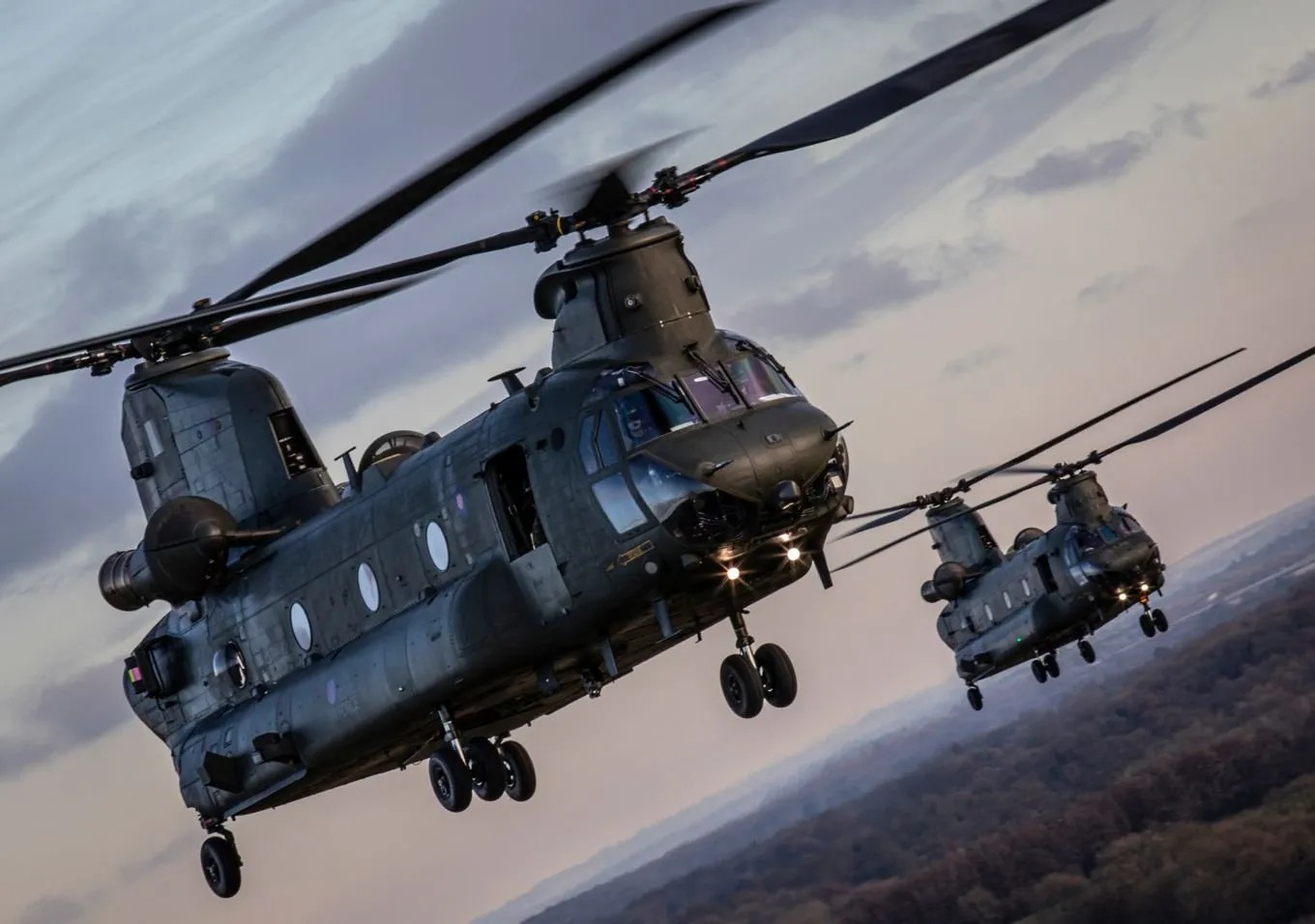
Next are CH-47D/F Medium-Lift helicopters. The US Army has 449 units of CH-47 helicopters.
Manufactured by Boeing, the CH-47D Chinook helicopter transports troops, artillery, supplies, and equipment to the battlefield, with other applications ranging from medical evacuation and aircraft recovery to parachute drops, search-and-rescue, disaster relief, firefighting, and heavy construction.
The US Army also has 391 UH-72A Light Utility helicopters.
The UH-72A Lakota is a versatile, twin-engine light utility helicopter developed by Airbus Helicopters and used by the U.S. Army.
The UH-72 Lakota’s missions include training, search and rescue, reconnaissance, MEDEVAC, disaster response, firefighting, homeland defense, drug interdiction, command and control, and VIP transport.
The force also has a fleet of 61 MF-47D/E/G Multi-Mission helicopters. The MF-47 is a variant of the iconic CH-47 Chinook. These are iconic twin-rotor, heavy-lift military helicopters designed for combat, transport, and covert missions.
Finally, the US Army’s air wing also has 47 AH/MH-6M Light Scout/Attack helicopters.
The AH/MH-6M Little Bird is a highly modified, light special operations helicopter used extensively by the U.S. Army’s elite 160th Special Operations Aviation Regiment.
Known as the “Killer Egg,” the platform is primarily divided into two roles: the unarmed MH-6M designed for fast troop insertion/extraction, and the heavily armed AH-6M configured as a light gunship for close air support.
Besides, the US Army has 152 transporters and 22 trainers.
It also has a fleet of 88 special-mission platforms, airframes purpose-built or modified for specialized airborne service roles. Categories include Airborne Early Warning (AEW), Maritime Patrol, and Electronic Warfare (EW).
Overall, this is a lethal and very well-balanced force comprising attack, multi-mission, heavy- and medium-lift, special-mission, and transporter helicopters.
In comparison, the PLAAF has 3,733 airframes, which include 1,975 combat aircraft, 1,060 trainers, 270 transporters, 209 bombers, 125 special-mission aircraft, 68 helicopters, and 26 tankers.
Of the 1,975 combat aircraft, the biggest fleet is of J-10 jets. The PLAAF has 588 – J-10Cs, 289 – J-7s, 280 – J-16s, 205 – J-11s, 210 – J-20, 200 – JH-7A, 97 – Su-30, 50 – J-8 Interceptors, 32 – Su-27, and 24 – Su-35s.
It has 209 H-6 Bombers and 68 helicopters.
While the PLAAF has a large aircraft inventory (3,733), nearly 28% (1,060) of its total fleet consists of trainers, which do not contribute to overall combat strength.
Furthermore, of the 1,975 combat aircraft, the PLAAF has a mix of modern and legacy aircraft. While it has 210 fifth-generation J-20s and 588 4.5-generation J-10Cs, it also has legacy aircraft such as the Su-27, J-7, and J-11.
Another factor is that many PLAAF combat aircraft lack combat experience.
The J-10 has seen limited combat during the 2025 India-Pakistan conflict; however, the J-20, J-11, J-16, and J-8 have not been combat-tested, and, as such, their performance in actual combat situations remains doubtful.
Force experience is another major factor.
While the US Army has seen combat all over the world, from Afghanistan, Iraq, Iran, Yemen, to Venezuela, the PLAAF last saw combat during the 1979 Sino-Vietnamese War, and even then, the PLAAF mostly flew defensive sorties within Chinese airspace.
Real-world combat experience is a big factor. The Indian Air Force, currently ranked ahead of the PLAAF at number six, surpassed the PLAAF in 2025 following the brief war with Pakistan.
During the May 2025 war with Pakistan, the IAF demonstrated its precision-strike capabilities, striking 11 Pakistani air bases in a single night, which probably helped it surpass China despite fielding a lesser number of aircraft.
Notably, a force’s combat experience also percolates into fighting doctrines and pilot training manuals.
Since the PLAAF has not fought a war in more than half a century, it is bound to impact the training of new pilot recruits as well.
On the other hand, the US Army operates one of the world’s largest and most capable rotary-wing fleets, optimized for real-world battlefield roles, such as close air support (CAS), troop transport, reconnaissance, and medical evacuation. The WDMMA ranking places heavy emphasis on dedicated CAS and ground-support capabilities.
Furthermore, US logistics, maintenance, and training standards, as well as its industrial base, score very highly. The WDMMA formula rewards forces that are balanced, sustainable, and ready.
Combat-proven platforms, real-world combat experience, superior logistics support, high training standards and doctrines, a balanced and modern fleet, and a world-class industrial support base are among the reasons the US Army’s TVR score is nearly double that of the PLAAF.
However, it must be noted that the PLAAF fields strategic bombers, fifth-generation stealth fighters, and long-range missiles, and Beijing is rapidly modernizing its aviation fleet. The PLAAF is also a highly networked air force and is rapidly integrating unmanned aerial vehicles into its force.
The WDMMA, by its own admission, has not factored in the status of UAV integration while ranking the air forces.
The WDMMA’s peculiar ranking formula, which places greater emphasis on a balanced and diversified force structure, might have placed the US Army’s air wing ahead of the PLAAF, but that does not mean the PLAAF is a weaker or less capable air force overall.
The WDMMA rankings are inherently skewed toward rotary-wing assets, which often distorts comparisons between different types of air arms. Because the system places substantial weight on the size, readiness, and diversity of helicopter fleets, it tends to favor army aviation units, such as the U.S. Army’s, over traditional air forces focused on strategic and fixed-wing capabilities.
As a result, the U.S. Army, with its thousands of attack, utility, and heavy-lift helicopters, receives a disproportionately high ranking despite lacking strategic bombers, long-range fighters, or noteworthy power-projection assets.
In a high-intensity conflict, especially in the Indo-Pacific, factors such as strategic reach, fifth-generation stealth fighters, long-range precision strike, integrated air defense, and rapidly expanding UAV/drone capabilities, areas where the PLAAF is investing heavily, could prove far more decisive than the US Army’s helicopter-centric force structure.
- Sumit Ahlawat has over a decade of experience in news media. He has worked with Press Trust of India, Times Now, Zee News, Economic Times, and Microsoft News. He holds a Master’s Degree in International Media and Modern History from the University of Sheffield, UK.
- He can be reached at ahlawat.sumit85 (at) gmail.com