Germany is seeking the lethal combination of Typhon mid-range capability (MRC) missile system and long-range Tomahawk missiles from the United States, a capability recently demonstrated by the US Army in the Philippines.
The Friedrich Merz government hopes to convince the Trump administration to approve the sale of Tomahawk and Typhon ground-launched missiles. Germany had first notified Pentagon leaders of its intention to buy the US Army’s Typhon missile launcher system in July 2025, with the 2nd Multi-Domain Task Force, based in Wiesbaden, Germany, singled out to receive them, as EurAsian Times reported at the time.
The demand has purportedly been renewed amid rising tensions between the US and Germany, exacerbated by Berlin’s criticism of the US war in Iran. Merz caused a stir last month, saying that Washington had been “humiliated” by its inability to reach an agreement with Tehran and accused Trump of having “no strategy” or an exit plan.
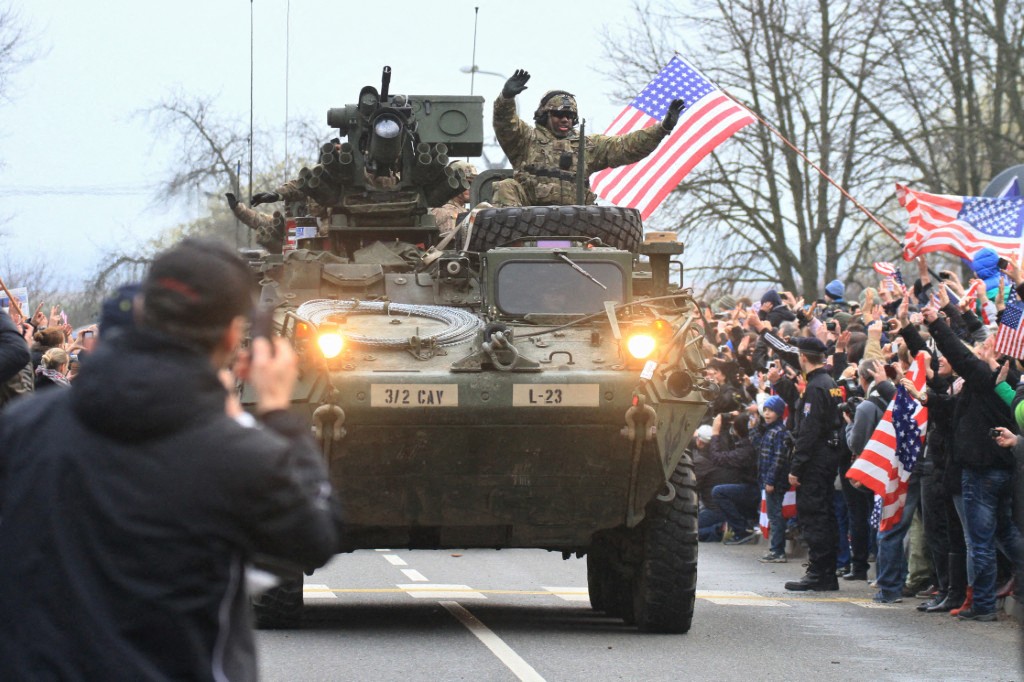
Miffed by the public criticism, Trump told Merz to focus on Germany’s own issues and accused him of wanting Iran to have nuclear weapons. However, the tensions took a sharp turn when Trump announced plans to withdraw about 5,000 US troops from Germany, sparking concern that the bilateral rift had fractured the transatlantic relationship.
Additionally, it raised speculation that the US could suspend plans to deploy Tomahawk cruise missiles on German soil, as promised by former President Joe Biden in 2024.
Merz subsequently confirmed that the US did not plan to deploy any Tomahawk cruise missiles in Germany in the near future, while emphasizing that this was unrelated to the tensions between the two leaders.
“The Americans don’t have enough for themselves right now. Objectively speaking, there is virtually no possibility of the US supplying weapons systems of this kind,” Merz said in an interview. However, he later emphasized that there had been no “definitive cancellation” by the US regarding Tomahawk.
Nonetheless, Germany has moved to ease tensions with the US President, particularly given that security and trade ties are at stake.
“I’m not giving up on working with Donald Trump either,” the German Chancellor said. He admitted that he may have to accept that Trump held a different opinion, “But that doesn’t change the fact that I remain convinced that the Americans are our most important partners in the North Atlantic Alliance,” he added.
German Defense Minister Boris Pistorius is reportedly preparing a trip to Washington to resuscitate Berlin’s request for long-range systems, which was first made in July of last year. However, the visit depends on Pistorius’s ability to arrange a meeting with his American counterpart, Pete Hegseth, the report added, citing unidentified sources.
Interestingly, the German reported interest in Typhon MRC and Tomahawk comes days after the US Army Pacific’s 1st Multi-Domain Task Force successfully fired a long-range Tomahawk cruise missile from the Typhon launcher in the central Philippines as part of the Balikatan multinational military exercises. The test-firing came two years after the system was first deployed to the Philippines amid stiff opposition from China.
Notably, Germany’s request for Typhon comes amid a heightened need to deploy long-range fire capabilities amid rising security threats from Russia. The Typhon and Tomahawk combination could strike targets as far as 2,500 kilometers away.
European countries, including Germany, have had very limited land-based long-range conventional strike options since the end of the Cold War and the Intermediate Range Nuclear Forces (INF) Treaty. Meanwhile, Russia has developed and deployed long-range missiles, such as the Iskander-M, with a range of about 500 kilometers, and Kalibr cruise missiles, which can reach up to 2,500 kilometers.
Typhon’s deployment in the European theatre would provide a comparable capability, allowing Germany and NATO to counterbalance Russia’s regional missile advantage.
Currently, the Medium Artillery Rocket System II (MARS II), a regional adaptation of the American M270 Multiple Launch Rocket System, is the centerpiece of the German Army’s present long-range fire capability. However, the system has a range of about 84 kilometers, whereas the Typhon can hit targets from 250 to 2,500 kilometers.
While Tomahawk missiles alone are long-range cruise missiles typically launched from ships to attack targets in deep-strike missions, integrating these lethal weapons with MRC would give Germany a solid, mobile, ground-based long-range capability.
The Typhon and Tomahawk purchase is explicitly described as a temporary “bridging” or interim solution. Germany and European partners are developing indigenous long-range systems, such as the European Long-Range Strike Approach (ELSA), as EurAsian Times explained earlier. However, these are not expected before 2032.
The purchase of the Typhon system would be subject to US approval. If it goes through, Germany would become the first overseas buyer of the system, though that prospect is very uncertain amid prevailing circumstances and Trump’s ire toward Berlin.
Typhon MRC
The Typhon Mid-Range Capability (MRC) system is a mobile, ground-launched missile system developed by the US Army, intended to deliver long-range, precise strikes in contested environments.
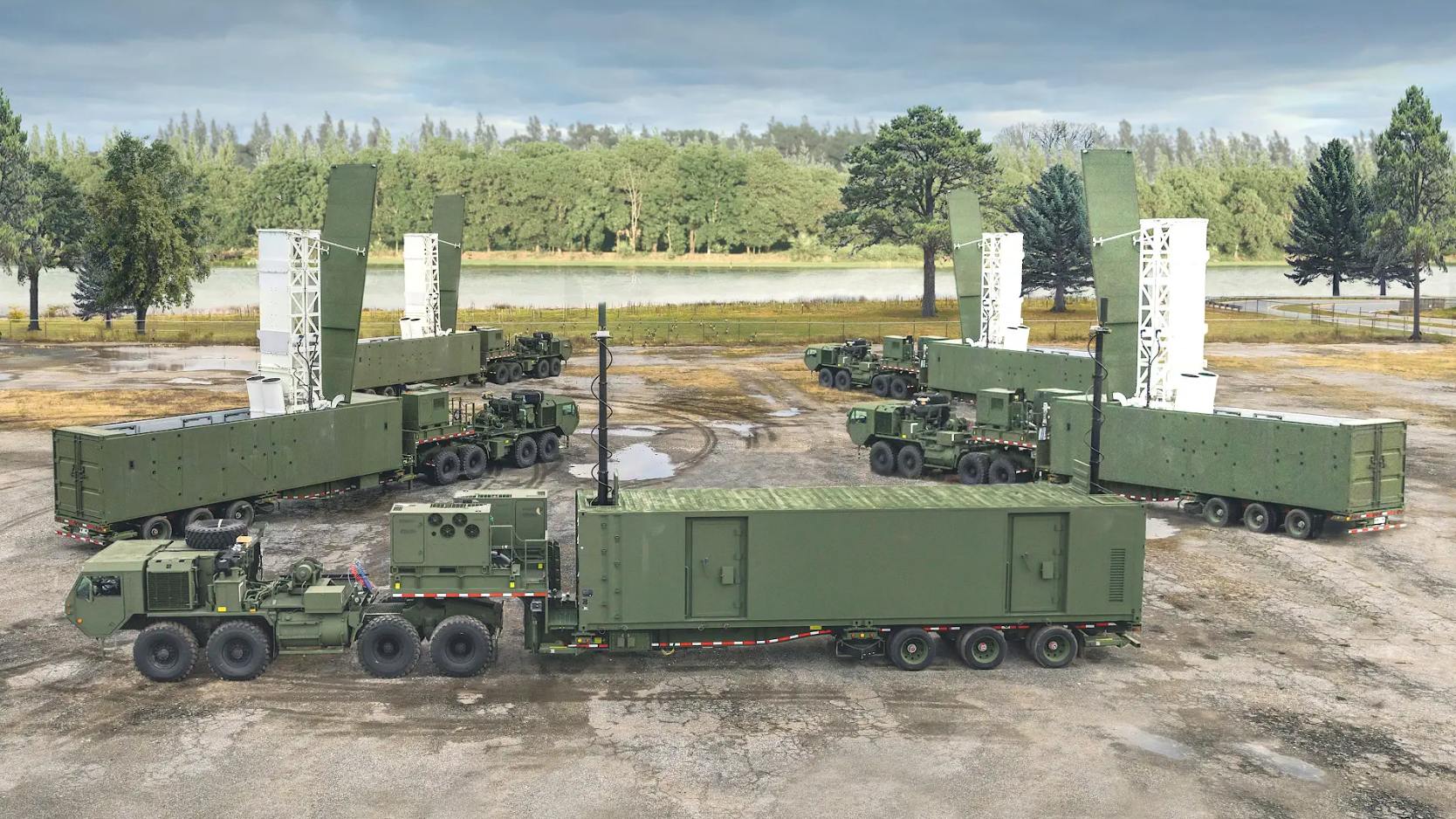
A Typhon battery consists of four launchers, each capable of carrying four missiles at once, which means it can launch a salvo of sixteen missiles before having to be reloaded. Additionally, the launcher is based on the Mk 41 Vertical Launch System (VLS), which is used on several US and allied warships.
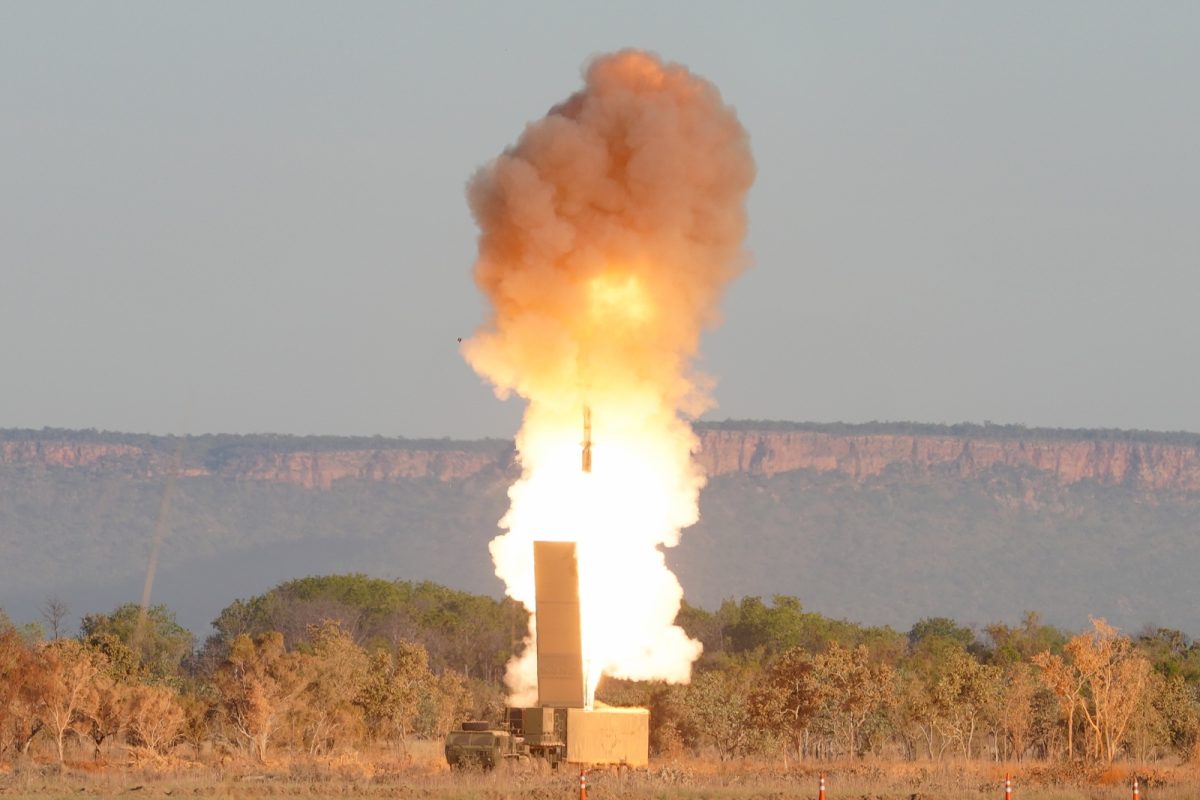
In particular, the Typhon is notable for its adaptability. It is capable of firing the SM-6 and Tomahawk cruise missiles, two distinct yet extremely deadly weapons. The Tomahawk cruise missiles can reach targets up to 1,600 kilometers (1,000 miles), but the SM-6 missiles can effectively engage air and sea threats at ranges of more than 200 kilometers (165 miles). This mobile system is easily transportable by a C-17 aircraft.
The MRC is part of the US Army’s Long Range Precision Fire (LRPF) modernization and is intended to hit targets at ranges between the Army’s Precision Strike Missile (PrSM) and the developmental Long-Range Hypersonic Weapon (LRHW) system, according to an earlier US Congress report.
The Typhon could integrate with the US Army’s Integrated Battle Command System (IBCS), enabling coordinated strikes across air, land, and sea domains.
In fact, it has been developed as an answer to “improved Chinese and Russian long-ranged artillery systems, new employment techniques for unmanned aerial vehicles (UAVs), and the proliferation of special munitions (such as precision, thermobaric, loitering, and top-attack munitions) have renewed concerns about the potential impact of Russian and Chinese fires on U.S. combat operations.”
The Typhon system is an essential part of the authorized force structure for the US Army’s Multi-Domain Task Forces (MTDF). One Typhon battery is assigned to the first MDTF in the Pacific, and the other to the third MDTF.
These formations are being constructed by the Army to meet specific military needs in those areas and to assign them to particular theatres.
“There will be five MDTFs in total, and three will be dedicated to the Pacific. The 2nd MDTF is in Europe, and the 5th, which has yet to be formed, will be stationed at Fort Bragg, North Carolina, and will be designed for rapid deployment where it is needed,” a Defence News report stated earlier, citing the US Army’s Maj. Gen. Frank Lozano, program executive officer for missiles and space.
The deployment of Typhon in Germany would likely allow NATO to have the option to target Russian military assets within Russia or occupied territories. Moreover, it will enhance NATO’s ability to counter Russian anti-access/area denial (A2/AD) strategies.
For now, it remains to be seen if the US will set aside differences and approve a potential sale or transfer of the MRC to Germany.
- Contact the author at sakshi.tiwari13 (at) outlook.com
- Follow EurAsian Times on Google News