
In addition to requesting more Patriot missile defense batteries and interceptors, Ukraine is now pressing the United States to grant it a license to produce Patriot interceptors domestically, citing low production rates of these critical munitions in the West and the growing risk of exhausting its existing stockpiles.
Ukrainian President Volodymyr Zelenskyy made the case for the license in an interview with Face the Nation, stating that the US lacks sufficient anti-ballistic missile production capacity, while Russia has been ramping up domestic ballistic missile production.
“I sent a letter to the White House and to the U.S. Congress. I hope they will understand and respond,” the President stated, adding that the slow production could lead to a crisis in different parts of the world.
“60–65 anti-ballistic missiles per month, compared to current challenges, is nothing. It is no secret, and Russia knows this. We need to expand the production. I asked the previous U.S. administration, and I am asking today’s administration to give Ukraine licenses to produce Patriot missiles,” Zelenskyy said rather emphatically. “We can increase the production of Patriot missiles. This will help us. This will help the Middle East and any other country that the United States decides to help. Until we produce a European anti-ballistic system, we will need support from the United States,” he added.
The appeal comes at a time when the US military is staring at depleted stockpiles of critical munitions after nearly 40-days of war with Iran. Expert assessments have revealed that the US military rapidly burned through its stockpiles of air defense missiles during the conflict, way faster than they could be produced.
There were about 2,500 Patriot interceptors in the US inventory before Operation Epic Fury was launched, and between 1,060 and 1,430 Patriots were fired during the hostilities, according to a report published by the US-based think tank, the Center for Strategic and International Studies (CSIS).
It must be noted that the Pentagon signed a landmark seven-year framework agreement with Lockheed Martin earlier this year to more than triple the annual production capacity of PAC-3 Missile Segment Enhancement (MSE) interceptors — from roughly 600 per year to 2,000 per year by 2030. In addition, Boeing is reportedly tripling production of the critical active radar seekers for PAC-3 MSE missiles.
However, even increased missile production may not be enough to meet delivery obligations. For instance, the CSIS report posits that the US faces a challenge in delivering Patriots because it needs to replenish its own stockpiles, assist Ukraine in fending off Russian missile attacks, and meet the demands of 17 other nations that have ordered the interceptors.
“Current production of the latest variant—PAC-3 Missile Segment Enhancement (MSE)—is around the baseline rate of 650 interceptors per year, with half the deliveries going to the United States and the rest to allies and partners. The surge annual production rate with existing tooling and facilities is 2,000. Lockheed intends to scale up to this level,” it stated.
The think tank predicts that the US stockpile of Patriot interceptors would return to the pre-war levels only by mid-2029. This may have sparked concern in Ukraine that the depleted stockpiles and less-than-ideal production rate could impact deliveries to the Ukrainian Armed Forces and further embolden Russia.
Options For Ukraine?
Ukraine has received several Patriot batteries from allies since 2023, including from the United States, Germany, and the Netherlands.
Ukraine maintains that the Patriot systems are among the few Western weapons that are highly effective against Russian ballistic missiles, such as the Iskander and Kinzhal, as well as some other cruise missiles. It relies heavily on them to protect cities, energy infrastructure, and troops.
The US has been sending Patriot missiles to Ukraine, among other weapons and munitions—including through the Prioritized Ukraine Requirements List (PURL), a new system wherein NATO nations pay for the transfer of weapons from the US.
However, Zelenskyy has warned that the current delivery pace under the PURL program is not keeping up with the threats facing the country as Russia intensifies aerial attacks.
Notably, the supply of interceptor missiles has been constrained by several factors, including the high cost per interceptor, limited production capacity, and allies’ perception that they need to maintain their own stockpiles for future contingencies.
Highlighting the inconsistent delivery of missiles, Zelenskyy earlier noted that 800 Patriot interceptors were used in just three days of the Iran War, whereas Ukraine received a total of 600 missiles over its four years of war with Russia.
The Ukrainian administration has continued to call for additional Patriot missile systems and interceptors, emphasizing their role in thwarting Russian ballistic missile attacks.
Zelenskyy reiterated the appeal in a letter to the White House and Capitol Hill last week, warning that Ukraine urgently needs additional Patriot missile systems as Russia intensifies ballistic missile attacks on Ukrainian cities. Patriot systems continue to be the “most-effective defense against every type of Russian ballistic missile,” since “the fate of many lives” is being decided in the conflict, the President said in the letter.
However, consider this: If the US prioritized restocking its inventory in the current scenario and amid glaring vulnerabilities created by the expenditure of air defense missiles in other theatres, the delivery of Patriot interceptors to Ukraine would take a back seat.
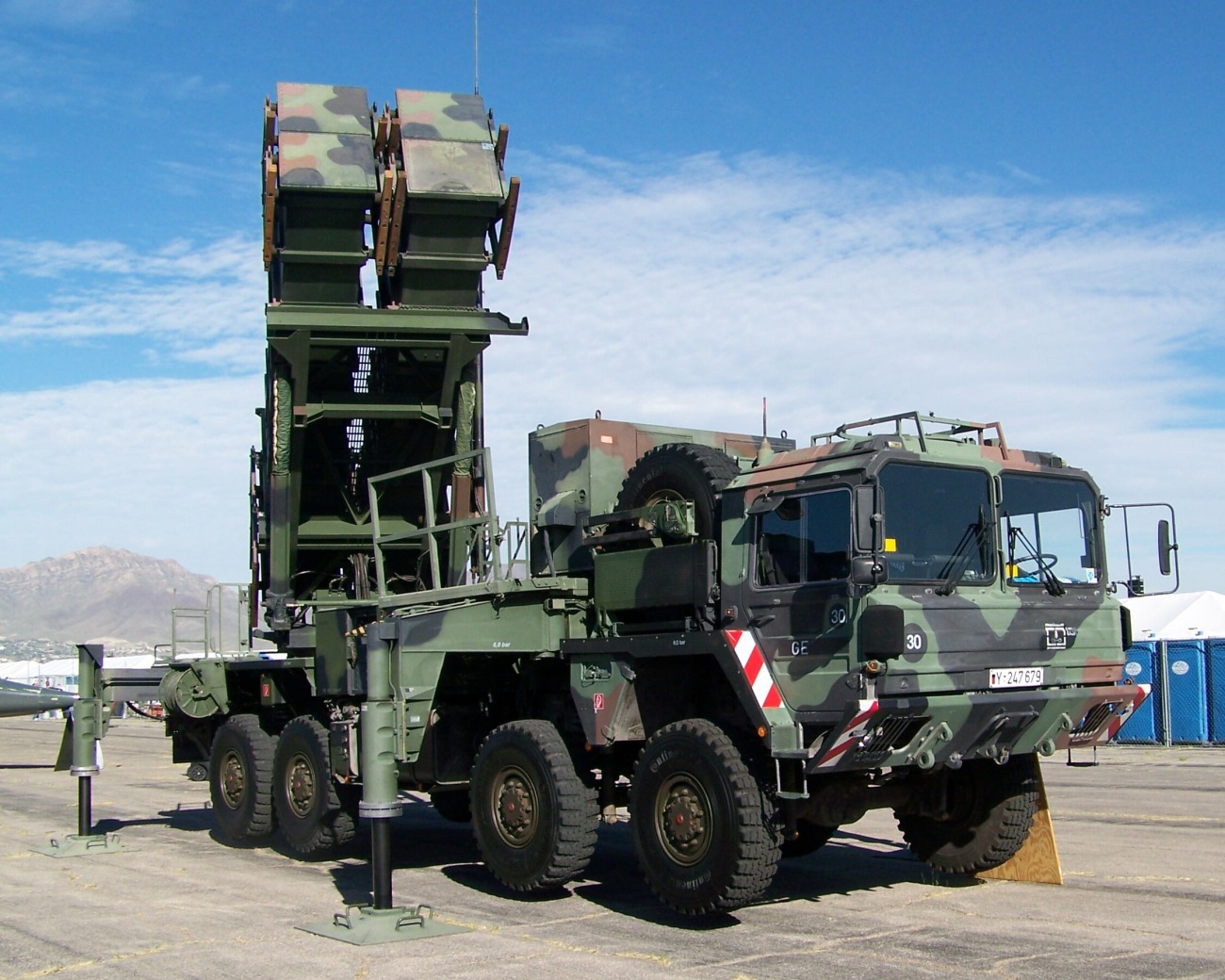
The Ukrainian President may have realized that relying solely on donations and purchases from the US and other NATO allies is unsustainable.
Domestic production would allow Ukraine to scale up output independently, potentially even exceeding current US rates, and reduce political and logistical vulnerabilities in aid delivery. Moreover, it would help the embattled country build a more self-reliant defense industry and possibly supply these interceptors to others, including Gulf users of the missile.
It is worth noting that the US is typically very protective of its advanced weapon systems and has been reluctant to transfer production capability for sensitive technologies. In fact, Japan is currently the only country that manufactures Patriot interceptors under an active license outside the United States.
However, the Pentagon recently gave Poland preliminary approval to start producing PAC-3 MSE missiles. “The Americans were initially skeptical about Poles being able to produce PAC-3 missiles for Patriots … now everything is open, and we have received preliminary approval,” the Polish Deputy Defense Minister Cezary Tomczyk said.
The Ukrainian President may have been inspired by the feat achieved by neighboring Poland, which may soon become a part of the supply chain rather than just a customer.
Patriots can intercept aircraft, tactical ballistic missiles, and cruise missiles, depending on the interceptor used.
The older PAC-2 interceptor uses a blast-fragmentation payload that detonates near the target. Meanwhile, the PAC-3 MSE is the most advanced variant of the Patriot interceptor. It uses hit-to-kill technology to destroy targets by direct impact, increasing the efficacy against modern threats by delivering significantly more kinetic energy.
It’s unclear which Patriot systems were shipped to Ukraine, though Kyiv most likely has at least some PAC-3 interceptors.
Ukraine has made some impressive kills with Patriot missiles, such as the Kinzhal hypersonic missile, which Russian President Vladimir Putin positioned as invincible. Additionally, the Patriots have also been credited with downing the Su-34 Fullback, Su-35 Flanker-E, and A-50 radar aircraft, among other Russian military aircraft.
Against that background, Zelenskyy’s appeal for domestic production of Patriots to address supply shortages could make political and strategic sense. However, it remains to be seen whether the Trump administration will heed the argument for stunted production and be sufficiently impressed to grant the request.
- Contact the author at sakshi.tiwari13 (at) outlook.com
- Follow EurAsian Times on Google News