On 6 and 9 August 1945, the United States detonated atomic bombs over Hiroshima and Nagasaki. On 2 September 1945, less than a month later, Japan formally surrendered to the Allied powers, led by the US.
For the next six years, Allied forces occupied Japan. During this time, Japan adopted a new constitution (1947) that included Article 9, which renounced war as a sovereign right and prohibited maintaining “land, sea, and air forces, as well as other war potential.”
In 1951, the Security Treaty between the United States and Japan was signed, which contained no explicit US obligation to defend Japan if attacked, had no fixed duration, and gave the United States broad freedom to use the bases.
However, the one-sided arrangement caused growing resentment in Japan, and nine years later, in 1960, the United States and Japan signed a new treaty: the Treaty of Mutual Cooperation and Security between the United States and Japan.
It included an explicit mutual defense commitment. Article V states that an armed attack against either party “in the territories under the administration of Japan” would be dangerous to the peace and safety of both, and each would “act to meet the common danger in accordance with its constitutional provisions and processes.”
Further, the treaty required prior consultation before major changes in U.S. force deployments or the use of bases for combat operations outside Japan.
Under the treaty, thousands of active duty U.S. soldiers were deployed in Japan. Even today, nearly 55,000 U.S. soldiers are deployed in Japan.
This treaty remains the foundation of the Japan-U.S. relationship.
While the U.S. has signed mutual defense agreements with many countries, including NATO members and South Korea, the treaty with Japan is unique in that it’s a unilateral security guarantee from the U.S. to Tokyo.
Tokyo provides no corresponding security guarantee to Washington, as Japan’s pacifist Constitution limits its ability to defend U.S. territory outside Japan.
This unique outsourcing of security by one of the world’s most technologically advanced countries and an economic superpower to the US also gave birth to the Yoshida doctrine (named after Prime Minister Shigeru Yoshida): Japan would focus on economic recovery while relying on the United States for security.
The model worked perfectly for over six decades; Japan, despite its small size in East Asia, was the world’s second-largest economy for roughly four decades and remains the world’s fourth-largest economy.
In the annals of history, one will be hard-pressed to find any other example of a country that was the world’s second-largest economy with such a small military force and with a pacifist constitution that has formally renounced war as a means of achieving geopolitical goals.
However, since President Donald Trump returned to the White House in January last year, questions have emerged about whether Tokyo can rely blindly on US security commitments.
Trump administration officials have repeatedly asked US security partners, from NATO countries to Japan and South Korea, to take more of the burden for their own security.
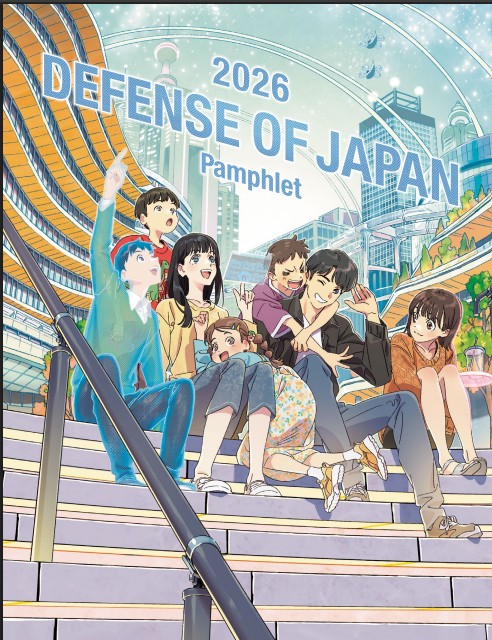
Amid these developments, Japan’s latest defense white paper, released earlier this week, underscores that while Tokyo still views its defense partnership with the United States as fundamental to its security, it recognizes it cannot rely blindly on the US alone and must develop its own capabilities.
Japan Defense White Paper
In the White Paper, Japan describes the United States as “central, a cornerstone, essential, or a key pillar of its security.”
“At the same time, peace and stability in the region cannot be achieved by any country alone. The Japan-U.S. Alliance is a key pillar of our national security policy.”
Further, it says that “the Japan-U.S. Alliance is essential to Japan’s national security, and Japan-U.S. bilateral exercises play a significant role in enhancing Japan’s deterrence and response capabilities.”
However, while the document reaffirms the importance of the US-Japan security alliance, Tokyo has also made clear that it must take greater responsibility for its own security going forward.
“By FY2027, Japan will strengthen its defense capability to the point where Japan is able to take primary responsibility for dealing with invasions against its nation, and disrupt and defeat such threats with the support of its ally and others,” the white paper said.
“Further efforts will be made approximately 10 years after formulating the DBP to better ensure that these defense objectives have been met and reinforce Japan’s defense capabilities so that any invasion of Japan can be disrupted and defeated and at places further afield,” it added.
The paper also notes that Tokyo needs to face its security challenges and reinforce its defense capabilities.
“The most consequential responsibility of the Government of Japan is to resolutely defend to the end the lives of Japanese nationals and their peaceful livelihood, as well as Japan’s territorial land, waters, and airspace. This constitutes the foundation of Japan’s national security. … Japan needs to squarely face this grim reality and fundamentally reinforce its defense capabilities, with a focus on opponent capabilities.”
The paper also notes that while the U.S., the most powerful country on earth, remains the most valuable ally, Tokyo must also explore defense partnerships with other like-minded countries.
“What should be prioritized the most in protecting the lives and livelihoods of the people of Japan is carrying out active diplomacy. With the Japan-U.S. Alliance as the cornerstone, it is essential to work along with like-minded countries and promote multilateral cooperation,” it said.
Further, “As efforts toward realizing FOIP (Free and Open Indo-Pacific), Japan will actively promote bilateral/multilateral exercises with its ally and like-minded countries throughout the Indo-Pacific region,” it said.
Notably, in recent years, Japan has developed active security partnerships with countries such as India and Australia. Tokyo sees these Indo-Pacific countries as essential to challenging China’s rising influence in the region.
For instance, in the foreword to the White Paper, Defense Minister Koizumi Shinjiro wrote, “To realize a ‘Free and Open Indo-Pacific,’ we are advancing bilateral efforts as well as multilateral efforts such as minilateral cooperation of Japan-U.S.-Australia, Japan-U.S.-ROK, and Japan-U.S.-Australia-Philippines…”
Further, the paper highlights the landmark defense agreement between Japan and Australia to purchase naval frigates.
“In August 2025, the Government of Australia selected the upgraded Mogami-class frigate (FFM) as its next general-purpose frigate…Going forward, Japan and Australia will jointly develop and produce a total of 11 frigates.”
Similarly, the paper notes the sale of Integrated Communication Antenna System for Warships (the Unicorn) Projects to India.
Japan is also part of QUAD, along with India, Australia, and the US.
Japan is also developing a sixth-generation fighter jet, the GCAP, in partnership with the UK and Italy. Traditionally, Japan has bought American fighter jets; however, its decision to join European countries in developing a next-generation fighter jet independently of the US underscores Tokyo’s intention to reduce its over-reliance on Washington.
Last month, Canada also joined the GCAP as an observer.
These efforts underscore that while Tokyo continues to regard its unique security partnership with Washington as the cornerstone and essential pillar of its national security, Japan is simultaneously reinforcing its own defense capabilities and deliberately expanding bilateral and multilateral partnerships with other like-minded democratic countries in the Indo-Pacific, particularly Australia, South Korea, the Philippines, and India, to strengthen collective deterrence and address China’s growing assertiveness.
- Sumit Ahlawat has over a decade of experience in news media. He has worked with Press Trust of India, Times Now, Zee News, Economic Times, and Microsoft News. He holds a Master’s Degree in International Media and Modern History from the University of Sheffield, UK.
- He can be reached at ahlawat.sumit85 (at) gmail.com