Ukraine has long complained that Russia continues to bypass Western sanctions, with its missiles, drones, air-defense systems, and fighter jets still relying on substantial quantities of Western-made components.
The latest revelation from Ukraine’s military intelligence agency (HUR/GUR) is particularly striking: specialists identified an NVIDIA Jetson Orin computer module inside a Russian S-71M “Monokhrom” air-launched cruise missile.
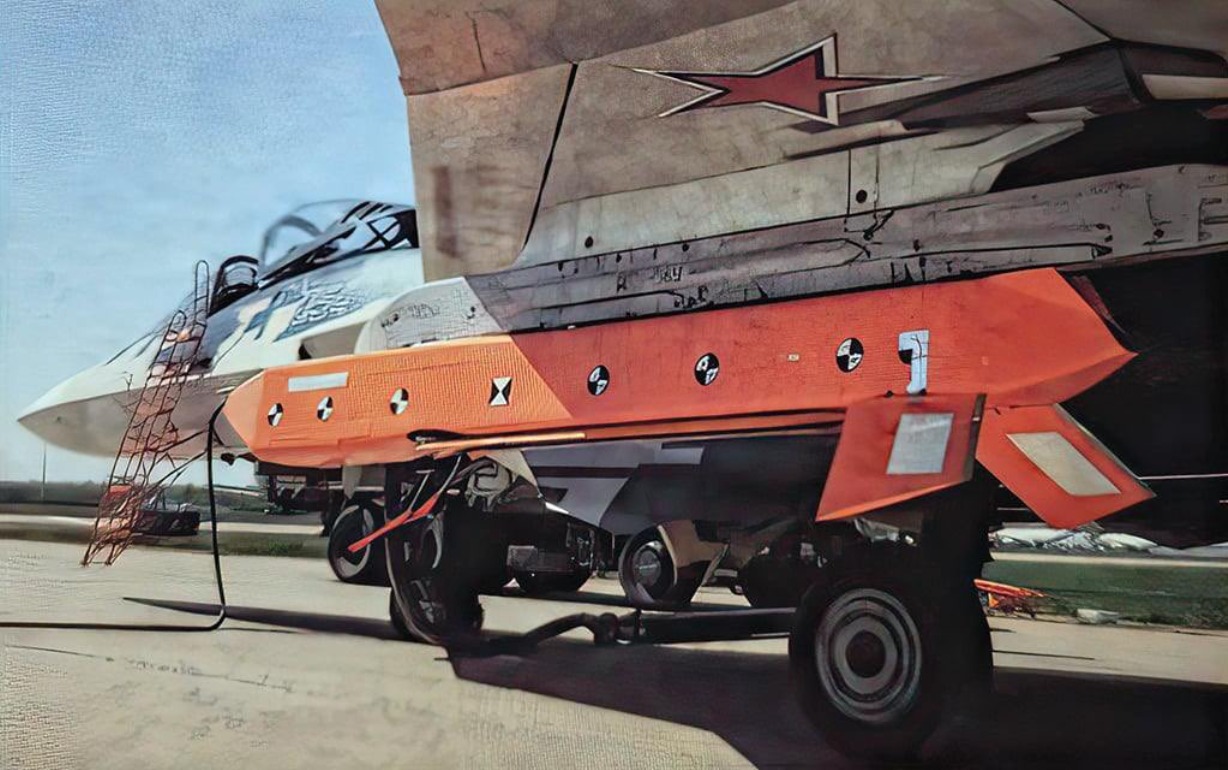
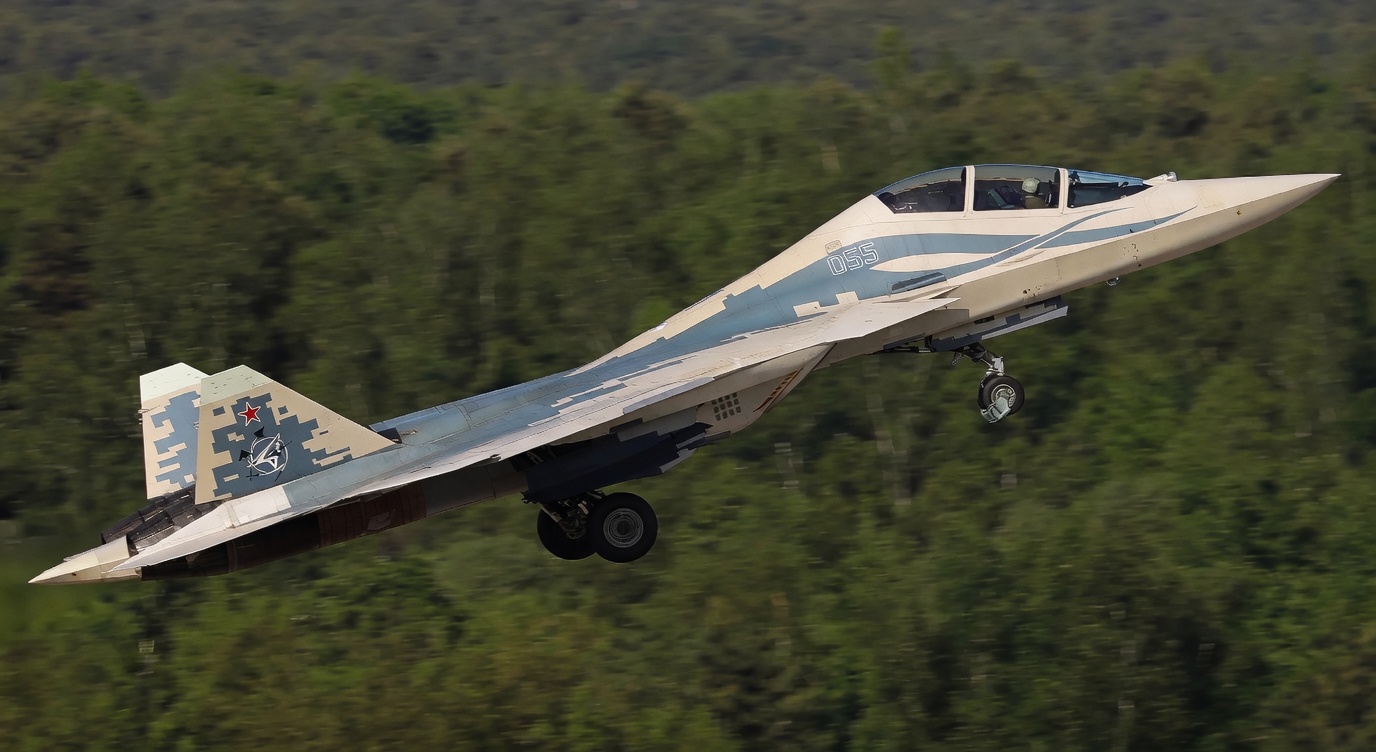
The S-71 is a stealthy, low-observable weapon, designed for internal carriage on the Su-57 and the S-70 Okhotnik drone. The stealthy cruise missile is associated with autonomous target-search capabilities.
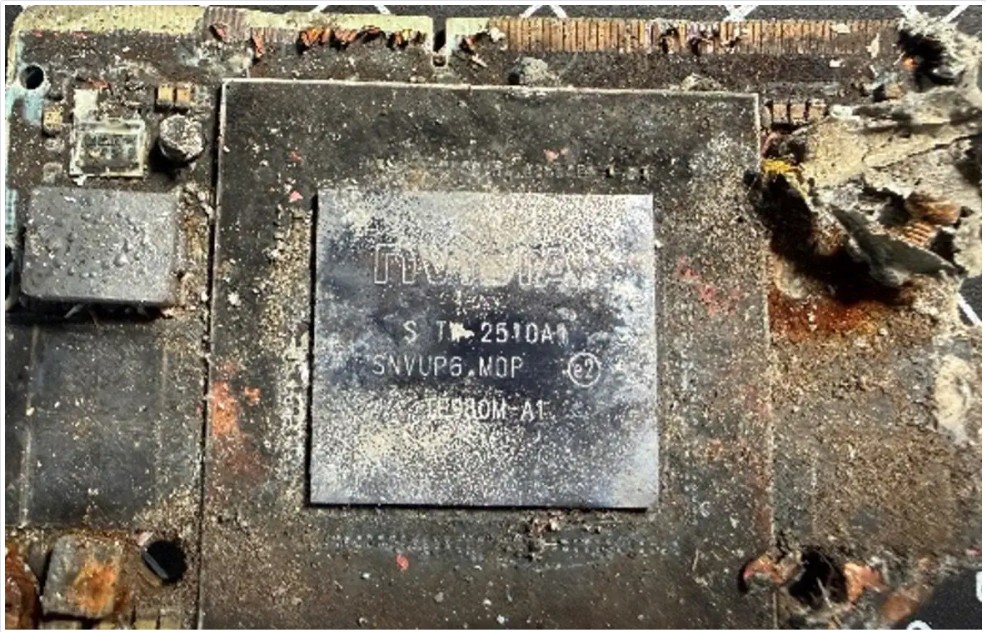
“Specialists from the Defense Intelligence of Ukraine (DIU) have identified an Nvidia Jetson Orin computer module in the new russian S-71 Monochrome air-launched cruise missile. The use of this component may indicate that artificial intelligence technologies are being employed in the missile,” DIU said in a statement.
“The discovery of an Nvidia Jetson module in a new russian missile once again demonstrates the need to strengthen sanctions pressure and coordinate the efforts of the civilized world,” it added.
The DIU also published an image of the alleged NVIDIA Jetson Orin computer module chip found inside the S-71 cruise missile.
The GUR published its findings through War&Sanctions, an online portal the agency runs to track foreign-made components discovered inside Russian weapons recovered from the battlefield. The latest research identified 35 electronic components in Russian weapons, according to the HUR.
If accurate, this would mean the Su-57, Russia’s most advanced fifth-generation fighter jet, uses AI chips from America’s most successful semiconductor chip-making firm in its weaponry.
Notably, advanced NVIDIA chips, such as A100, H100, H200, and Blackwell-series GPUs used for AI training, are classified as dual-use items on the Commerce Control List. Exports of these advanced chips to countries such as China and Russia require a license issued by the U.S. Department of Commerce’s Bureau of Industry and Security (BIS).
However, the NVIDIA Jetson Orin computer module chip found inside the S-71 cruise missile is not subject to the strict BIS advanced-computing export controls that apply to high-performance AI chips such as the H100, H200, or Blackwell series.
NVIDIA classifies Jetson modules and developer kits under ECCN 5A992.c, a relatively permissive category for certain mass-market, encryption-related, or telecommunications items.
In fact, NVIDIA has publicly described the Jetson Orin as a “consumer-grade” product intended for students, developers, startups, robotics, and autonomous systems. Company statements explicitly state that these modules “are not export-controlled” in the same way as high-end AI accelerators and are “not designed for military purposes.”
Although the Jetson Orin is not on the BIS export control list, NVIDIA has halted all product sales to Russia since 2022, when Russia invaded Ukraine and the United States tightened export controls.
Russia, however, has often circumvented Western sanctions by importing chips from third countries not on the export control list.
Notably, this is not the first time that NVIDIA chips have ended up in Russia, despite the company halting all product sales to Moscow since 2022.
For instance, in 2023, it was found that Russia was using NVIDIA and Intel Corp chips in its facial recognition surveillance cameras to identify people who were protesting Russia’s invasion of Ukraine.
A subsequent Reuters investigation found that while Russia was indeed using NVIDIA and Intel Corp graphics processing units (GPUs) in its facial recognition software, nothing suggested that NVIDIA or Intel had breached sanctions.
The probe further found that between April 1 and October 2022, at least 129 shipments of Nvidia products reached Russia via third parties.
Similarly, it reported that at least US$457 million worth of Intel products arrived in Russia between April and October 2022.
“We comply with all applicable laws, and insist our customers do the same. If we learn that any NVIDIA customer has violated U.S. export laws and shipped our products to Russia, we will cease doing business with them,” an NVIDIA spokesperson told Reuters at that time.
Now, NVIDIA chips are found in the Russian S-71 missile. Notably, last year, Ukrainian intelligence also reported that Russia used NVIDIA’s Jetson Orin NX modules in its Shahed MS001 autonomous drones for local decision-making and terminal guidance.
Ukrainian intelligence claimed that the use of NVIDIA chips in the Russian S-71 missile suggests the use of AI for autonomous targeting.
According to the claims, the module in question carries an NVIDIA chip marked as SNVUP6.MOP TE980M-A1 and resembles the Jetson Orin NX 8GB/16GB system-on-module.
The Orin NX is an automotive-grade SoM based on a system-on-chip featuring up to eight Arm Cortex-A78AE cores, a GPU with Ampere architecture and 1024 CUDA cores and 32 Tensor cores that provide up to 157 sparse INT8 TOPS for AI, dedicated NVDLA engines, and a vision accelerator. The unit has been shipping since 2023, though the markings on the chip purportedly found in the missile indicate it was packaged in March, 2025.
“Our Jetson Orin modules are consumer-grade products sold to students, developers, and startups for a wide range of beneficial applications,” an Nvidia spokesperson told Tom’s Hardware, a US-based technology-focused online publication.
“They are not available in Russia and are not designed for military purposes. Pre-owned Jetsons are available through many reseller channels. Although we cannot track products after they are sold, if we determine that any customer is violating U.S. export controls, we will take appropriate action.”
An Orin NX could serve as a dedicated electro-optical perception computer, recognizing images locally and passing the information to a separate flight-control/guidance system.
Therefore, the Orin NX chip could help the S-71 ‘Monochrome’ missile in autonomous target selection. It recognizes images in real time and assists with terminal guidance, the final phase of a missile’s flight, when it locks onto and steers itself toward a target using visual data processed by machine vision algorithms rather than a human operator’s real-time input.
Furthermore, the chip could relay the images it processes back to its command center, in this case, the Su-57 fighter jet.
The S-71 ‘Monochrome’ missile has a range of 300-400 km, carries a high-explosive fragmentation bomb as its payload, travels at speeds between 500 and 600 kilometers per hour, and could be fired from the Su-57 fighter jet or the S-70 Okhotnik drones.
The missile also has a low radar cross-section, allowing it to penetrate Ukraine’s multi-layered air defense systems.
Sukhoi began developing the S-71 to meet RuMoD specifications drafted in 2019 that emphasized multi-mission capability. However, along the way, Sukhoi tweaked the specification to increase range and reduce its radar cross-section.
There are two variants of the missile – S-71M Monochrome and S-71K Carpet.
The S-71K performs the role of an air-to-surface cruise missile that can be guided to its target. It features a modular warhead (cluster, high-explosive, and shaped charges), likely with electro-optical or SALH (Semi-Active Laser Homing) guidance for target acquisition.
The S-71M performs a more advanced role. It can autonomously search, detect, and engage moving targets using electro-optical sensors and onboard targeting data.
The S-71 represents Russia’s attempts to develop an autonomous target-selecting weapon for the Su-57. It will therefore fall into the elite group of weapons that can select a target, decide to attack it, and then guide itself to the target with minimal human oversight.
According to Ukrainian intelligence, Russia has used the missile in the conflict only sparingly since 2026. This could be because Russia is still developing the missile and its onboard systems.
Notably, this is not the first time that Ukraine has highlighted the presence of Western-sourced components in the S-71.
Earlier in April this year, the DIU claimed that the missile prominently features a vast majority of its electronic components originating from countries such as the United States, Germany, Japan, Switzerland, Ireland, China, and Taiwan.
GUR has published details of the Russian S-71K Kovyor cruise missile with a probable range of up to 300km and an OFAB-250-270 aviation bomb as the warhead. Russia is considering arming the S-70 Okhotnik UCAV with it. https://t.co/3JtTqpBrrm pic.twitter.com/oqTPRscZRO
— Rob Lee (@RALee85) April 27, 2026
While the presence of an NVIDIA chip inside the stealthy S-71 cruise missile underscores Russia’s increasingly sophisticated attempts to integrate advanced AI-based guidance and autonomous target selection capabilities in Su-57 jets’ weaponry, if the claims made by the Ukrainian intelligence are correct, it also highlights Moscow’s continued dependence on Western-sourced components for its military products.
This dependence on Western-sourced components is a vulnerability Ukraine intends to exploit by tightening targeted sanctions on Russia and blacklisting firms in third countries that help Moscow circumvent them.
- Sumit Ahlawat has over a decade of experience in news media. He has worked with Press Trust of India, Times Now, Zee News, Economic Times, and Microsoft News. He holds a Master’s Degree in International Media and Modern History from the University of Sheffield, UK.
- He can be reached at ahlawat.sumit85 (at) gmail.com