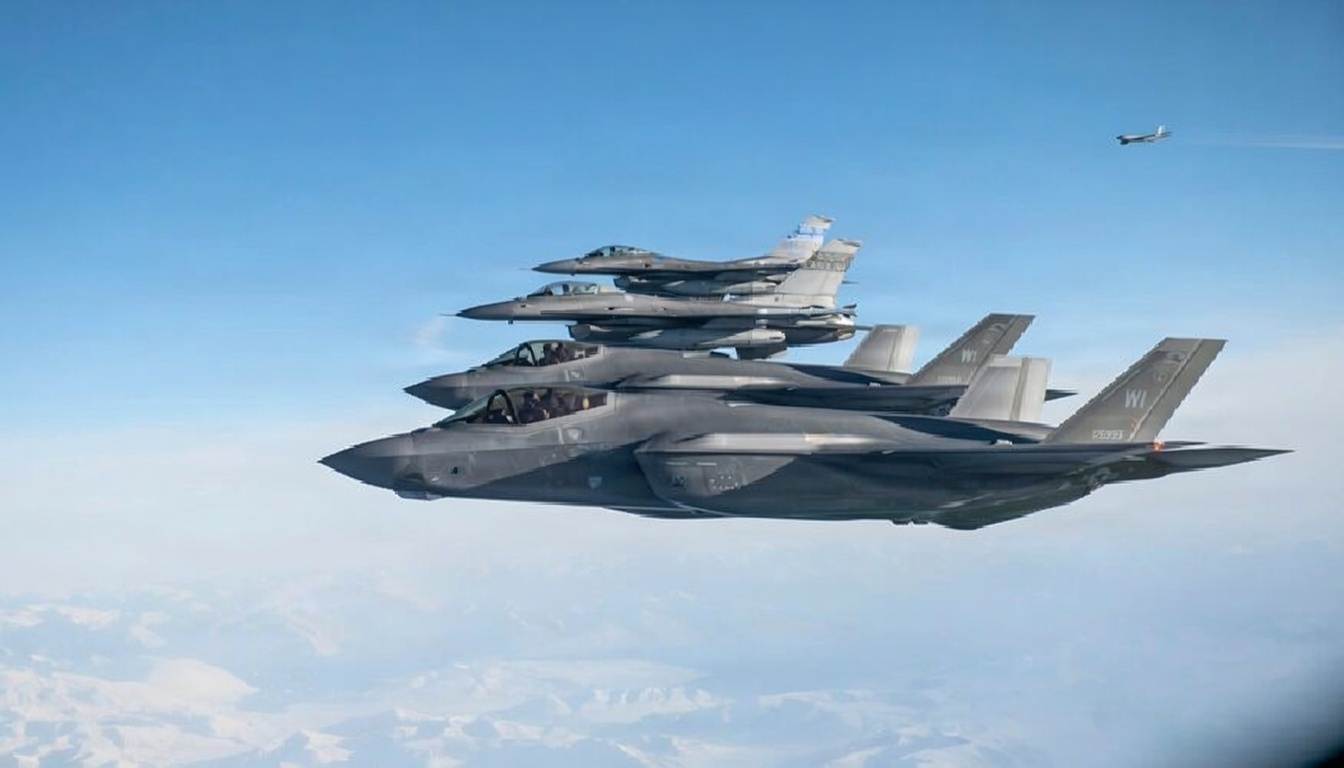
Iran has done what no other air force has managed to do in over seven decades – attack U.S. ground forces with a fixed-wing fighter jet.
Interestingly, Iran did this with nearly five-decade-old American fighter jets.
In fact, the last time U.S. ground forces came under attack by an enemy fighter jet was way back in 1953 during the Korean War.
Commenting on the first successful strike on U.S. ground forces by enemy fighter jets, retired U.S. Air Force Gen. Glen VanHerck said that “That’s embarrassing as an airman to me to say that happened,” as he noted that this was the first time in decades U.S. forces had been subjected to an aerial attack of this kind.
VanHerck was speaking during a panel discussion on counter-drone defenses at the annual Space & Missile Defense (SMD) Symposium in Huntsville, Alabama, on August 12.
“I want to talk a little bit about forward [forces] and air base defense. Let’s be clear, we got our rear-end handed to us from drones and other vehicles, aerospace vehicles, if you will, including three F-5s that took off in Iran and flew low level and dropped bombs on an airbase,” VanHerck said.
Notably, in June, multiple media reports had claimed that Iranian F5 fighter jets made a shallow incursion into Kuwait and dropped bombs on the U.S. military base, a major staging ground for US military operations in West Asia.
The attack reportedly came on March 1, within 24 hours of the Israeli and U.S. attack on Iran on February 28. NBC News was the first to report on this attack in an April story, citing anonymous U.S. officials.
However, the U.S. military did not officially confirm it.
Further, in June, Iranian state media outlet PressTV aired an interview with three Iranian F5 pilots where they recounted their March 1, 2026, low-altitude bombing mission against Camp Buehring in Kuwait.
The Commander, whose identity remains concealed, told the interviewer that planning for an attack on Camp Buehring began immediately after they learned that the US and Israel had launched joint strikes on their country. “We immediately wanted to carry out a retaliatory operation,” the Commander stated, adding that Camp Buehring is “a highly strategic base with one of the highest troop concentrations and capacities.”
At its maximum capacity, the Camp Buehring base can house up to 14,000 soldiers; however, it’s not clear how many U.S. soldiers were present at the base during the time of the Iranian attack.
Iran bought its first F-5s in the mid-1960s under the Shah, with major additional purchases of the improved F-5E/F Tiger II in the early to mid-1970s. Iran acquired over 300 airframes of various F-5 variants before the 1979 revolution.
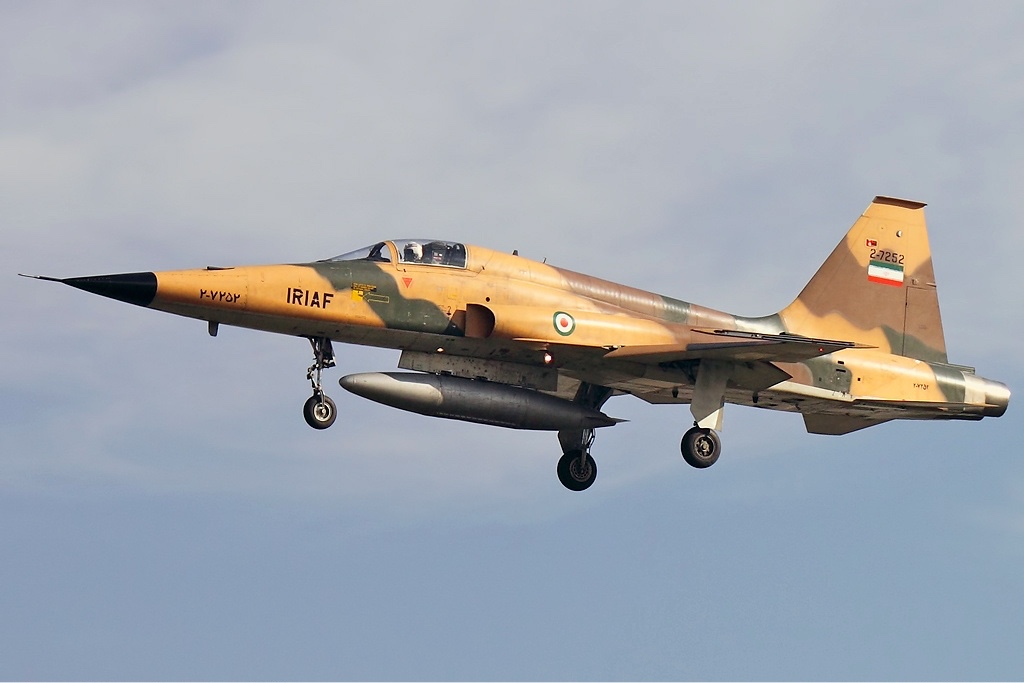
The Commander said that they planned to fly the mission at an extremely low altitude to evade radar detection, and vowed to see it through.
“We flew at very low altitude. At some points, we passed beneath high-voltage power lines and flew below 50 feet,” he said. This is an extraordinarily low altitude, given that the typical training altitude from flight standards is about 500 feet, or over 152 meters, as the Commander himself emphasized. “We were practically skimming the ground… We would even pass beneath power lines,” he added.
Camp Buehring has layered air defenses, including Patriot missile batteries, multiple shorter-range systems, advanced radar coverage, and persistent regional surveillance networks. All these systems went on ‘high alert’ after the US launched “Operation Epic Fury” on February 28, and Iran retaliated with ballistic missile and drone strikes on American military bases across the West Asian region.
The Commander further noted that they knew the facility had multiple layers of air defense systems. “Although we knew interception and surveillance sites were active, we maintained complete radio silence. We entered the waters of some neighboring countries and flew so low that at one point we passed between two ships,” he stated.
“As soon as we reached the base, we carried out a heavy bombing,” the Commander said.
The pilots reported that the strikes caused chaos and confusion, likely because the base personnel had not anticipated Iranian fighter jets intruding into their airspace.
Therefore, amidst all the pandemonium triggered at the facility, “Three [enemy] F-15 aircraft… were mistakenly engaged and destroyed simultaneously.”
On March 1, CENTCOM acknowledged that three U.S. F-15 fighter jets were shot down in a suspected case of friendly fire.
“During our turn, we saw them firing missiles at targets in the sky. My back-seat cockpit officer told me an explosion had happened in the sky, and we were confused about where it was coming from. By mistake, their aircraft also took off, and the 3 American F-15s that were coming for a counterattack toward Iran, the Kuwaitis mistook them for targets & shot them down,” one of the pilots said.
With their bombing run complete, the Iranian jets conducted a deception operation, which allowed them to exit the Kuwaiti airspace and land at a predetermined spot in Iran.
“After the bombing, we carried out a deception maneuver… They were unable to track or intercept us,” the pilots recalled.
How Iran was able to ingress into Kuwait with nearly five-decade-old fighter jets, and bomb a major U.S. military base, protected by layered air defense assets, and then escape unscathed is a serious embarrassment for the US.
The last time US ground forces came under attack by enemy fighter jets was way back in 1953, during the Korean War, and before that, during the Second World War, most notably, during Pearl Harbor.
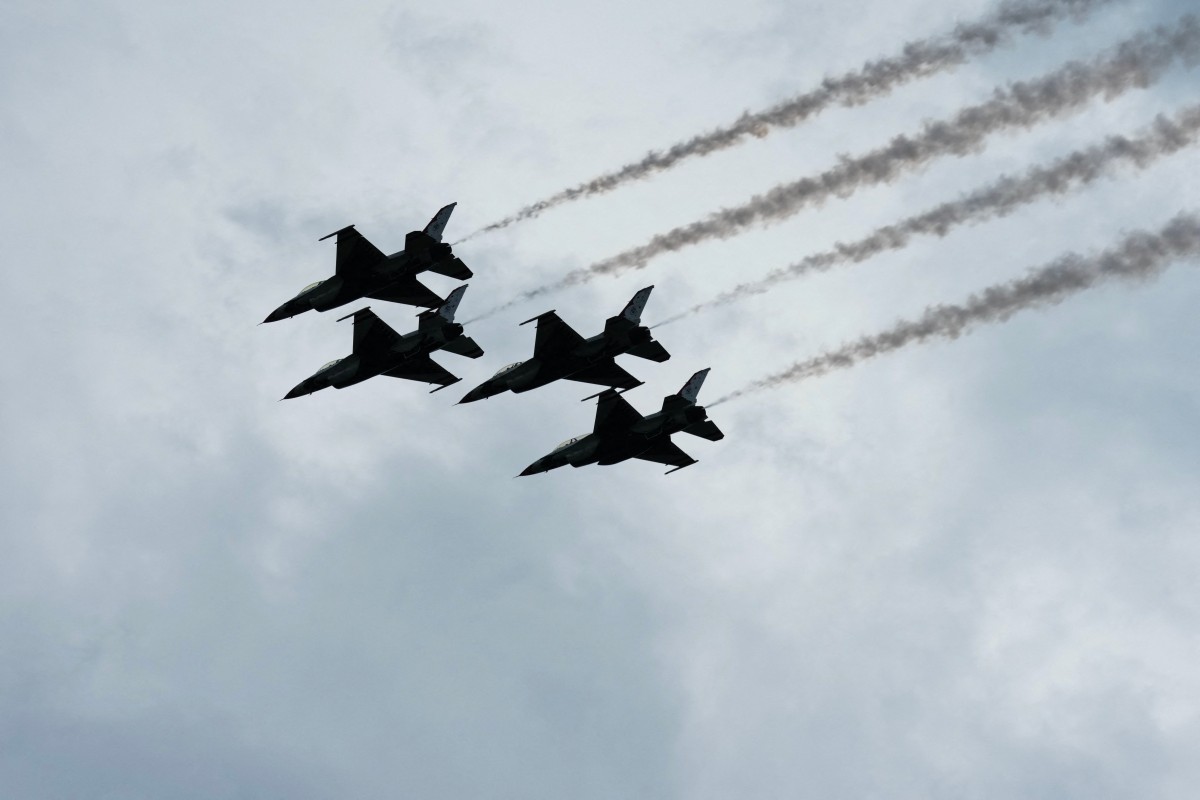
Seven Decades of Unchallenged U.S. Air Superiority
On the night of April 15, 1953, two United States Army Soldiers died on the small Korean island of Chodo. They died at night in their tent, victims of a North Korean air attack by Po-2 biplanes.
The two men were assigned to a U.S. Army anti-aircraft artillery battery deployed to protect Chodo and neighboring islands from enemy air attacks.
“The deaths of those two soldiers in 1953 are a tragic but remarkable milestone in U.S. military history – they are the last confirmed U.S. ground personnel lost to an enemy air attack,” said Charles Nicholls, Pacific Air Forces historian.
“Based on the evidence we have, this is the last instance in which US ground forces sustained any deaths from enemy aircraft,” says John Q. Smith, director of the Air Force Historical Studies Office.
Since 1953, American airmen have continued to evolve and are credited with zero U.S. service member casualties from enemy air attack.
“Though it was sixty years ago, we gained valuable insight and acknowledged the need for air superiority,” said Brig. Gen. Patrick C. Malackowski, Pacific Air Forces director of programs, in 2013. “Today, we strategically posture our forces throughout the area of responsibility to overcome the vast distances and challenges faced in PACAF.”
During the Vietnam War, North Vietnamese MiG fighters primarily engaged U.S. aircraft in air-to-air combat over North Vietnam or near borders. U.S. bases in South Vietnam were frequently attacked by rockets, mortars, and ground sappers, but not by enemy fighter jets conducting bombing or strafing runs.
During the 1991 Gulf War (Operation Desert Storm), no Iraqi fighter jets were able to bomb US ground forces.
Similarly, during the Afghanistan War and the Iraq War (2003), the US almost immediately achieved air superiority, and no enemy aircraft were able to bomb US ground forces.
After Iranian Quds Force general Qasim Suleimani was killed in a US air Strike in Baghdad in 2020, Iran attacked US bases in the Middle East with missiles, and Houthi rebels in Yemen have also attacked US forces with drones; however, since the Korean War, this was the first time ever that an enemy fighter jet was able to bomb U.S. ground forces.
Iran has not only shattered America’s seven-decade-long proud record of air superiority, but the fact that Tehran was able to do it with five-decade-old fighter jets must have hurt U.S. self-image.
- Nitin J Ticku holds a double master’s degree in Journalism and Business Management from the University of Glasgow. He has over 20 years of global experience in MARCOM, Journalism, and Digital Marketing, and has worked & traveled widely across Europe, the Americas, and Asia. Nitin is the Editor of the EurAsian Times.
- He can be reached at editor (at) eurasiantimes.com