When President Donald Trump initiated the war against Iran along with Israel on February 28, one of his biggest rationales was to ensure the permanent denial of nuclear power to Iran.
However, it is increasingly becoming perceived all over the world that not only has Trump lost the war to Iran but also endowed it with a new power that is more powerful than even nuclear weapons.
And that power happens to be legitimizing Iran’s control of the Strait of Hormuz in some way or the other through Trump’s MOU with the fundamentalist Islamic regime on June 17.
It seems that Trump is realizing the mistake. Now President Trump says, as he did at Ankara during the just-concluded NATO summit, the MOU is dead for him, with Iran attacking the commercial vehicles passing through the Strait of Hormuz.
And as one writes this, the so-called ceasefire between Iran and the US has crumbled, with US forces striking several locations in an Iranian coastal province and Iran counterattacking places in Qatar, Bahrain, Kuwait and Jordan.
Though neither Washington nor Tehran has ruled out talks, it seems highly unlikely they would be renewed on July 12, which was agreed earlier after this week’s funeral of Iran’s supreme leader, Ayatollah Khamenei.
Since the interim deal was signed on June 17, Iran has attacked five vessels along the Oman coast in the Strait, including the tankers belonging to Saudi Arabia and Qatar, despite the latter’s recent role in mediation between the US and Iran.
Apparently, Iran’s Revolutionary Guards (IRGC) have been hailing ships over the radio and telling them to change course to the route near the Iranian coast, failing which they would be attacked. These threats have forced many taking the Oman route, the natural one through the Strait of Hormuz, to make U-turns.
In other words, the IRGC is trying to exert control over the Strait and declaring that this control is their sovereign right. There are reports that the IRGC collects up to $2 million for a vessel’s “safe passage,” often settled in Chinese Yuan or stablecoins.
But that is something the EurAsian Times discussed in detail earlier: under international law, such tolls are strictly prohibited.
The United Nations Convention on the Law of the Sea (UNCLOS), which guarantees the right of “transit passage” through straits used for international navigation, makes it clear under Articles 37 to 44 that ships and aircraft are entitled to continuous and expeditious passage that cannot be impeded or suspended by the coastal state even if the Strait falls under its territorial jurisdiction.
Article 26 of the UNCLOS prohibits states from levying charges on vessels merely for passage, allowing fees only for specific services rendered. It says, “No charge may be levied upon foreign ships by reason only of their passage through the territorial sea,” and “Charges may be levied upon a foreign ship passing through the territorial sea as payment only for specific services rendered to the ship. These charges shall be levied without discrimination.”
Under this Article, Turkey is known to levy a ‘navigational’ service charge in the Bosporus Strait, the only natural strait (a vital, narrow waterway in northwestern Turkey that connects the Black Sea to the Sea of Marmara). Spanning about 30 kilometers long and as narrow as 700 meters at points, it physically separates Europe from Asia and famously runs through the middle of Istanbul, where such a service charge is paid.
But that is for ” health inspections, lighthouse maintenance, and emergency medical/rescue services”. And the fee is very nominal, of 7 to 10 dollars per ton.
This is quite different from the $ 1.5 million to $2 million per voyage that IRGC is reportedly charging (alternate pricing is $ per barrel of oil) for safe passage in the Strait of Hormuz.
Of course, the UNCLOS allows the coastal state to take remedial action if any passage is not “innocent”. And in Article 19, it provides what is “innocent” and what is not. Broadly speaking, passage is innocent so long as it is not prejudicial to the peace, good order, or security of the coastal State. Passage should not constitute any threat or use of force against the sovereignty, territorial integrity, or political independence of the coastal State.
Given this, Iran, which has signed UNCLOS (but has yet to ratify it), may have a point against blocking any adversary’s military vessels, particularly during a war. But it cannot impose transit fees against commercial vessels.
Secondly, Iran cannot stretch the argument that the Strait falls under its territorial jurisdiction (nautical miles, or 22 km, out of the total 39km width) beyond a point. Because the Strait also falls within Oman’s territorial waters.
The entire width of the Strait lies within the overlapping territorial seas of Iran and Oman. And it so happens that, though it has not been adequately pointed out, the shipping lanes lie mostly within Omani territorial waters, according to the Encyclopedia Britannica.
But unlike Iran, Oman is not talking of imposing transit fees. Though a co-owner of the Strait’s territorial waters, it ratified the UNCLOS in 1989 and publicly rejected Iranian tolls.
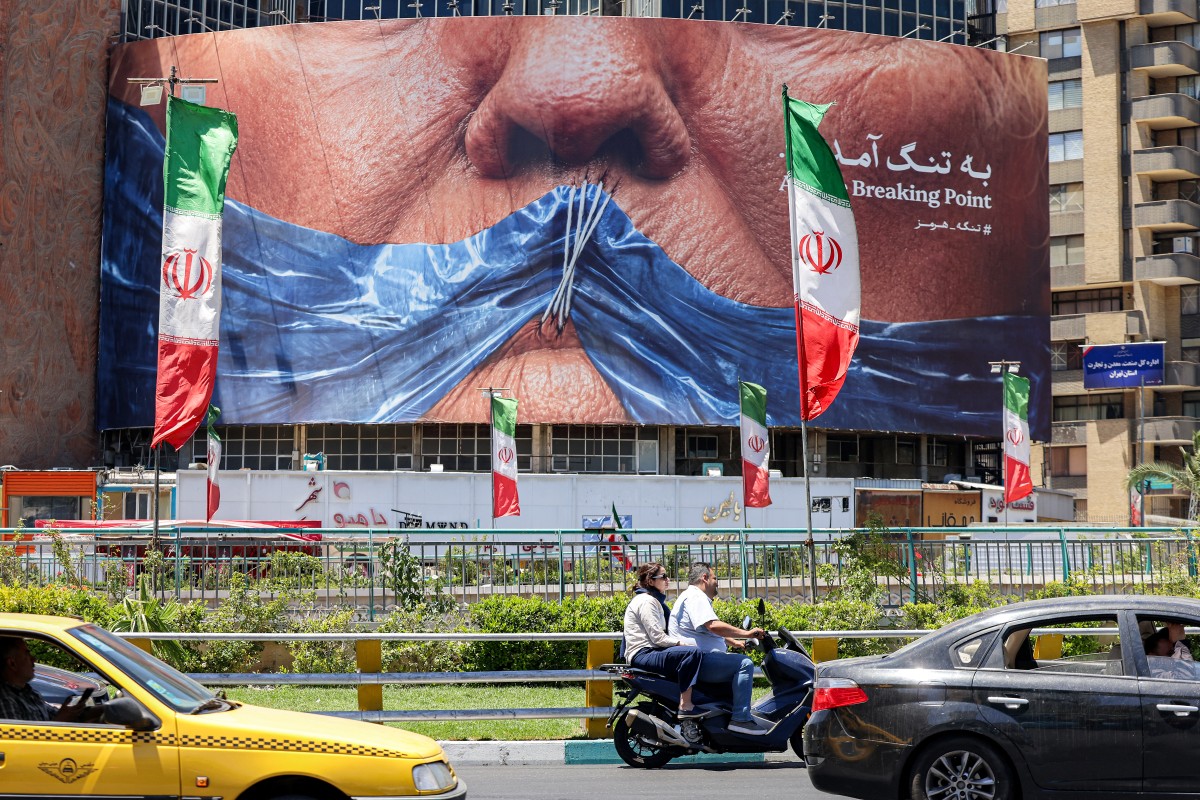
Incidentally, though vague and weak in composition, the point 5 of the US-Iran MOU of June 18 had also said that “The Islamic Republic of Iran will conduct dialogue with the Sultanate of Oman, to define the future administration and maritime services in the Strait of Hormuz, in discussions with other Persian Gulf Littoral States, in line with applicable international law and the sovereign rights of coastal states of the Strait of Hormuz”. But Iranian leaders deliberately overlook this, it seems.
The point is that the Iranian demand, if conceded, will lead to the crippling of the freedom of navigation. This diplomatic principle has largely prevailed for more than a century. Its violation has grave implications for global economic stability, as around 25% of the world’s seaborne oil trade and roughly 20% of global liquefied natural gas (LNG) shipments transit through the Strait of Hormuz daily. This translates to over 20 million barrels of petroleum and crude oil, and roughly 11.4 billion cubic feet of LNG each day.
This, in turn, has adversely affected other Gulf countries. Saudi Arabia has been forced to redirect crude through its roughly 1,200km (746-mile) East-West pipeline to the Red Sea port of Yanbu, and the UAE has leaned on the Habshan-to-Fujairah line to the Gulf of Oman.
But then, the fact remains that together these pipelines carry a fraction of what Hormuz once did: at best, 7 million barrels a day of design capacity for the Saudi line and under 1.8 million barrels a day for the Emirati one, against roughly 20 million barrels a day that transited the strait before the war.
Qatar has a direct stake, because its entire LNG export industry depends on the Strait of Hormuz. Iraq, highly dependent on its Gulf terminals, has also been forced to explore a northern export route through Turkey.
Incidentally, all these Gulf coastal countries are close allies of the United States. Accepting Iranian demand means Trump abdicating his responsibilities for the allies in the Gulf, who are suffering because of his, not their, war against Iran.
In fact, as EurAsian Times had pointed out earlier, the MOU that Trump signed last month considerably weakened America’s core policies toward the Middle East beyond the nuclear issue with Iran.
These included concessions for a parallel ceasefire between Israel and the Iran-aligned Hezbollah movement in Lebanon, the degree to which Iran would retain some degree of control over Strait of Hormuz traffic, and the US pledge to withdraw troops from the Islamic Republic’s immediate proximity.
In any case, analysts point out that even if Trump does recognize the “Iranian supremacy” in the Middle East, the present regime led by Mullahs will not shed their hostility toward Washington. They point out how it timed Ayatollah’s funeral to coincide with America’s 250th birthday and featured a range of slogans openly mocking Trump and vowing bloody revenge.
In fact, if Iranian media reports are any indication, it is quite logical for Tehran to demand the complete US withdrawal from the Gulf.
The present Iranian regime is unlikely to compromise with the idea of the destruction of Israel and the expansion of proxy militias stretching from Lebanon to Iraq, Syria, Yemen, and Gaza, all designed to build a regional architecture of coercion that goes against the vital national interests and stabilities of all the Gulf allies of the US.
For Jerusalem, Iranian supremacy is not stability — it’s an existential threat.
Saudi Arabia and the UAE view Iran as a revolutionary power that backs the Houthis, militias in Iraq, and dissent in Bahrain.
If Washington steps back, it is argued, it may opt for courting Moscow and Beijing, and in cases like Saudi Arabia, there will be attempts to “buy, if not make, nuclear weapons.
What, then, is the way out for the US? This question seems to be a leading issue in American strategic elite debates these days.
All told, over all these years, American policy in the Middle East has rested on a fairly simple formula: keeping oil flowing, containing hostile powers, and reassuring key partners.
Now a harder question is being asked in policy circles: after 20 years of war in Iraq and Afghanistan, and with strategic competition shifting to China, can the United States finally “come out” of the Middle East?
And can it do so by accepting that Iran will be the dominant regional power?
Answers seem to be a clear “NO”.
The growing consensus seems to be an option that does not involve war or American soldiers on Iranian soil, but an effective policy that will change the behavior of the regime in Tehran.
EurAsian Times had also once reflected this school of thought, which argues that the present regime is not monolithic and that many within the IRGC can be co-opted into a democratic, more accountable regime, provided America pursues it non-militarily.
In this regard, Erfan Fard, a counter‑terrorism analyst and Middle East researcher, views Trump’s comment on Tuesday in Ankara as “a new Iran doctrine”.
Apparently, Trump had signaled that “Washington may no longer view the Islamic Republic merely as a problem to contain, but as a system whose very structure generates instability”.
According to Fard’s explanation, Trump perhaps is realizing that the Islamic regime is a layered power structure in which ideology, coercion, finance, and military force are tightly interwoven. Therefore, the correct approach should include “a strategy for political transition, institutional continuity, and the restoration of national sovereignty”.
In this strategy, there needs to be a distinction between the Iranian people and the Islamic Republic that has victimized them, he argues. The distinction matters because any future policy toward Iran will be judged not only by whether it constrains the regime, but by whether it helps create the conditions for a more stable, accountable, and nationally oriented political order.
“A durable strategy cannot simply punish Tehran. It must also prevent the regime from reconstituting itself while opening space for a different future”, he argues.
Fard thinks that “Trump’s remarks may therefore reflect something larger than a momentary escalation. They may indicate that Washington is finally thinking in terms of systemic change rather than behavioral adjustment. If so, the significance is immense. The question is no longer whether the US can pressure the Islamic Republic into better conduct. The question is whether the regime’s capacity to generate instability can finally be dismantled”.
Is Trump really thinking the way analysts like Fard do? Only time will tell.
But the transition does not appear to be easy; it may turn out to be bloody.
- Author and veteran journalist Prakash Nanda is Chairman of the Editorial Board of the EurAsian Times and has been commenting on politics, foreign policy, and strategic affairs for nearly three decades. He is a former National Fellow of the Indian Council for Historical Research and a recipient of the Seoul Peace Prize Scholarship.
- CONTACT: prakash.nanda (at) hotmail.com