The Russia-Ukraine war has entered its fifth year, yet Moscow has deployed its most advanced fighter jet, the Su-57, only sparingly in combat.
Critics argue that Moscow is deliberately limiting the aircraft’s exposure to protect its export potential. Any confirmed losses to Ukrainian forces, they say, would severely damage the jet’s credibility in the international export market.
Recent Ukrainian media reports indicate that Russia has begun using the Su-57 for anti-drone operations. Even in this limited role, however, the stealth fighter has reportedly achieved only mixed results.
Russia deployed its Su-57 stealth fighters to intercept Ukrainian drones during the July 6 attack on the Omsk oil refinery, but the facility was hit despite the effort, the Kyiv Post reported.
During the attack on Russia’s largest refinery that marked Kyiv’s deepest strike into Russia to date, at over 3,000 kilometers (1,864 miles) from the border, online footage from locals showed the silhouette of the elusive Su-57 shrieking overhead.
Not only is Russia using Su-57s for anti-drone operations, but it is also deploying them more than 3,000 km from the front line, highlighting Moscow’s reluctance to expose its most advanced fighter jet to higher-risk combat zones.
The Ukrainian monitoring channel Exilenova+ shared footage showing a Su-57 fighter jet hunting drones near the Omsk oil refinery.
The silhouette of the Su-57 fighter jet is visible in these videos.
Russia’s modern Su-57 fighters, which the Kremlin presents as 5th-generation aircraft, tried to shoot down Ukrainian drones over Omsk, but failed. pic.twitter.com/NYomXqYuP6
— Visegrád 24 (@visegrad24) July 6, 2026
Exilenova+ said that the jet was able to shoot down only one drone, while the others hit their targets.
Reuters reported that operations at the plant have been halted following the drone strike.
Notably, reports of Russia employing its elusive Su-57 fighter jets for anti-drone operations come just a week after pictures emerged showing a Su-57 fitted with R-73 air-to-air missiles attached to its wing pylons rather than in its internal weapons bay.
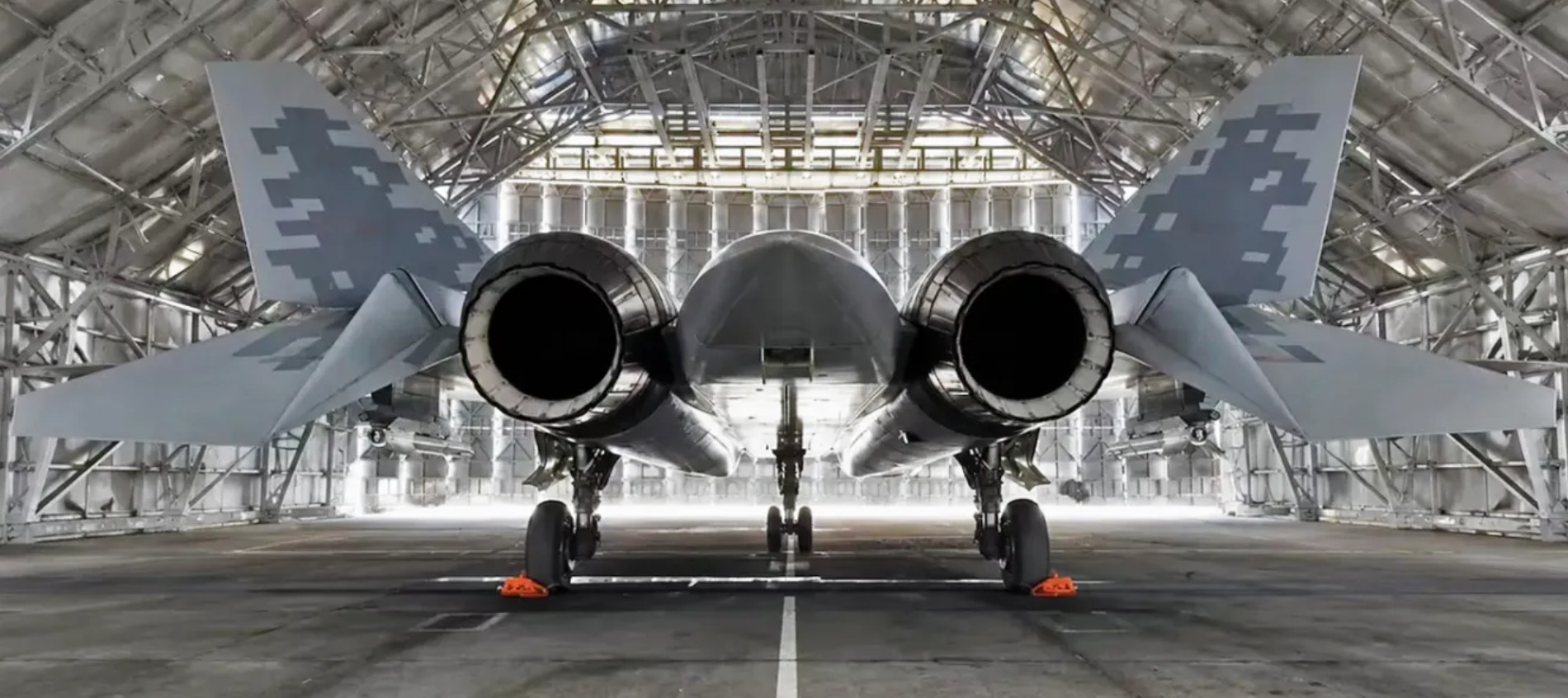
Carrying the missiles beneath the wing pylons would compromise the Su-57’s stealth; however, if the jet is deployed primarily for anti-drone operations, maintaining stealth is of no use.
Earlier this month, pictures emerged on social media showing a Su-57 jet armed with short-range R-73/R-74 (AA-11 Archer) series air-to-air missiles.
Carrying these short-range AAMs externally suggests that the Su-57 load-out was optimized for close-range aerial engagements, most likely against the long-range Ukrainian one-way attack drones and cruise missiles that Kyiv has recently begun using.
Another picture showed the fighter jet with a mysterious targeting pod beneath the left engine nacelle.
At the time, Russian military bloggers had commented that the pictures showed the Su-57s configured to hunt and shoot down Ukrainian drones and cruise missiles.
Notably, Russia is no exception in using fifth-generation stealth jets for anti-drone operations.
Earlier, the US, the UK, the Netherlands, and Israel had all used fifth-generation F-35 fighter jets in anti-drone operations.
In 2022, Israel revealed that it shot down two Iranian drones heading toward Israeli territory, marking the first aerial kill of the F-35 jets.
Making History:
Last year, Israeli "Adir" (F-35I) fighter jets successfully intercepted two Iranian UAVs launched towards Israeli territory. pic.twitter.com/FQsEjKzxct
— Israeli Air Force (@IAFsite) March 7, 2022
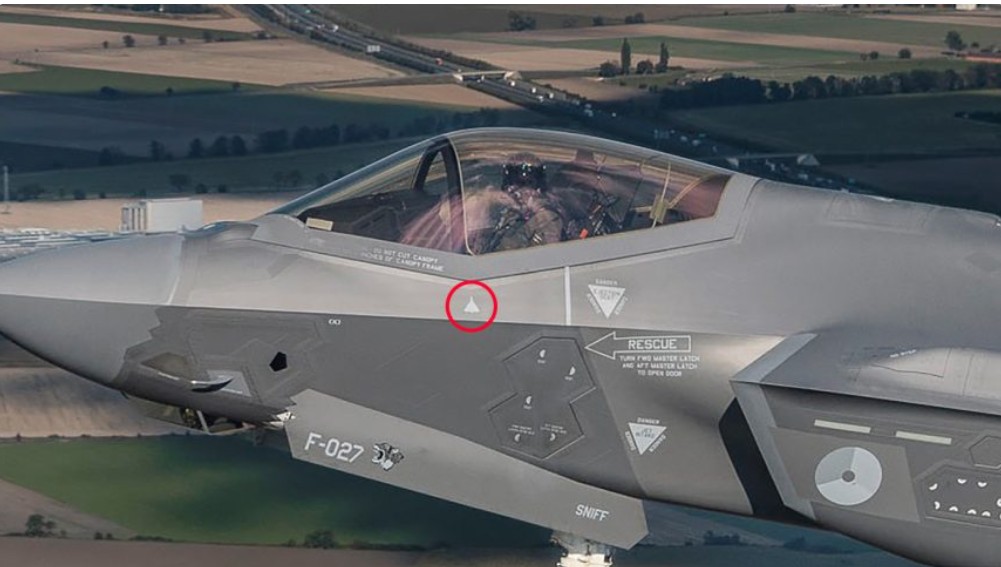
Similarly, in October last year, a Royal Netherlands Air Force (RNLAF) F-35A was seen with a drone kill marking after shooting down one of the Russian drones that had entered Polish airspace.
Notably, the Su-57 is Russia’s only operational combat jet with an active electronically scanned array (AESA) radar.
Russia announced a new AESA radar upgrade for the Su-35 to replace the current Irbis-E PESA radar. However, these radars have not been integrated into Su-35 fighter jets.
AESA radars are much better equipped to track drone and cruise missile threats.
Besides, the Su-57 is also equipped with a passive 101KS electro-optical suite.
It comprises an infrared search-and-track (IRST) sensor ahead of the cockpit and one imaging infrared sensor for low-level flying. IRST are particularly effective against slow-speed, low-flying drones with a small radar signature.
Besides, the Su-57 also has a 30mm single-barrel cannon within the starboard wing root with a magazine depth of 150 rounds. This 30mm cannon could also be utilized against drone threats.
These Su-57 features mean that the jet could be effectively employed against drone threats, which is a serious problem for Russia, as Ukraine has shown the ability to strike high-value Russian targets deep inside its territory with its long-range one-way attack drones.
Furthermore, since Russia has been extremely reluctant to deploy the Su-57s near the frontline, these jets could be employed for anti-drone and anti-cruise missile operations to protect Russian refineries and other high-value targets deep inside the country.
However, only a limited number of Su-57s are available to Russia.
According to reports, Russia currently has a fleet of nearly 30 operational Su-57 fighter jets, falling far short of Moscow’s planned delivery of 76 additional airframes by 2027.
The Su-57s have engaged in limited stand-off strikes in the Ukraine War; however, using them for anti-drone operations will allow Russia to use its most advanced fighter jets without overtly exposing them to risks that could affect its export potential.
Notably, the Su-57 has received only one confirmed export order so far, from Algeria.
At the same time, the fact that Russia is deploying its latest fighter jets only for low-end defensive missions, thousands of miles from the front line, will reflect poorly on Russia’s confidence in the Su-57’s capabilities.
Russia’s reluctance to deploy it near the front line suggests a lack of confidence in its stealth capabilities, a point many defense experts have already noted.
Though for some, this could also suggest the Su-57’s evolution into a multi-role fighter jet, one that can not only perform stealth-focused deep-strike missions in contested airspace but also execute high-capacity Defensive Counter-Air operations.
In this new role, the Su-57 could serve as a mobile, networked interceptor protecting strategic airspace rather than exclusively conducting stealth penetration missions.
However, the Russian defense ministry has not yet acknowledged these pictures of the Su-57 carrying short-range air-to-air missiles externally or conducting anti-drone operations near the Omsk oil refinery.
According to Ukrainian claims, in its new role, the Su-57 got only limited success as it could down only one drone, while others struck their targets.
However, this is by no means sufficient evidence to judge the jet’s capabilities in its new role as a high-capacity interceptor.
What can be safely said is that Russia is still upgrading the Su-57, making further changes that could also impact its future role.
Recently, Russia also unveiled the two-seater variant of the fighter jet.
Russia is also using the Izdeliye 177 (Product 177) engine in the Su-57 instead of the AL-41F1 engines used in earlier produced units.
The future role of the Su-57 could depend on how well these changes are integrated and how well the fighter jet performs in its new air-interception role.
- Nitin J Ticku holds a double master’s degree in Journalism and Business Management from the University of Glasgow. He has over 20 years of global experience in MARCOM, Journalism, and Digital Marketing, and has worked & traveled widely across Europe, the Americas, and Asia. Nitin is the Editor of the EurAsian Times.
- He can be reached at editor (at) eurasiantimes.com