After China fired a nuclear-capable submarine-launched ballistic missile (SLBM), the Indo-Pacific trinity of the United States, Australia, and Japan pulled out their big guns—the F-35 Lightning II stealth fighter jets—for joint drills.
Exercise Southern Cross 26 is taking place at RAAF Bases Darwin and Tindal and runs through July 17.
The Royal Australian Air Force (RAAF), the US Air Force (USAF), and the Japanese Self-Defence Air Force (JSDAF) have together “deployed about 1,000 personnel and 40 aircraft to practice operating as a trilateral task force within a contemporary, high-end, warfighting environment,” the Australian Defense Department stated.
The trilateral forces are anticipated to practice integrated, agile operations as a dispersed force, maintain multinational aircraft, conduct air-to-air refueling, and employ live (inert) weapons, among other things.
The exercise reportedly centers on trilateral F-35A-focused cooperation as all three countries operate Lockheed Martin’s fifth-generation stealth aircraft.
According to reports, the airmen from the three countries demonstrated a forward arming and refueling point at RAAF Darwin. The drill demonstrated that the three countries could refuel and rearm an F-35 at an austere airfield in Australia or elsewhere in the region.
Not just that, the Japanese F-35As were refueled over the Pacific Ocean by an Australian KC-30A tanker over the Pacific Ocean.
En route to Australia for trilateral Exercise Southern Cross, Koku-Jietai @JASDF_PAO F-35A fighters received refuelling from an @Ausairforce KC-30A tanker over the Pacific Ocean. This activity deepens bilateral interoperability and strengthens deterrence in the region. pic.twitter.com/AP5yBja937
— Royal Australian Air Force (@AusAirForce) July 2, 2026
Air Marshal Stephen Chappell, the head of the Royal Australian Air Force, stated that Southern Cross is the third of three countries’ stealth jet drills, following the three sides’ COPE North in Guam in February 2025 and Bushido Guardian in Japan in October 2025.
Meanwhile, the US Pacific Air Forces commander, Gen. Kevin Schneider, said, “There is so much more that we can get out of this platform by working together.”
The F-35 has essentially become a cornerstone of the military capability of the US and its Indo-Pacific allies, with shared data links, sensors, and stealth capabilities. The USAF has over 500 F-35A jets in its inventory, whereas the RAAF has taken delivery of 72. The JSDAF, on the other hand, has placed orders for 105 F-35As and has reportedly received more than 40.
The decision to hold F-35 training drills is crucial from a strategic standpoint, especially amid China’s military expansion in the region. These joint training initiatives not only enhance cooperation and interoperability between the US, Australia, and Japan but also serve as a deterrent against potential aggression.

While neither Japan nor Australia has made explicit commitments to join the United States in a military contingency involving China, both are well-placed geographically to support American operations in a Taiwan Strait or a South China Sea conflict.
The trilateral drills allow pilots, maintainers, and command elements to practice integrated operations, including air-to-air refueling, multinational maintenance, tactical attacks, air defense, and large-force employment. Additionally, it allows them to develop common tactics, techniques, and procedures for operating as a cohesive force in the face of potential adversaries and coercion in the region.
The Royal Australian Air Force, @USAirForce and @JASDF_PAO_ENG have established the Trilateral Air Logistics Coordination Organisation (TALCO), strengthening logistics coordination, interoperability and sustainment resilience across the three air forces. 🇦🇺🇺🇸🇯🇵 pic.twitter.com/nXLsSGsiJc
— Royal Australian Air Force (@AusAirForce) July 9, 2026
The F-35’s Multi-Function Data Link (MADL) technology will strengthen this partnership in the event of a conflict by enabling safe and efficient data transfer across the Pacific region. This technological edge would strengthen the allied nations’ collective defense capabilities and would complicate any attempt by a near-peer adversary to achieve air superiority.
This trilateral grouping also benefits from an acquisition and cross-servicing agreement that ensures logistical support for F-35 fleets across the region. Moreover, mutual access to each other’s territories provides a critical tactical advantage, allowing greater dispersion of assets and reducing the vulnerability of fixed bases to long-range missile threats.
In this regard, training F-35 operations from remote northern Australian airfields has substantial operational relevance for a hypothetical high-end scenario.
The timing of these activities is notable.
These drills kicked off on July 6, the same day China conducted a very rare test of a submarine-launched ballistic missile in the Pacific.
However, Air Marshal Chappel told the press that the exercise was only about team building and not aimed at a potential adversary. “It’s incredibly important we do so at this time in history to continue to deter decisions that would undermine the security, prosperity, and stability of the Indo-Pacific,” he was quoted as saying in media reports.
China’s SLBM Test: A Harbinger Of Power Projection?
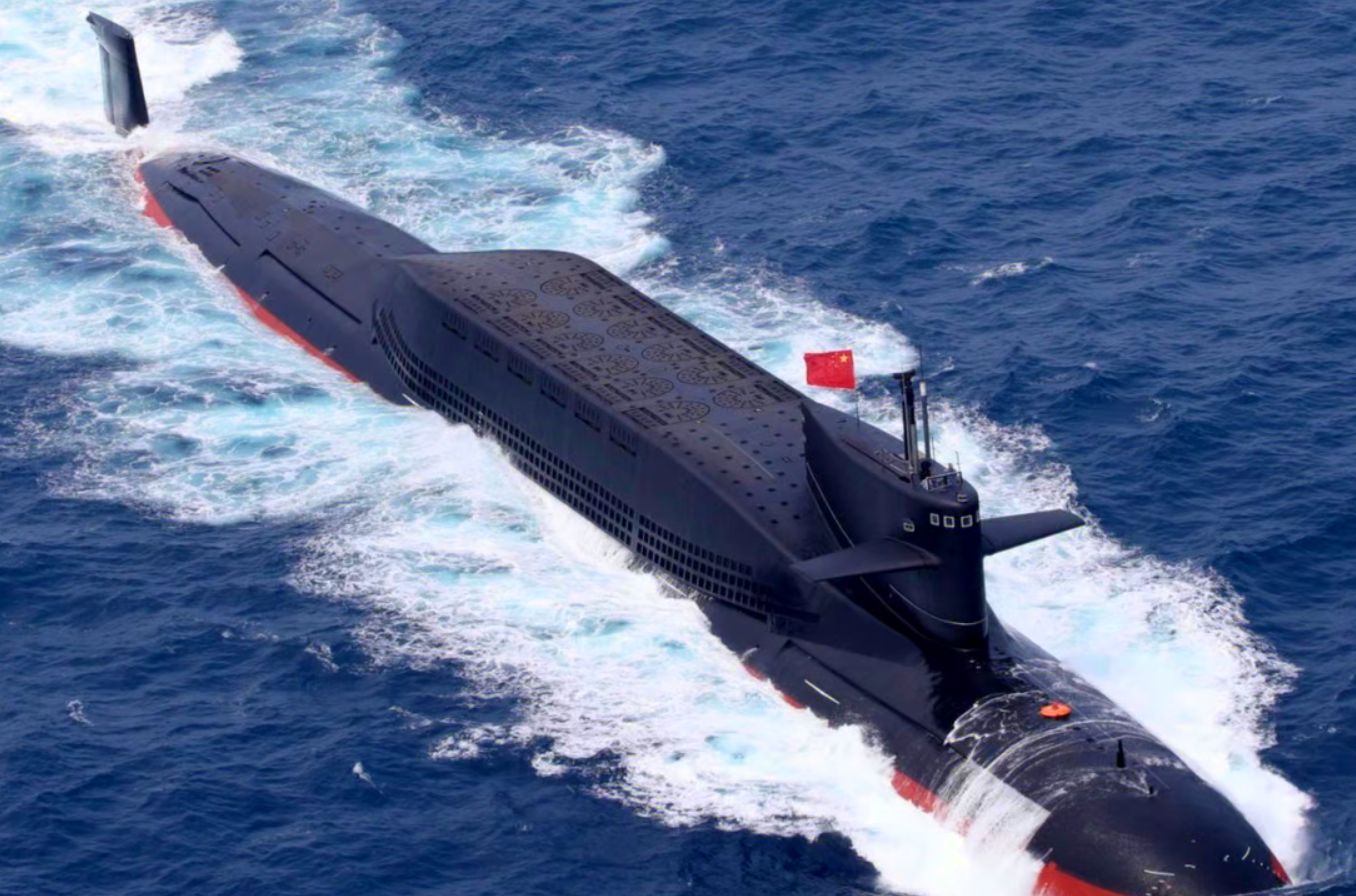
A nuclear submarine of the People’s Liberation Army Navy (PLAN) “launched a strategic missile carrying a dummy warhead toward relevant high seas of the Pacific Ocean, which landed precisely within the designated waters,” Senior Capt. Wang Xuemeng, a spokesperson for the PLA Navy, said in an official statement on July 6, 2026.
“This test launch was a routine part of China’s annual military training schedule,” Wang stated, adding that the “relevant nations” were informed in advance about the test. “The operation was in accordance with international law and practice, targeting no specific country or objective,” he added.
The statement did not disclose which submarine-launched ballistic missile was launched, from which location, or from which platform. However, Taiwan subsequently identified the missile as a JL-2, a second-generation intercontinental-range submarine-launched ballistic missile that has a range of about 7,200 to 9,000 kilometers. The JL-2 is a nuclear-capable missile that can carry either a single large nuclear warhead or 3 to 8 smaller multiple independently targetable reentry vehicles, or MIRVs.
From a strategic standpoint, the JL-2 enables China’s SSBNs to reach distant targets while operating from comparatively sheltered waters, thereby enhancing the country’s second-strike capability. However, independent analysts said that the missile could have been the JL-3, which has a range of about 10,000 kilometers.
Latest reports citing analysts and diplomats state that the test gave the Chinese military leadership a chance to assess some of the most complex and sensitive operations of its evolving nuclear deterrent.
“This aspect is certainly something that would have been very much evaluated, besides looking at the actual technical capabilities of the missile and submarine,” Collin Koh, a security scholar at Singapore’s S. Rajaratnam School of International Studies, was quoted as saying in a Reuters report. “There are still challenges ahead, but it would seem they are getting close to an operational strike capability here…they are probably trying to demonstrate that even if they can’t get into a position to hit the continental U.S., they could still target Guam and Hawaii,” he added.
At the same time, analysts have noted that the test was likely meant to send a loud and clear message to the US and its allies.
“First, China likely sought to use the missile test to showcase resolve and frustration at U.S. allies and partners. This Chinese missile test occurred the same day as Australia’s signing of a defence treaty with Fiji. Chinese media characterized this defense treaty as Australia seeking to shore up its influence in the South Pacific while also constraining Chinese power. Shortly after China launched its missile test, China’s Ministry of Foreign Affairs cautioned Australia and Fiji against using the defense treaty to target third parties (or China) or harm the interests of third parties,” the US-based think tank CSIS (Center for Strategic and International Studies) noted in a recent analysis.
“Second, China has demonstrated a repeated pattern of engaging in military exercises to counter U.S. or U.S.-led military activities around the same time. It is possible that China could be flexing its muscles against either the recently wrapped-up Australian army exercise in 2026—Exercise Southern Jackaroo, which involved U.S. and Japanese forces—or the concurrent U.S.-led Rim of the Pacific (RIMPAC) naval exercises involving Australia, the Philippines, Japan, and over two dozen other U.S. allies and partners,” it added.
Moreover, analysts believe that Beijing is seeking to make its ballistic missile tests “routine” by repeatedly projecting them as such.
Either way, the test has significantly raised the stakes in the region and stoked tensions, drawing criticism from Australia and New Zealand, as reported by the EurAsian Times.
Against that backdrop, the trilateral stealth exercises by the US, Australia, and Japan seem to come at a rather interesting time.
- Contact the author at sakshi.tiwari13 (at) outlook.com
- Follow EurAsian Times on Google News