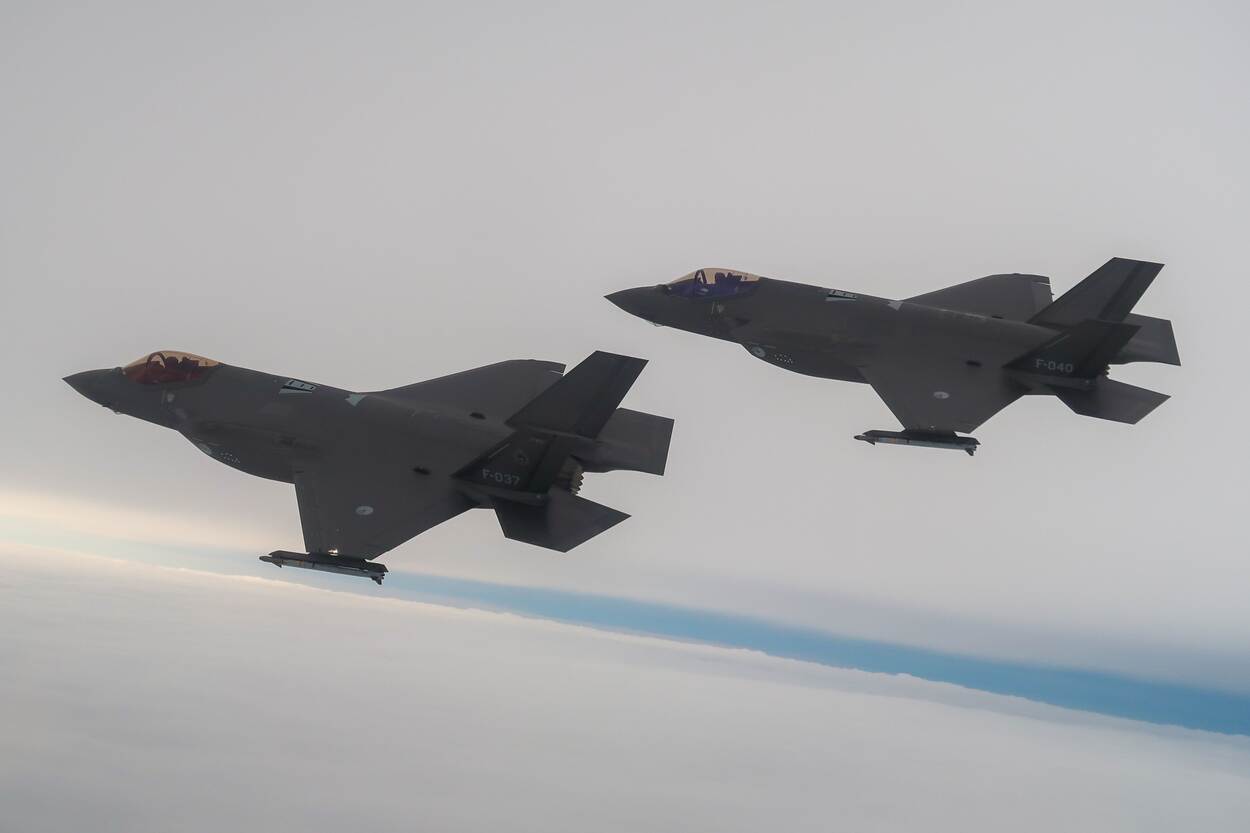
Imagine Russia launching a compact drone designed to remain airborne for more than three decades without landing, continuously monitoring adversaries, collecting intelligence around the clock, and retaining the ability to strike high-value targets on command.
Now imagine not one but hundreds of them silently loitering in Earth’s atmosphere, flying nonstop for 30 years or more, waiting to execute an ambush.
All military sites, air bases, aircraft carriers, and ammunition depots could become sitting ducks, vulnerable to strikes from drones launched decades earlier. It’s a nightmarish scenario for military planners.
Yet the United States is working on precisely this technology.
Scientists, defense specialists, and US universities have joined hands to develop a next-generation battery that will convert nuclear waste directly into electricity, potentially enabling drones, satellites, and other defense systems to operate nonstop for decades without refueling or recharging.
Known as the Defense Advanced Research Projects Agency’s (DARPA) “Rads to Watts” program, it aims to create lightweight, compact batteries that harness energy from radioisotopes such as Strontium-90, converting nuclear waste into high-density, long-lasting electrical power.
Recently, the program won a US$3.37 million award to develop a proof-of-concept device capable of producing more than 10 watts per kilogram.
“The Rads to Watts program centers on the development of a new class of radiovoltaic devices that significantly increase power density, which is the amount of power produced per mass of the device, measured in Watts per kilogram (W/kg). Achieving high power density while maintaining a long operational lifetime may open up new capabilities,” Morgan State University, which is leading the effort, said in a statement.
The program aims to produce “Radiovoltaic batteries” that can withstand intense radiation while delivering higher power density and durability than existing technologies.
Northrop Grumman, Pacific Northwest National Laboratory (PNNL), and Project Omega are also part of the pioneering program.
Project Omega is developing a generator that uses isotopes extracted from existing nuclear waste rather than newly produced radioactive material from dedicated facilities.
Morgan State University will serve as the prime contractor and handle basic research.
Pacific Northwest National Laboratory will handle nuclear materials and testing.
Northrop Grumman will use computational modeling to ensure the prototype meets performance standards.
Using AI-driven modeling and advanced computing, the company will rapidly test various materials and device designs before building physical prototypes.
The goal is to produce a working prototype at the Pacific Northwest National Laboratory by early 2027.
“Solar cells directly convert sunlight into electricity…Ours directly converts radiation into electricity,” said Stafford Sheehan, CEO and founder of Project Omega.
Using existing nuclear waste can be a game-changer, as a large quantity is already available.
Researchers estimate that more than 100,000 metric tons of nuclear waste are currently stored at 52 reactor sites nationwide, and that this waste could provide abundant fuel for drones and other defense systems, while also resolving the tricky issue of safe disposal of hazardous nuclear waste.
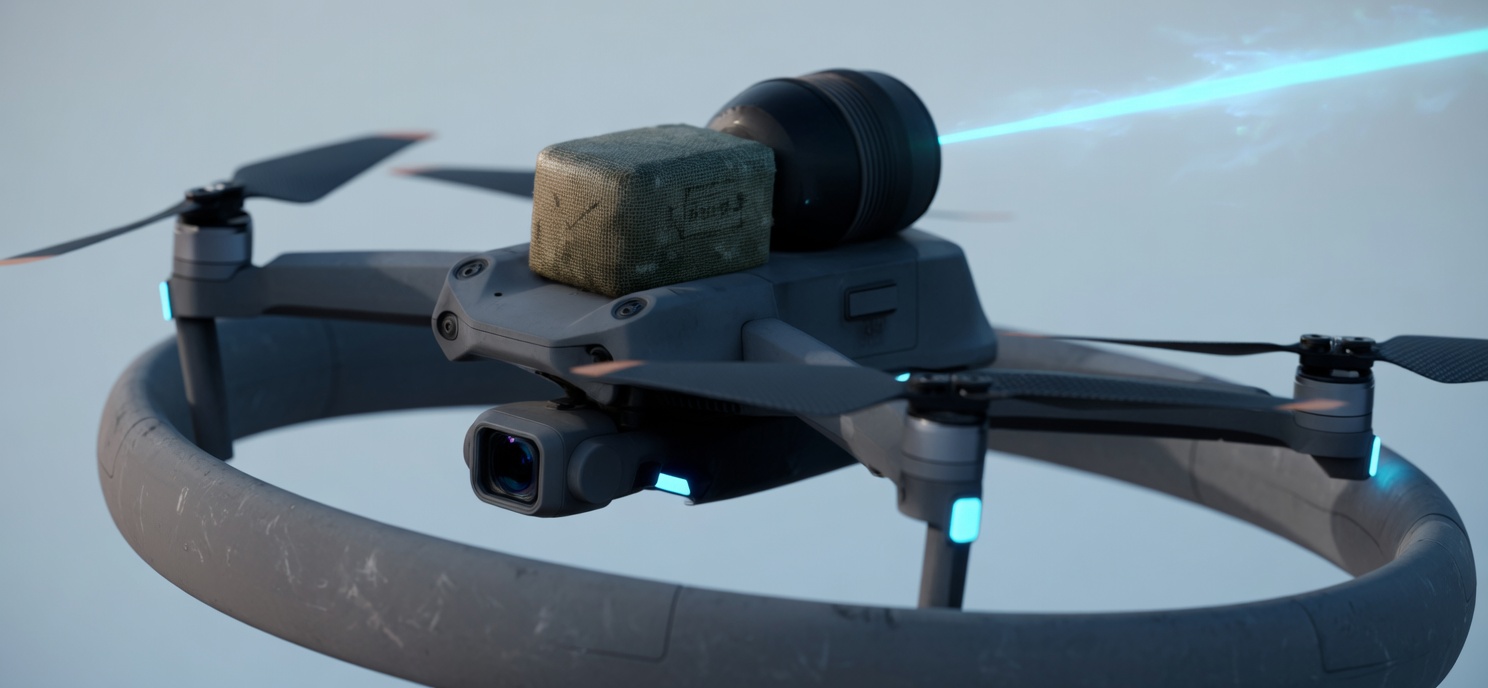
“At a high level, we take nuclear waste, we recycle it into two products: one is fuel for reactors…the other are power isotopes, so isotopes you can use to power things,” Sheehan said.
These power isotopes, with the help of Radiovoltaic batteries and ultra-thin semiconductors, will deliver high-density, persistent power that lasts for decades.
“Persistent power is a foundational requirement for next-generation defense systems,” said Matt Hicks, Director of Foundries, Test, and Advanced Packaging at Northrop Grumman.
While the technology will have obvious uses in the defense industry, it can also be used in other systems that require a high-density, persistent power supply.
These Radiovoltaic batteries powered by nuclear waste could be used in “any application where a battery dying is a pain point,” Sheehan said.
“One example is on satellites: if you lose power on a satellite, you lose the satellite, it’s gone…if your batteries die and you don’t have any sort of backup power.”
While the technology is revolutionary, radioisotope power sources have been used in various devices before.
They have been used in space systems and smoke detectors. Project Omega, however, plans to use them on a much wider scale.
“There are over 100,000 metric tons of nuclear waste sitting in the 52 reactor sites around the country, so there’s plenty of nuclear waste currently. The federal government gets sued for billions of dollars every year just because they haven’t dealt with the nuclear waste,” Defense One quoted Sheehan as saying.
“It’s very valuable to have a battery that lasts,” he added.
These radioisotope power sources will be designed to also operate at extremely high temperatures. This will ensure their use in military systems that must operate in harsh environments.
“We have been using these radioisotope power systems in space for decades,” Sheehan said. “We’re just taking the systems that we use for space, and we’re using a different isotope.”
The team will use Strontium-90, which is less hazardous than the Plutonium-238 isotopes used in similar systems.
Over the last few years, drones have emerged as the primary weapon of war.
In the Russia-Ukraine War, drones account for as much as 80% of the fatalities on the frontline. According to estimates, both sides are launching thousands of drones every day.
However, as drones emerge as the new bullets in war, there is an ever-expanding need for batteries and power sources to charge them.
Ukraine has made tremendous progress in drone warfare. It has developed drones that can fly over 2,500 kms.
In June last year, Ukraine launched Operation Spider Web and demonstrated what cheap drones could achieve in an asymmetric war.
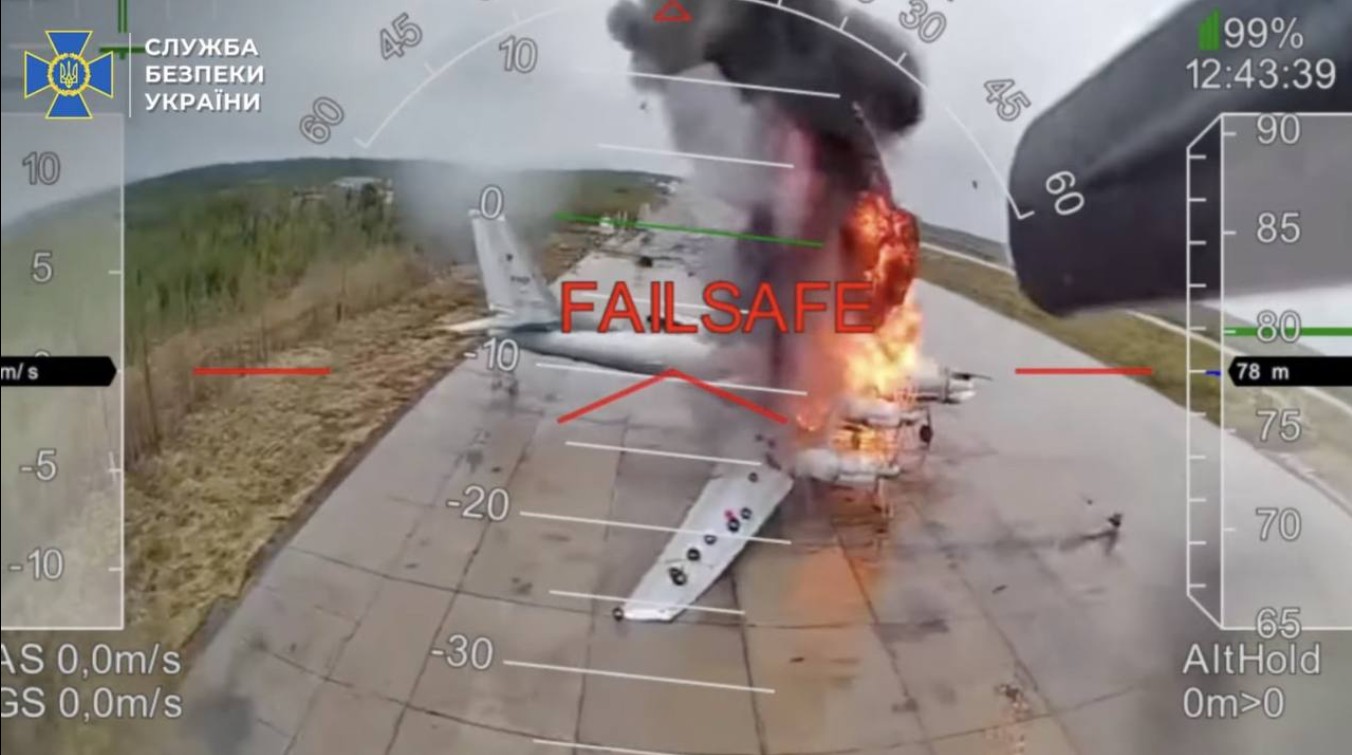
Kyiv smuggled dozens of drones into Russia. These drones were transported inside trucks. Once, near Russian airbases, the roof panels of the trucks were opened remotely, and the drones flew autonomously using AI software. They targeted Russian strategic bombers.
Using drones that cost Ukraine a few hundred thousand dollars, Russian bombers worth over US$7 billion were destroyed.
During Operation Spider Web, Ukraine had to smuggle drones into Russia because Kyiv lacked the technology to make drones fly more than 4,000 km.
However, radioisotope power sources could solve this problem, as drones powered by nuclear waste could fly nonstop for over three decades, circling Earth, hiding in uncontested airspace, and then striking high-value targets upon receiving a command.
Scientists, however, will still need to ensure there are no radiation risks and that deploying drones powered by radioactive isotopes in the environment is safe.
Once that technological breakthrough is achieved, Operation Spider Web will become a constant worry. No place on earth will be free from danger.
- Sumit Ahlawat has over a decade of experience in news media. He has worked with Press Trust of India, Times Now, Zee News, Economic Times, and Microsoft News. He holds a Master’s Degree in International Media and Modern History from the University of Sheffield, UK.
- He can be reached at ahlawat.sumit85 (at) gmail.com