Turkey has reportedly decided to sell its S-400 Triumf air defense systems to an unidentified Gulf country, most likely the UAE or Qatar, which faced the heaviest attack during the Iran War.
Earlier in the day, a report by Hurriyet columnist Abdulkadir Selvi stated that Ankara’s Russian-origin S-400 air defense systems would be sold to a third country, likely a Gulf state, after the final details are worked out.
Earlier, a report by the Turkish outlet, citing top sources, claimed that a transfer of these systems to the United Arab Emirates is on the agenda.
Meanwhile, the Kremlin said it was discussing whether to let Turkey sell off its Russian-made S-400 missile systems.
“We have had contacts with the Turkish side on this matter, and we will continue our contacts with the Turkish side on this issue,” Kremlin spokesman Dmitry Peskov told a briefing.
Turkey requires Russia’s consent to resell the S-400s; however, it does not have a re-export license.
The development comes after US President Donald Trump hinted, on the sidelines of the NATO Summit in Ankara, that his administration could lift CAATSA (Countering America’s Adversaries Through Sanctions Act) sanctions on Turkey and set the ball rolling for the sale of the coveted fifth-generation F-35 Lightning II stealth fighters.
“That’s a decision we’re going to make… It’s a great plane, the best plane by far, and it’s certainly something we will consider,” Trump said in Ankara. When asked about CAATSA, he said, “We’re going to be taking the sanctions off. We don’t want to sanction friends.”
To lift CAATSA sanctions, President Donald Trump must formally notify Congress that the S-400s are non-operational, that Turkey no longer owns them, and that Ankara pledges not to establish similar ties with Russia going forward, according to reports. However, the issue could go to a vote if Congress is unconvinced that these legal requirements have been met.
Turkey was a founding partner in the F-35 Joint Strike Fighter program and had already invested significantly in its development. However, it put its participation at risk in 2017 by signing a deal to acquire the Russian S-400 air defense system, despite stern warnings from the United States and other NATO allies.
The US repeatedly warned that integrating the Russian platform into the F-35 would seriously risk compromising sensitive stealth technology and endangering the program’s security.
Turkey was expelled from the F-35 program and sanctioned under CAATSA by the former Trump administration when it received the first S-400 shipment from Moscow in 2019.
The Recep Tayyip Erdogan government had risked buying the Russian S-400 because it urgently needed a long-range air defense system amid rising security threats in the region, and NATO-origin systems such as the Patriot and SAMP/T were either denied or delayed. However, some experts believe it was intended to assert a degree of strategic autonomy, as EurAsian Times explained in detail earlier.
Despite the risks it faced in acquiring the S-400, Turkey never activated this potent air defense system in hopes of securing the F-35, which is seen as instrumental in upgrading the Turkish Air Force and deterring adversaries such as Greece and Israel.
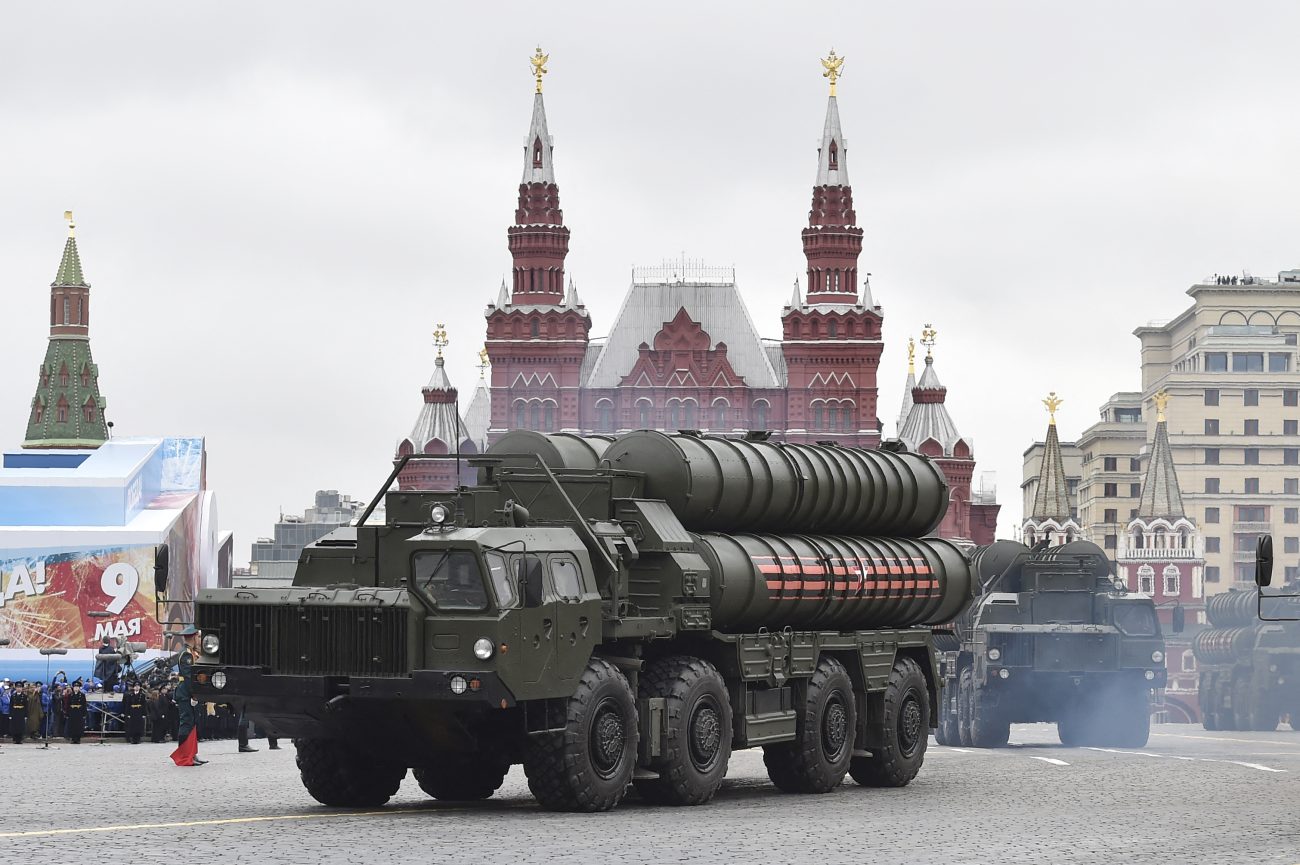
With an eye on the F-35, Turkey deliberately kept the S-400 batteries in active storage as the only way to convince Washington to transfer the stealth fighter was to keep the Russian system tucked away in obscurity. It is, perhaps, for this reason that Turkey has excluded the S-400 from its aspirational “Steel Dome” multi-layered air defense network. Instead, it is now seeking the Patriot or SAMP/T again—in a full-circle moment.
The sale of the S-400 to a third party finally settles the question of what Turkey will do with the S-400s in order to convince the US to green-light an F-35 sale.
A host of options for the S-400’s future were considered as informal talks between the two sides got underway. For example, the Turkish Defense Minister Yasar Guler said in November 2024 that the US had agreed to keep the S-400 systems in an inactive state. However, observers later surmised that US lawmakers were unlikely to relent unless Turkey permanently disposed of the S-400 and confirmed that they could not be activated or used.
Last year, a set of reports suggested that the US could demand that the S-400 be disassembled or moved to a US base in Turkey. Meanwhile, some other reports in Turkish media said Russia was interested in repurchasing the system from Turkey to offset export demand, offering Ankara an easier way out.
A fourth alternative was floated by a former Turkish minister, best known for brokering peace between Ankara and Moscow after a Russian fighter jet was shot down by a Turkish F-16. Cavit Caglar said in a 2024 interview that the country could get rid of the S-400s by selling them to a third country. “If it were me, I would sell the S-400s,” he stated.
Although Caglar suggested selling the system to India or Pakistan, Turkey appears to have chosen a safer route: keeping it in the Gulf, which has seen a massive onslaught of Iranian missiles.
Meanwhile, a recent Bloomberg report citing unidentified Turkish officials stated that the US could deliver a batch of six F-35s, depending on when the ban on Ankara is lifted. Turkey originally planned to buy 40-odd F-35 jets before it was expelled from the program in 2019.
While a formal decision is awaited, Erdogan stated at a news conference following the NATO summit that the US President supports providing Turkey with F-35 aircraft and expressed hope that Washington would honor its commitment.
With its outdated air force comprising older F-16 jets, Ankara has been steadily losing its airpower edge to regional rivals such as Greece and Israel. While Israel already operates a highly tailored F-35I Adir variant, Greece has ordered the F-35 and is expected to receive its first jet by 2028.
While Turkey is developing its own fifth-generation fighter, KAAN, it is likely to take some time for the jet to reach initial operational capability.
Furthermore, much has happened since the S-400 was first delivered to Turkey, making the system more challenging to operate.
Turkey has pivoted to indigenous defense manufacturing and realized that the S-400 might not integrate with its other locally produced systems, which was likely one of the reasons for its deliberate exclusion from the S-400.
“For a system like Steel Dome to be successful, all systems and subsystems must be fully interconnected and able to exchange information in an integrated manner. But a system like the S-400, which is not local, could become an obstacle to this integrated network,” Defense analyst Sinan Elgin earlier told BBC Turkey.
Not just that; the shelf life of the S-400 interceptors has declined, and the S-400s that are currently inactive cannot be used without maintenance, which would be subject to further sanctions. All of these factors might have prompted Turkey to abandon the S-400s for F-35s.
- Contact the author at sakshi.tiwari13 (at) outlook.com
- Follow EurAsian Times on Google News