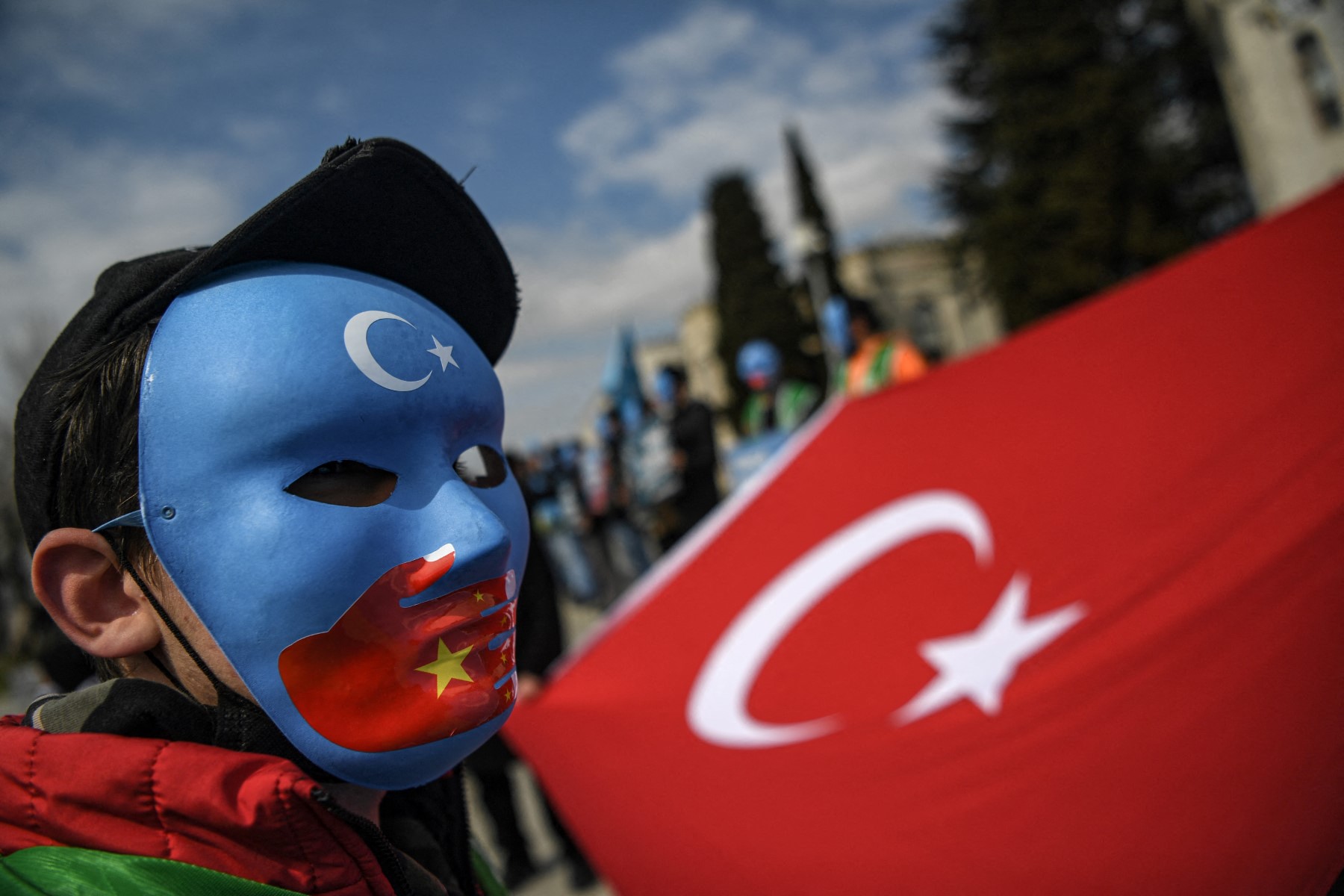
On 19 March 1996, a top-secret directive from the Politburo, China’s supreme political leadership, identified Turkey as a hub of the movement for an independent East Turkistan in Xinjiang, led by Uyghurs alongside other native Turkic peoples.
Beijing ordered its apparatus to bind Ankara, fragment the diaspora, isolate its leaders, and keep East Turkistan off the international agenda.
Turkey was the target; leverage the instrument; containment was the objective. Access bought compliance.
One year later, Beijing supplied what Washington had withheld: the foundations of an indigenous missile industry.
Turkey relied on imported systems, NATO guarantees, and air power.
Its Sakarya rocket reached 40 kilometers, but it still lacked design control, propulsion expertise, and production capacity. Ankara sought a partner willing to transfer the entire industrial base. Washington refused, Russia remained paralyzed after the Soviet collapse, and negotiations with Pakistan stalled. China filled the void.
In 1997, Turkey’s Ministry of National Defense signed a $250 million contract with the China Precision Machinery Import Export Corporation. Project K delivered 200 WS-1 rockets and transferred the materials, tooling, and expertise for Roketsan to build up to 1,300 more. Turkey fielded the system as the TR-300 Kasırga in 1998, extending its rocket range to 100 kilometers.
Project K supplied the rockets. Project J transferred sovereignty.
Turkey could now design, manufacture, and improve ballistic missiles independently.
In 1998, Ankara signed a second $300 million contract with the same Chinese state corporation for licensed production of the B-611 ballistic missile. Project J transferred production lines, tooling, and solid propellant expertise to Roketsan.
The J-600T Yıldırım became Turkey’s first indigenous ballistic missile, with a range of 150 kilometers.
As China transferred the B-611 production line, Ankara dismantled the East Turkistan political base on Turkish soil.
Until late 1996, Turkish policy had treated the Uyghurs and the broader East Turkistan struggle as a national cause. In 1992, President Turgut Özal backed East Turkistan’s claim to independence amid the Turkic awakening that followed the Soviet collapse. East Turkistan organizations led by Uyghurs mobilized, protested, and operated openly from Turkish territory.
Ankara pursued access to the Chinese market, missile technology unavailable from the West and a retreat from Beijing’s support for the Republic of Cyprus at the UN.
In December 1998, after a Chinese delegation requested intelligence cooperation against East Turkistan, the Turkish government issued secret Memorandum No. 36. It curtailed Uyghur mobilization, banned East Turkistan’s flag and withdrew Turkish backing from independence. Prime Minister Bülent Ecevit declared that Uyghur and other East Turkistani activists could no longer obstruct relations with China.
In April 2000, Jiang Zemin and Süleyman Demirel absorbed the East Turkistan cause into a bilateral counterterrorism framework. A Turkic national struggle became a security problem jointly managed by the state that suppressed it. With the Nationalist Movement Party serving in the coalition government, Ankara sealed the bargain by awarding Jiang Zemin Turkey’s highest state order.
Ankara sold the Uyghurs by abandoning East Turkistan for the ballistic autonomy the West had withheld, then closed their political space in Turkey.
Trade entrenched it. Bilateral commerce rose from $283 million in 1990 to $1.4 billion in 2000, then shifted into a China-dominated imbalance. Political compliance, military technology, and trade asymmetry fused into one system.
Over three decades, Turkey indigenized the Chinese transfer. In 2009, Project B produced the Bora, extending Yıldırım’s range beyond 280 kilometers and cutting its error radius from 150 meters to ten.
The Bora preserved the B-611M design. Turkey added domestic navigation, electronics, materials, and propulsion, but the lineage remained clear: WS-1 to Kasırga, B-611 to Yıldırım, Yıldırım to Bora, Bora to Tayfun.
Tayfun reached at least 560 kilometers and entered service in 2025. Tayfun Block IV moves the family into the 1,000-kilometer class; Cenk carries Ankara’s declared 2,000-kilometer ambition. Turkey moved from a 40-kilometer artillery rocket to a ballistic arsenal spanning battlefield, regional, and medium-range systems.
The original Yıldırım covered Cyprus, the eastern Aegean, and Greek territory adjacent to Anatolia. Bora extended the reach. The deployed Tayfun covers Cyprus, mainland Greece, Israel, and southeastern Europe from Turkish territory.
A 1,000-kilometer system reaches deeper into Europe. A 2,000-kilometer capability redraws the military geometry of Europe, the Mediterranean, the Black Sea, and the Middle East.
Erdogan named Athens
After Tayfun’s first long-range test, Erdogan said it would hit Athens unless Greece “stayed calm”. Weeks later, he ordered Greece to “behave itself”. He turned range into presidential doctrine and the missile family born of the Chinese transfer into a threat against a NATO ally.
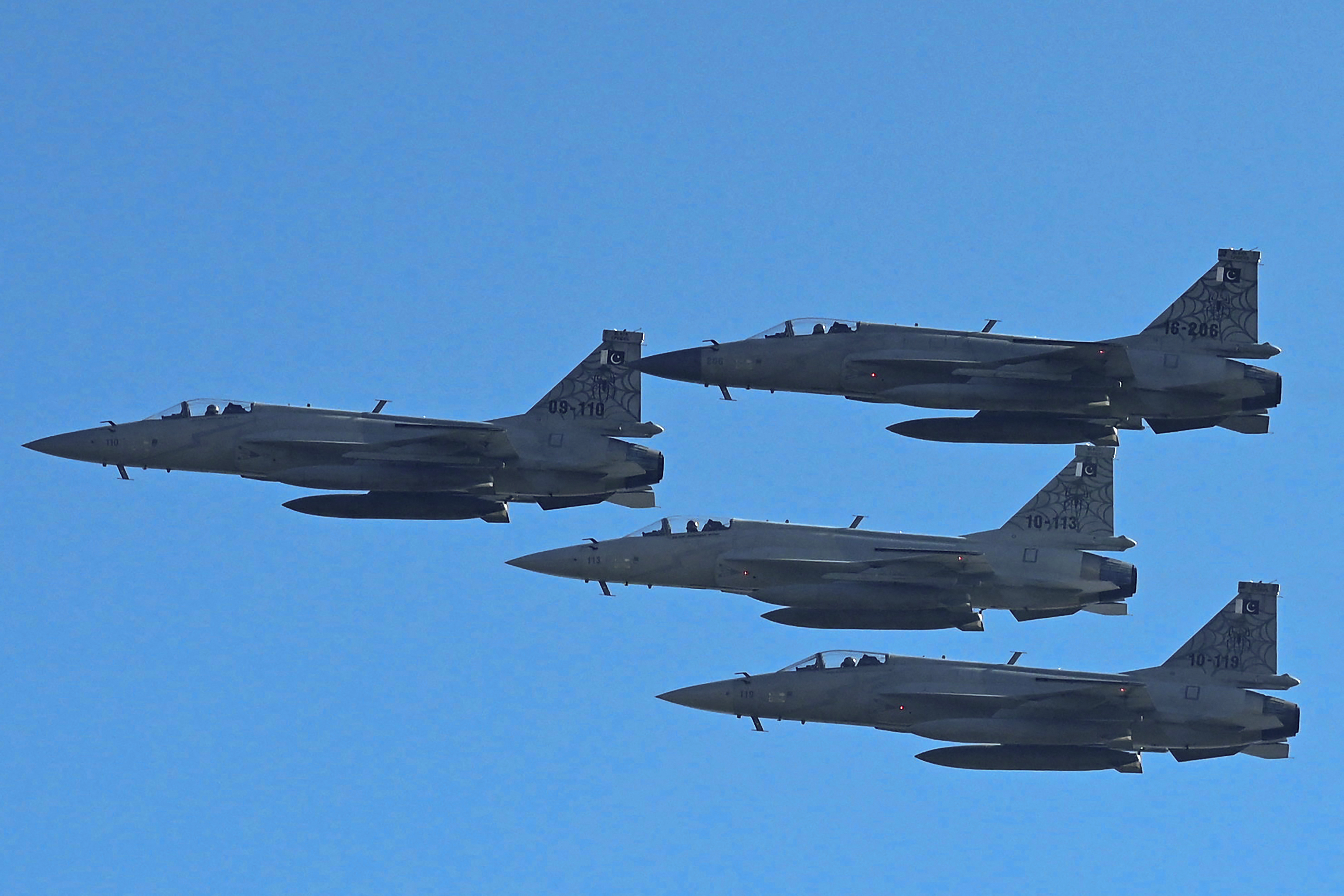
Ankara and Islamabad built a defense industry partnership spanning aircraft, naval platforms, munitions and drones, with local assembly and joint production. Pakistan’s National Aerospace Science and Technology Park works with Baykar to assemble the YIHA-III loitering munition, an attack drone that circles before striking. Each unit takes two to three days to complete in Pakistan.
During Operation Sindoor in May 2025, India struck nine sites it designated as terrorist infrastructure in Pakistan and Kashmir under Pakistani control. The following night, Islamabad deployed YIHA-III and Asisguard Songar drones of Turkish origin, alongside the domestically produced Shahpar-II, across a 1,700-kilometer front.
Between 300 and 400 drones crossed at 36 points to probe, map, and strain Indian air defenses. Turkish systems and jointly produced weapons entered combat between two nuclear powers.
China bought Turkish alignment with technology transfer; Ankara exported the formula through localization and insulation from Western veto.
The technologies diverge. The doctrine does not.
Turkey’s Black Sea facilities limit how far its missiles can be tested. The Somali coast opens an eastward oceanic corridor extending thousands of kilometers across the Indian Ocean. Ankara completed feasibility studies and design, began construction, and secured the land through a bilateral agreement. The project combines a national launch base with a proving ground for long-range missiles.
Somalia removes Turkey’s geographic ceiling.
The site provides Ankara with equatorial access, launch infrastructure, and a maritime corridor to test propulsion, stage separation, guidance, atmospheric reentry, and payload release for Tayfun’s successors, Cenk, and the dual-use technologies connecting space vehicles to ballistic missiles.
When such testing converges with nuclear expertise, it becomes a nuclear delivery program.
Turkey was embedded in the A.Q. Khan network, the clandestine Pakistani system that spread uranium enrichment technology across several states. Turkish companies supplied the network with dual-use electronics and centrifuge components. Khan considered relocating centrifuge production to Turkey. In 1998, Pakistani Prime Minister Nawaz Sharif offered Ankara a nuclear partnership.
That proliferation channel now converges with Turkey’s ballistic program and defense partnership with Pakistan. Pakistan supplies what Turkey lacks: warhead design, miniaturization, and payload integration.
Somalia validates the delivery system through tests of large motors, long trajectories, stage separation, and atmospheric reentry beyond NATO oversight. The space program supplies the cover.
The final supplier would be Washington.
China supplied the ballistic foundation, Pakistan the industrial and nuclear depth, Somalia the range. The F-35 would add the nervous system to an arsenal built beyond Western control: stealth, sensing, targeting, and data fusion. That would not restore NATO discipline. It would insert NATO’s most sensitive platform into Turkey’s autonomous strike system.
The Qatari/Emirati route for the S-400 exposes the fraud. Ankara is not abandoning its choice of Russia. It is relocating the systems, laundering the breach through an intermediary, and asking Washington to mistake relocation for realignment.
Beijing bought Turkish silence on the Uyghurs’ struggle for East Turkistan with missile technology. Trump would finish Beijing’s work by arming the strike system born from that betrayal. The S-400 changes address. The breach survives. Ankara turns another violation into leverage.
Turkey calls the Uyghurs the flesh of the greater Turkic nation. Ankara converted its struggle for East Turkistan into strategic currency.
East Turkistan was the political price. The range rings are the strategic return.
- Shay Gal is Founder and Principal of Line of State, an international strategic practice advising governments, institutions, and decision makers on strategy, risk, access, and security in high-consequence environments. He previously served as Vice President of External Relations at Israel Aerospace Industries (IAI).
- Meet the Author on X: @ShayGal84
- This is an Opinion Article. Views Personal of the Author