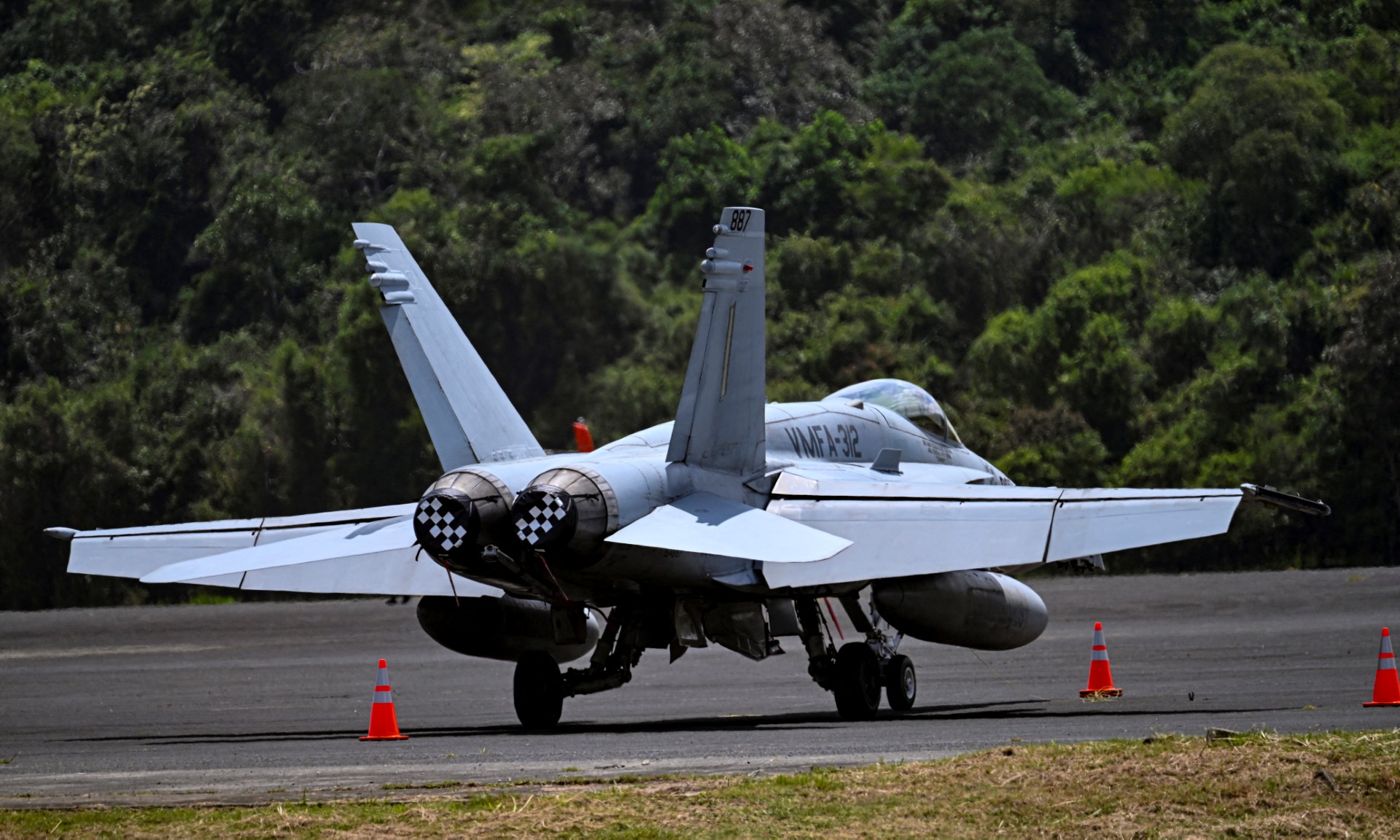
After nearly a decade of struggling to win new orders, Swedish defense manufacturer SAAB reported “better than anticipated” third-quarter earnings, driven by a steady surge in orders for the JAS-39 Gripen fighter jets and the GlobalEye early-warning aircraft.
This coincides with the 71st anniversary of the first flight of one of Saab’s most distinctive earlier designs, the J-35 Draken.
Saab recently announced at a quarterly earnings call that new order intake more than tripled year on year. “It is a very strong quarter,” Saab CEO Micael Johansson said in an interaction with Reuters. “Very good order intake, quite a few large orders, strong sales growth — over 30% organic — as well as increased profitability and strong cash flow,” he added, signaling that the company would meet its financial targets.
The new orders reportedly exceeded FactSet projections of 56.4 billion kronor ($5.68 billion), coming in at 65.8 billion Swedish kronor ($6.6 billion), up from 20.9 billion kronor ($2.10 billion) a year ago. Meanwhile, the third-quarter sales exceeded FactSet’s forecast of 20 billion kronor ($2.01 billion), coming in at 20.6 billion kronor ($2.07 billion), while EBIT (earnings before interest and taxes) exceeded projections of 1.9 billion kronor ($191.3 million), coming in at 1.95 billion kronor ($196.4 million).
Saab’s operating profit rose to 1.95 billion kronor ($196.4 million) from 1.37 billion kronor ($138 million) the previous year, exceeding the mean estimate of 1.91 billion kronor ($192 million) in an LSEG analyst survey.
The largest single contributor was the SEK 24.6 billion ($2.54 billion) contract for 16 Gripen E fighters for Ukraine, signed on 30 June 2026 and booked in the third quarter. “The growing customer demand is reflected in major contract awards, including Gripen for Ukraine, GlobalEye, and an order related to Germany’s new frigates,” CEO Johansson said.
The latest sales, including the order from Ukraine, highlight a major turnaround for a company that struggled to sell its aircraft—particularly the Gripen-E/F—to exporters who kept choosing the Lockheed Martin F-35 Lightning II stealth fighter or the Dassault Rafale.
The most advanced Gripen variant made an official comeback last year, with Thailand ordering 4 of these jets and Colombia ordering 17. SAAB is now pushing the aircraft for export to countries including Canada. If the export campaigns result in a contract, the company would see another significant surge in orders and earnings. The company has also reportedly offered the aircraft to countries like the Philippines and Peru.
“From a purely logical standpoint, I believe it would be a very good solution for Canada, and it would make for a very good partnership between Canada and Sweden,” the SAAB top boss told Reuters when asked about a potential deal with Ottawa, which placed its F-35 purchase on review last year and has been seeking a replacement ever since. Separately, Swedish Defense Minister Pål Jonson said earlier this year that the Swedish Air Force was considering purchasing the two-seat Gripen-F variant to expand training capacity, which would further boost the 4.5th-generation combat aircraft.
In addition to the Gripen-E, the GlobalEye early warning aircraft also drove profits this quarter. SAAB received a SEK 10.1 billion ($1.02 billion) order in July for two GlobalEye aircraft from a Middle Eastern country, as the EurAsian Times reported earlier.
The GlobalEye is also sweeping orders as Europe modernizes and strengthens NATO’s overall combat posture amid sustained security threats from Russia. Earlier this month, NATO Secretary General Mark Rutte announced that the alliance would begin formal negotiations with the company for up to 10 GlobalEye aircraft to replace its fleet of 14 Boeing E-3A Sentry AWACS aircraft, whereas Canada picked the aircraft in May 2026.
However, neither NATO nor Canada has placed a firm production order yet, so further sales growth from these programs remains prospective.
Further, a contract with German shipbuilder TKMS drove Saab’s profits. In July 2026, the company signed a SEK 8.7 billion ($876 million) contract with German naval defense company TKMS to deliver and integrate combat systems, composite structures, and sensors onto four of the German Navy’s new MEKO A-200 DEU-class frigates.
While Saab’s recent growth has been driven primarily by the Gripen E/F and related systems, the timing of the results invites a look back at another landmark Swedish design that first flew exactly 71 years ago.
The SAAB Draken 35 Flew More Than 7 Decades Ago
About 71 years ago, on October 25, 1955, the iconic Saab 35 Draken—whose name means “the Kite” or “the Dragon” in Swedish—made its maiden flight, marking the start of the most daring and transformative chapter in Swedish military aviation history.
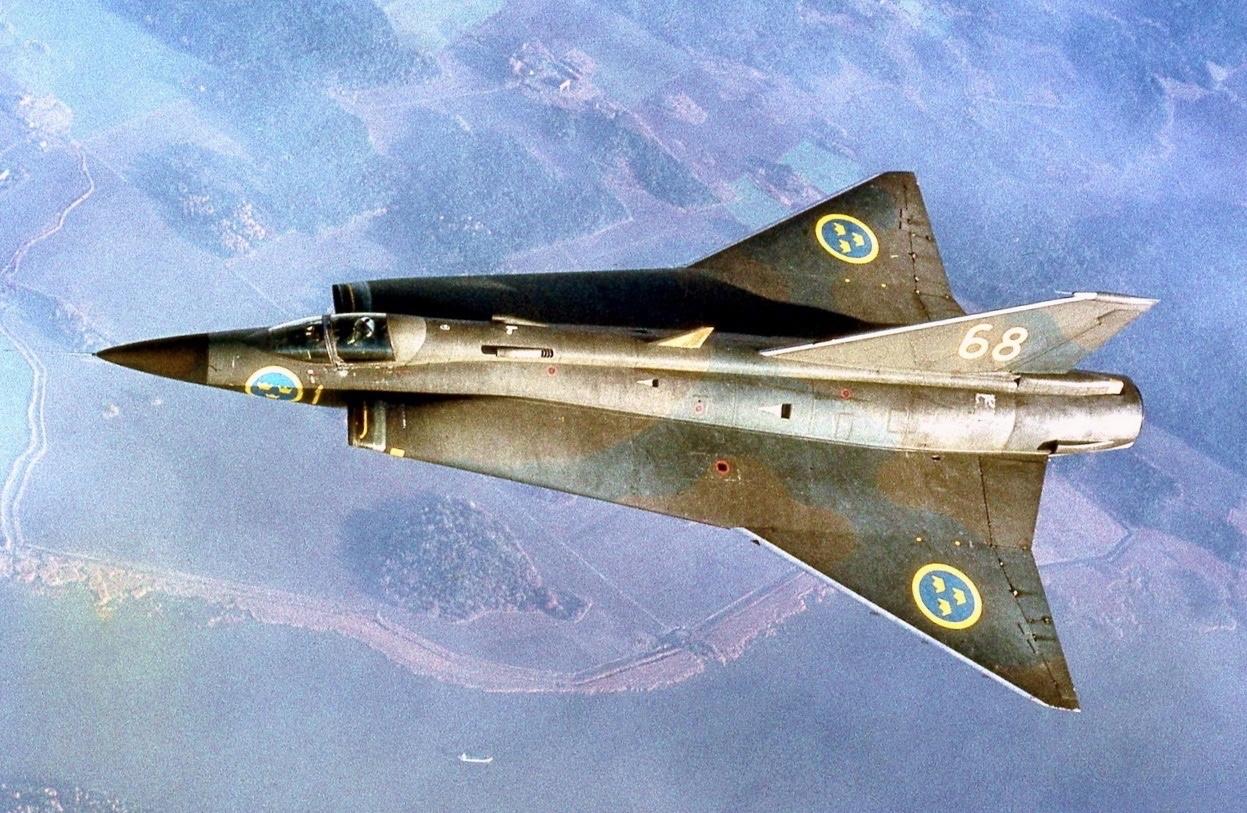
Sweden developed the Saab 35 Draken during the Cold War between the Soviet Union and the United States-led Western bloc, amid concerns that the Cold War might spill over its borders and threaten its sovereignty because of its proximity to Russia.
So, the country wanted an aircraft that could combat Soviet fighters and intercept its bombers at high altitudes, which ultimately led to the development of the Saab 35 Draken.
The Swedish Air Force demanded that the new combat aircraft could operate from reinforced public highways that would serve as wartime airbases. It wanted the aircraft to operate from its unique airbase system, Bas 60, which emphasized distributing Swedish air power across several air bases to increase survival chances in the event of conflict.
More importantly, however, the requirements emphasized supersonic speed, all-weather capability, quick turnaround by conscripts, and single-pilot operation, among other things.
Led by designer Erik Bratt, the team adopted a radical double-delta wing: a sharply swept inner section of approximately 80 degrees optimized for high-speed flight, combined with a more moderately swept outer section of about 60 degrees for improved low-speed handling.
The configuration blended the wing and fuselage so thoroughly that the aircraft dispensed with a conventional horizontal stabilizer, producing a distinctive stingray-like silhouette often described as resembling a kite.
Needless to say, the Draken-35 was distinguished as the most aesthetically pleasing combat aircraft. The aircraft had a service ceiling of 66,000 feet and a maximum speed of 2,450 kilometers per hour.
To validate the concept, Saab first built a half-scale testbed, the Saab 210 “Lilldraken,” propelled by the Armstrong Siddeley Adder jet engine, which flew in 1952.
The first full-scale Draken prototype, fitted with a license-built Rolls-Royce Avon Mk 21 engine, took off on 25 October 1955 and soon achieved supersonic speed in level flight.
The second prototype, equipped with an afterburner, unintentionally exceeded the sound barrier during its first climb.
The Saab 35 Draken was a revolutionary aircraft that set multiple records. It was the first Western European combat aircraft that could fly at true supersonic speeds. Later variants reached top speeds of Mach 2.0 to 2.3 (around 2,125–2,450 kilometers/hour) at altitude, with a service ceiling of about 18,000–20,000 meters and a very high rate of climb.
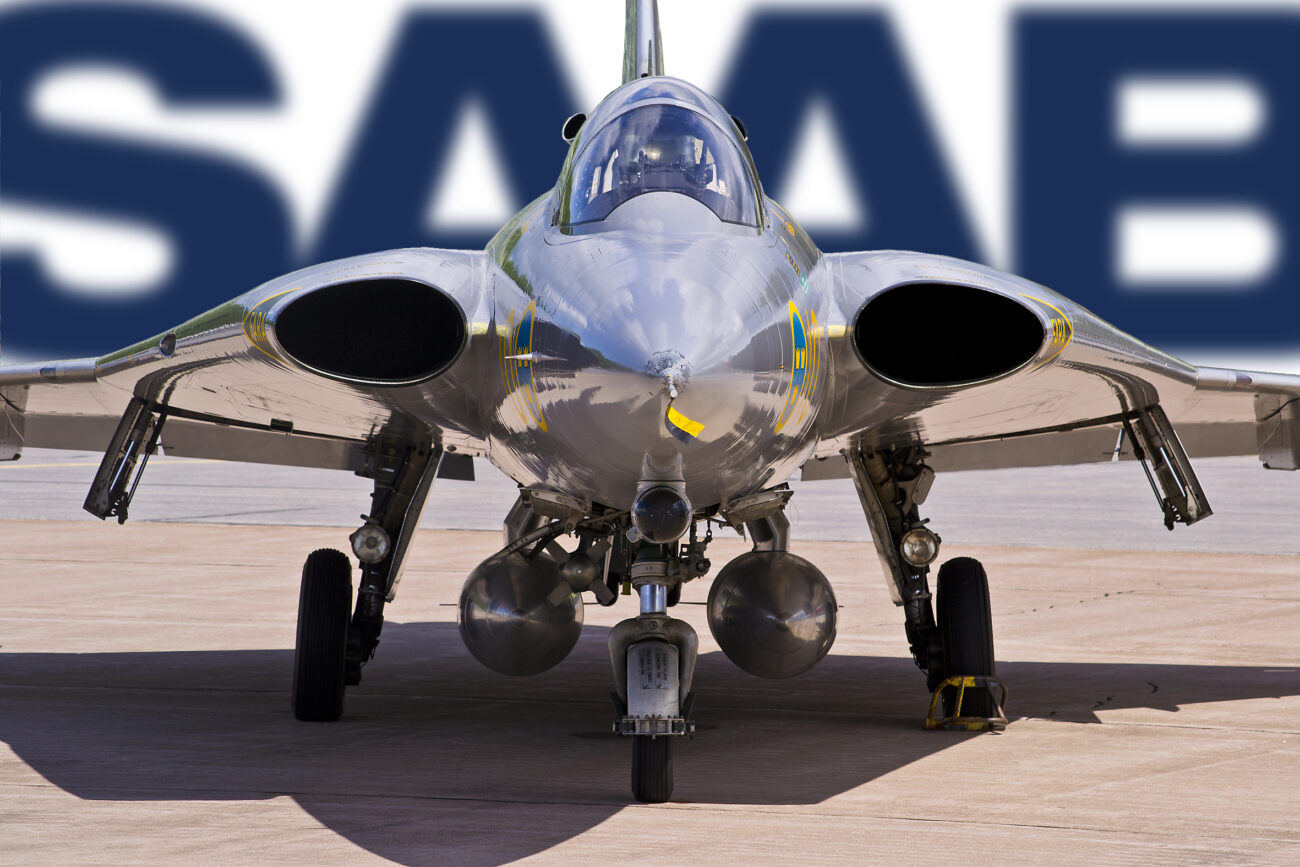
It was a single-engine aircraft that could carry the AIM-9 Sidewinder missile among other weaponry. The Swedish aircraft could also carry a payload of nearly 6,400 pounds, including internal rockets and bombs.
Most versions of this supersonic combat aircraft carried one or two 30 mm ADEN cannons, with later Swedish models often retaining only a single gun to make room for additional avionics.
Because the Draken’s fuselage was designed to split into front and rear sections, early versions of the aircraft had issues, including a tendency toward “superstall” at high angles of attack.
At times, it became uncontrollable regardless of pilot input, making ejection the only plausible option. Unfortunately, this caused several tragic accidents.
Swedish pilots developed recovery techniques, including the “kort parad” (short parry) maneuver—widely regarded as a precursor to the later “Cobra”—that allowed them to manage and even exploit the behavior.
The main Swedish Draken variants progressed from the initial J 35A to the improved J 35B with better radar and integration into Sweden’s air-defense network, and onto the two-seat Sk 35C trainer, the more powerful J 35D, the S 35E reconnaissance variant, and the definitive J 35F interceptor equipped with advanced radar and missiles.
Additionally, the aircraft was built in four export variants for Sweden, Denmark, Finland, and Austria.
All Drakens were interceptors with limited air-to-ground capability except for the Danish Drakens, which served as strike aircraft and carried AGM-12 Bullpup air-to-ground missiles, electronic countermeasures, and enhanced internal and external fuel storage.
Despite early technical challenges, the Draken earned a strong reputation for performance and reliability, as shown by its about fifty-year service life. In fact, Austria (the last operator of the type) used it until 2005.
Sweden introduced the Draken into front-line service in 1960 and retired the last examples in the late 1990s, by which time the Saab 37 Viggen had largely replaced them and the Draken was bridging the gap until the JAS 39 Gripen arrived.
Nonetheless, a handful of aircraft have continued flying in civilian and historic roles, including with the Swedish Air Force Historic Flight and the US National Test Pilot School, according to reports.
Although the Draken never saw real combat, its striking double-delta shape, long service life, and design ingenuity secured its place as one of the most recognizable European fighters of the Cold War era.
- Contact the author at sakshi.tiwari13 (at) outlook.com
- Follow EurAsian Times on Google News